Ridwan Kamil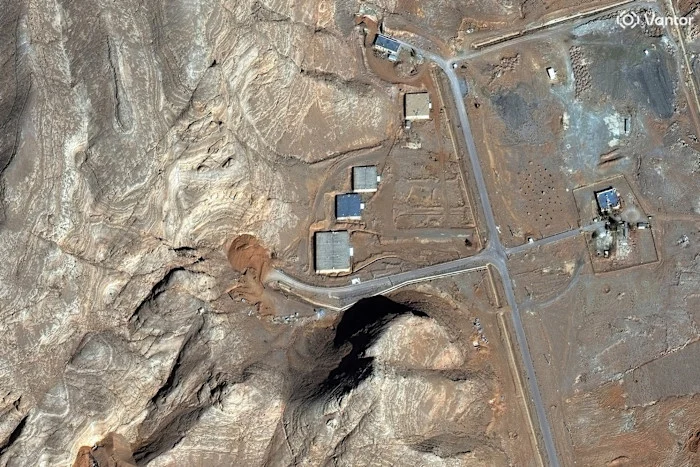
In a high-stakes diplomatic gambit, the United States and Iran are engaged in a race against time, with escalating military posturing and the specter of war looming large over the Middle East, amplified by volatile oil markets. As President Trump orchestrates a significant American military deployment in the region, second only in scale to the Iraq War buildup, the ongoing negotiations between Washington and Tehran have become a critical juncture, where the slightest misstep could plunge the two nations into a devastating regional conflict.
The latest round of nuclear talks, a crucial but fraught dialogue, has yielded cautiously optimistic pronouncements from both sides. Iran’s Foreign Minister, Abbas Araghchi, reported “good progress,” while a U.S. official indicated that Tehran would soon present “detailed proposals.” However, this fragile optimism is constantly under threat. U.S. Vice President J.D. Vance has voiced concerns, asserting that Iran has yet to acknowledge the “red lines” set by President Trump, adding a layer of acrimony to the delicate discussions.
Adding to the tension, White House Press Secretary Karoline Leavitt reiterated on Wednesday that while “diplomacy is always his first option,” there exist “many reasons and arguments that one could make for a strike against Iran.” These statements coincide with the deployment of a second U.S. aircraft carrier and numerous additional military aircraft to the region, underscoring the dual track of diplomacy and military readiness. The juxtaposition of these competing narratives highlights the perilous path ahead, fraught with immense and complex obstacles to achieving a diplomatic resolution and averting a new conflagration between these long-standing adversaries.
Navigating this treacherous terrain requires what Professor Vali Nasr of Johns Hopkins University terms “a kind of diplomatic ju-jitsu,” a strategy of intricate maneuvering to broker an agreement palatable to both sides. At the heart of the deadlock lies the intractable dispute over Iran’s uranium enrichment program. President Trump has consistently demanded the permanent dismantling of Iran’s enrichment capacity, a non-negotiable “red line” for Iran’s Supreme Leader, Ayatollah Ali Khamenei. The challenge lies in devising a framework that allows both the unpredictable American president and the defiant Iranian leader to preserve their standing and claim a semblance of victory.

One potential avenue for breaking the stalemate involves a formula that sidesteps an outright demand for Iran to relinquish its right to enrich uranium – a process vital for both nuclear fuel and, potentially, weapons-grade material. Instead, Iran could agree to a suspension of all enrichment activities indefinitely. Given that Iran is not believed to have enriched uranium since last June’s coordinated Israeli-U.S. military action targeting its primary nuclear facilities, such an agreement would essentially formalize the existing status quo. However, the efficacy of this approach is complicated by ongoing limitations on international inspectors’ access to remaining nuclear program elements. Richard Nephew, a nuclear expert and former U.S. official, identifies the “verification challenge” as the most significant and potentially insurmountable technical hurdle to any nuclear deal at this juncture.
Analysts anticipate that Tehran would also be compelled to transfer its stockpile of fissile material, including over 400 kilograms of uranium enriched to near weapons-grade purity, and submit to rigorous international oversight of its nuclear facilities. These were precisely the terms Iran agreed to under the Joint Comprehensive Plan of Action (JCPOA) in 2015, a landmark agreement negotiated with the Obama administration and other global powers. The JCPOA limited Iran’s enrichment purity to levels far below those required for nuclear weapons and capped its enriched uranium stockpile at 300 kilograms.
The JCPOA’s demise was precipitated by President Trump’s withdrawal during his first term. This decision, followed by Iran’s installation of advanced centrifuges and the accumulation of nearly 10,000 kilograms of enriched uranium, significantly deepened decades of mutual distrust. The subsequent U.S. decision to abandon the accord in 2018, and its alignment with Israel’s military actions while Washington and Tehran were engaged in negotiations, further eroded any remaining confidence.
Another previously explored option involves the establishment of a regional “consortium” situated outside of Iranian territory. This arrangement would permit Iran and other nations to enrich uranium to low levels for civilian purposes. However, Tehran has consistently maintained that such an initiative cannot serve as a substitute for its own indigenous program. Regional states, which have played a pivotal role in facilitating these talks and are deeply concerned about the spillover effects of a U.S. attack on their borders, suggest that the Trump administration may be signaling a degree of flexibility on the nuclear issue. The White House has declined to comment on these assertions.
Nevertheless, analysts and diplomats widely expect President Trump to require a deal that he can present as superior to the 2015 accord signed by former President Barack Obama. The Trump administration has also stipulated that negotiations must encompass curbs on Iran’s ballistic missile program and an end to its support for regional militant groups. Iran, however, remains adamant that these issues are outside the scope of the current discussions, insisting that the focus should remain exclusively on the nuclear program.

Regional diplomats have proposed a phased approach, advocating for a sequential negotiation of each issue. The hope is that an initial breakthrough on the nuclear program could foster an environment conducive to trust-building. Turkish Foreign Minister Hakan Fidan recently conveyed to the Financial Times that regional powers are actively exploring “creative ideas” to address concerns surrounding Iran’s ballistic missile threat.
Richard Nephew posits that President Trump possesses greater latitude than Iran to accept a deal, provided he can credibly claim that U.S. military pressure compelled the Islamic Republic to make concessions exceeding those of the JCPOA. He elaborates, “If the president were to come out tomorrow and say: ‘Good news!’… ‘the Iranians have agreed that they will not have any uranium enrichment for a decade, and we’re going to keep talking about missiles, proxies and other things which they never agreed to talk about with Obama,’ I find it hard to believe the U.S. political system wouldn’t say, ‘well, that’s actually pretty good.’”
Without resolving the impasse on uranium enrichment, progress on other critical issues for both sides, including sanctions relief for Iran, remains improbable. A Western diplomat observed, “The Iranians are being clever by saying the talks are only about the nuclear issue and sanctions, not other matters. But [focusing] solely on enrichment will not satisfy the Americans. The U.S. does not believe that something similar to the JCPOA would work.”
Ali Vaez, an Iran expert at Crisis Group, suggests that even if President Trump were amenable to allowing some low-level enrichment, akin to the JCPOA, this might not be sufficient for Supreme Leader Khamenei to save face. He emphasizes, “What the Iranians want is not just relief from the looming military threats, but they also need reprieve from the economic pressure.” Hamid Ghanbari, a deputy foreign minister, recently informed Iranian businessmen that any agreement must include the unfrozen of Iran’s overseas oil revenue, estimated in the tens of billions of dollars. He also alluded to discussions regarding U.S. investments in Iran’s gas, oil, and mining sectors, seemingly appealing to President Trump’s transactional approach to diplomacy. The White House has not commented on whether sanctions relief is under consideration.
Some analysts believe that President Trump’s intensified threats, particularly in the wake of Iran’s severe crackdown on anti-regime protests last month, coupled with the significant U.S. military buildup, could inadvertently create an irreversible momentum towards conflict. Susan Ziadeh, a former U.S. Ambassador to Qatar during the Obama administration, noted, “You have arrayed this huge armada into the region. The fact that you have so much firepower… creates a momentum of its own. And sometimes that momentum is a little hard to just put the brakes on.”

Furthermore, Iran is expected to demand explicit details and concrete assurances in any agreement, stemming from its deep-seated suspicions of the United States. This contrasts sharply with nebulous proposals, such as President Trump’s Israeli-Palestinian peace plan, which deferred the resolution of key issues to a later date. However, a comprehensive agreement of the magnitude required would necessitate a timeframe that Iran may not possess, along with technical expertise and negotiating bandwidth that President Trump’s current team may lack, according to analysts. The ongoing indirect talks have been limited to a few hours, a stark contrast to the nearly two years it took to finalize the JCPOA.
Ali Vaez observes that “the pace of military mobilization is higher than the pace of negotiation.” Vali Nasr, speaking at a recent roundtable, indicated that following the failure of last year’s negotiations to prevent the June military action by Israel and the U.S., Iranian hardliners are convinced that the most effective deterrent against a new war is to signal unequivocally that this time, they will inflict significant costs on America. They understand President Trump’s preference for swift and decisive outcomes, akin to the quick capture of Nicolás Maduro in Venezuela, and are reportedly aiming to demonstrate that any confrontation with Iran will be protracted and costly.
Concurrently, certain elements within the Trump administration anticipate that any new military operation, should the U.S. opt for such a course, would mirror the limited impact of the June war, with Iran suffering minimal damage due to its perceived weakened state. Vali Nasr cautions that both these assumptions represent potentially grave miscalculations, stating, “We’re in a scenario where this could get out of hand very quickly.” The delicate balance between diplomatic engagement and military pressure hangs precariously, with the potential for a rapid escalation of tensions and the eruption of a wider regional conflict.



 Aura Kasih
 Lisa Mariana
 Ayu Aulia