
 Aura Kasih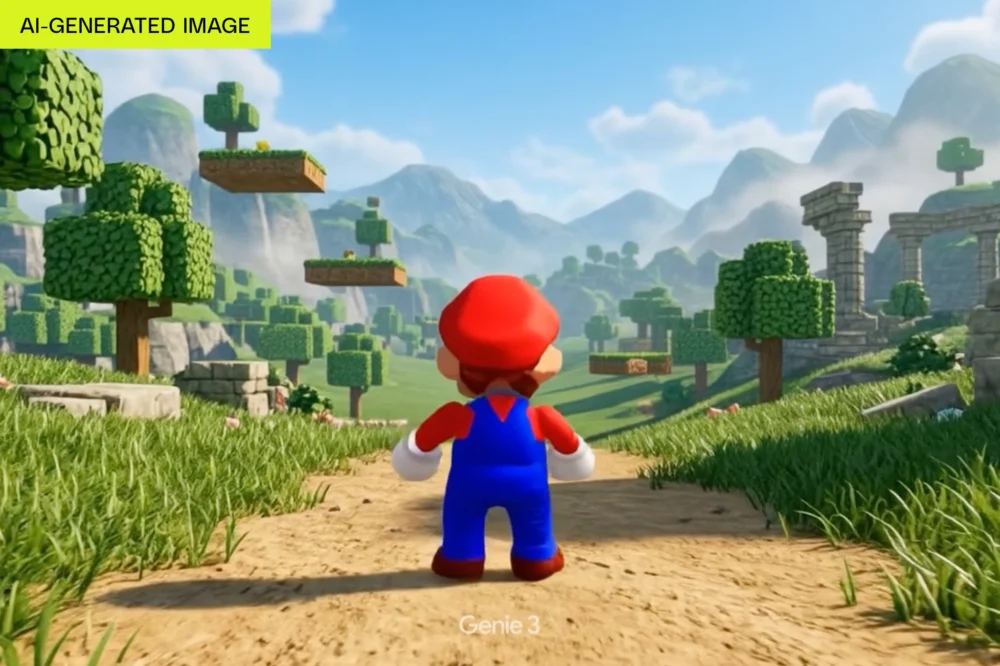
While the allure of artificial intelligence generating boundless virtual landscapes and dynamic gameplay experiences is potent, current AI capabilities fall significantly short of replicating the nuanced artistry and engaging depth that define truly compelling video games. Despite considerable investment and rapid advancements in AI, the creation of rich, interactive worlds remains a fundamentally human endeavor, a complex tapestry woven from creativity, technical skill, and an intrinsic understanding of player psychology that AI has yet to grasp.
The genesis of AI’s entanglement with video game world creation can be traced back to the industry’s own pioneering efforts in procedural generation. Decades before the current AI boom, titles like the seminal 1980 game Rogue (the namesake of the "roguelike" genre) and the ubiquitous Minecraft demonstrated the power of algorithms to construct unique, emergent environments. These games, however, were not born from a vacuum of code; they were the product of meticulous human design, where developers painstakingly crafted the rules, parameters, and underlying logic to ensure that these procedurally generated worlds were not merely vast, but also inherently engaging, filled with purpose, and ripe for exploration. The enduring replayability of these titles stems from the sophisticated systems that allow for novel experiences on each playthrough, a testament to the foresight and ingenuity of their human creators. Now, as other creative sectors grapple with the potential deluge of AI-generated content, the video game industry finds itself at a similar precipice, facing the prospect of AI-driven content creation that, at present, lacks the soul and sophistication of human artistry.
The integration of generative AI into the video game development pipeline has swiftly become a contentious issue, igniting fervent debate among both consumers and industry professionals. Gamers have voiced strong dissatisfaction with what they perceive as "in-game slop"—low-quality, uninspired content churned out by AI—while a significant portion of game developers, according to industry surveys, express concerns that generative AI poses a detrimental threat to the creative integrity and economic stability of the industry. Despite these reservations, major players in the gaming landscape are actively pursuing AI integration. Companies like Krafton, the developer behind PUBG, are rebranding as "AI First" organizations, while EA has entered into a strategic partnership with Stability AI to explore "transformative" game development tools. Ubisoft, in a significant corporate restructuring, has publicly committed to "accelerated investments behind player-facing Generative AI." The sentiment within the industry is encapsulated by the candid statement from the CEO of Nexon, a prominent gaming conglomerate, who suggested, "I think it’s important to assume that every game company is now using AI," a notion that, while potentially alarming, highlights the pervasive nature of this technological shift. This widespread adoption is often framed by larger corporations as a means to streamline the increasingly costly and complex process of AAA game development. However, the embrace of generative AI tools also carries the palpable risk of job displacement within an industry already characterized by frequent and significant layoffs.
A recent development that has amplified these discussions is Google’s introduction of Project Genie, an experimental prototype designed to generate interactive sandbox worlds from text or image prompts. While accessible only to a select group of users and limited to brief 60-second exploratory sessions, Project Genie, powered by Google’s advanced Genie 3 AI world model, has been positioned as a significant stride towards Artificial General Intelligence (AGI). The model’s purported capabilities extend beyond gaming, aiming to enable AI agents with reasoning and problem-solving abilities. However, its demonstration has provided a tangible glimpse into how generative AI might be applied to game development, mirroring the impact of tools like DALL-E and OpenAI’s Sora on image and video generation.
Initial explorations with Project Genie reveal its current limitations. The generated "worlds" offer minimal interactivity, primarily allowing users to navigate through them with basic controls. The output is ephemeral, with generated content unable to be integrated into traditional game engines, and users are restricted to downloading recordings of their limited interactions. Furthermore, the generated environments, while capable of producing rudimentary, unauthorized imitations of existing intellectual property, highlight persistent concerns regarding copyright infringement and the ethical implications of AI training data. The quality of these AI-generated worlds—characterized by a lack of ambient sound, imprecise physics, and rudimentary environmental design—falls drastically short of the polished and immersive experiences crafted by human developers. The announcement of Project Genie had a discernible impact on the stock market, causing a temporary dip in the valuations of major gaming companies like Take-Two, Roblox, and Unity. This market reaction prompted a defensive response from industry leaders. Karl Slatoff, President of Take-Two Interactive, publicly downplayed Genie’s immediate threat, asserting that it is not a game engine and does not replace the creative process, likening its current output more to "procedurally generated interactive video."
The trajectory of AI development in game creation suggests a continued push towards more sophisticated world generation. Google is expected to refine its Genie models, though its ultimate focus—whether on enhancing gaming experiences or facilitating AGI research—remains to be seen. Concurrently, prominent figures in the AI landscape are articulating ambitious visions for interactive AI. Elon Musk, through xAI, has prognosticated the imminent arrival of "real-time" and "high-quality" video games, customized for individual players, within the next year, and has identified building an "AI gaming studio" as a core objective for his venture. Meta, under Mark Zuckerberg’s leadership, is pivoting towards AI as a primary focus, envisioning a future where users can generate and share games from simple prompts. Even Roblox, a platform built on user-generated content, is exploring "real-time dreaming," a concept that allows creators to leverage AI world models for dynamic in-game world generation and modification.
However, even under the most optimistic projections, where AI can generate worlds as responsive and engaging as those found in locally run console or PC titles, the creation of a complete video game encompasses far more than just environmental design. The most successful games are built upon a foundation of compelling gameplay mechanics, intrinsically rewarding activities, and the distinct aesthetic contributions of original art, sound design, narrative, and character development. The intricate harmonization of these elements, often taking years of dedicated human effort, is what elevates a game from a mere technical demonstration to a profound interactive experience.
AI, in its current iteration, is not poised to autonomously craft complete video games. The notion that it is capable of doing so is a premature and unfounded assumption. While AI-generated video has seen improvement, its application in areas like advertising has yielded notably subpar results, suggesting that the technology, despite ongoing investment by tech companies, still struggles with fundamental aspects of quality and coherence. The persistent pursuit of AI-driven game creation, even with flawed outputs, carries significant implications for an industry already navigating inherent instability. The mere possibility that AI tools could eventually rival human creative output poses a substantial long-term challenge.
The complexity inherent in video game design fundamentally differs from that of AI-generated video. While AI video generation has advanced rapidly due to a more constrained set of variables, game development involves a far more intricate interplay of systems, mechanics, and artistic elements. AI game-making tools will undoubtedly continue to evolve, but it remains highly improbable that they will bridge the qualitative chasm that currently separates AI-generated content from the nuanced and deeply resonant experiences crafted by human developers. The essence of a truly great video game lies not just in the expansiveness of its world, but in the depth of its design, the ingenuity of its mechanics, and the emotional resonance it achieves through human creativity. These are qualities that, for the foreseeable future, remain firmly within the domain of human artistry.




 Ridwan Kamil


 Lisa Mariana