Aura Kasih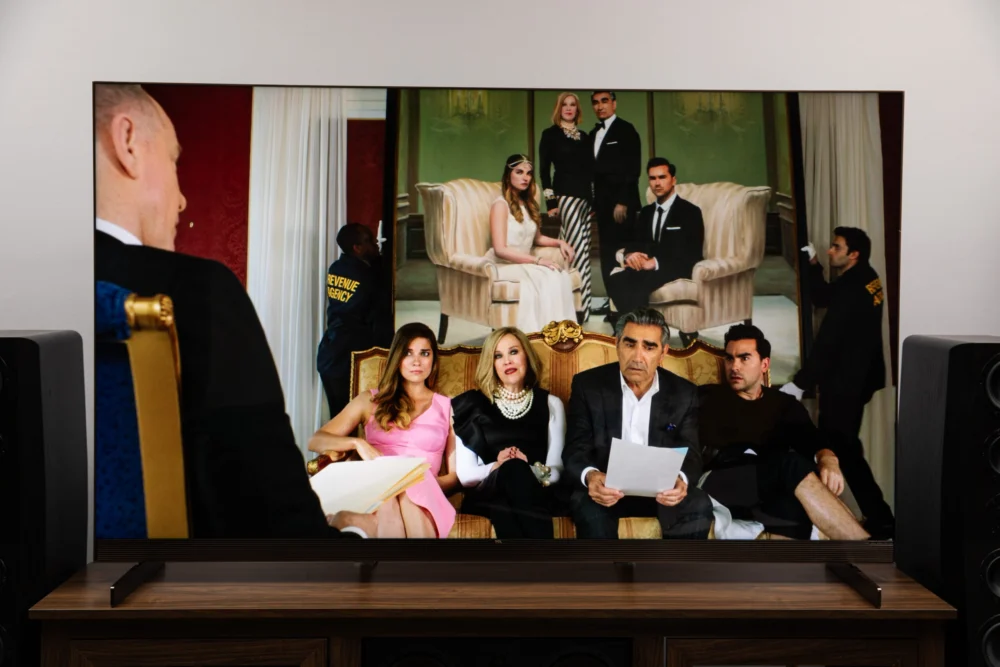
TCL has unveiled its latest premium television, the X11L SQD-Mini LED TV, a device that has generated significant anticipation since its initial preview, even earning accolades as the best TV of CES 2026. This new flagship represents a bold step for TCL, challenging established titans in the high-end television market with a combination of groundbreaking Mini-LED technology, exceptional brightness, and vibrant color reproduction. However, its substantial price point necessitates a thorough examination of its performance against its cutting-edge competitors and the emerging RGB LED landscape.
The moment the X11L powers on, its visual prowess is immediately apparent. Upon completing the initial Google TV setup and delving into content, users are greeted with a display that stands out as the brightest ever tested in a home environment. Yet, it is the sheer vibrancy and accuracy of its color palette that truly captivates. Familiar hues – the subtle nuances of skin tones, the expansive blues of the sky, and the rich greens of natural landscapes – are rendered with a realism that approaches perfection, creating a viewing experience that is nothing short of breathtaking.

This television marks a departure from TCL’s previous offerings, establishing itself as a true flagship in every sense. Its color saturation is exceptional, and it exhibits remarkable control over blooming, a common issue in high-brightness displays where light from bright objects can bleed into darker areas. The X11L positions itself directly against the top-tier models from industry leaders such as Sony’s Bravia 9, LG’s G5, and Samsung’s S95F. Crucially, it surpasses these competitors in terms of peak brightness, a testament to its advanced Mini-LED architecture. However, this performance comes at a significant cost. The 75-inch model reviewed retails for $7,000, with larger 85-inch and 98-inch variants commanding $8,000 and $10,000 respectively. The impending release of a wave of RGB LED televisions, potentially at comparable price points, raises questions about whether prospective buyers might benefit from a more measured approach to their purchasing decisions.
At a time when the television industry is increasingly focusing on the potential of RGB LED technology, TCL has opted to refine and advance its proven Mini-LED approach for its flagship X11L. This strategy involves employing blue LEDs as the primary backlight source, augmented by Super Quantum Dots (SQD) and an enhanced color filter. This combination is engineered to deliver the widest color gamut coverage ever achieved by a Mini-LED display. While both Mini-LED and RGB LED technologies aim for similar levels of light output and color fidelity, the inherent architecture of RGB LEDs, with individual red, green, and blue elements, theoretically offers the potential for more precise color reproduction. Conversely, RGB LED displays could also introduce challenges such as visible color crosstalk. Until RGB LED televisions become more widely available and thoroughly evaluated in real-world viewing scenarios, the true comparative advantage remains speculative. Nevertheless, Mini-LED is a mature and well-understood technology, and TCL’s implementation in the X11L showcases significant advancements.
Beyond its technical specifications, the X11L boasts a more sophisticated and premium design aesthetic compared to earlier TCL models. It features a robust metal frame and a chassis of uniform thickness, measuring approximately one inch deep, contributing to its elegant profile. The audio experience is further enhanced by an integrated B&O sound system. The front-firing speakers, strategically placed along the bottom edge of the television, deliver remarkably clear dialogue and, aided by built-in subwoofers, produce a surprisingly deep and resonant bass. The system is also designed to be expandable, with the option to integrate TCL’s Z100 FlexConnect speakers, which are slated for future testing.

TCL X11L Specifications
- Display Technology: Mini LED with Super Quantum Dots (SQD)
- Backlight System: Blue LED array
- Supported HDR Formats: Dolby Vision, HDR10+, HDR10, HLG
- Operating System: Google TV
- HDMI Ports: 4 x HDMI 2.1 (including one with eARC/ARC support)
- Audio Capabilities: Dolby Atmos, DTS Virtual:X
- Gaming Features: 4K resolution at 144Hz refresh rate, Variable Refresh Rate (VRR) up to 288Hz, Auto Low Latency Mode (ALLM), FreeSync Premium Pro
- Available Sizes: 75-inch, 85-inch, 98-inch
In terms of calibration and accuracy, the Filmmaker mode consistently proves to be the most precise according to extensive testing. The television demonstrates superior grayscale performance compared to previous TCL iterations. The primary observed limitation in this mode is a tendency to slightly crush black levels, meaning subtle details in very dark scenes can be lost. Out of the box, the TCL’s default settings exhibit a slight deviation from the EOTF (Electro-Optical Transfer Function) curve, indicating that as gray tones approach white, the perceived brightness falls slightly short of the ideal. However, adjusting the brightness setting from the default 50 to 70 results in near-perfect EOTF tracking and maintains excellent grayscale performance, with the minor near-black detail issue persisting. While not quite reaching the absolute accuracy of an LG G5 OLED, its performance is comparable to the Sony Bravia 9. Significantly, even in its most accurate Filmmaker mode, the TCL X11L achieves a considerably higher peak brightness than either of these competitors.
The standard Filmmaker mode, while highly accurate, is not the brightest available setting. With a 10% window, it achieves a peak brightness of 2,789 nits. However, the X11L’s true brightness potential is far greater. Utilizing a Konica Minolta LS-100 luminance meter, which is more accurate for readings above 6,000 nits, a peak brightness exceeding 8,800 nits was measured from a 5% window. This was achieved in Filmmaker mode with the brightness set to 100, local contrast at high, and peak brightness set to boost. For comparison, last year’s TCL QM9K Mini-LED TV reached 5,844 nits, and the brightest OLED from the previous year, the LG G5, topped out at 2,340 nits, both tested under identical Filmmaker mode conditions.

While the television’s ability to reach such extreme brightness levels is technically impressive, particularly within its most color-accurate mode, it is largely unnecessary for the vast majority of typical viewing environments and user preferences. For most of the review period, a setting of brightness at 70, local contrast at medium, and peak brightness at high provided an optimal balance. In dimly lit rooms, further reductions in brightness were sometimes implemented, as the excessive luminosity was not required for the content being viewed.
A welcome addition to the user interface is the inclusion of dedicated brightness and picture mode buttons directly on the side of the remote control. This feature, while perhaps most appreciated by technical reviewers and display enthusiasts, represents a significant improvement in user convenience. The remote itself retains the familiar design of previous TCL models, featuring an input select button, a microphone for voice commands, and a settings button, all enhanced by a backlit design for ease of use in low light conditions.
Further calibration analysis revealed an interesting dynamic between the Filmmaker and Movie picture modes. While some reviewers have reported Movie mode as being more accurate on their specific units, independent testing indicated that despite its higher default brightness, Movie mode exhibited less overall accuracy. During this comparative analysis, a subtle drift in the red channel of the grayscale measurements was observed over extended periods of use.

Initial tests conducted in the morning, shortly after the TV’s setup, yielded highly accurate grayscale measurements, closely mirroring the initial calibration results. However, after leaving the TV on for approximately four hours to display Olympic broadcasts, a re-measurement of the same tests showed a measurable decrease in the red channel’s accuracy. While this variation is detectable through precise testing, the magnitude of the change is minor and occurs over several hours, making it unlikely to be perceptible during regular viewing. Nonetheless, for a television at this price point, transparency regarding such nuances is critical.
The viewing experience with the X11L is, without exception, spectacular. Action sequences, such as the fire and explosions in Mad Max: Fury Road, are rendered with dazzling intensity. The verdant landscapes of Rivendell are portrayed with an inviting and lifelike quality. The blooming control on this Mini-LED set is arguably the most effective yet seen, surpassing even TCL’s previous flagship, the QM9K. The separation between bright elements and adjacent dark areas is remarkably sharp. While it may not yet achieve the absolute perfection of OLED’s pixel-level dimming capabilities, its performance is the closest that Mini-LED technology has come to date.
The X11L arrived just prior to the Super Bowl, providing ample opportunity to experience its performance during the Winter Olympics. Throughout these extensive viewing sessions, the television consistently handled fast-moving content with exceptional fluidity. While the dedicated Sports picture mode offers motion compensation and clarity enhancements, including noise reduction, super resolution, and sharpness adjustments, its color temperature was deemed excessively blue for optimal viewing. Consequently, the preferred approach was to utilize the Filmmaker mode and selectively enable these processing features within the Picture Settings menu. A low setting for motion compensation proved sufficient to smooth out fast action like a football pass or a triple lutz without introducing an unnatural "soap opera effect." Increasing this setting to medium, however, resulted in a noticeably artificial appearance. The noise reduction and super resolution settings proved effective in upscaling and cleaning up artifacts in 1080p broadcast signals. While the processing capabilities may not rival those of Sony’s high-end displays, they represent a significant improvement over TCL’s past offerings.

The Google TV operating system on the X11L performs with remarkable fluidity. Popular applications such as HBO Max, Prime Video, Peacock, and Netflix launched rapidly, and navigation through the interface was consistently responsive. As a gaming display, the X11L excels, adeptly handling motion and supporting high frame rates from both consoles and PCs. Gaming sessions in titles like Forza Horizon 5 and F1 24 on both an Xbox Series X and a PC were free from screen tearing or smearing, and input lag was negligible.
The current television market is characterized by a strong emphasis on the emerging RGB LED technology, with TCL itself introducing an RGB LED model this year. This makes TCL’s decision to designate its flagship status to a Mini-LED television, even one that pushes the technology to new frontiers, a notable strategic choice. The ultimate success of this decision will depend on whether the purported color accuracy and brightness claims of upcoming RGB LED televisions translate into genuine, impactful improvements when viewed with real-world content, rather than solely on controlled demonstration material.
Alternatively, TCL’s commitment to refining Mini-LED for the X11L could be interpreted as an indication that RGB LED technology may not yet be poised to supersede Mini-LED, or perhaps never will. Furthermore, the comparative pricing of 2026 RGB LED televisions remains an unknown factor. For instance, last year’s 100-inch Hisense UX, currently priced at $13,000 (down from its original $20,000 MSRP), remains significantly more expensive than the $10,000 TCL X11L in its 98-inch configuration.

Based on an extensive two-week evaluation, the TCL X11L SQD-Mini LED TV is exceptionally well-positioned to be considered the premier television of the year. TCL’s ability to advance Mini-LED technology to this level of performance is genuinely impressive.
Despite its outstanding visual capabilities, a direct recommendation for immediate purchase of the X11L is tempered by the uncertainty surrounding its competitive positioning against the forthcoming RGB LED offerings. Historically, TCL televisions tend to experience significant price reductions as the year progresses. The 85-inch X11K from the previous year, which initially retailed for $10,000, can now be found for approximately $3,500. This trend suggests a strong likelihood of similar price adjustments for the X11L. Should its price eventually fall within $1,000 of its direct competitors like the Bravia 9 or LG G5, the X11L would undoubtedly represent an exceptional value proposition.
Photography by John Higgins / The Verge


 Lisa Mariana
 Ayu Aulia