Ridwan Kamil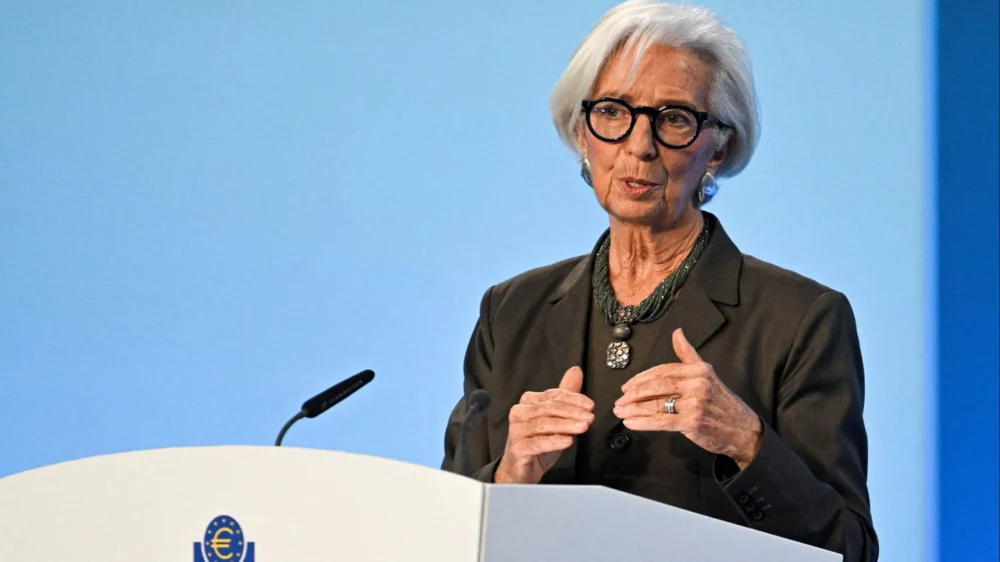
The economic and financial landscape of the Eurozone is abuzz with reports suggesting that Christine Lagarde, the current President of the European Central Bank (ECB), may be contemplating an exit from her esteemed position prior to the conclusion of her constitutionally mandated eight-year tenure. This potential early departure, if materialized, would undoubtedly send ripples through global financial markets and necessitate a swift and strategic transition at the helm of one of the world’s most influential monetary policy institutions.
Christine Lagarde, a distinguished legal scholar and former Managing Director of the International Monetary Fund (IMF), assumed the presidency of the ECB in November 2019. Her tenure has been marked by a series of unprecedented economic challenges, including the lingering effects of the COVID-19 pandemic, a surge in inflation not seen in decades, and the geopolitical ramifications of the conflict in Ukraine. Throughout these turbulent periods, Lagarde has navigated complex policy decisions, striving to maintain price stability and foster economic growth within the diverse economies of the Eurozone.
The implications of Lagarde’s potential early departure are multifaceted and warrant careful consideration. Firstly, it would trigger a process of selecting a successor, a crucial undertaking that will be closely scrutinized by governments, financial institutions, and market participants worldwide. The choice of the next ECB President will invariably shape the direction of monetary policy for years to come, influencing interest rate trajectories, asset purchase programs, and the bank’s overall approach to economic management. This selection process will likely involve delicate negotiations among the member states of the Eurozone, each with its own economic priorities and perspectives. The ultimate decision will reflect a balance of experience, economic philosophy, and geographical representation.
Secondly, any perceived instability or uncertainty surrounding leadership transitions at a central bank of the ECB’s stature can introduce volatility into financial markets. Investors and businesses rely on the predictability and continuity of monetary policy. A sudden or unexpected departure, especially without a clear successor immediately in place, could lead to heightened market anxiety, impacting currency valuations, bond yields, and equity prices. Therefore, the communication surrounding any such decision, and the subsequent transition plan, will be paramount in mitigating potential market disruptions.
Furthermore, Lagarde’s leadership has been characterized by a particular focus on certain strategic objectives. Her tenure has seen a significant emphasis on the ECB’s role in addressing climate change and promoting sustainable finance. The central bank has begun to incorporate climate-related risks into its monetary policy framework and supervisory activities. The departure of a leader who has championed these initiatives could lead to a re-evaluation of their prominence and pace of implementation by her successor. Similarly, her commitment to fostering a more inclusive and digitalized financial system, along with efforts to enhance the ECB’s communication strategies, are aspects that will be assessed and potentially continued or altered by the incoming leadership.
The specific reasons behind Lagarde’s potential early exit remain a subject of speculation. While official statements have not confirmed any such plans, the whispers within financial and political circles suggest a confluence of factors could be at play. It is not uncommon for senior international figures to consider transitions after a significant period of demanding public service, particularly when facing prolonged periods of intense pressure and complex decision-making. The sheer weight of managing the Eurozone’s monetary policy through successive crises is an immense undertaking, and the desire for a change of pace or a return to other endeavors is a plausible consideration for any individual.
Looking beyond the immediate implications of a leadership change, the broader economic context within which this potential transition occurs is critical. The Eurozone economy is currently navigating a delicate balance. Inflation, while showing signs of moderation from its peak, remains a persistent concern for many households and businesses. The ECB’s monetary policy stance, particularly interest rates, is a key tool in its arsenal to combat this inflation. The decisions made by the ECB in the coming months will have a profound impact on borrowing costs for consumers and businesses, investment levels, and overall economic activity.
The ongoing debate about the appropriate path for interest rates, the management of the ECB’s balance sheet, and the potential for future economic shocks are all central to the bank’s current mandate. A new ECB President will inherit these challenges and be tasked with charting a course through them. The successor’s economic philosophy – whether they lean towards a more hawkish stance focused on aggressively taming inflation, or a more dovish approach prioritizing economic growth and employment – will significantly influence the Eurozone’s economic trajectory.
Moreover, the structural challenges facing the Eurozone economy, such as demographic shifts, the green transition, and the need for greater fiscal integration, will continue to demand the attention of the ECB, irrespective of who is at its helm. While monetary policy is a powerful tool, it cannot unilaterally solve all economic problems. The ECB’s role in supporting the broader policy agenda of the European Union, particularly in areas related to structural reforms and investment, will remain a significant aspect of its influence.
The international dimension of the ECB’s role cannot be overstated. As a major global central bank, its decisions have repercussions far beyond the Eurozone’s borders. The relationship between the Eurozone and other major economic blocs, such as the United States and China, is crucial for global economic stability. The ECB President plays a vital role in international forums, engaging in dialogue with other central bankers and policymakers to coordinate responses to global economic challenges. The successor to Christine Lagarde will need to possess not only a deep understanding of Eurozone economics but also the diplomatic acumen to navigate these international relationships effectively.
The selection process for a new ECB President typically involves consultations between the governments of the Eurozone member states, with the European Council making the final appointment. Historically, the position has often been held by individuals with strong economic or legal backgrounds, and a proven track record in public service. The geographical distribution of past presidents has also been a consideration, with a general understanding that the role rotates among different national origins. Any nominee will be subject to rigorous scrutiny, with their past decisions, public statements, and economic outlook being thoroughly examined.
The European Parliament also plays a role in this process, with hearings and a non-binding vote on the proposed candidate. This ensures a degree of democratic oversight and public accountability in the selection of such a critical figure. The entire process is designed to ensure that the individual appointed to lead the ECB is well-equipped to handle the immense responsibilities of the role and to command the confidence of both national governments and international financial markets.
In conclusion, while concrete confirmation of Christine Lagarde’s departure remains pending, the mere contemplation of such an event underscores the dynamic nature of leadership in major international institutions. The potential transition at the ECB presidency will undoubtedly be a focal point for economic and political observers worldwide. The successor’s mandate will be to steer the Eurozone through its current economic complexities, uphold the bank’s commitment to price stability, and adapt to the evolving global economic landscape, all while potentially continuing or reshaping the strategic priorities that have been set during Lagarde’s influential tenure. The coming months will likely reveal more about the future direction of the European Central Bank and the individual who will ultimately shape its destiny.




 Lisa Mariana
 Aura Kasih

 Ayu Aulia