Lisa Mariana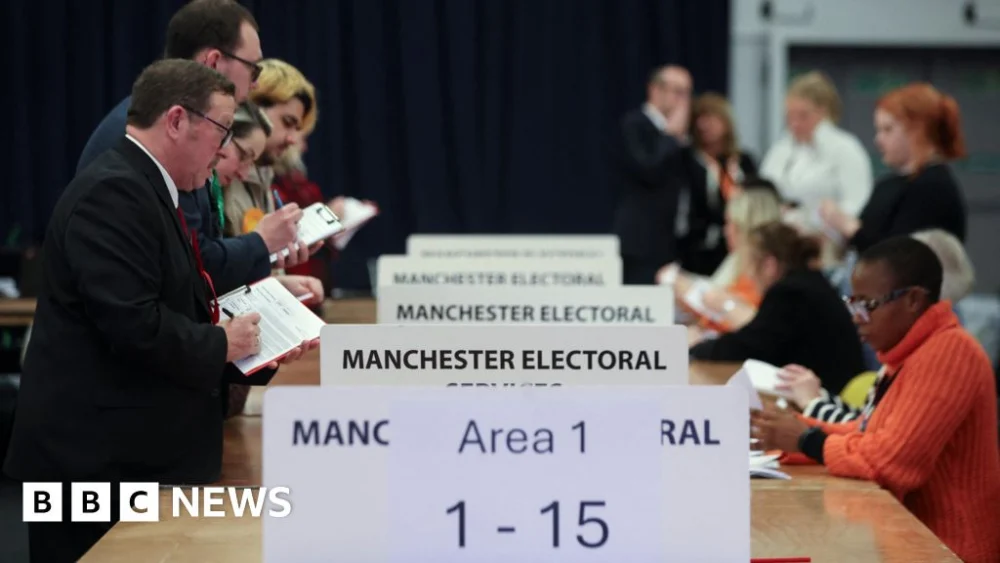
In the wake of a recent by-election in Gorton and Denton, a significant divergence has emerged between the official law enforcement position and the findings of independent election monitors regarding the conduct of the ballot. Greater Manchester Police have confirmed they have not received any formal complaints or reports of electoral misconduct during the closely watched contest, a stance that contrasts sharply with assertions from a prominent election observation group, Democracy Volunteers, which reported what it termed "extremely high" instances of "family voting." This disparity has ignited a broader discussion on the efficacy of electoral oversight, the interpretation of new legislative measures, and the integrity of the democratic process, particularly in the context of heightened political sensitivities.
The by-election, a critical barometer of public sentiment, unfolded against a backdrop of evolving electoral regulations. At the heart of the current controversy lies the practice of "family voting," a phenomenon where one family member is perceived to influence another’s vote, often by accompanying them into the polling booth. This practice, long a subject of debate, was effectively criminalized under the recently enacted Ballot Secrecy Act 2023. This landmark legislation explicitly designates it as a criminal offence for an individual to be present in or near a polling booth with another person for the purpose of swaying their vote in a specific direction. The Act aimed to fortify the principle of individual voter autonomy and the fundamental secrecy of the ballot, cornerstones of a fair democratic system.
Democracy Volunteers, an organization dedicated to upholding electoral standards through independent observation, released an unusual post-poll statement articulating grave concerns. John Ault, the director of Democracy Volunteers, highlighted that their observers had documented the highest levels of family voting in their decade-long history of monitoring UK elections. The group’s methodology involved deploying four observers across 22 of the constituency’s 45 polling stations, each spending between 30 to 45 minutes to scrutinize voting procedures. From a sample of 545 individuals observed casting their ballots, 32 instances of potential family voting were identified, with a notable concentration of nine cases reported at a single polling station.
Ault’s statement underscored the statistical anomaly, drawing a direct comparison to other recent parliamentary by-elections. For instance, in the Runcorn and Helsby by-election, family voting was observed in only 12% of polling stations, impacting an estimated 1% of voters. In stark contrast, the Gorton and Denton contest reportedly saw such instances in a staggering 68% of observed polling stations, affecting approximately 12% of the voters monitored by the group. This substantial discrepancy forms the crux of Democracy Volunteers’ assertion that the levels of undue influence were unprecedented.
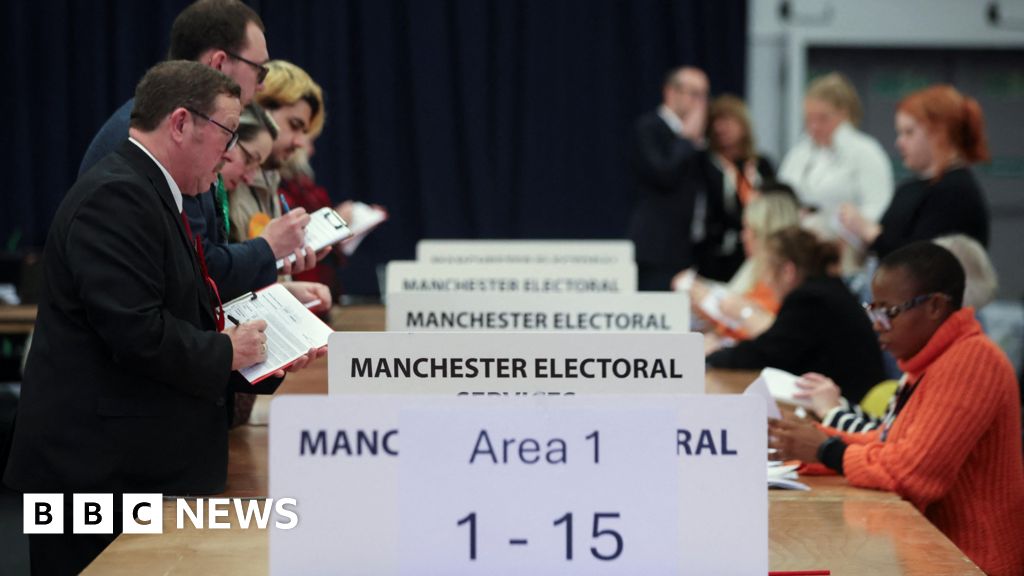
However, the local electoral authorities have vehemently disputed these claims. The acting returning officer for the by-election, the official responsible for the administration of the vote, issued a robust rebuttal. A spokesperson for the officer emphasized that all polling station staff undergo rigorous training specifically designed to identify and address any evidence of undue influence exerted on voters. Crucially, the spokesperson stated that "no such issues" had been reported by polling staff throughout the polling hours. The acting returning officer’s office also criticized Democracy Volunteers for not raising their concerns during the active polling period, suggesting that a dedicated by-election hub, established to rapidly address reported issues in conjunction with the police, could have taken immediate action. This timing, coming after polls had closed, was described as "extremely disappointing."
The Electoral Commission, the independent body responsible for overseeing elections and regulating political finance in the UK, acknowledged receipt of Democracy Volunteers’ report. In its official response, the Commission reiterated that electoral offences fall under the purview of the police and encouraged anyone believing an offence had occurred to report it directly to law enforcement. The Commission also referenced the statutory electoral observer Code of Practice, which stipulates that observers are empowered to bring potential irregularities, fraud, or significant problems to the immediate attention of electoral officials on the spot. This highlights a procedural expectation that observers should intervene or report in real-time if they witness potential breaches.
The allegations and the subsequent official responses quickly spiraled into a broader political discourse, particularly concerning the implications for electoral integrity. Nigel Farage, leader of Reform UK, took to social media platform X to voice his "deep concern" over the reports of high levels of family voting. He provocatively suggested that these observations raised serious questions "about the integrity of the democratic process in predominantly Muslim areas," further stating that the election represented "a victory for sectarian voting and cheating." Reform UK’s chairman, David Bull, echoed these sentiments on BBC Radio 4, affirming that family voting is "illegal" but conceding that it "probably not" affected the final outcome of the election. These comments, explicitly linking the alleged issues to specific demographics, injected a highly sensitive and potentially divisive element into the debate.
The Green Party, which secured a historic victory in the by-election, strongly rejected Reform UK’s criticisms. A party spokesman characterized Reform’s stance as "an attempt to undermine the democratic result" and likened it to tactics from the "Trump playbook." The spokesman emphasized their comfortable margin of victory and asserted that the Greens had demonstrated their ability to defeat Reform despite the latter’s substantial financial backing. This response framed the Reform UK’s complaints as a politically motivated attempt to delegitimize a legitimate electoral outcome.
Other prominent political figures also weighed in. Labour Party chair Anna Turley expressed that reports of family voting were "extremely worrying and concerning," acknowledging that such practices are antithetical to a healthy democracy. She called for a thorough review of the evidence and the report to inform decisions on what authorities should investigate. Green Party leader Zack Polanski, while also calling for an investigation if any wrongdoing were substantiated, underscored Manchester City Council’s statement that no issues had been formally reported by polling station staff. This highlights the inherent tension between observed irregularities and the official lack of reported incidents.
The unfolding situation in Gorton and Denton illuminates several critical facets of modern electoral practice and oversight. Firstly, it underscores the ongoing challenge of enforcing the Ballot Secrecy Act 2023, particularly concerning the nuanced distinction between legitimate assistance for voters (e.g., for those with disabilities or language barriers) and undue influence. The subjective nature of "influence" makes policing such activities complex, requiring careful judgment from polling staff. Secondly, the incident highlights the vital, yet sometimes contentious, role of independent election observers. While groups like Democracy Volunteers provide an invaluable external check on the electoral process, the timing and method of reporting observed irregularities are crucial for effective intervention by authorities. The criticism from the acting returning officer regarding the post-poll timing of the report suggests a need for clearer protocols for real-time engagement between observers and election officials.
Furthermore, the political reactions to the allegations, particularly those from Reform UK, underscore the potential for such reports to be politicized and to fuel narratives questioning electoral integrity, especially when linked to specific communities. Such rhetoric, regardless of the veracity of the claims, can erode public trust in democratic institutions and foster division. Conversely, the swift and firm rejection of these claims by the victorious party, coupled with calls for evidence-based investigations, reflects the imperative for political actors to defend the legitimacy of electoral outcomes against perceived attacks.
Looking ahead, the Gorton and Denton by-election controversy is likely to prompt further scrutiny from the Electoral Commission and potentially parliamentary committees regarding the effectiveness of the Ballot Secrecy Act 2023 in practice. It may also lead to a review of training protocols for polling station staff and clearer guidelines for election observers on reporting procedures. While the police have closed the immediate investigative avenue by confirming no reports, the wider implications for public perception of electoral fairness and the ongoing debate about safeguarding democratic processes are far from resolved. The incident serves as a salient reminder of the continuous effort required to ensure that every vote cast is truly free, secret, and uninfluenced, thereby upholding the foundational principles of a robust democracy.



 Aura Kasih
 Ayu Aulia