Ridwan Kamil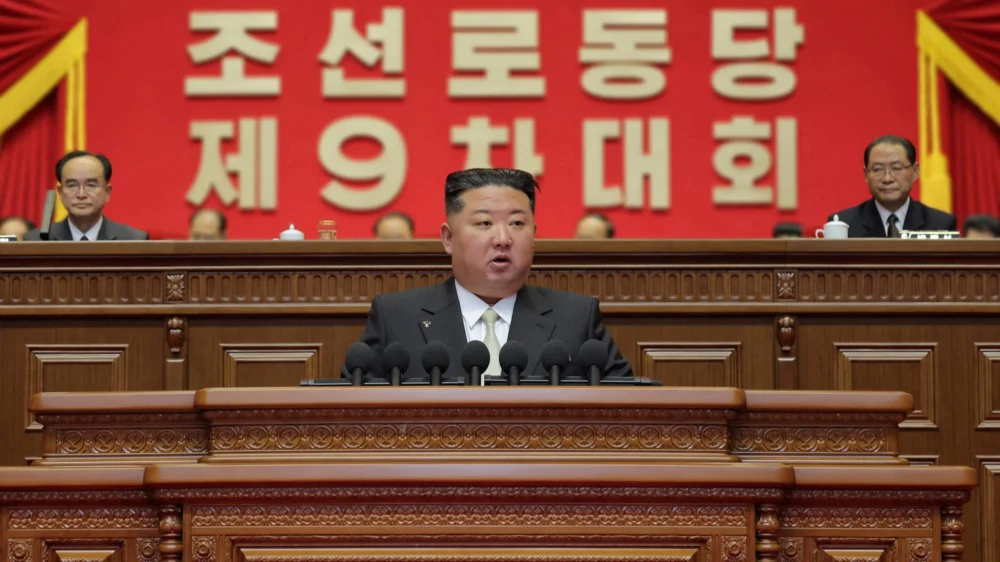
North Korea’s supreme leader, Kim Jong Un, has orchestrated a significant display of authority and strategic foresight during a recent Workers’ Party of Korea (WPK) congress, projecting an image of unwavering control and ambitious national development. The meticulously staged event, characterized by lavish pronouncements and a reaffirmation of the nation’s self-reliance doctrine, served as a crucial platform for Kim to underscore his leadership, outline future policy directions, and solidify his position as the unchallenged architect of the Democratic People’s Republic of Korea’s (DPRK) destiny.
The Workers’ Party of Korea, the ruling party of North Korea, convened for its eighth congress, a rare and highly significant event that occurs only when the leadership deems it necessary to address critical national issues or chart a new course. The proceedings, which typically span several days, are a carefully choreographed spectacle designed to project unity, strength, and ideological coherence. In this instance, the congress served a multifaceted purpose: to officially ratify Kim Jong Un’s established leadership, to unveil a comprehensive five-year plan for national economic development and defense, and to reinforce the guiding principles of the "Juche" ideology, emphasizing self-reliance and national independence.
At the heart of the congress’s proceedings was the re-election of Kim Jong Un as the General Secretary of the WPK, a position that bestows upon him ultimate authority over the party and, by extension, the state. This re-appointment was not merely a procedural formality; it was a potent symbolic endorsement of his tenure and a clear signal to both domestic audiences and the international community of his enduring grip on power. The congress also saw the elevation of several key party officials, a move that likely reflects a strategic reshuffling of personnel to ensure loyalty and efficient implementation of future directives. These personnel changes are often scrutinized for indications of factional dynamics or the consolidation of Kim’s inner circle.
A central theme emanating from the congress was the unveiling of a new five-year plan, reportedly focused on bolstering the nation’s economic capabilities and strengthening its defense posture. Given North Korea’s persistent struggles with sanctions, resource constraints, and a largely isolated economy, the emphasis on economic revitalization is a critical component of the leadership’s strategy. The specifics of this plan remain largely opaque to external observers, as is typical of North Korean policy pronouncements. However, the rhetoric surrounding it suggests a continued focus on heavy industry, agricultural development, and the strategic advancement of the country’s military-industrial complex. The success of such a plan will undoubtedly hinge on the regime’s ability to overcome internal inefficiencies and navigate the complex web of international economic restrictions.
The congress also provided a platform for Kim Jong Un to deliver extensive speeches, wherein he lauded the achievements of the past, particularly in the realm of national defense and the development of advanced weaponry. He reiterated the importance of self-reliance, a cornerstone of North Korean ideology, and emphasized the need for continued vigilance against external threats. This emphasis on defense is inextricably linked to the country’s nuclear program, which Kim has consistently portrayed as a deterrent against perceived hostility from the United States and its allies. The congress offered an opportunity to reaffirm the strategic significance of these capabilities and to signal a commitment to their continued development, albeit within the context of a broader national development agenda.
The international implications of the WPK congress are significant. For the United States and its regional partners, South Korea and Japan, the pronouncements from Pyongyang will be closely analyzed for any shifts in policy or rhetoric regarding denuclearization and inter-Korean relations. The congress’s emphasis on military strength and self-reliance suggests that any immediate breakthroughs in diplomatic engagement are unlikely. Instead, the focus will likely remain on North Korea’s continued efforts to enhance its military capabilities and its resolve to resist external pressure. This dynamic underscores the persistent challenges in achieving meaningful denuclearization and fostering lasting peace on the Korean Peninsula.
Furthermore, the congress’s proceedings offer insights into the internal dynamics of the North Korean regime. The elaborate ceremonies, the pronouncements of unity, and the carefully curated media coverage are all designed to project an image of unwavering support for Kim Jong Un and the WPK’s leadership. However, the underlying economic pressures and the persistent challenges of international isolation likely create an environment where internal stability is paramount. The leadership’s emphasis on self-reliance and ideological purity can be interpreted as a means of bolstering national cohesion and fostering a sense of collective purpose in the face of adversity.
The WPK congress, therefore, represents a critical juncture in North Korea’s strategic planning and its projection of leadership. It serves as a reaffirmation of Kim Jong Un’s authority, a declaration of ambitious national development goals, and a reinforcement of the ideological underpinnings that guide the nation’s policies. The global community will continue to monitor Pyongyang’s actions closely, seeking to decipher the true implications of these pronouncements and to assess their impact on regional security and international relations. The congress, while a domestic affair, invariably sends ripples across the geopolitical landscape, highlighting the enduring significance of North Korea as a strategic player, however isolated. The carefully crafted narrative emerging from Pyongyang aims to project an image of a nation confident in its direction, secure in its leadership, and resolutely pursuing its own path, regardless of external pressures. The congress, in essence, was a powerful statement of intent, designed to solidify Kim Jong Un’s legacy and to chart a course for North Korea that prioritizes national strength and self-sufficiency above all else. The intricate choreography of the event, from the selection of delegates to the content of the speeches, underscores the regime’s sophisticated understanding of propaganda and its ability to leverage such occasions to project an image of national unity and unwavering resolve. As the dust settles on this significant political gathering, the international community will be left to ponder the long-term consequences of North Korea’s renewed assertions of strength and its steadfast commitment to its unique developmental trajectory. The economic blueprint unveiled, though shrouded in secrecy, will be a crucial indicator of the regime’s capacity to deliver tangible improvements in the lives of its citizens, a perennial challenge for any authoritarian state. The concurrent emphasis on military modernization, however, suggests that security considerations will continue to loom large in Pyongyang’s strategic calculus, shaping its interactions with the outside world for the foreseeable future. This delicate balancing act between internal development and external security will likely define North Korea’s trajectory in the years to come, making future pronouncements and actions from Pyongyang subjects of intense global scrutiny. The congress, in its meticulous execution, served as a potent reminder of the DPRK’s enduring capacity for political maneuvering and its unwavering determination to chart its own course on the world stage. The reaffirmation of Kim Jong Un’s leadership, coupled with the ambitious pronouncements of economic and military progress, paints a picture of a state determined to project an image of strength and resilience, even in the face of considerable international headwinds. This carefully constructed narrative underscores the regime’s commitment to its core principles of self-reliance and national sovereignty, principles that have guided its policies for decades and continue to shape its engagement with the global community. The congress’s success, from the regime’s perspective, lies not only in the ratification of its plans but also in its ability to project an image of internal unity and unwavering resolve, a critical element in maintaining both domestic stability and international leverage. The long-term implications of this event will unfold over time, as the world observes the implementation of the newly outlined strategies and assesses their impact on the Korean Peninsula and beyond. The inherent opacity of North Korea’s political and economic systems means that definitive conclusions will be difficult to draw, but the message emanating from Pyongyang is clear: the regime is resolute in its determination to pursue its own agenda, prioritizing national strength and self-sufficiency.



 Ayu Aulia
 Aura Kasih
 Lisa Mariana