Ridwan Kamil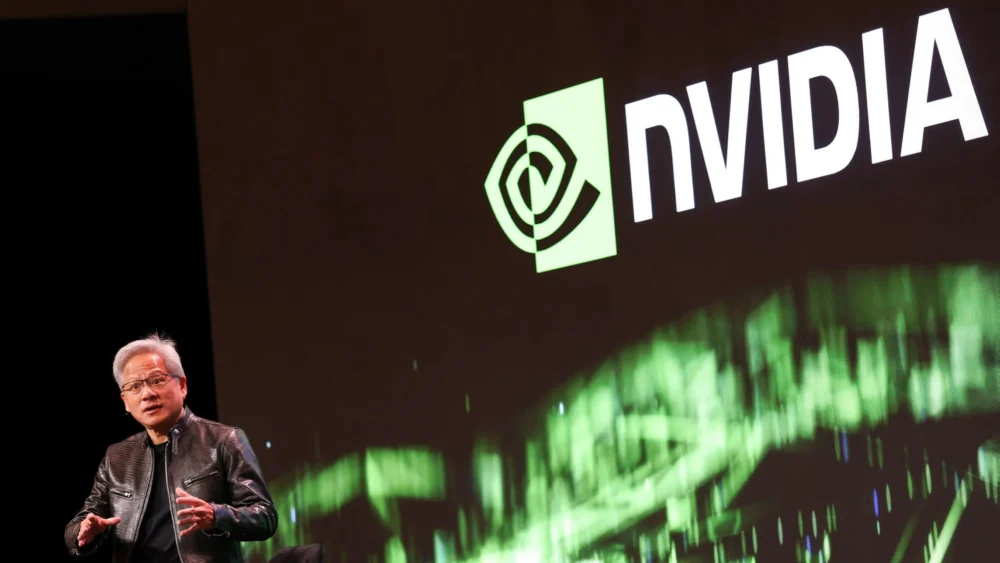
Despite reporting a breathtaking surge in revenue and profits, semiconductor giant Nvidia encountered a muted reception from the stock market, signaling a complex interplay of investor sentiment, evolving industry landscapes, and the inherent volatility of high-growth technology sectors. The company’s latest financial disclosures, which highlighted its dominant position in the Artificial Intelligence (AI) hardware market, were met not with widespread elation, but with a more discerning and cautious appraisal from Wall Street. This divergence between impressive financial metrics and a less-than-jubilant market response underscores the nuanced realities of investing in a sector at the forefront of technological innovation, where future expectations and competitive pressures often temper immediate reactions to quarterly results.
Nvidia’s fiscal fourth quarter and full-year earnings report presented a compelling narrative of unprecedented growth, largely propelled by the insatiable demand for its cutting-edge graphics processing units (GPUs), the workhorses of modern AI development. The company announced a staggering increase in revenue, far exceeding analyst expectations, and a corresponding surge in profitability. This financial outperformance is a direct testament to Nvidia’s strategic foresight in anticipating and capitalizing on the AI revolution. Its GPUs, initially designed for graphics-intensive gaming, have proven exceptionally adept at the parallel processing required for training and deploying complex AI models, from large language models to sophisticated computer vision systems. This dual utility has cemented Nvidia’s position as an indispensable component in the global AI infrastructure.
The sheer scale of Nvidia’s revenue figures paints a vivid picture of its market dominance. For the fourth quarter, the company reported revenues that more than doubled year-over-year, a feat rarely seen in established technology firms. This growth trajectory extends to the full fiscal year, where revenues also saw a substantial leap, driven by an insatiable appetite for its data center products. These products, specifically engineered for the computational demands of AI, have become the primary revenue engine for Nvidia. The company’s ability to consistently scale production and meet this surging demand has been a critical factor in its financial success, allowing it to capture a significant share of a rapidly expanding market.
Profitability has followed a similarly upward trend. Nvidia’s net income and earnings per share (EPS) have soared, reflecting not only increased sales but also the high-margin nature of its advanced semiconductor offerings. The company’s integrated hardware and software ecosystem, including its CUDA parallel computing platform, creates a significant competitive moat, enabling it to command premium pricing. This ecosystem fosters developer loyalty and accelerates the adoption of its hardware, creating a virtuous cycle of innovation and market leadership. The robust financial health demonstrated in these reports indicates a company operating at the zenith of its current technological cycle.
However, the market’s tepid reaction suggests that investors are looking beyond the immediate impressive numbers and contemplating the broader implications of Nvidia’s performance. Several factors likely contribute to this more measured response. Firstly, the extraordinary growth rates already factored into Nvidia’s stock price have set an exceptionally high bar for future performance. Investors are now scrutinizing the sustainability of such rapid expansion and seeking reassurance about the company’s long-term strategic vision. The law of large numbers dictates that maintaining hyper-growth becomes increasingly challenging as a company’s revenue base expands.
Secondly, the competitive landscape in the AI chip market, while currently dominated by Nvidia, is evolving rapidly. While Nvidia has a significant lead, major technology players and emerging startups are investing heavily in developing their own AI accelerators. Companies like AMD, Intel, and cloud providers such as Google, Amazon, and Microsoft are all working to create or enhance their in-house AI silicon capabilities. This increased competition, even if not yet translating into significant market share erosion, represents a potential future headwind that investors are carefully monitoring. The development of custom AI chips by hyperscalers, designed to optimize specific workloads and potentially reduce reliance on third-party vendors, is a trend that cannot be ignored.
Furthermore, the broader macroeconomic environment and potential shifts in investor sentiment towards technology stocks play a crucial role. While AI remains a powerful secular growth theme, broader economic uncertainties, inflation concerns, and the prospect of higher interest rates can influence market appetite for growth stocks. Investors may be adopting a more risk-averse stance, demanding stronger evidence of sustained profitability and defensible market positions before fully committing to further appreciation in already highly valued companies. The market’s focus can quickly pivot from sheer growth to metrics such as free cash flow generation, debt levels, and the clarity of future product roadmaps.
Nvidia’s guidance for the upcoming quarters, while likely projecting continued growth, will be a critical determinant of investor confidence. Any signs of a slowdown, even if marginal, could be amplified in the current market sentiment. Investors will be keenly observing whether the company can maintain its impressive revenue momentum, manage its supply chain effectively, and continue to innovate at a pace that outstrips its competitors. The company’s ability to diversify its revenue streams beyond its core data center offerings, perhaps by further expanding its automotive, gaming, or professional visualization segments, will also be a key consideration.
The implications of Nvidia’s performance extend beyond its immediate stock valuation. The company’s dominance in AI hardware has profound implications for the entire technology industry and beyond. Its chips are enabling breakthroughs in scientific research, healthcare, finance, and countless other fields. However, this concentration of power also raises questions about market concentration and the potential for monopolies. As AI becomes more pervasive, the control over the underlying hardware infrastructure becomes increasingly significant.
The future outlook for Nvidia, while undeniably bright due to its current market position, is not without its complexities. The company faces the ongoing challenge of maintaining its technological edge in a field characterized by rapid innovation. The development of new architectures, more efficient processing techniques, and advancements in areas like neuromorphic computing could eventually disrupt the current paradigm. Nvidia’s sustained success will depend on its continued investment in research and development, its ability to attract and retain top engineering talent, and its strategic agility in navigating the evolving technological and competitive landscape.
Moreover, the sustainability of the current AI boom is a subject of ongoing debate. While the potential applications of AI are vast, the market’s enthusiasm could be influenced by the pace of actual deployment and the realization of tangible economic benefits across various industries. If the widespread adoption of AI-driven solutions falters, or if the investment cycle in AI infrastructure begins to mature, the demand for high-performance GPUs could moderate.
In conclusion, Nvidia’s recent financial disclosures represent a monumental achievement, underscoring its unparalleled leadership in the AI hardware sector. The company has delivered exceptional results that would, in many other circumstances, trigger a euphoric market response. However, the tempered investor reaction highlights a market that is increasingly sophisticated, forward-looking, and cognizant of the inherent risks and opportunities within the dynamic technology landscape. Investors are weighing the company’s current triumphs against the backdrop of intensifying competition, evolving macroeconomic conditions, and the perpetual quest for sustainable, long-term growth in a sector that is both revolutionary and inherently volatile. The narrative for Nvidia is no longer solely about past performance, but about its capacity to navigate the complex future of artificial intelligence.




 Lisa Mariana
 Aura Kasih