Aura Kasih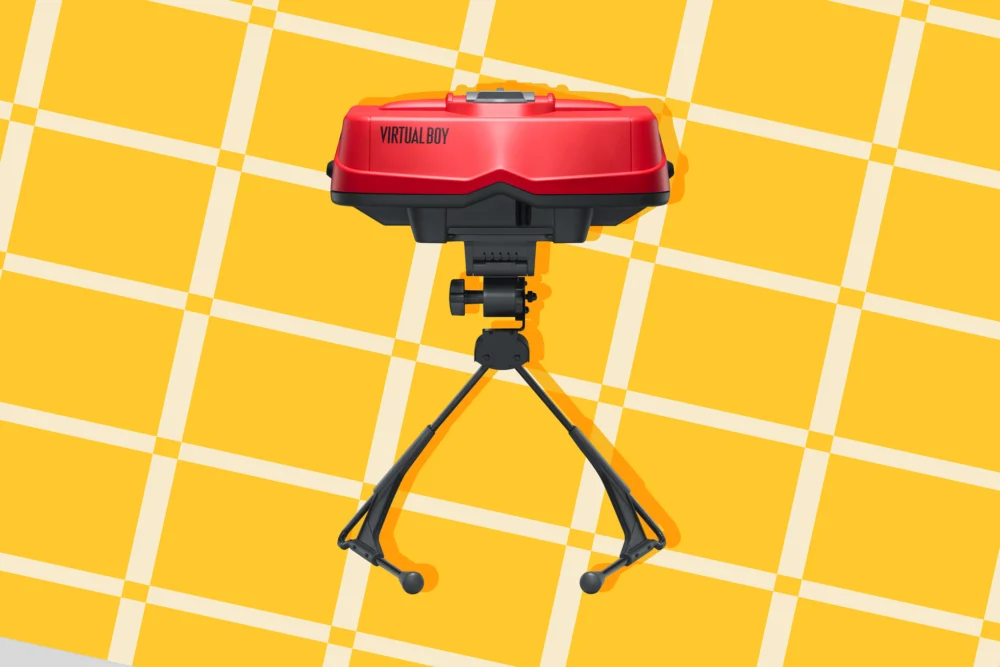
Nintendo, a company celebrated for its enduring legacy of innovation and beloved franchises, has embarked on an unusual endeavor: resurrecting its most infamous commercial failure, the Virtual Boy, as an accessory for its current-generation Nintendo Switch. This ambitious yet peculiar move transforms a hardware anomaly into a costly, physically taxing novelty, demanding significant investment from both finances and physical comfort for a fleeting glimpse into a bygone era of gaming. The resurrection of the Virtual Boy, a system that once languished in obscurity, now serves as a stark reminder of Nintendo’s willingness to revisit its past, even its most ignominious chapters, offering a unique, albeit challenging, experience primarily for its most devoted enthusiasts.
The original Virtual Boy, launched in 1995, was a bold, albeit misguided, attempt to pioneer stereoscopic 3D gaming. Eschewing the traditional television display, it presented players with a pair of bulky, head-mounted goggles connected to a standalone console. This contraption promised a novel visual depth, immersing players in a world rendered exclusively in stark red and black. While conceptually intriguing, the execution proved problematic. The monochromatic palette, intended to simulate depth, was widely criticized for causing eye strain and headaches, while the physical design of the unit was unwieldy and uncomfortable. The console’s brief lifespan, marked by a meager library of fewer than two dozen titles, cemented its status as one of Nintendo’s most significant commercial disappointments.
In a surprising turn of events, Nintendo has integrated the Virtual Boy’s distinct gaming experience into its current Switch Online Classics collection. However, the accessibility of these retro titles is contingent upon the acquisition of a specific accessory, a deliberate choice that mirrors the original hardware’s unique demands. Nintendo offers two options for experiencing these games: a premium, $100 plastic replica of the original Virtual Boy, designed to house a Switch console, and a more economical $25 cardboard headset. Both options necessitate a Nintendo Switch Online subscription, effectively creating a multi-tiered financial barrier to entry for this retro gaming revival.
While the Virtual Boy games can technically be launched in portable mode on the Switch without an accompanying accessory, the visual output is rendered so minuscule as to be practically unplayable. The intended stereoscopic effect, a hallmark of the original hardware, is entirely lost without the specialized lenses. The plastic replica, a meticulously crafted homage to the original Virtual Boy, serves as an elaborate casing. It features a compartment where a Switch console, sans Joy-Con controllers, can be inserted. Upon closing the unit, the Switch powers the Virtual Boy-like presentation, allowing players to gaze through the faux goggles. This system, while eliminating the need for a separate console, replicates the original’s distinctive red and black aesthetic, with promises of additional color palettes becoming available post-launch through software updates.

The physical design of the Switch-based Virtual Boy, while avoiding the direct cranial weight of traditional VR headsets, presents its own set of comfort challenges. The adjustable stand, intended to facilitate an optimal viewing angle, proved to be a source of frustration during testing, with finding a truly comfortable and clear perspective proving elusive. The monochromatic red graphics, a defining characteristic of the original, remain visually demanding, necessitating frequent breaks to mitigate eye and neck strain. This echoes the original’s inherent design flaws, suggesting that the discomfort associated with the Virtual Boy is not merely a relic of its past but an intrinsic element of its resurrected experience.
Despite the inherent challenges, the Virtual Boy’s limited game library offers a surprisingly compelling glimpse into the system’s unique design philosophy in 2026. Seven titles are available at launch, providing a spectrum of experiences. While some, like the first-person robot combat game Teleroboxer, may prove divisive, titles such as 3D Tetris, Galactic Pinball, and the space shooter Red Alarm demonstrate the platform’s potential for engaging, albeit brief, gameplay sessions. Wario Land, a platformer that incorporates forward-projecting enemies to enhance tension, stands out as a notable example of the Virtual Boy’s innovative, albeit sometimes clunky, use of its 3D capabilities. The absence of Mario’s Tennis at launch, particularly given the recent release of Mario Tennis Fever, remains an intriguing omission, especially considering its prominence on the original hardware. The curated selection, while modest, effectively communicates the Virtual Boy’s core appeal: solid gameplay mechanics enhanced by novel 3D gimmicks, best enjoyed in short bursts.
Nintendo’s historical engagement with its own past is often characterized by a selective celebration of its successes while downplaying its commercial missteps. The reappearance of the Virtual Boy, therefore, can be viewed as a curious anomaly, offering a platform for a console that few had the opportunity to experience firsthand. Its integration with the Nintendo Switch, the company’s most commercially successful hardware to date, amplifies this accessibility. However, the overall proposition necessitates a significant investment of resources for a limited return, particularly given its subscription-based model. The $100 accessory, coupled with the ongoing cost of the Switch Online subscription, transforms the Virtual Boy into a potentially expensive paperweight once the service is discontinued or the subscription lapses.
In conclusion, the Nintendo Switch iteration of the Virtual Boy embodies the very essence of its predecessor: an odd, ergonomically challenged, and niche product with limited mainstream appeal. It is a bold, if perplexing, testament to Nintendo’s willingness to revisit its most unconventional creations, offering a unique historical artifact for the dedicated collector and the curious enthusiast. The resurrected Virtual Boy, while a remarkable feat of nostalgic engineering, ultimately serves as a potent reminder that some technological experiments, however intriguing in concept, are best appreciated as historical footnotes, albeit ones that can now be experienced with a significant financial and physical commitment. This revival, while offering a window into a peculiar corner of gaming history, underscores the enduring challenges of making a truly uncomfortable and visually demanding experience accessible and enjoyable in the modern era.




 Lisa Mariana

 Ridwan Kamil