Lisa Mariana
Recent political turbulence placed Prime Minister Sir Keir Starmer at a critical juncture, transforming what began as arguably his most challenging day in office into a surprising demonstration of his capacity for political survival, yet leaving a host of unresolved questions about the durability and direction of his leadership.
The profound instability that gripped Downing Street and the Labour Party on Monday was underscored by candid admissions from senior figures within the government. Energy Secretary Ed Miliband articulated the palpable "peril" faced by the Prime Minister, acknowledging that Labour Members of Parliament had indeed "looked over the precipice," contemplating a dramatic change in leadership. While the immediate question of whether the parliamentary party would continue to back Sir Keir has been temporarily settled, the underlying fissures and strategic uncertainties persist, demanding a deeper examination of the path ahead for the Prime Minister and his administration.
I. Is Sir Keir Starmer’s Position Secure?
The events of Monday illustrate the precarious nature of political power, even for a leader who has recently secured a significant electoral mandate. Sir Keir’s vulnerability became acutely apparent when Anas Sarwar, the leader of Scottish Labour, reportedly prepared to publicly withdraw his support, a move that would have almost certainly triggered a cascade of resignations and a leadership challenge. During this period of intense uncertainty, a conspicuous silence emanated from many cabinet ministers, and a sense of impending resignation permeated even some quarters of Downing Street. This near-collapse serves as a stark reminder of the fragile balance of power within a parliamentary democracy and highlights the scale of the strategic recovery orchestrated by Sir Keir’s inner circle.
The Prime Minister’s team, despite recent personnel changes and operating with interim staff, swiftly transformed the cabinet room into a de facto "war room." From this command center, an intensive rearguard action was launched, involving a concerted effort to contact ministers, instructing them to issue public declarations of support and providing them with carefully crafted statements. A pivotal moment was a terse exchange between Sarwar and Sir Keir, wherein the Prime Minister reportedly confronted his Scottish counterpart with pointed questions regarding the viability of an alternative leadership: "Who would replace him? How would they improve Labour’s prospects? Is there a plan?" These same interrogatives were then strategically deployed by the "war room" to dissuade wavering MPs, effectively exposing the lack of a coherent succession plan and the inherent risks of an immediate coup. This decisive counter-maneuver effectively stemmed the tide, culminating in a public display of unity that, for the moment, stabilized the Prime Minister’s position.
II. The Temporal Nature of Leadership Security
While the immediate threat has receded, the endorsements garnered by Sir Keir on Monday are widely understood, even by those within his closest circle, to be conditional and time-limited. The intense fight for survival, waged hour-by-hour on Monday, has shifted to a battle measured in weeks rather than months. Among certain segments of the party, particularly those who celebrate the scale of the recent electoral victory, there is genuine incredulity and anger at any suggestion of replacing a successful leader. One cabinet minister, speaking anonymously, expressed profound frustration at Sarwar’s intervention, questioning his motives and lamenting the potential for internal strife to undermine the government’s broader objectives.
However, a more pragmatic view prevails among others, who privately acknowledge that their public support is a temporary measure, reserving their ultimate judgment for future performance benchmarks. A significant "pinch point" is anticipated with the upcoming May elections, which now carry heightened political significance beyond their immediate impact on local and devolved governance. The outcomes of these elections will be closely scrutinized as a barometer of public confidence and internal party cohesion. Furthermore, some analysts predict an even earlier crisis point, potentially emerging within three weeks following the Gorton and Denton by-election. This constituency presents a complex challenge for Labour, facing strong competition from both the Green Party on its left flank and Reform UK on its right, making the result a critical test of the government’s electoral resilience and its ability to navigate a multi-polar political landscape.
III. The Strategic Posturing of Wes Streeting
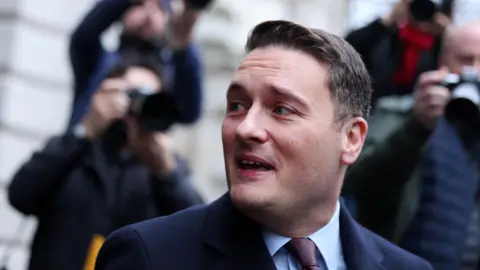
The actions and perceived intentions of Health Secretary Wes Streeting have become a recurring subject of intense speculation within Westminster, particularly among those aligned with the Prime Minister. Streeting’s movements are frequently interpreted through the lens of potential leadership ambitions, fueling an undercurrent of distrust and rivalry. Despite his public declarations of support for the Prime Minister and his stated focus on reducing NHS waiting lists, the perception of his strategic maneuvering persists.
A notable incident involved Streeting’s decision to release his WhatsApp communications with Lord Mandelson outside the established parliamentary protocol for handling such sensitive information, which typically involves the Intelligence and Security Committee. This move, interpreted by some as an assertion of independence or a calculated play for visibility, prompted a swift directive from the Cabinet Office, circulated throughout government, explicitly prohibiting other ministers from similar disclosures. More incendiary, though denied, are claims circulating within the Prime Minister’s camp suggesting Streeting’s influence behind Sarwar’s initial challenge. While reports of a mass resignation of Streeting-aligned ministers before the Parliamentary Labour Party meeting proved unfounded, the sheer volume and nature of such rumors underscore the deeply strained relationship between the Prime Minister and his Health Secretary, highlighting the internal political dynamics that continue to complicate Starmer’s leadership.
IV. The Landscape of Potential Successors
The discussion of alternative leadership figures reveals a complex internal dynamic within the Labour Party, where potential successors are often evaluated more for their perceived weaknesses than their strengths. The names most frequently cited by Labour colleagues include Wes Streeting, the Health Secretary; Angela Rayner, the former Deputy Prime Minister; Shabana Mahmood, the Deputy Prime Minister; John Healey, also a Deputy Prime Minister; and Ed Miliband, the Energy Secretary.
However, a critical observation made by many insiders is that these individuals are often discussed with an emphasis on their drawbacks or perceived flaws rather than their suitability to lead. This lack of a universally compelling, unifying alternative candidate is a significant factor in Sir Keir Starmer’s continued tenure. In the absence of a clear, broadly supported successor, the risks associated with initiating a leadership challenge often outweigh the perceived benefits, thus inadvertently bolstering the incumbent’s position. This dynamic suggests that Starmer’s immediate security is as much a product of the perceived deficiencies of his potential rivals as it is of his own political acumen.
V. Anticipated Adjustments within 10 Downing Street
Despite the recent turmoil, the Prime Minister’s depleted inner team has garnered praise across the party for their effective crisis management during Monday’s challenge. This unexpected success in shoring up the leadership may afford Sir Keir the luxury of time in meticulously selecting permanent appointees for key roles within his Downing Street operation. The effectiveness of this interim team during a moment of profound crisis could influence the profile and capabilities sought for future permanent positions.
One significant change expected in the near future is the departure of Sir Chris Wormald, the Cabinet Secretary and head of the civil service. His appointment in December 2024 reportedly raised immediate concerns within the upper echelons of government regarding his suitability for the Prime Minister’s ambitious agenda to "rewire the state." The emphasis on this particular policy objective suggests a desire for a civil service leader capable of driving transformative change, a characteristic that Sir Chris was apparently perceived to lack by some. Having already overseen a significant turnover of key personnel, including those he personally appointed, the onus is now firmly on Sir Keir to demonstrate his capacity to build a stable, effective, and loyal team that can translate his vision into tangible policy outcomes and ensure the long-term stability of his administration.
VI. The Potential for a Shift in the Government’s Agenda
Perhaps the most pivotal question emerging from this episode concerns the future direction of the government’s policy agenda. Ed Miliband’s call for the Prime Minister to be "bolder" reflects a growing sentiment among a significant number of Labour MPs who advocate for a more ideologically left-leaning approach. Historically, certain aspects of Sir Keir’s agenda have presented difficulties for the parliamentary party, evidenced by instances where he has been compelled to alter course on controversial issues. The recently departed chief of staff, McSweeney, often served as a lightning rod for these policy disputes. The coming period will reveal whether Sir Keir’s decision-making can truly be decoupled from the influence of his former chief of staff, or if these policy tensions are inherent to his leadership style and the broader ideological currents within the party.
The identity of the new permanent chief of staff will undoubtedly play a crucial role in shaping the government’s strategic direction and its capacity to manage internal dissent. While Sir Keir’s impassioned address to the Parliamentary Labour Party (PLP) on Monday evening, where he vowed to "fight against Reform" and "fight for the country that I love," was met with rapturous applause, it does not erase the looming presence of potential policy flashpoints. Forthcoming reforms to the Special Educational Needs and Disabilities (SEND) system, for example, represent just one area where the government could face significant internal opposition and public scrutiny. As one skeptical Labour MP remarked, "He says he’s won every fight he’s ever been in. Not true — he’s lost every fight he’s ever had with the PLP. And that situation is untenable." This observation encapsulates the ongoing tension between the Prime Minister’s stated resolve and the practical realities of governing with a diverse and sometimes fractious parliamentary party, suggesting that while he has survived this immediate challenge, the path to stable, unchallenged leadership remains fraught with significant strategic and ideological hurdles.


 Aura Kasih
 Ridwan Kamil