Lisa Mariana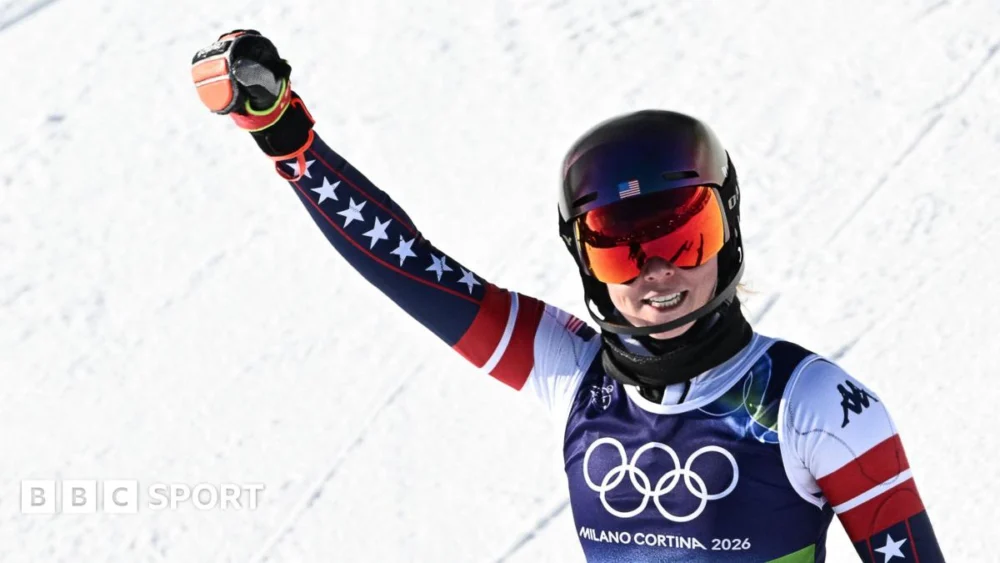
In an display of unparalleled technical precision and strategic command, Mikaela Shiffrin, the American alpine skiing phenom, secured her latest Olympic gold medal in the women’s slalom, further solidifying her monumental legacy as the preeminent figure in the sport’s annals. This victory, achieved with a commanding margin, underscores a career defined by consistent excellence and a relentless pursuit of perfection, cementing her position at the zenith of alpine skiing history.
The highly anticipated slalom event saw Shiffrin, now 30 years old, deliver a performance that combined aggressive skiing with impeccable control, leaving her competitors struggling to match her pace. Her overall time of 1 minute, 39.10 seconds placed her a significant 1.50 seconds ahead of the silver medalist, a remarkable differential in a discipline often decided by mere hundredths of a second. This triumph marks her third Olympic gold medal, a testament to her enduring prowess and adaptability across more than a decade at the sport’s pinnacle, coming twelve years after her initial Olympic gold in Sochi at the age of 18.
A Decisive First Run Establishes Unassailable Lead
From the outset, Shiffrin signaled her intent to dominate. In the critical first run, she navigated the challenging course with characteristic fluidity and precision, clocking an impressive time of 47.13 seconds. This initial effort immediately created a substantial gap, with Germany’s Lena Duerr, a formidable competitor, being the only skier to finish within one second of Shiffrin, trailing by 0.82 seconds. The conditions on the course, a combination of firm snow and varying light, demanded absolute focus and technical mastery, qualities Shiffrin displayed in abundance. Her line selection was aggressive, yet impeccably clean, allowing her to carry maximum speed through each gate transition. The opening run effectively set the stage, placing her in an commanding position and exerting immense pressure on the rest of the field.
The second run typically involves a reverse start order based on the first run’s results, meaning the fastest skiers from the initial descent go last. This setup intensifies the drama, as leading athletes have the advantage of knowing the times to beat. For Duerr, tasked with closing the substantial deficit, the pressure proved overwhelming. Early in her second descent, she made a critical error, straddling the first gate, which resulted in an immediate disqualification. This unfortunate incident for Duerr effectively removed the primary challenger from medal contention, transforming Shiffrin’s impending final run into a victory lap, albeit one still requiring professional execution.
A Controlled Final Descent to Gold
With Duerr out of the running and a significant lead already established, Shiffrin’s final run became a demonstration of controlled excellence rather than a desperate charge. She completed the course in 51.97 seconds, a time that, while not her fastest, was more than sufficient to secure the gold. This calculated approach underscored her experience and race intelligence; rather than risking an error in pursuit of an even wider margin, she focused on a clean, secure run to prevent any last-minute mishaps. The crowd, anticipating her victory, erupted as she crossed the finish line, celebrating a performance that was both dominant and flawlessly managed.
The battle for the remaining podium spots intensified following Duerr’s exit. Ultimately, Switzerland’s Camille Rast delivered a strong performance to claim the silver medal, marking a significant achievement in her career. Sweden’s Anna Swenn Larsson secured the bronze, adding another prestigious accolade to her own impressive resume. Both athletes showcased remarkable resilience and skill, navigating the demanding slalom course under immense pressure to earn their Olympic hardware.
A Career Defined by Unprecedented Milestones
Mikaela Shiffrin’s journey to this latest Olympic gold has been a narrative of relentless progression and record-breaking achievements. Her career began its meteoric rise in the early 2010s, quickly establishing her as a prodigious talent. Her debut Olympic gold in slalom at the Sochi 2014 Games, at just 18 years old, heralded the arrival of a generational athlete. Since then, she has amassed an unparalleled collection of World Cup victories, surpassing legends in both overall wins and discipline-specific triumphs. Her versatility across multiple alpine disciplines, including giant slalom, super-G, and downhill, further distinguishes her, demonstrating a comprehensive mastery of the sport rarely seen.
The demanding nature of slalom, with its rapid-fire gate transitions and requirement for absolute precision at high speeds, makes consistent dominance in the discipline particularly challenging. Shiffrin’s continued success in slalom, spanning over a decade, is a testament to her technical evolution and unwavering commitment to refining her craft. She has navigated periods of immense pressure, personal challenges, and the physical toll of elite competition, consistently emerging stronger and more determined. This gold medal, twelve years after her first, not only adds to her Olympic tally but also highlights her remarkable longevity and ability to maintain peak performance over an extended period in a physically gruelling sport. Her career trajectory serves as a blueprint for sustained excellence, inspiring countless aspiring athletes globally.
Analytical Breakdown: The Anatomy of Dominance
Shiffrin’s supremacy in alpine skiing, particularly in slalom, can be dissected into several key components:
-
Technical Prowess and Precision: Her fundamental technique is arguably the most refined in the sport’s history. She possesses an extraordinary ability to maintain a perfectly balanced stance over her skis, allowing for incredibly efficient edge changes and optimal pressure application through turns. This precision minimizes energy loss and maximizes speed, especially crucial in the tight, rhythmic turns of slalom. Her line choice is consistently aggressive, taking the shortest possible path while maintaining control, a delicate balance that few can execute with her consistency.
-
Mental Fortitude and Strategic Acumen: Beyond the physical, Shiffrin exhibits exceptional mental resilience. The pressure of Olympic competition, coupled with the weight of expectations as the sport’s greatest, is immense. Her ability to remain calm, focused, and execute her race plan under these conditions is a defining characteristic. Her strategic approach to races, adapting to varying snow conditions, course sets, and competitor performances, demonstrates a high level of race intelligence. The "exhibition run" scenario, where she could have eased off, instead showcased her disciplined approach to secure the win without unnecessary risk.
-
Physical Conditioning and Longevity: Sustaining a career at the elite level for over a decade requires meticulous physical preparation. Shiffrin’s conditioning allows her to generate immense power, absorb the forces of high-speed turns, and maintain endurance over two demanding runs. Her focus on injury prevention and recovery has been paramount in ensuring her career longevity, allowing her to compete at the highest level well into her thirties, an age where many alpine skiers begin to consider retirement.
-
Equipment Optimization: The synergy between athlete and equipment is vital in alpine skiing. Shiffrin works closely with her equipment sponsors to fine-tune skis, bindings, boots, and poles to perfectly match her technique and the specific demands of each discipline. This meticulous attention to detail ensures that her equipment provides the optimal platform for her performance, contributing to her marginal gains.
Implications: Reshaping the Landscape of Alpine Skiing
This latest Olympic gold medal carries profound implications for Mikaela Shiffrin’s legacy and the broader sport of alpine skiing:
-
Undisputed GOAT Status: While her status as one of the greatest was already firmly established, this gold medal further solidifies her claim as the undisputed greatest alpine skier of all time, regardless of gender. Her ability to win across multiple Olympic cycles and disciplines, combined with her World Cup records, places her in a league of her own. This achievement transcends mere statistics, representing a sustained period of unparalleled excellence.
-
Inspiration for Future Generations: Shiffrin’s journey serves as a powerful source of inspiration for aspiring skiers worldwide, particularly young women. Her combination of talent, hard work, resilience, and sportsmanship provides a compelling role model. Her impact extends beyond the slopes, promoting dedication, perseverance, and grace under pressure.
-
Enhanced Commercial Value and Global Visibility: Olympic gold medals significantly boost an athlete’s commercial appeal and global recognition. Shiffrin’s marketability will undoubtedly reach new heights, attracting further sponsorship opportunities and elevating the profile of alpine skiing on a global scale. Her narrative of triumph and longevity resonates with a broad audience, far beyond the traditional winter sports fan base.
-
Competitive Benchmark: Shiffrin’s continued dominance pushes the entire competitive field to elevate their game. Rivals are compelled to analyze her technique, training methodologies, and mental approach in an effort to close the gap. This perpetual pursuit of excellence by one athlete drives innovation and raises the overall standard of competition in women’s alpine skiing.
Future Outlook: Beyond the Slalom Gates
Even with an already storied career, the question arises: what remains for Mikaela Shiffrin to achieve? Her drive suggests that retirement is not an immediate consideration, and there are still potential milestones within reach. She may continue to pursue additional World Cup overall titles, challenge for more discipline globes in events like giant slalom or super-G, or even target further Olympic appearances. Her presence in any race immediately designates her as a favorite, and her pursuit of perfection indicates she will continue to push her own boundaries.
Beyond her competitive career, Shiffrin is poised to remain a pivotal figure in alpine skiing. Her deep understanding of the sport, coupled with her experience at the highest level, makes her an ideal candidate for roles as an ambassador, mentor, or even a coach. Her influence could shape future generations of athletes, contributing to the development of training techniques, equipment innovation, and the strategic evolution of the sport. Her enduring legacy will not only be defined by the medals she has won but also by the profound impact she has had on alpine skiing’s trajectory and global appeal. Her latest Olympic gold is not merely another medal; it is a reaffirmation of a truly historic career, one that continues to redefine the limits of human performance in winter sports.




 Ridwan Kamil
 Aura Kasih
 Ayu Aulia