
 Lisa Mariana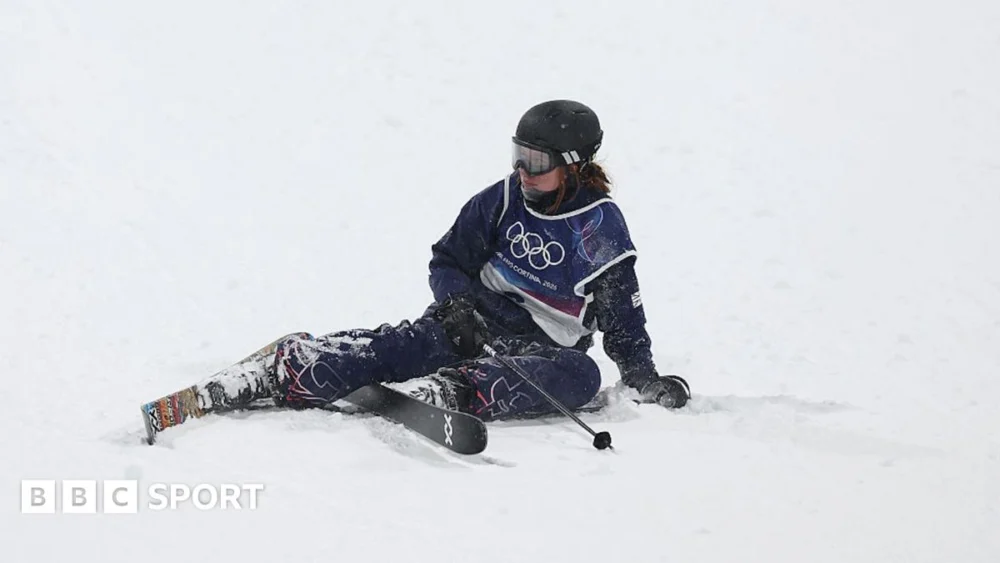
British freestyle skiing talent Kirsty Muir concluded her 2026 Winter Olympic campaign with a second consecutive fourth-place finish, narrowly missing a podium position in the highly competitive Big Air discipline, underscoring the razor-thin margins at the pinnacle of winter sports. The 21-year-old athlete, representing Great Britain, accumulated a total of 174.75 points across her two highest-scoring jumps, positioning her just 3.5 points adrift of Flora Tabanelli, the Italian competitor who secured the bronze medal. This result echoed her performance precisely one week prior in the slopestyle event, where she was separated from a bronze medal by a mere 0.41 points, highlighting a recurring narrative of exceptional performance often just shy of Olympic hardware.
The narrative of Kirsty Muir’s Olympic journey is one of consistent progression and burgeoning talent. Hailing from Aberdeen, Scotland, Muir first burst onto the international scene with promising junior results before making her senior Winter Olympic debut at the Beijing 2022 Games. There, she demonstrated her potential by reaching the finals in both slopestyle and Big Air, finishing fifth and eighth respectively. Her trajectory since then has been marked by a diligent refinement of her technical repertoire and a growing competitive maturity. By 2026, she arrived in Livigno not merely as a participant but as a legitimate contender, a testament to her dedication and the strategic investment in her development by Team GB’s winter sports programmes. Her consistent qualification for finals and her ability to execute high-difficulty tricks under pressure had positioned her as one of the sport’s rising stars, making her near-misses in Livigno all the more poignant for observers and her support team.
The Big Air discipline itself is a spectacle of audacious acrobatics and precision. Competitors launch themselves from an enormous jump, performing complex aerial maneuvers that involve multiple rotations along various axes (spins, flips, or a combination thereof) before landing cleanly. The judging criteria are multifaceted, encompassing air time, amplitude (height), technical difficulty of the trick, execution (style, grabs, fluidity), and landing stability. Athletes perform multiple jumps, with their best two scores contributing to their overall total, demanding not just individual brilliance but also strategic planning regarding trick selection and risk assessment. The event is a high-stakes arena where a fraction of a point can delineate success from disappointment, as Muir’s experience vividly illustrates.
The Livigno Snow Park, nestled within the Italian Alps, provided a challenging backdrop for the Big Air final. Prior to the competition, a heavy blizzard descended upon the venue, forcing a delay of over an hour. Such weather phenomena are not uncommon in alpine settings, but their impact on high-performance sports is significant. Reduced visibility, altered snow conditions on the takeoff and landing zones, and the sheer psychological pressure of an extended wait can all affect an athlete’s focus and physical readiness. For a sport like Big Air, where precision timing and spatial awareness are paramount, adverse weather introduces an additional layer of complexity, demanding exceptional adaptability from the competitors. Adding to the pre-competition tension, two prominent Swiss skiers, including the highly-favoured Mathilde Gremaud, were forced to withdraw at the last minute due to injury, ostensibly opening up the competitive field. Muir, having qualified strongly in fourth position, was well-placed to capitalise on these developments.
The final commenced under an atmosphere of palpable anticipation, with the initial round setting an exceptionally high standard. Four competitors immediately posted scores exceeding 90.00 points, signaling an elite display of skill and an intensely competitive environment. This early surge of high scores placed Muir in a precarious seventh position after her first attempt, a stark reminder of the unforgiving nature of Olympic finals where initial missteps can prove costly. The pressure intensified significantly, demanding a bold and flawless response in her subsequent runs.
Muir’s second jump was a masterclass in strategic execution and technical prowess. Recognizing the imperative to elevate her standing, she opted for a highly complex 1620 trick, involving four and a half rotations. Her flawless execution of this maneuver yielded a score of 93.00 points, the highest of the second run. This exceptional performance not only demonstrated her technical capability but also her mental fortitude under extreme pressure, catapulting her dramatically up the leaderboard into a provisional silver medal position. This moment underscored the dynamic nature of Big Air, where fortunes can shift instantaneously based on a single, perfectly executed trick.
The competitive landscape continued its volatile trajectory. Eileen Gu, the defending Olympic champion from China, who was participating in a Big Air event for the first time since her triumph four years prior, had surprisingly struggled with her second attempt, momentarily falling off the pace. However, in a display of champion-level resilience, Gu delivered a powerful final jump that significantly improved her score, displacing Muir from the silver medal position down to third. Gu’s celebration, indicative of her belief in a secured medal, underscored the high stakes and the immediate emotional responses in such a fluid competition. Yet, the final was far from over, with several athletes still poised to make their ultimate attempts.
The penultimate stages of the final saw further dramatic shifts. Flora Tabanelli, the Italian hopeful, executed a phenomenal final jump, achieving a score of 94.25 points. This was the highest individual score recorded during the entire final and moved her tantalizingly close to Gu, just 0.75 points shy of the silver medal, while simultaneously nudging Muir down to fourth place. This sequence of events placed immense pressure on Muir for her third and final jump, with the podium now requiring another exceptional, and potentially unprecedented, performance.
The moment of Muir’s final jump was fraught with tension. Pausing at the apex of the Big Air structure, she engaged in a crucial discussion with her coach, weighing the risks and rewards of her final strategy. The decision was made to attempt another 1620 trick, but with a different grab, signifying an increased level of difficulty and a calculated gamble for the podium. Despite her courage and commitment to push the boundaries, Muir was unable to land the trick cleanly. The crash, while denying her a medal, was a consequence of her unwavering determination to pursue the highest possible outcome, rather than settling for a safer, lower-scoring jump that would not have been sufficient. Her subsequent reflection, "I just had to go for it, and yes I crashed out, but I’m still proud of myself," encapsulates the ethos of elite sport, where the pursuit of excellence often entails embracing high risks.
The broader implications of Muir’s performance extend beyond individual disappointment. For Team GB, her dual fourth-place finishes underscore both the progress of its freestyle skiing program and the persistent challenge of converting strong competitive positions into Olympic medals. The consistent proximity to the podium suggests that the fundamental components for success – athlete talent, coaching, and support infrastructure – are largely in place. However, the fractional differences separating Muir from her competitors highlight the microscopic margins that define Olympic success. It implies a need for further refinement in execution, perhaps an even greater emphasis on trick innovation, or an enhanced focus on mental preparation to manage the immense pressure of those decisive final moments.
The competitive landscape of women’s freestyle skiing is characterized by rapidly evolving technical standards. The increasing prevalence of 1620s and even higher rotation tricks, combined with meticulous execution, raises the bar continuously. Megan Oldham’s gold medal, alongside Gu’s silver and Tabanelli’s bronze, showcases a field where a combination of consistent high-difficulty execution and clutch performances defines success. Oldham’s ability to maintain her composure and deliver across multiple runs, and Gu’s capacity for a late-game comeback, are illustrative of the comprehensive skill sets required at this level.
Looking ahead, Kirsty Muir, at 21, possesses significant potential for future Olympic cycles. Her repeated near-misses, while agonizing in the immediate aftermath, also serve as invaluable learning experiences. The ability to perform at such a high level, to strategically adapt during a competition, and to demonstrate the courage to attempt new, challenging tricks are all hallmarks of a future champion. The psychological resilience required to absorb these close calls and channel them into renewed determination will be crucial. For Muir, the focus will likely shift to further enhancing her consistency, perhaps introducing even more complex variations of existing tricks, and critically, perfecting her landings under the most extreme pressure.
In conclusion, Kirsty Muir’s performance at the Livigno 2026 Winter Olympics, while not yielding a medal, represented a significant statement of her competitive capabilities and the ongoing ascent of British freestyle skiing. Her dual fourth-place finishes in Big Air and slopestyle were a testament to her talent, courage, and the fine margins that separate Olympic glory from near-misses. The strategic decisions made in the heat of competition, the impact of external factors like weather, and the relentless pursuit of increasingly difficult tricks all contributed to a compelling narrative of elite sport. As the global standard for freestyle skiing continues to escalate, Muir’s journey embodies the spirit of an athlete pushing the boundaries, with the ultimate prize seemingly within grasp for future competitions.




 Ridwan Kamil
 Aura Kasih

 Ayu Aulia