Aura Kasih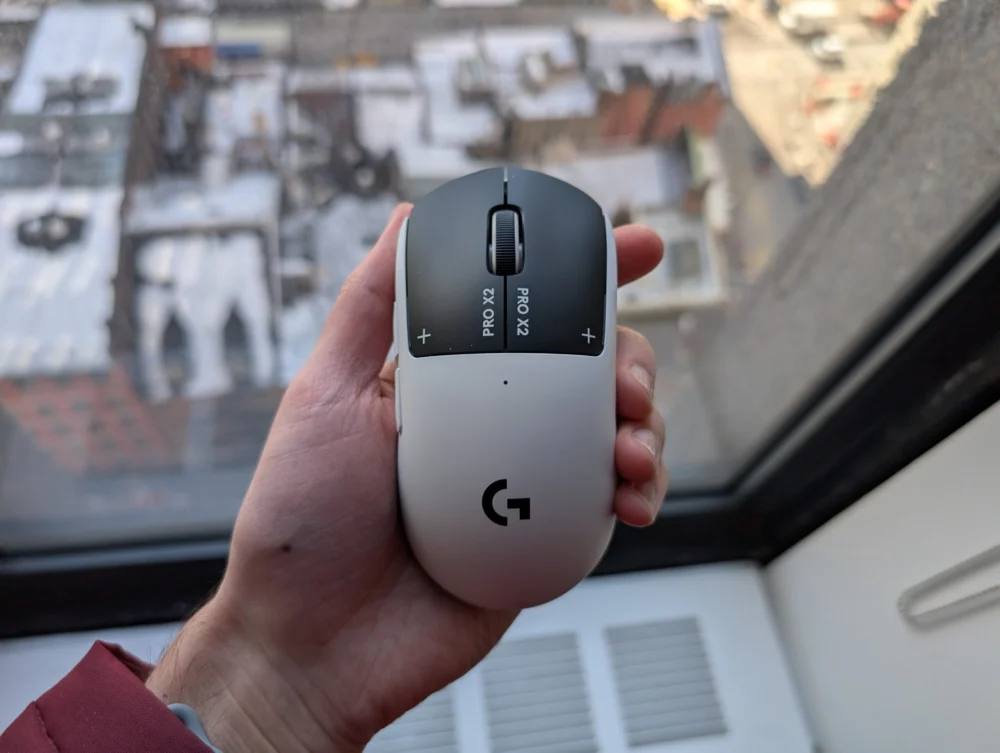
Logitech has unveiled a groundbreaking gaming peripheral, the G Pro X2 Superstrike, poised to redefine the standards of responsiveness and customization in the competitive gaming landscape. This innovative mouse introduces analog sensor technology, a feature previously exclusive to high-end enthusiast keyboards, bringing a new dimension of tactile and performance enhancements to the gaming mouse market.
The technological leap embodied by the G Pro X2 Superstrike lies in its pioneering use of analog sensors. Unlike traditional microswitches that operate on a binary on/off principle, these advanced sensors utilize induction to register input. This fundamental difference allows for significantly faster actuation, a critical advantage in fast-paced gaming scenarios where milliseconds can determine victory or defeat. The implications of this technological integration extend far beyond mere speed, unlocking a suite of sophisticated features designed to cater to the nuanced demands of professional and serious amateur gamers.
One of the most impactful advancements is the incorporation of a "rapid trigger" setting. Popularized by Hall effect keyboards, this feature dramatically reduces the reset time between individual clicks. In essence, it allows the mouse buttons to register a new input almost instantaneously after being released, creating a fluid and continuous input stream. This capability is particularly beneficial in games requiring rapid, successive actions, such as precise aiming adjustments or rapid-fire weapon deployment. The ability to "rapid fire" through digital inputs without the mechanical limitations of traditional switches offers a tangible performance edge.
Furthermore, the analog sensors empower users with an unprecedented level of control over button actuation. Gamers can now precisely calibrate the pressure required to register a click. This customization ranges from an almost imperceptible touch, ideal for players seeking the absolute fastest response, to a more deliberate press, offering a tactile safeguard against accidental inputs for those with a tendency for "itchy trigger fingers." This fine-tuning capability ensures that each gamer can tailor the mouse’s responsiveness to their unique playstyle and physiological preferences, moving beyond a one-size-fits-all approach.

A particularly revolutionary aspect of the Superstrike is its departure from conventional physical switches in favor of advanced haptic actuators beneath the main buttons. These haptics are engineered to meticulously simulate the auditory and tactile sensation of a traditional click with remarkable fidelity. Crucially, unlike the static feedback of some trackpad technologies, the Superstrike’s primary buttons maintain a satisfying physical travel and return, mimicking the familiar feel of a well-engineered mouse button. This sophisticated simulation provides essential feedback without compromising on the underlying analog performance.
The customization options extend to the haptic feedback itself. Users can adjust the intensity of the simulated click, opting for a more pronounced sensation that may come at the cost of battery longevity, or conversely, opt for silent operation by disabling the haptics altogether. This allows for a personalized sensory experience, catering to those who rely on auditory and tactile cues for confirmation of their actions, as well as those who prefer a purely silent, performance-focused interaction. The ability to fine-tune this aspect of the user experience further solidifies the Superstrike’s position as a highly adaptable gaming tool.
The gaming peripheral market has seen a proliferation of features over the years, many of which have offered marginal, if any, practical benefits in real-world competitive gaming. Technologies such as ultra-lightweight designs, extremely high polling rates, and early iterations of optical sensors have often been met with skepticism regarding their tangible impact on gameplay. However, the Logitech G Pro X2 Superstrike appears to represent a genuine evolutionary leap, integrating innovations that demonstrably enhance performance and user experience without resorting to superficial gimmicks. While its external design may bear a resemblance to Logitech’s established Pro series, the internal technological advancements are what truly set it apart.
The introduction of analog sensors and adjustable actuation distances in the Superstrike positions it as a far more compelling proposition than comparable Hall effect technology found in gaming keyboards. While keyboard implementations offer similar speed benefits, the Logitech solution’s sophisticated haptics provide a crucial layer of nuanced feedback that traditional keyboard switches often lack. Hall effect switches, with their inherently light and almost frictionless actuation, can be difficult to master, and their characteristic feel is largely unalterable. The Superstrike, however, offers a more adaptable sensory profile, allowing users to fine-tune the click feel to their preference, bridging the gap between raw performance and tactile satisfaction.
Initial impressions from extended use in both professional work environments and gaming contexts suggest a significant impact on gameplay. While the benefits of advanced haptics and analog sensors are less pronounced in everyday productivity tasks such as navigating web browsers, their utility becomes readily apparent in demanding gaming applications. In titles requiring constant input, such as those involving resource management, rapid ability deployment, and precise aiming, the ability to reduce haptic intensity and actuation distance for critical buttons significantly enhances the player’s ability to perform complex actions fluidly. The rapid trigger feature, in particular, proves invaluable for characters or weapon types that rely on burst firing or rapid successive attacks, allowing for a more immediate and responsive engagement with in-game targets. The observed improvements in responsiveness were noted to be more pronounced with characters capable of sustained automatic fire compared to those employing single-shot projectiles, highlighting the nuanced impact of the technology across different gameplay mechanics.

The concept of increasing actuation distance might seem counterintuitive for a performance-oriented mouse. However, this feature could prove beneficial in specific genres, such as extraction shooters, where deliberate and controlled actions are paramount to avoiding detection and ensuring successful outcomes. The ability to require more pressure for a click could act as a deterrent against accidental discharges or premature actions, particularly for players who experience heightened nervousness during critical in-game moments. This flexibility underscores the thoughtful design philosophy behind the Superstrike, offering tailored solutions for diverse gaming needs.
The broader reception of the Superstrike has been overwhelmingly positive, with many reviewers and content creators highlighting its transformative potential. One particularly insightful observation posits that the mouse’s enhanced responsiveness and advanced sensors have a "de-aging" effect on a gamer’s performance, enabling them to recapture the speed and agility of their prime. This sentiment is rooted in the natural decline of reaction times with age, a factor that often contributes to the predominance of younger players in professional esports. The Superstrike’s appeal is evident in its adoption by emerging esports talents, such as Yigox, who recently leveraged the mouse to achieve a Guinness World Record for the most mouse clicks in one minute, registering an impressive 760 clicks. This feat not only validates the mouse’s speed capabilities but also demonstrates its potential for pushing the boundaries of human-computer interaction in competitive gaming.
It is important to clarify that the Logitech G Pro X2 Superstrike is not a panacea for improving gaming skills. It does not magically enhance aiming accuracy or provide shortcuts to victory. Instead, its value lies in its ability to optimize existing skills by providing a more responsive and customizable interface. For players who are dedicated to practice and improvement, the Superstrike’s advanced features—its faster actuation, customizable click feedback, and rapid trigger functionality—can provide a critical edge, allowing them to maintain peak performance and compete more effectively against increasingly skilled opponents. The integration of these technologies represents a significant step forward in peripheral design, offering a tangible benefit to serious gamers seeking to maximize their potential. The implications of this technology extend beyond current gaming trends, suggesting a future where gaming peripherals are increasingly sophisticated and tailored to the individual. As the esports industry continues to grow and evolve, devices like the Superstrike will undoubtedly play a pivotal role in shaping the competitive landscape, pushing the boundaries of human-machine synergy.




 Lisa Mariana

 Ridwan Kamil