
 Aura Kasih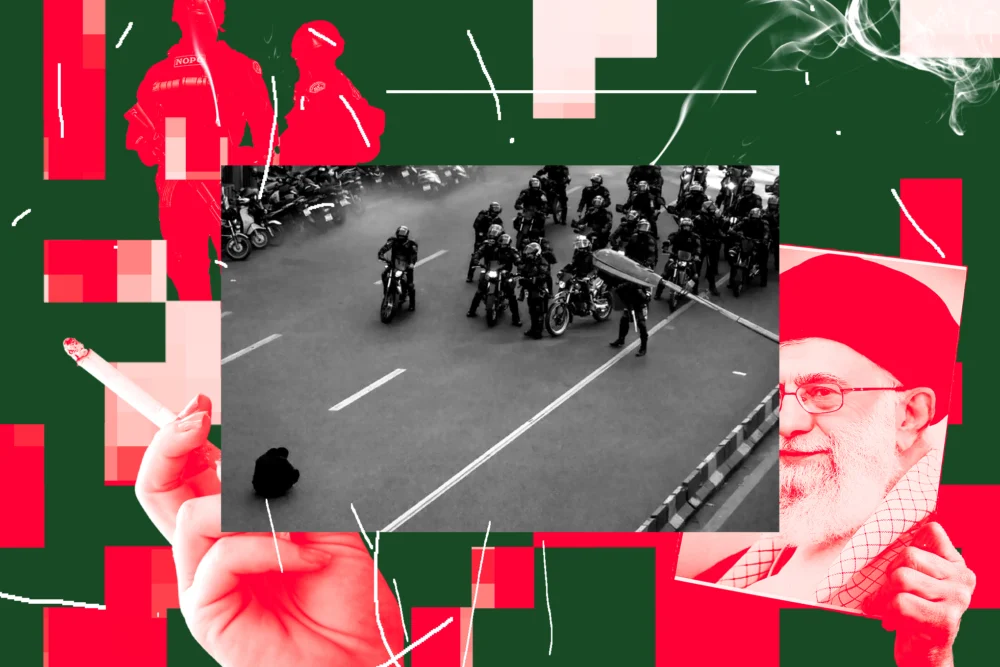
In the early days of January, as a wave of widespread public dissent erupted across Iran, the regime initiated an unprecedented internet shutdown, enacting the longest period of digital isolation in the nation’s modern history. This drastic measure, intended to quell the burgeoning protests and stifle the flow of information, proved to be a grim testament to the government’s fear of an interconnected populace, while simultaneously highlighting the profound impact of technological control on human rights and historical memory. The blackout, a digital iron curtain descending upon a nation, served not only to impede the spread of protest movements within Iran but also to obscure the gravity of the unfolding events from the global stage.
Beneath the veil of enforced digital silence and the jamming of signals, a brutal campaign of state-sponsored violence has continued unabated. The true scale of the human cost remains tragically obscured, with estimates of the death toll ranging wildly from a low of 3,000, acknowledged with reservations by the Iranian state itself, to a staggering 30,000. Even at the most conservative end of these figures, the recent weeks represent one of the most violent suppression of uprisings in contemporary global history. Understanding the intricate tapestry of events unfolding within Iran, a nation with a complex historical narrative and a constantly evolving technological landscape, necessitates a deep dive into the mechanics of state control and the resilience of civil society.
To gain critical insight into the present situation, we turn to Mahsa Alimardani, an associate director at WITNESS, a prominent organization dedicated to the intersection of technology and human rights. Alimardani, a seasoned researcher and advocate in the digital rights sphere with a particular focus on Iran since 2012, offers a nuanced perspective on the current digital climate and the complex relationship between technology and authoritarian regimes. Her analysis illuminates the strategic deployment of digital infrastructure as both a tool of oppression and a potential vector for resistance.
The Current State of Internet Access in Iran: A Fragile Resumption
As of the weekend of January 24th, there has been a discernible, albeit precarious, resumption of internet connectivity within Iran. This partial restoration, however, raises concerns of potentially misleading perceptions of a return to normalcy. Current data suggests that connectivity hovers around 30-40% on certain network infrastructures, with significant inconsistencies and intermittent service. Encouragingly, some circumvention tools have begun to regain functionality, offering a sliver of hope for unhindered digital access. The experience of individuals within Iran underscores this fragmented reality; one user reported an unexpected FaceTime call functioning without a VPN, a momentary glitch in the otherwise heavily controlled digital environment. These sporadic openings, the reasons for which remain unclear, cast a shadow of uncertainty over the prospects for sustained connectivity.
The significant internet shutdown, commencing on January 8th, coincided with a surge in protest activity, marking the longest in Iran’s recorded history. This digital suppression was tragically mirrored by a record number of casualties among protesters, a stark reminder of how technological tools can be perverted to facilitate state-sanctioned atrocities. The deliberate denial of information access directly correlates with the regime’s ability to operate with impunity, allowing for the perpetuation of violence with minimal external scrutiny.
The Iranian Government’s Deep-Seated Fear of Unfettered Internet Access
The Iranian government’s profound apprehension regarding unfettered internet access is rooted in a historical understanding of information control and its role in maintaining political power. The mass executions of political prisoners in 1988, a horrific event that transpired during an era of heavily centralized and state-controlled media, serves as a stark historical precedent. In the absence of widespread digital communication, the memory and documentation of such atrocities were significantly curtailed, rendering them obscure to subsequent generations within Iran. This historical context highlights the transformative power of the internet in enabling documentation, fostering accountability, and challenging state narratives. The ability for citizens to witness and record human rights abuses poses a direct and existential threat to regimes that rely on secrecy and the suppression of information.
The pattern of severe crackdowns, particularly internet shutdowns, has consistently preceded periods of intense state violence. The week-long internet blackout in 2019, under the cover of which an estimated 1,500 people were reportedly killed, exemplifies this correlation. The primary objective of such shutdowns is to dismantle networks of communication and mobilization, thereby preventing both the organization of dissent and the systematic documentation of human rights violations. This denial of the scale and severity of their actions is a cornerstone of the regime’s strategy. In a nation where free polling and independent media are non-existent, and where foreign journalists operate under strict surveillance, the role of citizen-generated content and independent digital verification becomes paramount. The internet, therefore, represents a critical lifeline for the dissemination of authentic information and the pursuit of truth in a tightly controlled information ecosystem.
The Evolving Digital Landscape: From Telegram to Circumvention Tools
The digital landscape in Iran has been characterized by a continuous cat-and-mouse game between the state’s censorship apparatus and the ingenuity of its tech-savvy populace. Since 2017-2018, Iran has experienced periodic waves of protests, each accompanied by evolving forms of digital restriction and regulatory frameworks. In 2017, the messaging application Telegram emerged as a dominant platform, effectively serving as a virtual internet for many Iranians, facilitating news dissemination, social interaction, and even e-commerce. Its ubiquity and efficiency, particularly in low-bandwidth environments, made it indispensable. However, the regime’s response was to block Telegram in 2018, recognizing its potent role in protest mobilization as a significant threat.
This led to a subsequent shift towards platforms like Instagram and WhatsApp, which remained accessible for a period. While Instagram initially served primarily as a social and entertainment platform, it gradually became more politicized following the ban on Telegram. The "Woman, Life, Freedom" movement in 2022 witnessed a further escalation, with both Instagram and WhatsApp being blocked, underscoring the regime’s increasing intolerance for any digital space that could foster dissent.
Consequently, the reliance on Virtual Private Networks (VPNs) has become a critical survival mechanism for many Iranians. The government has invested substantial resources in attempting to disable VPN services, leading to a constant cycle of innovation and adaptation within the VPN community. Both for-profit and non-profit VPN initiatives are engaged in this perpetual struggle, developing new protocols and countermeasures as existing ones are rendered obsolete. The average Iranian user often maintains multiple VPN applications, prepared to switch to an alternative when one fails, demonstrating a remarkable level of digital resilience and resourcefulness in the face of pervasive censorship.
Technology as an Enabler of Repression: Beyond Digital Controls
While the technological empowerment of citizens is a significant challenge for the regime, technology also serves as a potent instrument of repression, operating on multiple levels. Beyond the direct censorship of internet access, the state employs various forms of physical coercion and psychological manipulation to maintain control. The fear instilled by the state is so profound that individuals have reportedly refrained from reporting the deaths of loved ones killed during protests due to the intimidating and fraught process of reclaiming bodies.
Furthermore, the regime actively floods the information space with misinformation and propaganda, aiming to sow doubt and confusion. This information warfare predates the internet but has been amplified exponentially by digital technologies. Iran’s complex geopolitical landscape, marked by historical interventions and ongoing regional rivalries, further muddies the information environment, allowing the regime to conflate legitimate dissent with foreign-backed operations. The legacy of the 1953 CIA and MI6-backed coup, which overthrew a democratically elected government, continues to fuel suspicion and provides a historical backdrop for narratives of foreign interference.
The strategic partnership between Iran and the Syrian dictatorship, and their involvement in disinformation networks alongside Russia, further complicates the information ecosystem. The Syrian civil war, a breeding ground for sophisticated disinformation campaigns, saw the deletion of hundreds of state-backed accounts by major social media platforms. This history underscores the regime’s capacity to weaponize information on a global scale. The regime’s sophisticated propaganda efforts have even sought to manipulate narratives around sensitive issues like the Palestinian cause, attempting to frame Iranian protesters as anti-Islamist provocateurs rather than individuals seeking liberation from an oppressive regime. This involves presenting distorted portrayals of events, such as protests targeting mosques, without providing the crucial context that these religious institutions often serve as operational bases for paramilitary forces.
The Rise of AI in Information Warfare and the Challenge of Verification
The advent of Artificial Intelligence (AI) has introduced a new and formidable dimension to the regime’s information control strategies, amplifying pre-existing capabilities for denial and manipulation. While authoritarian regimes have historically denied evidence of their crimes, AI-powered tools offer unprecedented sophistication in generating and disseminating fabricated content. The increasing ubiquity of AI editing and generative AI presents a challenge to the traditional binary of "real" versus "fake," as the lines between authentic and artificially created media blur.
A notable example of this phenomenon emerged during the recent Iran-Israel war, where AI-generated content proliferated rapidly. While AI has been a factor in previous conflicts, the advanced capabilities of contemporary AI tools made it a central element in shaping narratives. Citizen Lab’s attribution of an AI-generated video depicting Israel bombing Evin Prison to the Israeli state illustrates the manipulative potential of such technologies. This fabricated video, which went viral and was initially reported by mainstream media, aimed to propagate a narrative of precise military operations and the liberation of political prisoners. The reality, however, was a tragic incident where political prisoners were indeed casualties of the bombing, a war crime documented by human rights organizations. The deliberate dissemination of such deepfakes, amplified by state-sponsored accounts and international actors with vested interests, highlights the critical need for robust verification mechanisms in an increasingly complex information environment. The regime’s exploitation of AI, coupled with the inherent complexities of Iran’s foreign relations and historical grievances, creates a fertile ground for sophisticated disinformation campaigns that obscure the truth of ongoing human rights abuses.
Starlink: A Glimmer of Hope in the Digital Desert
In the face of pervasive internet shutdowns, satellite internet technologies like Starlink have emerged as crucial lifelines, offering a rare window into Iran. Drawing inspiration from the critical role of Starlink in Sudan during periods of digital isolation, the technology has proven to be a game-changer for Iranians seeking to bypass state censorship. While intermittent connectivity through traditional networks has been observed, Starlink has served as the primary means of accessing the outside world during full internet blackouts. Documentation organizations have relied heavily on Starlink connections for evidence gathering and verification, underscoring its vital role in circumventing state control.
Anecdotal evidence suggests widespread adoption, with entire neighborhoods reportedly gathering to share Wi-Fi access from single Starlink terminals. The surge in demand, particularly following the Iran-Israel war and subsequent regime-imposed shutdowns, has driven up the price of Starlink receivers significantly, with reports of them being sold through illicit channels for upwards of $1,000 to $2,000 USD. While this reflects the high risk undertaken by smugglers and the immense demand, it also highlights the accessibility challenges for many Iranians, particularly those in economically disadvantaged regions or provinces historically subjected to harsher repression, such as Kurdistan and Sistan and Baluchestan.
The current model of satellite internet access, while invaluable, is largely confined to a privileged segment of the population, creating a digital divide within the broader struggle for connectivity. This reality underscores the need for innovative solutions to democratize access. The "Direct 2 Cell" initiative, which aims to leverage satellite technology to enable connectivity directly to modern smartphones, represents a promising avenue for reimagining widespread digital access, transcending the limitations of national digital sovereignty and empowering individuals in regions experiencing humanitarian crises or systematic repression.
Personal Reflections Amidst the Digital Storm
On a personal level, the impact of these events is profound. Maintaining contact with family and friends within Iran, though sporadic, offers a vital connection to the unfolding reality. A recent, unexpected FaceTime audio call from an acquaintance who had been actively participating in protests provided a stark and harrowing account of their experiences. The caller’s demeanor, marked by dark humor and a detached recounting of tear gas exposure and the grim aftermath of violence, painted a disturbing picture of the psychological toll of living through such events. Witnessing the streets being washed clean of blood and experiencing the pervasive fear undoubtedly leaves an indelible mark on one’s psyche. For those in the diaspora, processing these accounts while acknowledging the privilege of distance presents a unique and complex emotional challenge. The resilience and courage of individuals within Iran, operating under the oppressive weight of state control, continue to inspire and underscore the urgent need for global attention and support.


 Ridwan Kamil


 Lisa Mariana