Lisa Mariana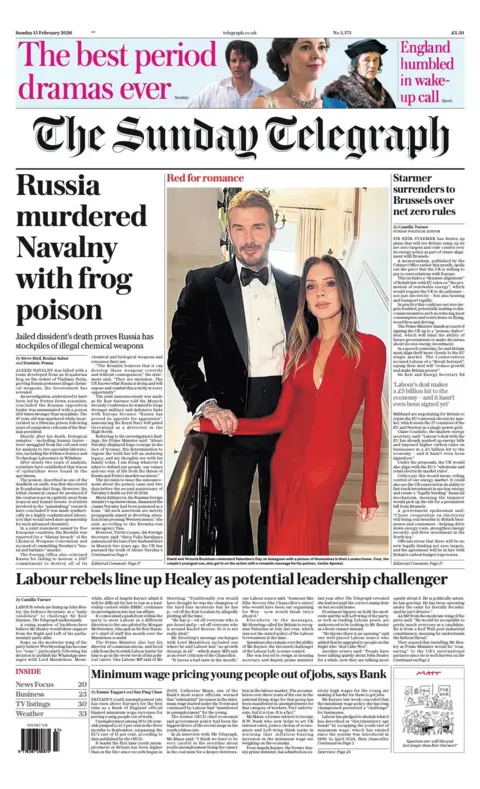
A series of high-profile disclosures has thrust global attention onto two distinct yet equally impactful narratives: the United Kingdom’s assertion that Russian opposition figure Alexei Navalny succumbed to a poison derived from dart frog toxins, and escalating demands for a police investigation into the former royal, Andrew Mountbatten-Windsor, regarding his past conduct as a trade envoy. These developments underscore a period of profound international political friction and intensified domestic accountability, reverberating through diplomatic circles and societal institutions alike.
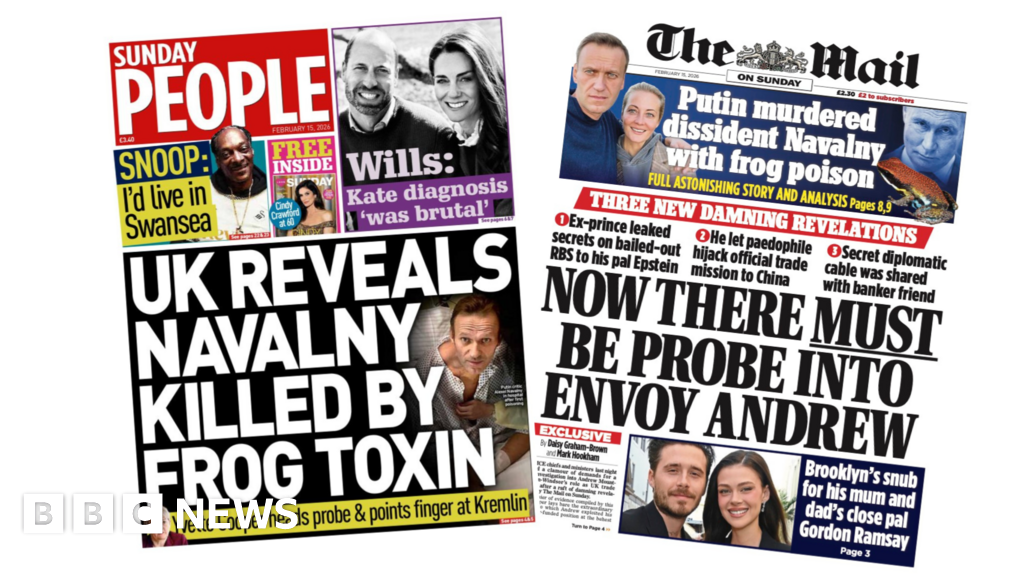
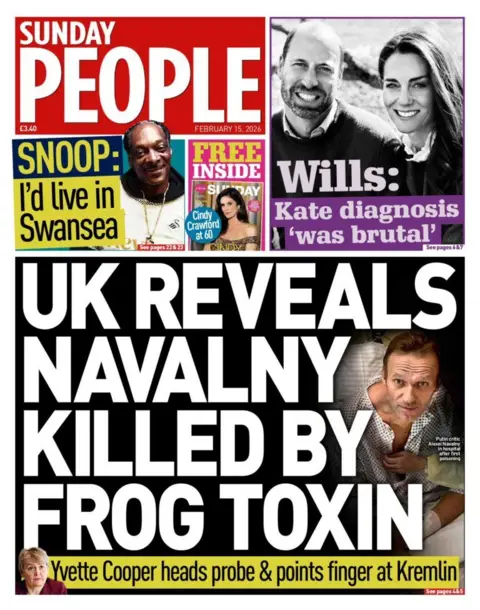
The revelation concerning Alexei Navalny’s demise, which occurred suddenly in a Siberian penal colony in February 2024, has significantly escalated the already fraught relationship between Russia and Western nations. British intelligence agencies, following a meticulous forensic examination, have concluded that the prominent Kremlin critic was killed by a potent neurotoxin synthesized from the secretions of dart frogs, an allegation that carries grave implications for international chemical weapons protocols. This finding, first highlighted by The Sunday People, explicitly points blame at the Russian state, with Foreign Secretary Yvette Cooper reportedly spearheading the inquiry and directing accusations towards the Kremlin. Moscow, through its official news agency Tass, has predictably dismissed these findings as a politically motivated "information campaign," maintaining its consistent stance of denial in incidents involving its critics.
The specific identification of a poison derived from an Ecuadorian dart frog, as reported by The Telegraph, suggests a sophisticated and illicit chemical weapons program. Forensic experts at the UK’s highly respected Defence Science and Technology Laboratory at Porton Down are understood to have been instrumental in this groundbreaking analysis. It is believed that critical biological samples were surreptitiously obtained from Navalny’s cell and transported to the UK shortly after his death, enabling the comprehensive investigation. This clandestine operation highlights the immense challenges and risks involved in gathering evidence pertaining to state-sponsored actions within Russia. The use of such an exotic and potent toxin not only demonstrates an advanced capability in chemical weapon development but also raises serious questions about Russia’s adherence to international disarmament treaties. The international community, still reeling from previous alleged chemical attacks involving Russian agents, is now confronted with further compelling evidence that could necessitate a coordinated and robust response. The implications extend beyond diplomatic condemnation, potentially leading to further sanctions, expulsion of diplomats, and a re-evaluation of engagement strategies with the Russian Federation.
Navalny’s life was a testament to persistent defiance against authoritarian rule. For years, he served as the most prominent internal critic of Russian President Vladimir Putin, exposing corruption, organizing protests, and advocating for democratic reforms. His activism frequently led to arrests, detentions, and harassment. This latest alleged assassination is not an isolated incident; Navalny had previously survived a near-fatal poisoning in August 2020 with a Novichok nerve agent, an attack widely attributed to Russian state security services. Despite recovering and facing imminent imprisonment, he made the courageous decision to return to Russia in January 2021, where he was immediately arrested and subsequently sentenced to a lengthy prison term on charges widely condemned as politically motivated. His death in an Arctic penal colony, under opaque circumstances, had already sparked outrage and demands for an independent investigation from human rights organizations and Western governments. The new forensic findings provide a concrete, albeit horrifying, piece of evidence that solidifies suspicions of state involvement and potentially transforms the nature of international discourse and action.
Concurrently, a significant domestic controversy continues to grip the United Kingdom, focusing on Andrew Mountbatten-Windsor, the former Prince Andrew. The Mail on Sunday has intensified calls for a formal police investigation into his past activities and associations, particularly his role as a UK trade envoy. The publication asserts that it has amassed a "dossier of evidence" warranting official scrutiny. This renewed pressure stems from long-standing questions surrounding Mountbatten-Windsor’s connections to convicted sex offender Jeffrey Epstein, a relationship that has severely damaged his public reputation and led to his withdrawal from royal duties. While he has consistently and strenuously denied any wrongdoing in relation to Epstein, the persistent allegations and the public’s demand for transparency have refused to subside.
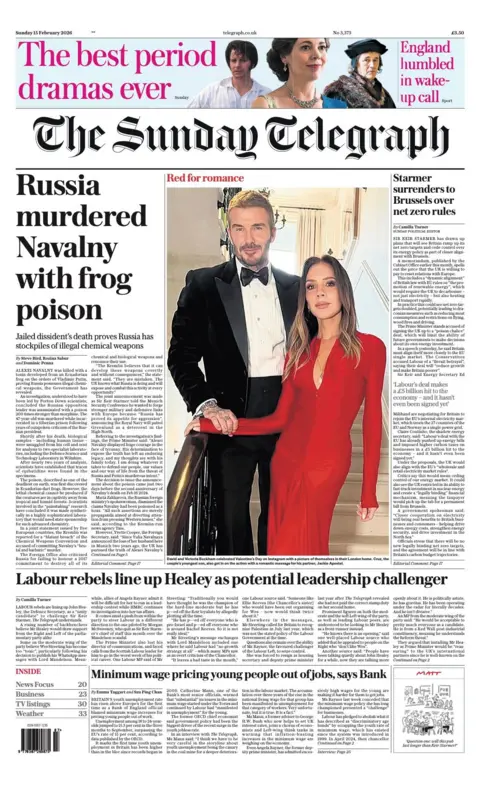
The call for a police probe represents a critical juncture. For years, Mountbatten-Windsor has been embroiled in controversy, largely stemming from his friendship with Epstein and the subsequent civil sexual assault lawsuit, which was settled out of court. His role as a UK trade envoy, intended to promote British business interests abroad, has now come under renewed scrutiny, with questions being raised about the appropriateness of his conduct and associations during that period. The "dossier of evidence" cited by the Mail on Sunday, if substantiated, could potentially provide new grounds for criminal investigation, moving beyond the civil claims and public relations crisis that have defined his recent years. Such an investigation would be unprecedented in its scale and sensitivity, involving a former senior member of the Royal Family and carrying immense implications for the monarchy and public trust in institutions. The legal complexities and the intense media spotlight would pose considerable challenges for all parties involved, demanding meticulous due process and absolute impartiality from law enforcement.
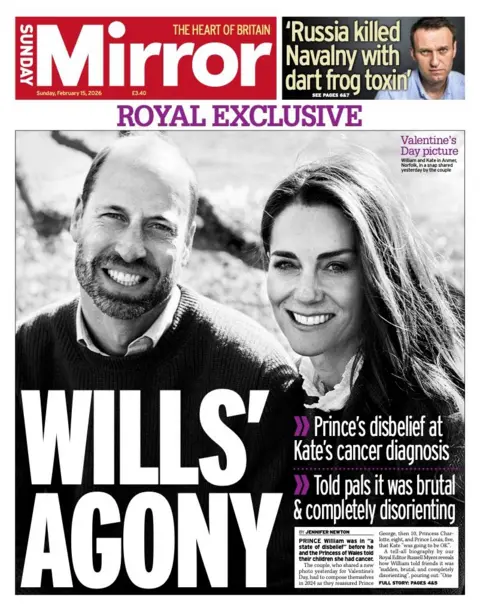
Beyond these two dominant narratives, other significant events have captured public attention. The Royal Family has faced another period of intense personal difficulty, with the Mirror reporting on Prince William’s profound distress following the Princess of Wales’s cancer diagnosis. The paper describes his "agony" and "disbelief," quoting sources who characterize the news as "brutal and completely disorienting." This revelation, accompanied by a new photograph shared by the Prince and Princess of Wales, has elicited widespread public sympathy and highlighted the human element within the monarchy, even amidst personal hardship.
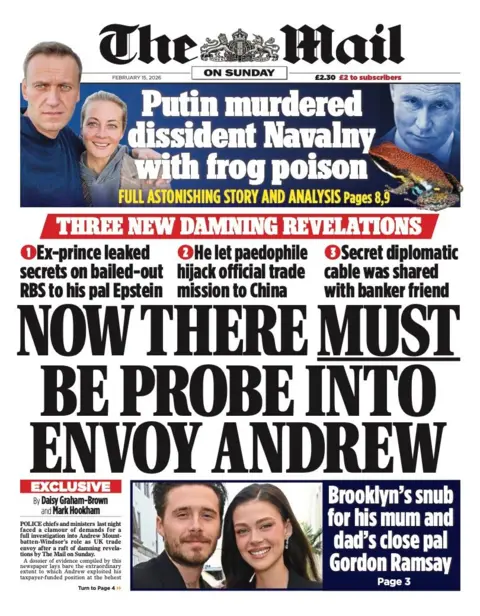
In other news, the ongoing fallout from the Jeffrey Epstein scandal continues to surface, with The Sun on Sunday alleging that the disgraced financier "lured" actress and model Donna Air. These continuous disclosures underscore the far-reaching and deeply unsettling impact of Epstein’s activities and the persistent efforts to uncover the full extent of his network. Meanwhile, the political landscape is also seeing significant debates, as evidenced by The Sun’s interview with Prime Minister Sir Keir Starmer, where he stated, "It’s been tough but I’ll fight on," signaling resilience amidst governmental challenges.
Economically, the Sunday Express has issued a stark warning regarding an impending rise in the state pension age, projecting that it "will send 115,000 elderly into poverty." This alarming figure is based on historical data from previous pension age increases, which reportedly saw a substantial rise in poverty rates among 65-year-olds. This highlights a pressing social issue, with critics arguing that such policy changes disproportionately affect vulnerable demographics and necessitate comprehensive support mechanisms.
Finally, in the realm of sports, the Observer celebrated Matt Weston’s triumph, dubbing him "Dr Ice," after his impressive Winter Olympics gold medal win in the skeleton event on Friday, bringing a moment of national pride. Conversely, celebrity news featured Jeremy Clarkson facing a lawsuit, as The Star reported a woman is suing the TV presenter and farmer after allegedly tripping and falling in his pub car park. Clarkson has reportedly been contacted for comment, indicating an ongoing legal process.
Collectively, these diverse headlines paint a vivid picture of a society grappling with profound challenges, from the geopolitical ramifications of alleged state-sponsored assassinations and the pursuit of accountability for past misconduct at the highest echelons of society, to the personal struggles within public life and significant socioeconomic policy debates. The coming months will undoubtedly witness further developments in each of these complex narratives, with global implications for diplomacy, justice, and societal well-being.


 Aura Kasih
 Ridwan Kamil