Lisa Mariana
The escalating controversy surrounding Lord Peter Mandelson, stemming from allegations of transmitting sensitive government intelligence to the late convicted financier Jeffrey Epstein, has drawn pointed commentary from former Prime Minister Gordon Brown, who has underscored the gravity of the situation for Labour leader Sir Keir Starmer while simultaneously asserting Starmer’s fundamental integrity. Brown’s remarks provide a critical lens through which to view the ongoing investigation and its profound implications for public trust and political accountability within the United Kingdom’s governance structures.
Speaking on a prominent national radio program, Gordon Brown conveyed his conviction that while the predicament facing Sir Keir Starmer is undeniably "serious," the current Labour leader is fundamentally a "man of integrity" who has been "betrayed" by Lord Mandelson. This dual assessment highlights a nuanced position, acknowledging the severity of the allegations while seeking to bolster confidence in Starmer’s leadership capabilities, particularly his stated commitment to rectifying systemic flaws. Brown suggested that Starmer, despite his inherent integrity, might have demonstrated a degree of hesitation, being "too slow to do the right things" in the immediate aftermath of the revelations. Nevertheless, Brown articulated his belief that Starmer possesses the necessary resolve to "clean up the system," positioning him as a potential catalyst for much-needed political reform.
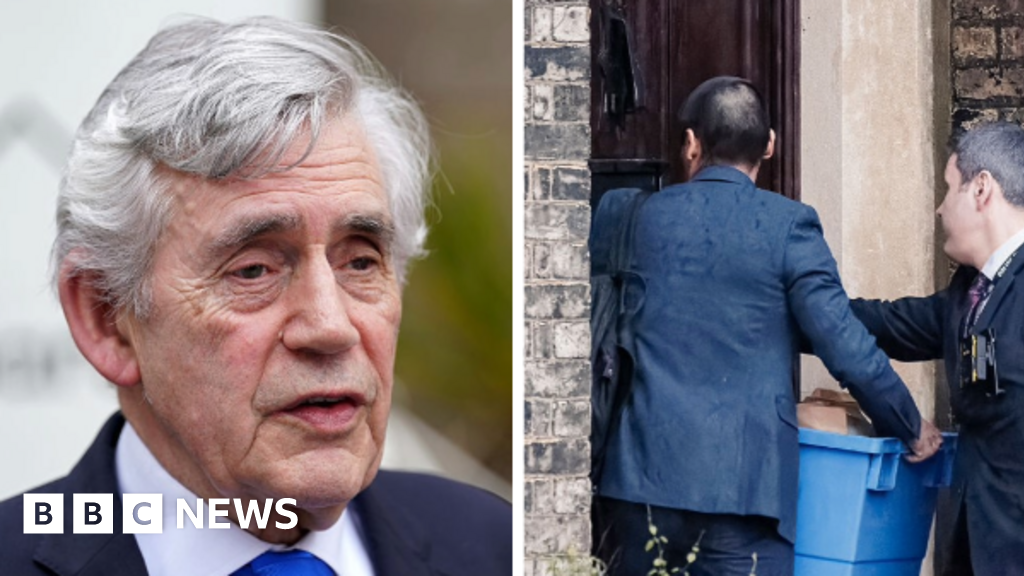
These significant observations from a former head of government emerged concurrently with confirmation from law enforcement agencies regarding the conclusion of searches at two properties associated with Lord Mandelson. The Metropolitan Police undertook these actions as part of an ongoing inquiry into suggestions that Lord Mandelson may have disclosed market-sensitive governmental information to Jeffrey Epstein. While Lord Mandelson, who was previously relieved of his duties as the UK’s ambassador to the United States in September, has refrained from publicly addressing the specific allegations, it is understood that his stance is one of denying any criminal conduct or motivations driven by financial gain. The police investigation into "misconduct in public office" underscores the serious nature of the claims and the legal scrutiny now directed towards a figure once central to British political life.
The substance of the allegations against Lord Mandelson primarily revolves around a series of email exchanges brought to light through recently declassified documents related to Jeffrey Epstein. These communications reportedly indicate Lord Mandelson’s alleged transmission of internal governmental data to Epstein. Among the most concerning purported disclosures was a confidential memorandum authored by policy adviser Nick Butler, detailing the precarious state of the UK economy and recommending the divestment of state-held assets to bolster public finances. Further exchanges suggest that Lord Mandelson provided Epstein with advance knowledge of a substantial €500 billion bailout package initiated by the European Union, aimed at stabilizing the struggling Euro currency. Compounding these accusations, other communications reportedly show Lord Mandelson furnishing Epstein with near real-time updates on the unfolding political landscape following the 2010 general election, a period during which the Labour Party experienced a significant loss of its parliamentary majority.
Gordon Brown expressed profound personal and political dismay regarding these alleged disclosures. He characterized Lord Mandelson’s actions as a "betrayal" of the nation, asserting that the leakage of such information carried substantial risks for Britain’s economic stability. Brown elaborated that the currency itself was placed "at risk," and the potential for speculative trading based on privileged information could have resulted in "huge commercial damage," which he posited "perhaps was done." The former Prime Minister articulated a range of emotional responses, including feeling "shocked, sad, angry, betrayed, let down" by the revelations contained within the messages.
Beyond the immediate damage, Brown interpreted the email exchanges as indicative of Lord Mandelson’s alleged preoccupation with his post-governmental career trajectory while still occupying a senior ministerial position. He pointed to communications where Lord Mandelson purportedly discussed writing a book and exploring employment opportunities within the banking sector, all while serving as Business Secretary during a period of immense national and global financial crisis. Brown condemned this apparent dual focus as a "complete betrayal of his colleagues and of the job that he was carrying out and, of course, it was a betrayal of the country." This perspective frames the alleged actions not merely as an isolated lapse but as a broader dereliction of duty, undermining the very principles of public service during a critical juncture.
The connection between Lord Mandelson and Jeffrey Epstein itself introduces an additional layer of concern. Epstein was a convicted sex offender whose extensive network of high-profile associates has been a subject of intense public and legal scrutiny globally. The BBC noted that Lord Mandelson’s association with Epstein was publicly known prior to his appointment as US ambassador. While the current police investigation focuses on allegations of misconduct in public office, the broader context of Epstein’s activities amplifies the sensitivity and public interest in any alleged dealings between him and individuals in positions of governmental authority. Brown commented on this wider context, stating, "We’re dealing with a global network of very powerful people who believed that they could break the law, they believed they could do anything because nobody would prosecute them." This statement hints at a deeper concern about the erosion of accountability among powerful elites, irrespective of national borders.
The Metropolitan Police’s statement regarding the conclusion of searches at two properties – one in Wiltshire and another in north London – provides a procedural update on the unfolding legal process. Deputy Assistant Commissioner Hayley Sewart confirmed that these actions were linked to an ongoing investigation into "misconduct in public office offences" involving a 72-year-old man, without naming him directly but aligning with the context of the article. It was explicitly stated that the individual had not been arrested and that inquiries remain ongoing. Sewart highlighted the complexity of the investigation, anticipating a "significant amount of further evidence gathering and analysis" and emphasizing that it would require considerable time to conduct this work comprehensively. This methodical approach underscores the challenges inherent in prosecuting high-profile cases involving potentially intricate financial and political connections, and it signals that a definitive resolution is not imminent.
For Sir Keir Starmer, the leader of the opposition, the Mandelson scandal presents a multifaceted political challenge. As Labour seeks to project an image of renewed integrity and competence ahead of a general election, any association with past controversies, even indirectly, can prove problematic. Brown’s remarks about Starmer being "too slow to do the right things" suggest a perceived initial hesitancy in responding decisively to the allegations. However, Brown’s subsequent affirmation of Starmer as a "man of integrity" and the right person to "clean up the system" serves as a crucial endorsement, particularly from a figure with deep roots in the Labour Party and extensive experience in government. Starmer’s response will be judged not only on his public statements but also on any concrete actions taken to reinforce ethical standards within his party and, more broadly, to advocate for greater transparency in public life. The challenge lies in demonstrating leadership that is both firm in its condemnation of alleged misconduct and proactive in proposing systemic solutions.
In light of the Mandelson allegations and other broader concerns about governance standards, Gordon Brown has reiterated his long-standing calls for comprehensive reform of the British political system. He specifically advocated for the establishment of an "anti-corruption commission" endowed with robust "powers to seize assets," a measure designed to deter illicit enrichment and ensure accountability. This proposal reflects a belief that existing mechanisms are insufficient to tackle complex cases of corruption or misconduct effectively. Brown also championed the implementation of "US-style confirmation hearings" for prospective government ministers and senior appointees. This significant procedural shift would introduce a layer of public scrutiny and accountability typically absent in the UK system, where appointments are largely executive decisions.
Elaborating on his vision for enhanced public integrity, Brown drew upon recommendations outlined in his report, "A New Britain: Renewing our Democracy and Rebuilding our Economy." He argued that the alleged misrepresentations made by Lord Mandelson during his appointment process as US ambassador highlighted a "systemic failure to do proper vetting" and to adhere to adequate procedures. Brown’s call for public hearings for senior government positions aims to ensure that individuals are thoroughly scrutinized before assuming roles of significant public trust, thereby preventing future instances of alleged impropriety or conflicts of interest.

Further elements of Brown’s proposed reform agenda include granting an independent ethics commission statutory powers to audit the bank accounts of individuals appointed to senior government roles. This measure would significantly enhance financial transparency and act as a deterrent against undeclared wealth or illicit dealings. He also advocated for a decisive crackdown on "the systematic abuse of power by lobbyists," suggesting stricter regulations to prevent undue influence on policy-making. Finally, Brown renewed his call for a ban on Members of Parliament holding second jobs, with the sole exception of medical professionals, arguing that such external employment can lead to conflicts of interest and distract from parliamentary duties. This comprehensive package of reforms reflects a deep-seated concern about the erosion of public trust and the perceived vulnerabilities within the existing framework of British governance.
The debate surrounding these reforms extends beyond the immediate Mandelson scandal, touching upon fundamental questions about the nature of public service, accountability, and the integrity of democratic institutions. The implementation of an anti-corruption commission with asset-seizing powers would represent a significant shift in the UK’s legal and administrative landscape, potentially mirroring models found in other democracies that have grappled with corruption. Similarly, US-style confirmation hearings, while potentially increasing transparency, would also introduce a new dynamic to the relationship between the executive and legislative branches, possibly leading to more politicized appointment processes.
The implications for Sir Keir Starmer and the Labour Party are substantial. As the primary opposition party, Labour is well-positioned to champion these reforms and present itself as the party committed to cleaning up politics. However, the historical ties of figures like Lord Mandelson to the Labour Party mean that Starmer must navigate this terrain carefully, demonstrating a clear break from any perceived past failings while avoiding overly aggressive condemnations that could alienate factions within his own movement. His ability to articulate a compelling vision for reform and to demonstrate unwavering commitment to ethical governance will be crucial in shaping public perception and potentially influencing the outcome of the next general election.
Looking ahead, the police investigation into Lord Mandelson’s alleged misconduct will undoubtedly remain a significant point of focus. Its trajectory, the nature of any further evidence uncovered, and the eventual legal outcome will have lasting consequences for the individuals involved and for the broader political discourse on standards in public life. Concurrently, the pressure on political leaders, particularly Sir Keir Starmer, to address systemic issues will intensify. The Mandelson scandal, therefore, transcends a single incident; it has become a powerful catalyst for a broader national conversation about transparency, accountability, and the necessary reforms to restore and maintain public confidence in Britain’s political institutions. The coming months will reveal not only the legal fate of those implicated but also the political will to enact meaningful change in the face of deep-seated challenges to governmental integrity.




 Ridwan Kamil
 Aura Kasih
 Ayu Aulia