Aura Kasih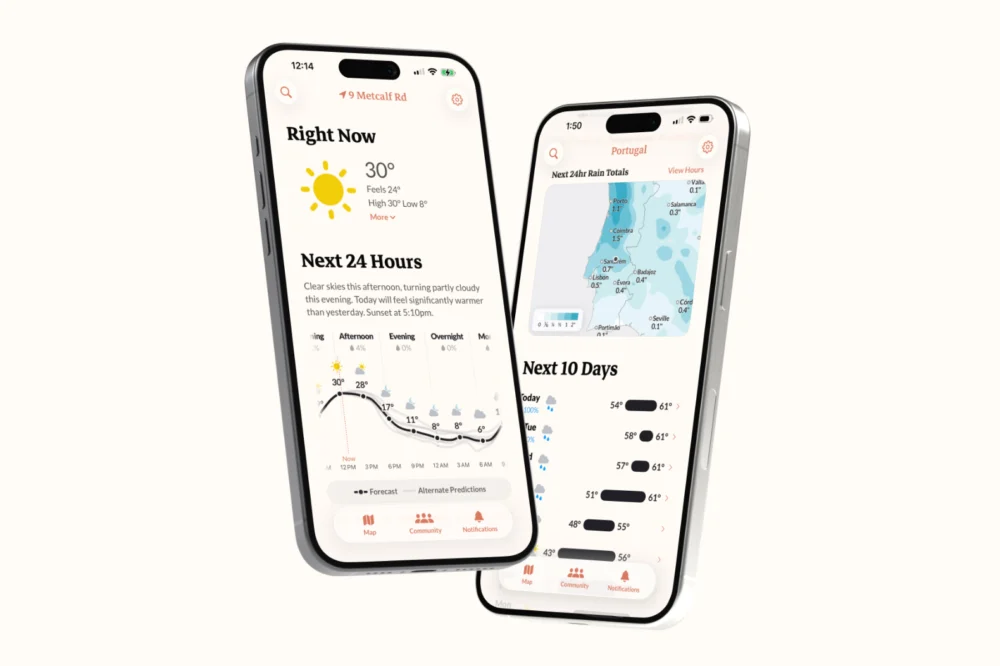
The original architects of the beloved Dark Sky weather application have resurfaced with an innovative new application, Acme Weather, designed to offer users a multifaceted perspective on meteorological predictions by presenting a primary forecast alongside a spectrum of alternative scenarios, acknowledging the inherent complexities and uncertainties in weather forecasting.
The journey of the team behind Dark Sky is a compelling narrative within the technology and consumer application landscape. Following the highly publicized acquisition of their pioneering weather app by Apple in March 2020, a move that saw many of Dark Sky’s distinctive functionalities integrated into Apple’s native Weather application, the core group of developers has embarked on a new venture. This new endeavor, Acme Weather, represents a philosophical shift in how weather information is communicated to the public. Rather than presenting a single, definitive forecast, Acme Weather boldly confronts the reality that meteorological predictions are not absolute certainties. The application’s core innovation lies in its presentation of a primary daily forecast complemented by a range of alternate predictions, offering users a more nuanced understanding of potential weather outcomes.
This forward-thinking approach to weather dissemination stems from a deep understanding of atmospheric science and the limitations of predictive modeling. Weather systems are dynamic and influenced by a multitude of variables, many of which are difficult to precisely measure or predict over extended periods. By acknowledging this inherent variability, Acme Weather empowers users with a more comprehensive view, allowing them to gauge the confidence level of the forecast based on the divergence of the alternative predictions. When these alternate scenarios converge closely around the primary forecast, it signifies a higher degree of confidence in the prediction. Conversely, a wider dispersion among the alternate predictions suggests a greater degree of uncertainty and a higher likelihood of the forecast evolving. This transparency in presenting forecast uncertainty is a significant departure from traditional weather apps that often present a singular, seemingly infallible prediction.
Currently, Acme Weather is exclusively available on the iOS platform, catering to Apple’s extensive user base. While a version for Android devices is reportedly in development, no specific release timeline has been announced, leaving a significant portion of the global mobile market awaiting access. The application operates on a subscription model, offering a two-week complimentary trial period for prospective users to evaluate its features and utility. Following this trial, a subscription fee of $25 annually is required to maintain access. This pricing structure positions Acme Weather as a premium offering in the crowded weather app market, contrasting with Dark Sky’s previous one-time purchase model of $3.99. The creators, however, assert that the enhanced subscription fee is justified by the app’s superior forecasting capabilities and the breadth of weather information provided, drawing data from a sophisticated array of sources including satellite imagery, ground-based meteorological stations, and advanced radar data.

The technological underpinnings of Acme Weather are designed to provide a richer and more detailed weather experience. The app’s commitment to providing multiple predictions is visualized through a series of graphical representations, where alternate forecast lines are overlaid on the primary prediction. These lines illustrate the potential range of conditions throughout the day, offering a visual cue to the forecast’s reliability. The proximity of these lines serves as an intuitive indicator: tightly clustered lines suggest a robust and likely accurate forecast, while widely divergent lines signal a higher degree of meteorological uncertainty and a greater probability of deviations from the primary prediction. This visual approach democratizes the understanding of forecast uncertainty, making complex meteorological concepts accessible to a broader audience.
Beyond its innovative predictive display, Acme Weather actively engages its user base by incorporating crowd-sourced weather reporting. During active weather events, users can contribute by reporting local conditions, which are then visualized on an interactive map as simple icons. This community-driven data stream enriches the app’s real-time situational awareness, providing granular, hyper-local insights that complement the broader meteorological models. These user-generated reports are integrated with a suite of sophisticated weather maps, including detailed visualizations of radar activity, lightning strikes, precipitation intensity (rain and snow), wind patterns, temperature gradients, humidity levels, storm tracks, and cloud cover. The inclusion of these various map layers is strategically aligned with their relevance to the predicted weather conditions, offering users a comprehensive and layered understanding of current and impending weather phenomena.
The legacy of Dark Sky was significantly defined by its exceptionally accurate and timely notification system, a feature that the developers have meticulously carried forward and enhanced in Acme Weather. The new application offers a highly customizable notification suite, empowering users to tailor alerts to their specific needs and preferences. This includes granular, "down-to-the-minute" rain warnings, providing precise alerts for imminent rainfall. Additionally, users can opt to receive official government-issued severe weather warnings, notifications for nearby lightning activity, and even unique alerts that predict opportune moments for observing meteorological phenomena such as rainbows at their specific location. This level of personalized and context-aware notification delivery represents a significant advancement in how individuals interact with and are informed by weather data.
The strategic decision to offer multiple predictions and incorporate crowd-sourced data reflects a growing trend in application development towards user empowerment and transparency. In an era where information is readily available, users are increasingly seeking not just data, but context and understanding. By acknowledging the inherent complexities of weather forecasting and providing users with tools to interpret this complexity, Acme Weather is positioning itself as a leader in a new generation of intelligent and user-centric weather applications. The potential implications of this approach extend beyond individual convenience, potentially fostering a greater public understanding of meteorological science and the challenges involved in predicting our planet’s ever-changing climate. As the app expands its reach and refines its data sources, its impact on how individuals prepare for and engage with weather events is likely to be substantial. The focus on providing a spectrum of possibilities rather than a single outcome addresses a fundamental limitation of current forecasting models and offers a more realistic and empowering user experience. This commitment to detail and user engagement suggests a long-term vision for Acme Weather, aiming to become an indispensable tool for anyone seeking a deeper and more informed connection with the weather around them. The integration of diverse data streams, from sophisticated satellite feeds to individual user reports, creates a dynamic and continuously evolving understanding of atmospheric conditions, setting a new benchmark for what a weather application can and should be.


 Lisa Mariana
 Ayu Aulia