Aura Kasih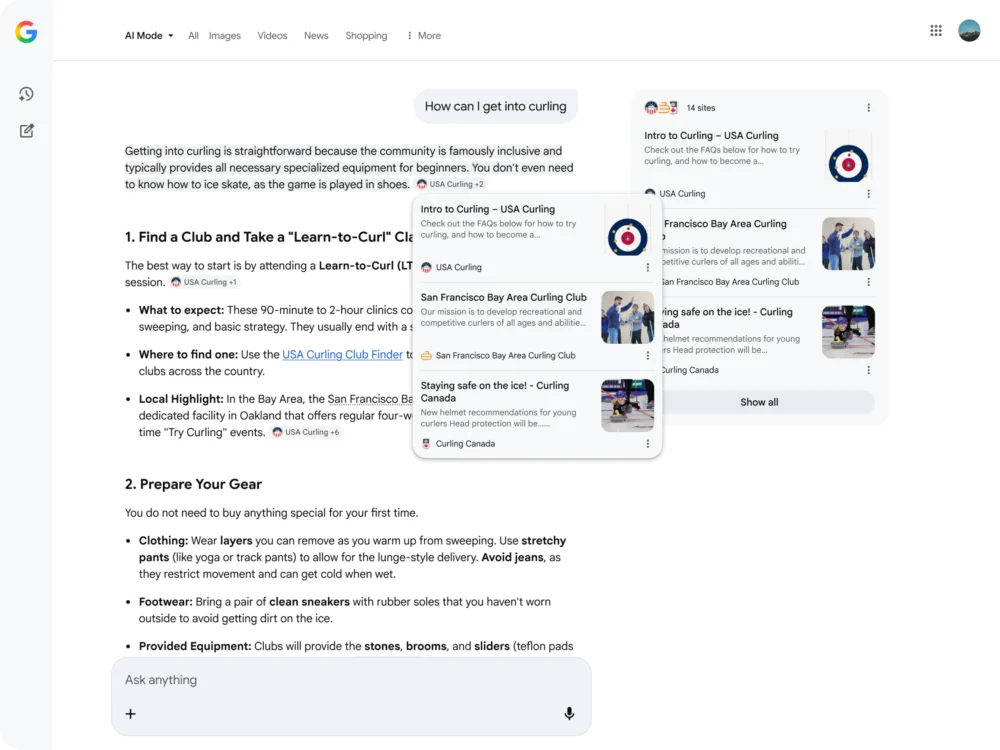
In a significant shift for online information retrieval, Google is implementing a refined approach to how it presents links within its experimental AI-powered search features, aiming to make source attribution more transparent and user-friendly. This evolution in Google’s AI Overviews and AI Mode is designed to improve the user’s ability to navigate to the original content that informs the AI-generated summaries, addressing ongoing discussions about the impact of generative AI on the open web and content creators.
The newly introduced interface modifications will see links to cited sources appear in a non-intrusive pop-up. This pop-up is triggered by a user hovering over the indicated sources within the AI-generated content. This enhancement moves beyond simply listing links; it will now offer a more descriptive preview, potentially including snippets of text from the linked article and accompanying visual elements like images. This deliberate design choice suggests a strategic effort by Google to bridge the gap between AI-synthesized information and the original web content, thereby facilitating direct access for users who wish to delve deeper into the information’s origin.
This strategic adjustment by Google arrives at a critical juncture in the evolution of search technology. The integration of artificial intelligence into search engines has been a focal point of innovation and debate. While AI promises to deliver more immediate and comprehensive answers, it has also raised concerns regarding the potential for reduced traffic to websites that form the bedrock of this information. By making cited links more prominent and interactive, Google appears to be responding to these concerns, signaling a commitment to maintaining the flow of traffic to the vast ecosystem of online publishers. This move is not merely an aesthetic update; it represents a fundamental recalibrative effort to balance the efficiency of AI with the sustainability of the internet’s content creation landscape.

The technical implementation of these changes, as announced by Robby Stein, vice president of Google Search, on a widely followed social media platform, underscores the company’s iterative development process. The inclusion of "more descriptive and prominent link icons" across both desktop and mobile interfaces suggests a unified strategy to enhance discoverability. The assertion that testing has indicated a more "engaging" user experience, leading to easier access to "great content across the web," positions these updates as beneficial to both users and content providers. This data-driven approach to UI refinement highlights Google’s ongoing efforts to optimize its search products based on user interaction and feedback.
The context surrounding these updates is multifaceted. Google’s AI search features, including AI Overviews, are designed to provide users with synthesized answers to their queries, often summarizing information from multiple sources. AI Mode, in particular, offers a more conversational, chatbot-like experience, allowing users to engage with information without necessarily clicking through to individual websites. This functionality, while convenient for users, has been a source of apprehension for publishers who rely on web traffic for revenue. The "open web," as Google itself has acknowledged, is facing significant challenges, with concerns growing about the economic viability of content creation in an era of AI-driven summarization. These new link presentation methods can be viewed as a direct attempt to mitigate the perceived negative externalities of these advancements.
Furthermore, regulatory scrutiny has played a role in shaping Google’s approach. The European Commission’s investigation into Google’s AI search features, examining potential violations of competition law related to the use of digital publisher content in AI responses without adequate compensation, is a significant factor. In response to such pressures, Google has indicated a willingness to explore options, such as allowing publishers to opt out of appearing in AI search features. The increased emphasis on source linking can be interpreted as a proactive measure to demonstrate a commitment to fair attribution and to potentially preempt further regulatory intervention by fostering a more transparent relationship between AI-generated content and its origins.
The evolution of AI in search is not a static phenomenon; it is a dynamic and rapidly developing field. Google’s latest adjustments reflect a broader industry trend toward more sophisticated and nuanced AI integration. The challenge lies in striking a delicate balance: delivering the speed and convenience of AI-generated answers while ensuring that the creators of the underlying content are appropriately recognized and rewarded. The pop-up mechanism for links, coupled with descriptive previews, is an innovative step in this direction. It allows users to quickly ascertain the relevance and origin of information without overwhelming the primary AI output, thereby preserving the user experience while reinforcing the value of the original web sources.

Analyzing the long-term implications of these changes is crucial. For users, the enhanced link visibility could lead to a more informed and critical engagement with search results. They gain a clearer understanding of where information originates, enabling them to cross-reference and verify AI-generated summaries with greater ease. This can foster a more discerning approach to information consumption, a vital skill in the digital age. For publishers and content creators, the potential for increased traffic, even if indirect, represents a significant positive outcome. If users are more inclined to visit original sources due to clearer and more accessible links, this could help stabilize and even revitalize the economic models that support online journalism and content creation.
However, the success of this initiative will hinge on several factors. The effectiveness of the pop-up design in encouraging clicks, the quality and relevance of the descriptive previews, and the overall user perception of transparency will all play a role. Moreover, the ongoing dialogue between Google and the publishing industry will continue to be critical. While this update addresses a key concern, the fundamental questions surrounding fair compensation and the future of web traffic in an AI-dominated search landscape remain complex and will likely require continued collaboration and innovation.
The strategic importance of these changes for Google cannot be overstated. As AI becomes increasingly integrated into everyday digital interactions, search engines are at the forefront of this transformation. Google’s ability to adapt its core search products to accommodate AI while maintaining user trust and supporting the broader internet ecosystem is paramount to its continued dominance. The current enhancements to link presentation are a clear indication of Google’s recognition that the future of search is not solely about providing answers, but also about intelligently connecting users with the rich tapestry of information that exists on the web. This evolution signals a maturing phase in the deployment of AI in search, one that emphasizes attribution and user agency as integral components of a responsible and sustainable information retrieval system. The path forward will undoubtedly involve further refinements as Google continues to navigate the intricate interplay between artificial intelligence, user experience, and the global digital content landscape.




 Ridwan Kamil
 Lisa Mariana
 Ayu Aulia