Ridwan Kamil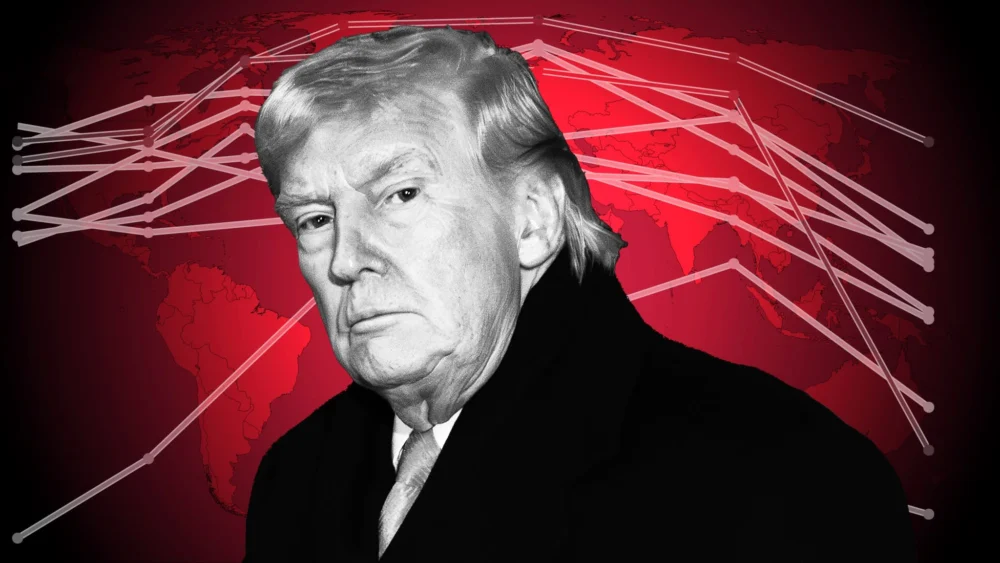
A significant recalibration of international sentiment has occurred, with a notable increase in the number of nations and global citizens viewing the United States through a lens of apprehension and perceived threat, largely attributed to the policies and rhetoric espoused during the tenure of former President Donald Trump.
The presidency of Donald Trump, marked by a departure from established diplomatic norms and a pronounced "America First" foreign policy, has demonstrably reshaped global perceptions of the United States, fostering widespread unease and prompting a reevaluation of American intentions and reliability on the international stage. This shift is not merely a transient fluctuation in public opinion but represents a more profound recalibration, impacting geopolitical alliances, international cooperation, and the very foundation of the liberal international order. The ramifications of this perceived threat extend across diplomatic, economic, and security spheres, demanding a comprehensive analysis of the underlying causes and their enduring consequences.
The era of Donald Trump’s presidency was characterized by a deliberate and often disruptive approach to foreign policy. His administration’s emphasis on bilateral deals over multilateral agreements, its skepticism towards long-standing alliances such as NATO, and its willingness to engage in protectionist trade measures sent ripples of uncertainty across the global landscape. This departure from the post-World War II consensus, which had positioned the United States as a steadfast guarantor of international stability and a champion of democratic values, led many nations to question the predictability and commitment of American leadership. The rhetoric employed by Trump, often nationalistic and confrontational, further exacerbated these concerns, frequently portraying international partners as adversaries or exploitative entities rather than collaborators.
One of the most significant areas of concern has been the erosion of trust in multilateral institutions. Trump’s administration openly questioned the value and efficacy of organizations like the World Trade Organization (WTO), the World Health Organization (WHO), and even the United Nations. The withdrawal of the U.S. from the Paris Agreement on climate change and the Iran nuclear deal were seen by many as unilateral actions that undermined global efforts to address critical transnational challenges. This skepticism towards collective action was interpreted by numerous countries as a signal that the U.S. was no longer invested in shared global governance, fostering a sense of abandonment and prompting them to seek alternative frameworks for cooperation or to bolster their own regional initiatives.
The impact on established alliances has been particularly pronounced. NATO, a cornerstone of transatlantic security for decades, faced unprecedented scrutiny from the Trump administration, which demanded increased financial contributions from member states and questioned the mutual defense pact’s relevance. This created palpable anxiety among European allies, who relied on the U.S. security umbrella and felt vulnerable to potential Russian aggression. Similarly, alliances in the Indo-Pacific region, such as those with Japan and South Korea, experienced moments of tension as the U.S. pursued its transactional foreign policy. The perception that U.S. commitments were contingent on immediate transactional gains rather than enduring strategic partnerships led many allies to reassess their security architectures and explore greater strategic autonomy.
Economically, the imposition of tariffs and the initiation of trade disputes, particularly with China, created global economic uncertainty. While proponents argued these measures were necessary to protect American industries, critics pointed to the disruption of global supply chains, increased costs for consumers, and retaliatory measures that harmed American businesses and agricultural sectors. This protectionist stance was perceived by many trading partners as a form of economic coercion, further fueling the sense that the U.S. was prioritizing its own interests at the expense of global economic stability and interconnectedness. The weaponization of trade as a foreign policy tool led to a widespread reassessment of global economic dependencies and a renewed focus on diversifying trade relationships.
The erosion of democratic norms and values, both domestically and in its foreign policy pronouncements, also contributed to the perception of the U.S. as a threat. Critics from authoritarian states often pointed to perceived hypocrisy in U.S. calls for democracy abroad while domestic political discourse became increasingly polarized and, at times, seemingly undermined democratic institutions. This diminished the U.S.’s standing as a model for democratic governance, emboldening autocratic regimes and weakening the international push for human rights and political freedoms. The emphasis on transactional relationships over ideological alignment meant that long-standing U.S. advocacy for human rights and democratic principles appeared to be sidelined, leading to disappointment and a sense of betrayal among activists and citizens in countries striving for greater freedom.
Beyond the direct policy decisions, the style and rhetoric of the Trump presidency played a significant role in shaping global perceptions. The frequent use of inflammatory language, personal attacks on foreign leaders, and the dissemination of what were often termed "fake news" created an atmosphere of unpredictability and instability. This not only made diplomatic engagement more challenging but also contributed to a general sense of unease about the stability and reliability of the U.S. as a global actor. International diplomats and analysts observed a growing apprehension that U.S. foreign policy decisions could be driven by personal whim or short-term political considerations rather than carefully considered strategic objectives.
The consequences of this recalibrated perception are far-reaching. Many nations have begun to actively seek greater strategic autonomy, investing more in their own defense capabilities and forging new regional partnerships independent of U.S. leadership. This could lead to a more fragmented and less stable global order, where regional powers vie for influence and the U.S. finds itself increasingly isolated or facing more formidable blocs of opposition. The diminished U.S. influence in international forums could also hamper efforts to address global challenges such as climate change, pandemics, and nuclear proliferation, as consensus-building becomes more difficult without a strong, engaged, and trusted American presence.
Furthermore, the perception of the U.S. as a threat can have implications for American economic interests. Businesses operating in countries that view the U.S. with suspicion may face increased regulatory hurdles, boycotts, or a preference for domestic or alternative foreign suppliers. This could impact American export markets and investment opportunities, leading to a gradual erosion of U.S. economic leverage on the global stage. The concept of "soft power," which relies on attraction and persuasion rather than coercion, has undoubtedly been diminished, making it harder for the U.S. to influence global norms and values.
Looking forward, the challenge for the United States is to rebuild trust and re-establish its credibility as a reliable international partner. This requires a consistent and predictable foreign policy, a renewed commitment to multilateralism, and a demonstrable respect for international law and institutions. Rebuilding alliances and fostering collaborative approaches to global challenges will be crucial in counteracting the narrative of the U.S. as a destabilizing force. The ability of the current administration to articulate a clear vision for American engagement in the world, one that emphasizes cooperation and shared responsibility, will be paramount in assuaging global anxieties and restoring confidence in U.S. leadership. The long-term implications of the Trump era’s impact on global perceptions will likely continue to shape international relations for years to come, underscoring the profound influence of presidential leadership on the global stage. The path to recovery will require sustained effort, strategic patience, and a genuine commitment to the principles of diplomacy and international cooperation that were once seen as hallmarks of American foreign policy. Failure to address these deeply ingrained perceptions could lead to a permanent shift in the global balance of power and a diminished role for the United States in shaping the future international order.



 Lisa Mariana
 Aura Kasih