
 Ridwan Kamil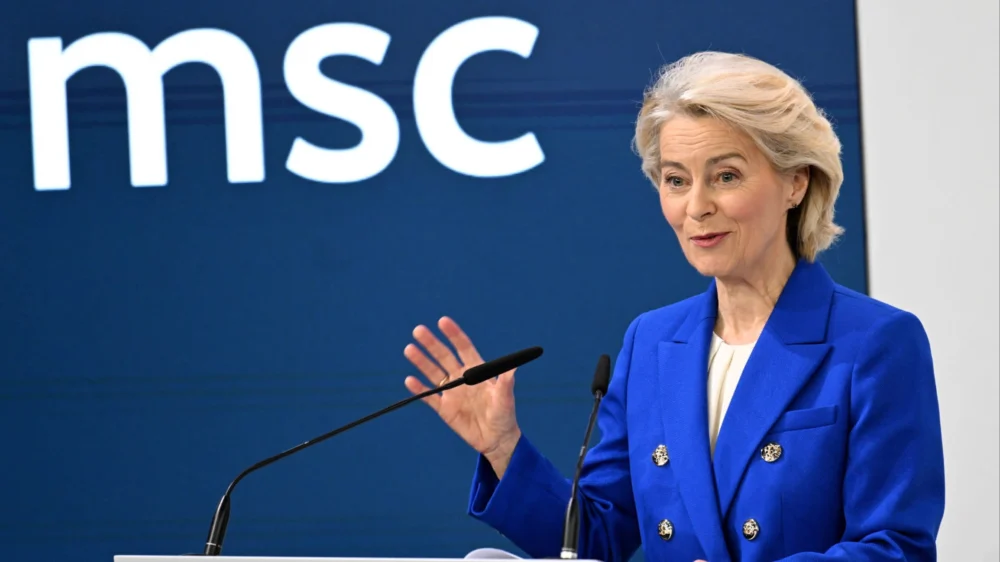
In an era of escalating global instability and shifting geopolitical landscapes, European leaders are being urged to move beyond rhetoric and decisively implement the foundational principles of mutual defense, a crucial step to ensuring the continent’s security and strategic autonomy.
The stark reality of the contemporary international environment necessitates a profound re-evaluation of Europe’s defense posture. The continent, long accustomed to a period of relative peace and stability, now finds itself confronting a complex web of threats, ranging from resurgent authoritarianism and hybrid warfare to the persistent specter of conventional conflict. Against this backdrop, the principle of collective defense, enshrined in Article 42(7) of the Treaty on European Union, is no longer a theoretical construct but a critical operational imperative.
The Genesis of Collective Defense and its Current Relevance
Article 42(7) of the Treaty on European Union, often referred to as the EU’s mutual defense clause, provides a framework for member states to come to the aid of another if it is the victim of armed aggression on its territory. This clause, inspired by the North Atlantic Treaty Organization’s (NATO) Article 5, represents a significant commitment to solidarity and shared security among EU members. However, for years, its practical application has remained largely dormant, overshadowed by the dominant security architecture provided by NATO and a prevailing sense of continental tranquility.
The renewed emphasis on this clause by European Commission President Ursula von der Leyen signals a pivotal shift in strategic thinking. It acknowledges that while NATO remains the cornerstone of European security for many, the EU possesses its own unique capabilities and responsibilities that must be fully leveraged. The current geopolitical climate, characterized by Russia’s aggressive actions in Ukraine and a broader resurgence of state-based military competition, has unequivocally demonstrated that the continent can no longer afford to be complacent. The war in Ukraine has not only shattered decades of post-Cold War optimism but has also exposed the vulnerabilities inherent in relying solely on external security guarantees.
Understanding the Nuances of Article 42(7)
It is crucial to understand that Article 42(7) is distinct from, and complementary to, NATO’s collective defense commitment. While NATO’s Article 5 is a military alliance obligation binding all members to consider an attack on one as an attack on all, the EU’s clause is a political and legal commitment within the framework of the European Union. It does not automatically trigger a military response, but rather obliges member states to "aid and assist by all the means in their power, whatever they may be." This allows for a more flexible and nuanced approach, encompassing diplomatic, economic, and military measures tailored to the specific nature of the threat.
The clause’s strength lies in its inherent solidarity, fostering a sense of shared destiny among member states. However, its activation requires a unanimous decision by the Council of the European Union, which can be a complex political process. The challenge, therefore, is not merely in the existence of the clause but in establishing the political will and the operational mechanisms to ensure its swift and effective implementation when needed.
The Imperative for Action: Why Now?
Several converging factors underscore the urgency of "bringing the mutual defence clause to life."
Firstly, the deterioration of the security environment in Europe is undeniable. Russia’s invasion of Ukraine has fundamentally altered the continent’s strategic calculus. The conflict has demonstrated a willingness by a major power to employ large-scale military force, challenging established norms and international law. This has created a tangible sense of insecurity among many European nations, particularly those in Eastern Europe with direct historical experience of Soviet domination. The implications extend beyond direct military threats, encompassing destabilizing hybrid warfare tactics, cyberattacks, and disinformation campaigns aimed at undermining democratic institutions and societal cohesion.
Secondly, the evolving role of the United States in global security is a significant consideration. While the transatlantic alliance remains vital, there is a growing recognition in European capitals that the continent must assume greater responsibility for its own defense. Shifts in US foreign policy priorities, coupled with the sheer scale of global challenges, necessitate a more self-reliant Europe. This does not imply a decoupling from NATO, but rather a strengthening of Europe’s own defense capabilities to act as a more capable and credible partner within the alliance.
Thirdly, the strategic autonomy debate within the EU has gained significant traction. The concept of strategic autonomy envisions a Europe that can act independently on the world stage, possessing the capacity to defend its interests and values without undue reliance on external actors. Activating the mutual defense clause is a crucial step in realizing this ambition. It demonstrates a collective commitment to security that transcends individual national interests and builds a more robust European defense ecosystem.
Bridging the Gap: From Clause to Capability
The transition from a dormant legal provision to a functional defense mechanism requires a multi-pronged approach.
-
Enhancing Military Readiness and Interoperability: For Article 42(7) to be credible, European armed forces must possess the necessary capabilities and be able to operate seamlessly together. This involves increased defense spending, joint procurement of advanced military equipment, and regular, realistic joint military exercises. Harmonizing doctrines, command structures, and logistical chains is essential to ensure that when the clause is invoked, a coordinated and effective response is possible. This also includes investing in emerging defense technologies, such as artificial intelligence, cyber warfare capabilities, and advanced drone systems, to maintain a technological edge.
-
Developing Clear Activation Protocols: The current lack of predefined protocols for invoking Article 42(7) creates a significant hurdle. Member states need to agree on clear criteria for assessing when an armed aggression has occurred and what constitutes "aid and assist." Establishing a streamlined decision-making process within the Council, perhaps through a dedicated working group or a pre-defined crisis management mechanism, would expedite response times. This requires overcoming political sensitivities and fostering a culture of trust and transparency.
-
Strengthening the European Defence Agency (EDA) and PESCO: The EDA plays a crucial role in coordinating defense research, development, and procurement. Its mandate and resources should be further enhanced to facilitate joint projects and foster technological innovation. The Permanent Structured Cooperation (PESCO) framework offers a valuable avenue for member states to undertake joint defense projects and develop interoperable capabilities. Expanding participation in PESCO and ensuring that its projects directly contribute to the operationalization of Article 42(7) is vital.
-
Integrating Civilian and Military Responses: The threats Europe faces are not solely military. Hybrid warfare, cyberattacks, and disinformation campaigns require a comprehensive response that integrates civilian and military instruments of power. The EU’s experience in developing civilian crisis management missions can be leveraged to create a more holistic approach to security, where diplomatic, economic, and military tools are deployed in a coordinated manner.
-
Fostering Public and Political Consensus: The effective implementation of a mutual defense clause relies on broad public and political support. Governments need to communicate clearly to their citizens the importance of collective defense and the rationale behind increased defense investments. Building a shared understanding of the threats and the necessity of a united response is crucial for sustaining the political will required for sustained action.
Implications for the Future of European Security
The proactive activation of Europe’s mutual defense clause carries profound implications:
- Enhanced Deterrence: A credible and readily deployable collective defense mechanism would significantly enhance Europe’s deterrent capabilities, making the continent a less attractive target for aggression. This would contribute to greater regional stability and reduce the likelihood of conflicts.
- Increased Strategic Leverage: A more unified and capable Europe would possess greater strategic leverage on the global stage. This would enable the EU to play a more assertive role in shaping international security norms, resolving conflicts, and promoting its values.
- Strengthened Transatlantic Relationship: Paradoxically, a stronger and more self-reliant Europe would also strengthen the transatlantic alliance. A more capable EU would be a more valuable partner for the United States, allowing for a more equitable distribution of security burdens and a more effective response to global challenges.
- Economic Benefits: Increased investment in European defense industries can foster innovation, create high-skilled jobs, and drive economic growth. Joint procurement and research can lead to economies of scale, reducing costs and improving the efficiency of defense spending.
- Resilience Against Hybrid Threats: By integrating civilian and military responses, Europe can build greater resilience against hybrid threats, which often seek to exploit societal divisions and undermine democratic processes.
Challenges and the Path Forward
Despite the compelling arguments for activating Article 42(7), significant challenges remain. National sovereignty concerns, differing threat perceptions among member states, and the complex budgetary implications of increased defense spending are all factors that need to be carefully navigated. The political will to move beyond declarations and towards concrete actions will be tested.
However, the current geopolitical juncture offers a unique window of opportunity. The war in Ukraine has served as a harsh but effective wake-up call. European leaders now have a mandate and a clear rationale to translate the abstract principle of mutual defense into tangible reality. The success of this endeavor will depend on sustained political commitment, strategic foresight, and a willingness to invest in the collective security that underpins Europe’s prosperity and stability. The time for Europe to truly "bring its mutual defence clause to life" is not in the future, but now.




 Aura Kasih
 Lisa Mariana



 Ayu Aulia