Lisa Mariana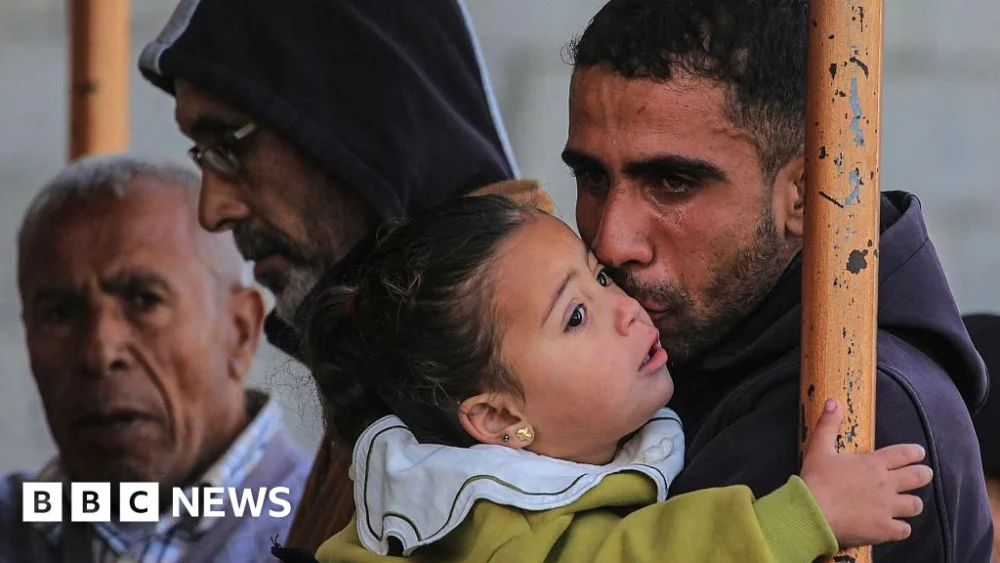
A recent surge in hostilities across the Gaza Strip has resulted in the tragic deaths of eleven individuals following targeted Israeli military operations on Sunday morning, according to detailed reports from Palestinian civil defense and health authorities, casting a grim shadow over the precarious ceasefire arrangements and nascent international efforts to stabilize the embattled territory. These fatalities underscore the profound fragility of the existing truce and highlight the formidable challenges confronting a US-backed initiative to establish a lasting peace and reconstruct the devastated enclave. The renewed violence comes as diplomatic discussions intensify regarding the implementation of a multi-phased peace plan and the formation of a new governance structure for Gaza, even as regional powers grapple with broader geopolitical flashpoints, including concerns over Iran’s nuclear ambitions.
Palestinian emergency services documented a particularly devastating strike on a tent encampment situated in the northern reaches of the Gaza Strip, an area densely populated by internally displaced persons seeking refuge from the ongoing conflict. This particular incident alone claimed the lives of at least six people, as reported by the Palestinian Red Crescent, which has been at the forefront of emergency response efforts in the beleaguered region. Concurrently, a separate Israeli operation in the southern part of the strip resulted in five additional fatalities, contributing to a rapidly escalating death toll. These incidents are not isolated; Gaza’s Civil Defence Directorate has confirmed the eleven casualties attributed directly to the strikes, while medical personnel at Al-Shifa Hospital in Gaza City noted a twelfth individual died in an unrelated exchange of gunfire, further illustrating the pervasive danger within the territory. This recent bloodshed dramatically elevates the number of lives lost since the nominal ceasefire took effect on October 10, with the Hamas-run Gaza health ministry reporting over 600 deaths in the intervening period, painting a stark picture of a truce honored more in breach than in observance.
The Israel Defense Forces (IDF) issued a statement asserting that its military actions were directed at "terror targets," framed as a defensive response to what it characterized as repeated ceasefire violations perpetrated by Hamas. The IDF further specified that militants were neutralized after emerging from a subterranean tunnel network into an area of the strip under Israeli military control, implying pre-emptive or responsive engagement with active threats. This narrative from the Israeli side consistently positions its operations as essential for national security, aimed at dismantling militant infrastructure and preventing further attacks. However, these justifications are met with staunch counter-accusations from Hamas, which routinely condemns Israeli incursions and strikes as aggressive acts that undermine any attempts at de-escalation. The continuous exchange of accusations regarding ceasefire breaches has become a defining feature of the post-October 10 period, with both parties alleging near-daily infringements, thereby perpetuating a cycle of violence and mistrust that prevents any meaningful or sustained calm from taking hold.
The very concept of a "ceasefire agreement" in this context appears increasingly tenuous, resembling more a fluctuating cessation of major hostilities rather than a comprehensive cessation of all military activities. The US-brokered agreement, which initially aimed to facilitate humanitarian aid, stabilize the situation, and pave the way for more substantive peace discussions, has been plagued by inconsistencies and sporadic violence since its inception. The initial phase of the agreement involved complex negotiations for the exchange of Israeli hostages held by Hamas for Palestinian prisoners detained in Israel, along with commitments for increased humanitarian access into Gaza. However, the implementation has been fraught with challenges, primarily due to the deep-seated animosity and lack of mutual confidence between the warring parties. The current violence erupted as preparations were reportedly underway for the "second phase" of this intricate agreement, a stage anticipated to involve more comprehensive steps towards de-escalation, potentially including further prisoner exchanges or broader security arrangements. The precise details of this second phase remain largely undisclosed to the public, adding to the uncertainty surrounding its feasibility amidst the renewed conflict.
Adding another layer of complexity to the post-conflict landscape, US President Donald Trump announced the establishment of a novel international entity last month: the "Board of Peace." This body, crucially mandated by the United Nations Security Council, has been tasked with an ambitious and multifaceted agenda aimed at fundamentally altering the security and governance paradigm in Gaza. Its primary responsibilities include the deployment of an international force designed to secure border areas, thereby preventing illicit arms smuggling and cross-border infiltrations, and overseeing the disarmament of Hamas, a militant organization that has historically resisted any attempts to relinquish its arsenal. The disarmament mandate, in particular, represents an enormous political and logistical hurdle, as Hamas views its military wing as integral to its resistance movement and its popular legitimacy within Gaza.
The Board of Peace is slated to convene its inaugural meeting in Washington on February 19, an event that will likely be scrutinized by international observers for any tangible signs of progress. Beyond security matters, the board’s purview extends to the intricate process of forming a new technocratic Palestinian government in Gaza. This proposed administration would ideally be composed of non-partisan experts, capable of focusing on governance and reconstruction without being beholden to any single faction. The establishment of such a government aims to overcome the longstanding division between the Hamas-controlled Gaza and the Palestinian Authority-governed West Bank, potentially paving the way for a unified Palestinian leadership. Furthermore, the board is charged with orchestrating the colossal task of post-war reconstruction, an undertaking estimated to require billions of dollars and extensive international coordination to rebuild the vast swathes of infrastructure, housing, and public services decimated by successive conflicts. The success of this ambitious board hinges on the willingness of all regional and international stakeholders to cooperate, a prospect that remains highly uncertain given the volatile political climate.
The immediate catalyst for the current conflict and the subsequent, fragile ceasefire was the unprecedented Hamas-led assault on southern Israel on October 7, 2023. This meticulously planned and executed incursion saw militants breach Israeli security barriers, resulting in the brutal killing of approximately 1,200 people, predominantly civilians, and the abduction of 251 others who were taken hostage into Gaza. The scale and brutality of this attack sent shockwaves across Israel and the international community, triggering an immediate and robust military response from Israel. Prime Minister Benjamin Netanyahu’s government declared its unequivocal objective: to dismantle Hamas’s military and governance capabilities, ensure the liberation of all hostages, and restore a sense of security to its southern borders.
Israel’s subsequent military campaign in Gaza, characterized by intensive aerial bombardments, artillery shelling, and a ground invasion, has inflicted catastrophic damage on the densely populated enclave. According to the Hamas-run Gaza health ministry, the death toll in the territory has tragically surpassed 71,820 individuals, with a significant proportion being women and children. The offensive has also led to the widespread displacement of nearly 80% of Gaza’s 2.3 million residents, pushing them into overcrowded and unsanitary tent cities, particularly in the southern region. Critical infrastructure, including hospitals, schools, and residential buildings, has been severely damaged or destroyed, leading to a profound humanitarian crisis marked by acute shortages of food, water, medicine, and electricity. International humanitarian organizations have repeatedly warned of impending famine and a public health catastrophe, urging for an immediate and sustained cessation of hostilities to allow for the delivery of life-saving aid.
Beyond the immediate theater of conflict in Gaza, the regional geopolitical landscape remains intricately linked and fraught with tensions. Israeli Prime Minister Benjamin Netanyahu embarked on a diplomatic visit to Washington just last Wednesday, engaging in high-level discussions with US President Donald Trump. A principal item on their agenda was the pressing concern over Iran’s nuclear program, which both Israel and the United States view as a significant threat to regional and global stability. Tehran has consistently maintained that its nuclear activities are exclusively for peaceful civilian purposes, a claim that Israel and its allies largely dispute.
During his visit, Netanyahu was expected to exert considerable pressure on President Trump to pursue a more stringent international agreement that would not only halt Iran’s uranium enrichment activities but also curtail its ballistic missile program, which Israel perceives as a direct threat. The history of international efforts to curb Iran’s nuclear ambitions, notably the 2015 Joint Comprehensive Plan of Action (JCPOA) from which the US unilaterally withdrew, underscores the profound complexities and divisions surrounding this issue. For Israel, Iran represents an existential threat, not only due to its nuclear capabilities but also its support for proxy groups across the Middle East, including Hezbollah in Lebanon and various militant factions in Gaza. While the meeting between Netanyahu and Trump reportedly touched upon these critical issues, President Trump later indicated that "nothing definitive" had been reached during their discussions, adding that talks with Iran would nonetheless continue. This suggests that while concerns remain high, a clear pathway for a new, comprehensive agreement with Iran has yet to materialize, leaving a significant regional security challenge unresolved amidst the ongoing turmoil in Gaza.
The convergence of these interconnected crises – the immediate violence in Gaza, the precarious nature of the ceasefire, the ambitious yet challenging post-conflict governance plans, and the overarching regional tensions with Iran – paints a picture of profound instability. The ability of the "Board of Peace" to fulfill its mandate, particularly regarding Hamas disarmament and the formation of a unified Palestinian government, will be severely tested by the continuing military engagements and the deep political fissures within the Palestinian landscape. International actors face the daunting task of navigating these complexities, pushing for de-escalation while simultaneously laying the groundwork for a sustainable peace that addresses both security concerns and humanitarian imperatives. Without a dramatic shift in the trajectory of the conflict and a renewed commitment to the ceasefire by all parties, the prospects for a lasting resolution in Gaza, and indeed for broader regional stability, remain exceedingly dim. The human cost of this protracted conflict continues to mount, demanding urgent and decisive action from the global community.

 Ridwan Kamil
 Aura Kasih
 Ayu Aulia