Lisa Mariana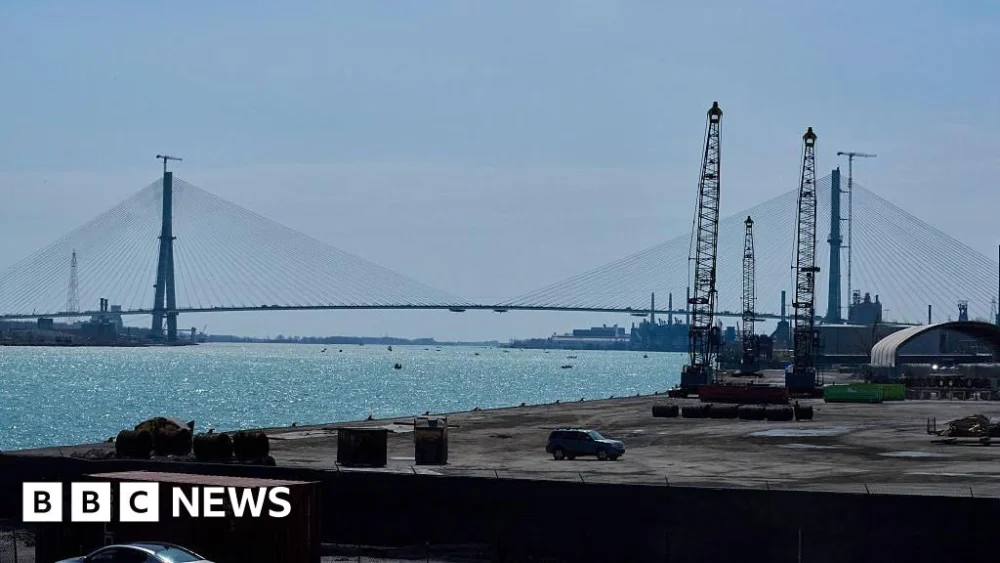
A significant infrastructure project poised to bolster North American trade and connectivity faces an unexpected geopolitical challenge, as former U.S. President Donald Trump has publicly declared his intent to prevent the operational launch of the Gordie Howe International Bridge until the United States receives what he deems "full compensation" from Canada. This declaration, disseminated through his social media channels, injects considerable uncertainty into the timeline for the bridge’s opening, demanding immediate attention from policymakers, economic strategists, and diplomatic channels on both sides of the border.
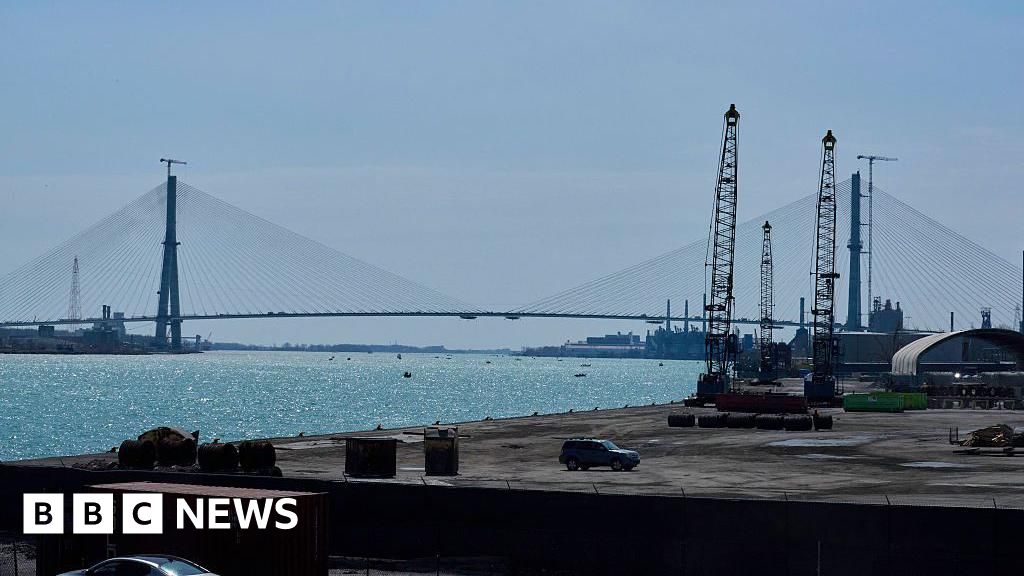
The Gordie Howe International Bridge, a monumental undertaking spanning the Detroit River, is designed to link Windsor, Ontario, with Detroit, Michigan, serving as a critical artery in the intricate North American supply chain. This project, which has been under construction since 2018 and is nearing completion, represents a decades-long vision for enhancing trade capacity and resilience between two of the world’s closest economic partners. Its imminent opening, anticipated early this year pending final regulatory approvals and testing, has been celebrated as a testament to cross-border cooperation and a vital upgrade to an aging infrastructure network.
Trump’s demand for unspecified "fairness and respect" from Ottawa and his assertion that the U.S. should possess "at least one half of this asset" despite the project’s distinct financing structure, immediately triggered a wave of concern. The former president’s statement further suggested that Canada "takes advantage of America," echoing a familiar rhetoric from his previous administration regarding bilateral trade imbalances and perceived inequities. His claims also controversially included an accusation that the project commenced under the Obama administration without utilizing any U.S. steel, a contention swiftly refuted by Canadian municipal officials.
Historical Context and Strategic Imperative
The necessity for the Gordie Howe International Bridge stems from the critical reliance of North American commerce on efficient border crossings. The existing Ambassador Bridge, privately owned by the Moroun family, has long been the busiest commercial crossing between the U.S. and Canada, handling a substantial portion of the annual $600 billion in bilateral trade. However, its age, capacity limitations, and the singular point of failure it represents have underscored the urgent need for a redundant and expanded crossing. The automotive industry, in particular, with its deeply integrated, just-in-time supply chains, is heavily dependent on the swift movement of goods across this corridor. Any disruption at the border can cascade rapidly through manufacturing networks, leading to production halts and significant economic losses.
The concept of a new bridge has been a topic of discussion for well over a decade, navigating complex political, legal, and environmental hurdles. A key obstacle involved securing funding and overcoming opposition from the owners of the Ambassador Bridge, who aggressively litigated against the construction of a competing span, viewing it as an infringement on their monopoly on toll collection. Ultimately, the Canadian government committed to financing the entirety of the bridge’s construction, estimated at approximately C$6.4 billion (approximately £3.4 billion), an arrangement designed to circumvent fiscal constraints in Michigan and expedite the project. While Canada is funding the build, the bridge will be jointly owned by both the Canadian and Michigan governments through the Windsor-Detroit Bridge Authority (WDBA), an entity wholly owned by the Canadian government. This unique financing model underscored Canada’s strategic commitment to bolstering cross-border trade infrastructure.
Economic Ramifications and Political Backlash
The threat to impede the bridge’s opening has been met with strong opposition from political and economic leaders, particularly in Michigan and Ontario, who recognize the profound implications for regional economies. Michigan Senator Elissa Slotkin, a Democrat, articulated grave concerns, warning of "serious repercussions" for her state’s economy, including elevated costs for businesses, diminished supply chain security, and ultimately, job losses. This sentiment was echoed by Michigan Governor Gretchen Whitmer, also a Democrat, whose press secretary emphasized the project as a "tremendous example of bipartisan and international cooperation" and a boon for job creation within the state.
The potential economic disruption is not merely theoretical. The Detroit-Windsor corridor is a linchpin of North American manufacturing and logistics. Disrupting the flow of goods would not only affect the automotive sector but also agriculture, technology, and countless other industries reliant on timely cross-border movements. Businesses have made investment decisions and structured their operations based on the anticipated operational efficiency of the new bridge. A delay, or worse, a permanent blockage, would force a costly re-evaluation of these strategies, potentially driving up consumer prices and diminishing the competitiveness of North American industries on a global scale.
Legal and Diplomatic Uncertainties
One of the most pressing questions arising from Trump’s declaration is the practical mechanism by which a former president, or even a future president, could legally and practically block the opening of an internationally funded and jointly owned infrastructure project. While a U.S. president possesses broad executive authority, unilaterally halting a project of this nature, especially one with such significant international investment and agreement, would likely face immediate and substantial legal challenges. Potential avenues for obstruction could involve withholding federal permits, delaying customs and border protection staffing, or invoking national security pretexts. However, such actions would be unprecedented and would undoubtedly ignite a complex legal battle involving federal, state, and international law, potentially escalating to the Supreme Court.
Diplomatically, such a move would represent a severe deterioration of the historically stable and cooperative U.S.-Canada relationship. The two nations share the world’s longest undefended border and maintain deeply intertwined economies and cultural ties. Forcing a standoff over a mutually beneficial infrastructure project would undermine trust, complicate future bilateral initiatives, and send a chilling message to other international partners about the reliability of U.S. commitments. Senator Slotkin’s retort, suggesting Canada was pursuing closer trade ties with China precisely because Trump had previously "kicked them in the teeth," highlights the lingering diplomatic strains from his previous term.
Trump’s broader grievances, including long-standing complaints about Canadian dairy tariffs, have been a recurring theme in his trade rhetoric. While dairy tariffs are a legitimate point of contention in trade negotiations, conflating them with a massive infrastructure project funded by Canada represents a significant departure from conventional diplomatic practice. His unconventional rhetorical flourish, suggesting China would terminate "ALL Ice Hockey being played in Canada, and permanently eliminate The Stanley Cup" in response to a hypothetical Canadian trade deal, further underscores the unique and unpredictable nature of his communication style.
Implications for North American Resilience and Future Outlook
The Gordie Howe International Bridge is more than just a physical link; it symbolizes North American economic integration and the shared commitment to strengthening supply chain resilience. The COVID-19 pandemic and subsequent global disruptions highlighted the vulnerabilities inherent in extended supply chains and underscored the importance of robust domestic and near-shore manufacturing capabilities. The new bridge is critical for ensuring the continuous flow of goods and raw materials, thereby safeguarding thousands of jobs and ensuring economic stability across the continent. Impeding its opening would directly undermine these efforts and introduce an element of geopolitical risk into core economic planning.
Looking ahead, the resolution of this potential standoff will be closely watched by international investors and trade partners. Should a future Trump administration attempt to follow through on this threat, the process would likely involve intense diplomatic negotiations, potential legal challenges from Canadian and Michigan stakeholders, and a significant test of the foundational principles governing cross-border infrastructure development. The outcome would not only determine the fate of the Gordie Howe Bridge but also set precedents for how future disputes between closely allied nations are managed, particularly when substantial economic interests and national pride are at stake. Regardless of the immediate outcome, the very public threat has cast a shadow over what was intended to be a celebratory moment for North American cooperation, signaling a continued era of unpredictable and assertive U.S. foreign economic policy under certain political leaderships.



 Aura Kasih
 Ridwan Kamil