Lisa Mariana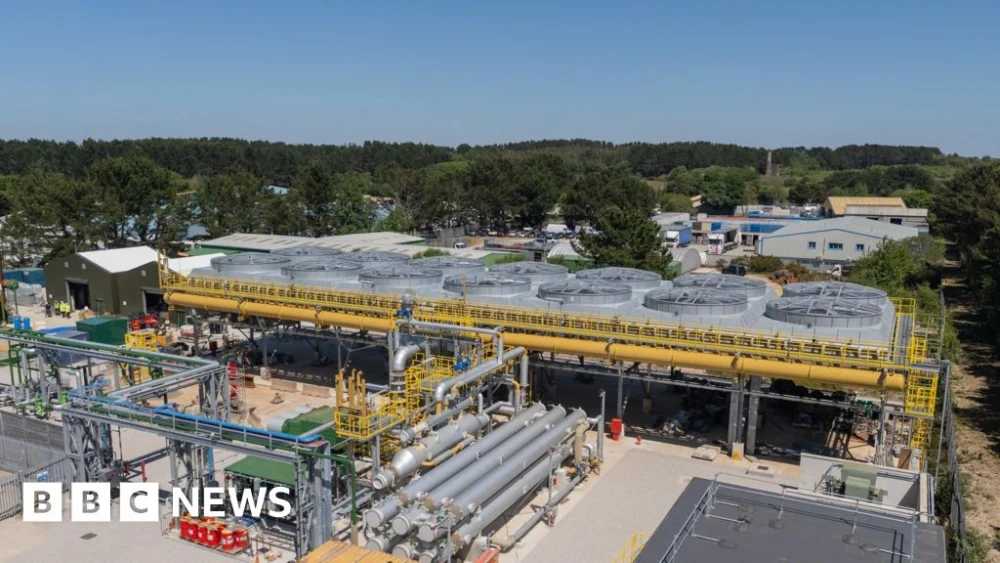
The United Kingdom has reached a significant clean energy milestone with the operational launch of its first commercial deep geothermal power plant, marking a pivotal moment in the nation’s quest for diversified, resilient, and sustainable electricity generation. Located in the geological heartland of Cornwall, this pioneering facility harnesses the intrinsic heat of the Earth’s crust to generate a continuous supply of electricity, capable of energizing thousands of residences while simultaneously unlocking a crucial domestic source of lithium, a vital element for the burgeoning green technology sector. This innovative dual-benefit approach underscores a strategic shift towards leveraging indigenous natural resources to bolster both energy independence and supply chain security for critical minerals, setting a precedent for future renewable infrastructure development across the archipelago.
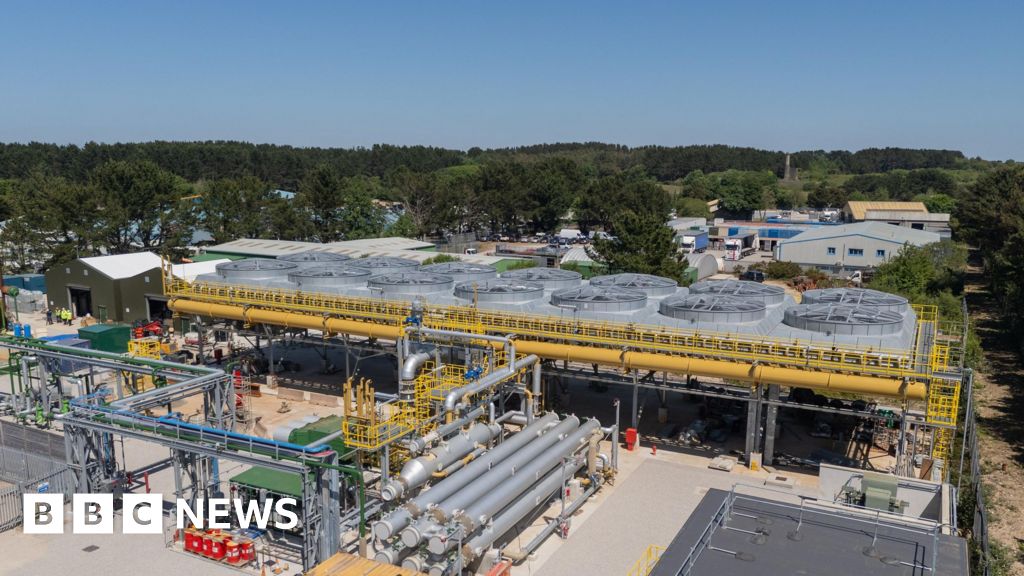
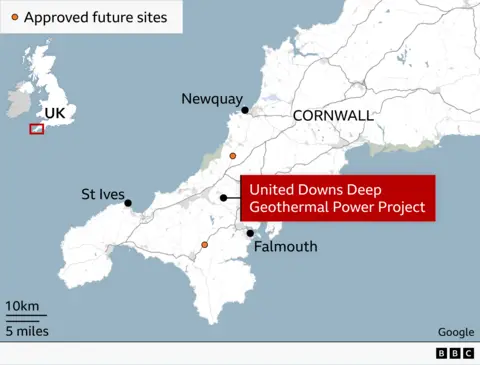
For nearly two decades, the ambitious vision of Geothermal Engineering Ltd (GEL) has propelled the development of this groundbreaking project near Truro. The undertaking demanded an extraordinary feat of engineering: the drilling of the deepest onshore well ever attempted in the United Kingdom. This intricate subsurface exploration was necessary to access the superheated subterranean water, a process that culminates this Thursday morning with the plant’s official activation. The high-temperature fluid, heated by the deep granite formations, will be circulated to drive turbines, providing a stable and predictable flow of electricity directly to the national grid. Beyond its primary role in power generation, the facility is poised to deliver a transformative secondary output: the extraction of lithium, a strategic mineral indispensable for electric vehicle batteries and various other advanced energy storage solutions.
The British Geological Survey (BGS) has lauded this development as a monumental leap forward for geothermal energy in the UK, recognizing its potential to reshape the national energy landscape. However, experts from the BGS also acknowledge the substantial financial investment required for such deep drilling operations, suggesting that the initial capital expenditure could present challenges for widespread replication without robust policy and funding mechanisms. The £50 million project, financed through a combination of private investment and significant contributions from the European Development Fund, highlights the scale of commitment necessary to bring such advanced renewable energy solutions to fruition.
Geothermal energy fundamentally leverages the Earth’s internal heat, a perpetually available resource, to provide a consistent and renewable power source for heating and electricity. This energy is accessed by drilling into geological formations where temperatures naturally increase with depth. While shallow geothermal systems typically utilize temperatures for direct heating applications, deep geothermal technology targets much higher temperatures, often exceeding 150-200 degrees Celsius, found several kilometres below the surface. At these depths, the intense heat is sufficient to convert water into steam or superheated fluid, which can then be used to drive turbines and generate electricity.
The geological characteristics of the UK, particularly regions like Cornwall with its deep granite batholiths, are conducive to deep geothermal development. Granite is particularly effective at retaining and conducting heat, making it an ideal medium for heat exchange within a geothermal system. As Dr. Monaghan, head of geothermal at the British Geological Survey, explains, the process involves "drilling deep boreholes into the ground, and then fractures within the granite rock are used to circulate the water that pick up the heat [that is] used for electricity production." This closed-loop circulation minimizes environmental impact and ensures a sustainable energy extraction process. The successful implementation of this technology in the UK marks a culmination of extensive research and engineering, overcoming the significant technical and financial hurdles associated with deep drilling in complex geological environments.
The protracted journey to this operational milestone underscores the dedication of the teams involved. Ryan Law, CEO of GEL, expressed profound excitement, noting, "after 15 years of hard graft, difficulties, we’re finally there." He emphasized the strategic importance of geothermal power for the UK, particularly its immunity to the price volatility that plagues fossil fuels like natural gas. Furthermore, unlike intermittent renewable sources such as wind and solar, geothermal energy provides "constantly on, 24/7 electricity," offering crucial baseload power that enhances grid stability and reliability. This constant availability is a distinguishing feature that positions geothermal as a uniquely valuable component of a diversified renewable energy portfolio.
The electricity generated by the United Downs plant has been secured by Octopus Energy, a prominent energy supplier, which will integrate it into the national grid to power approximately 10,000 homes. An Octopus spokesperson hailed the project as a "genuine game-changer," highlighting its contribution of "always-on" green power and a "steady stream of clean, home-grown energy" to the UK. This partnership exemplifies the growing collaboration between innovative energy developers and established providers, driving the transition towards a more sustainable and secure energy future.
Looking ahead, GEL has outlined plans for two additional power plant sites, though one proposed development currently faces an appeal process due to environmental considerations. This highlights the ongoing need for careful site selection, rigorous environmental impact assessments, and effective community engagement in the expansion of geothermal infrastructure. While the initial project benefited from significant European funding, the future growth of the sector will increasingly rely on a coherent national strategy and diverse investment streams.
The technical feasibility of deep geothermal electricity generation extends beyond Cornwall, with potential identified in regions such as Scotland and the Northeast of England, areas also characterized by favourable geological conditions. However, the absence of approved development plans in these regions underscores a broader challenge: translating geological potential into operational projects. Anne Murrell, head of the industry body Geothermal UK, articulates this gap, stating, "We have a great energy resource, underneath our feet in the UK, but we’re not maximising its potential." She argues that while the operational costs of deep geothermal are comparable to other forms of electricity generation, the substantial upfront capital expenditure for drilling and infrastructure remains a significant barrier.
To unlock the full potential of this nascent industry, Murrell stresses the critical need for a supportive government policy framework. "The challenges we have include investment, and to unlock investment and increase investor confidence, we need a supportive government policy framework – geothermal needs to be recognised by government as a key part of our energy strategy," she stated. Encouragingly, the government has shown increasing interest in the sector, evidenced by the appointment of Lord Whitehead as the country’s first geothermal minister late last year. In anticipation of the plant’s activation, Lord Whitehead hailed it as a "groundbreaking moment for UK energy innovation," signaling a growing political commitment to integrating geothermal into the national energy strategy.
Beyond deep geothermal, the broader geothermal industry is experiencing growth, particularly in shallow geothermal applications, which involve lower upfront costs and are often focused on direct heating. Currently, approximately 30,000 ground source heat pumps are installed in UK homes, with government grants incentivizing their adoption. Local authorities and businesses are also embracing the technology. A notable example is Gateshead Council, which utilizes heat extracted from water in abandoned coal mines to warm hundreds of homes. Estimates suggest that a quarter of UK homes are situated above former coal mines, presenting an immense, untapped resource for similar mine-water heating schemes. This diversified approach to geothermal utilization, from deep electricity generation to shallow heating, demonstrates the versatility and broad applicability of Earth’s thermal energy.
Globally, investment in deep geothermal for electricity generation is experiencing a remarkable surge, as reported by the International Energy Agency (IEA), with an 80% year-on-year increase since 2018. This acceleration is partly driven by the escalating electricity demands of rapidly expanding sectors, particularly data centres operated by technology giants. As Ms Murrell highlights, "Data centres have major power needs, and we all know that this is very challenging for our current and future anticipated grid." Consequently, major tech corporations like Google, Meta, and Microsoft are actively exploring geothermal solutions to power their energy-intensive operations, recognizing its stable and continuous supply. An additional benefit for these companies is the potential to integrate the excess heat produced by data centres into the same underground geothermal systems, creating a highly efficient and symbiotic energy solution.
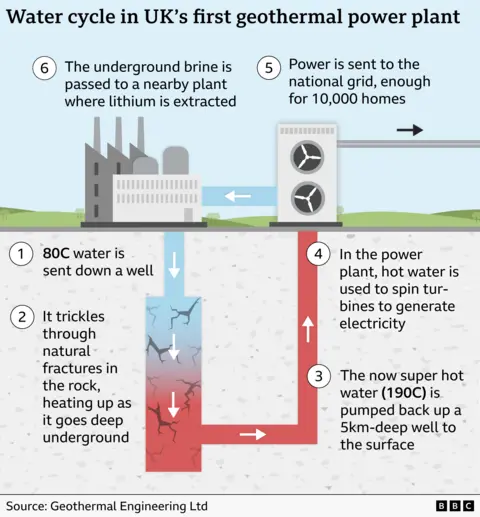
The co-production of critical minerals further amplifies the strategic value of geothermal electricity projects. The United Downs facility exemplifies this by integrating the extraction of lithium carbonate from the geothermal fluid. This marks the UK’s first commercial source of this critical mineral, which is indispensable for the manufacturing of electric vehicle batteries and other advanced energy storage technologies. While the initial output from the site will be modest—approximately 100 tonnes of lithium annually, sufficient for around 1,400 electric vehicles—GEL has ambitious plans to significantly scale this production to 18,000 tonnes per year. This potential for domestic lithium supply is particularly significant given that China currently processes over 60% of the world’s lithium, primarily for electric batteries, making the UK’s initiative a crucial step towards diversifying global supply chains and enhancing national economic resilience. The UK government has demonstrated its commitment to this aspect of the project, providing a £1.8 million grant, covering 50% of the initial lithium extraction costs.
The successful launch of the United Downs geothermal power plant represents a multifaceted triumph for the United Kingdom. It not only introduces a novel, always-on renewable energy source but also establishes a domestic supply of critical minerals, both of which are foundational to achieving net-zero emissions and enhancing national energy security. While challenges related to high upfront costs and the need for a comprehensive policy framework persist, the pioneering spirit of this project, coupled with increasing government recognition and burgeoning global investment, signals a promising future for geothermal energy as a cornerstone of the UK’s green industrial revolution. The Earth’s deep heat, long an untapped resource, is now poised to play an increasingly vital role in powering the nation’s homes and driving its transition to a sustainable economy.




 Aura Kasih
 Ayu Aulia