Lisa Mariana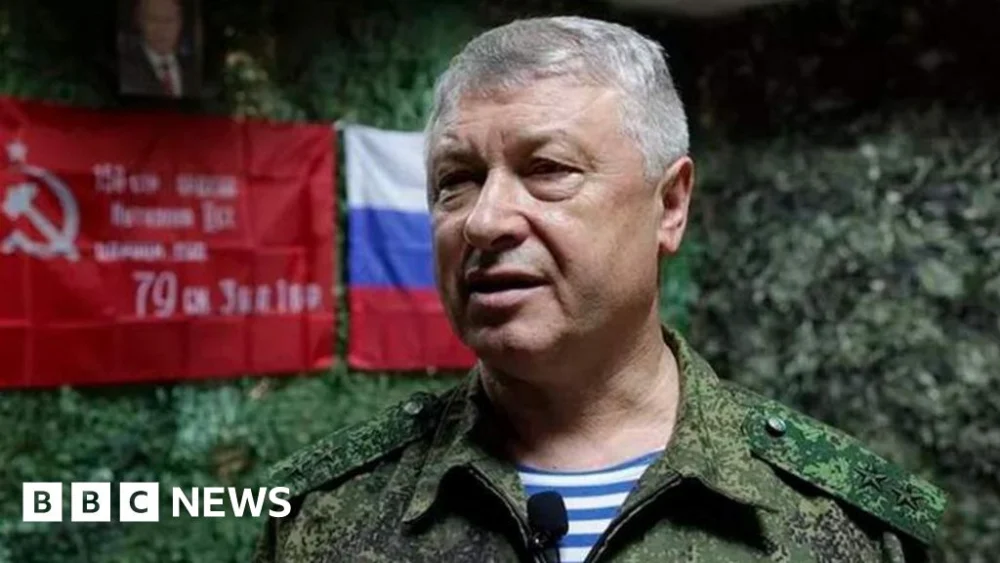
The attempted assassination of Lieutenant General Vladimir Alexeyev, a pivotal figure within Russia’s Main Intelligence Directorate (GRU), in a residential area of Moscow marks a significant escalation in the targeting of high-ranking military and intelligence personnel on Russian soil, raising profound questions about internal security, the reach of external adversaries, and potential internal fissures within the state apparatus.
Lieutenant General Alexeyev, holding the crucial position of Deputy Head of the GRU, was reportedly shot multiple times on Friday morning in an incident that has sent ripples through Russia’s defense establishment. The attack occurred within a residential complex on the northwestern periphery of the capital, a location typically considered secure, underscoring a disturbing vulnerability for a figure of his stature. While details regarding his current medical condition remain undisclosed, the severity of the assault suggests a determined effort to incapacitate or eliminate a key architect of Russia’s intelligence operations. The swift initiation of a criminal investigation for attempted murder by Russia’s Investigative Committee signals the gravity with which the Kremlin views this incident, with immediate efforts focused on apprehending the perpetrator, who reportedly fled the scene, and scrutinizing surveillance footage for critical clues.
Alexeyev’s prominence is not merely derived from his rank but from his strategic roles in some of Russia’s most sensitive and internationally scrutinized operations. His career trajectory reflects deep immersion in the covert world of military intelligence, culminating in his influential position within the GRU. This agency, historically known for its clandestine operations, has been at the forefront of Russia’s hybrid warfare doctrine, engaging in activities ranging from cyber warfare to intelligence gathering and special operations globally. The GRU’s operational scope, its reputation for ruthlessness, and its direct involvement in shaping Moscow’s geopolitical posture make Alexeyev’s targeting particularly consequential.
One of the most notable controversies associated with Alexeyev and the GRU is the 2018 Salisbury nerve agent attack in the United Kingdom. Following investigations, Western intelligence agencies, including those in the UK, attributed the poisoning of former GRU officer Sergei Skripal and his daughter Yulia to the GRU, specifically implicating several of its operatives. The international outcry that followed led to widespread diplomatic expulsions and the imposition of sanctions by the European Union and the United Kingdom on individuals deemed responsible, including Lieutenant General Alexeyev. This historical context provides crucial insight into the high-stakes environment in which Alexeyev operated and the significant adversaries he accumulated through his professional responsibilities. The attack in Moscow, therefore, could be interpreted through the lens of retribution or ongoing geopolitical antagonism stemming from such past incidents.
Beyond these international controversies, Alexeyev has played a direct and instrumental role in the ongoing conflict in Ukraine. In 2022, during the brutal siege of Mariupol, a city of immense strategic importance on the Sea of Azov, Alexeyev was reportedly involved in negotiations with Ukrainian forces. His presence at such sensitive talks highlights his deep operational involvement and the trust placed in him by the Russian leadership to manage critical military and diplomatic interfaces during intense combat operations. The protracted and devastating battle for Mariupol, characterized by immense human suffering and extensive destruction, ultimately resulted in the city’s capture by Russian forces. Alexeyev’s engagement in these high-level discussions underscores his direct influence on the battlefield and its periphery.
Even more recently, in June 2023, Lieutenant General Alexeyev was thrust into another crisis of paramount national security: the brief but dramatic mutiny led by Yevgeny Prigozhin, the head of the Wagner mercenary group. As Wagner forces advanced towards Moscow, Alexeyev was reportedly dispatched to negotiate with Prigozhin, attempting to de-escalate a situation that threatened to plunge Russia into internal chaos. His involvement in these frantic, high-stakes talks demonstrates his perceived ability to navigate treacherous political and military landscapes and his direct access to the highest echelons of power. The fact that a senior GRU officer was tasked with confronting a rogue paramilitary leader speaks volumes about Alexeyev’s authority and the critical nature of his interventions during moments of profound national instability.
The attack on Alexeyev also unfolds against a backdrop of increasing internal security concerns within Russia since the full-scale invasion of Ukraine commenced. The Russian capital, typically seen as a bastion of state control, has witnessed a series of audacious acts targeting military and intelligence figures. This pattern suggests either a sophisticated campaign by an external intelligence agency capable of operating deep within Russia’s borders, or a manifestation of profound internal dissent, or a complex interplay of both. The Kremlin’s immediate response, including public statements from Dmitry Peskov, indicating that President Putin was being directly briefed and expressing wishes for the general’s recovery, underscores the perceived severity of the event and its potential implications for national morale and stability.
Attribution for such an attack is inherently complex and often mired in geopolitical accusations. Russian Foreign Minister Sergei Lavrov was quick to point the finger at Ukraine, a predictable response given the ongoing conflict. While Kyiv has historically maintained a policy of strategic ambiguity regarding attacks on Russian territory, it has, on occasion, claimed responsibility for specific operations targeting figures deemed hostile. If Ukrainian intelligence agencies are indeed behind this attack, it would represent a significant expansion of their operational capabilities and a bold demonstration of their intent to inflict costs on Russia’s military leadership within its own heartland. Such actions could be interpreted as a psychological warfare tactic, aimed at eroding public confidence in the Kremlin’s ability to protect its most senior personnel and fostering a sense of vulnerability among the elite.
However, the possibility of internal factors cannot be entirely dismissed. The intensity of the conflict in Ukraine, the immense human and economic costs, and the increasing isolation of Russia on the international stage have undoubtedly created pressures within the Russian political and military establishment. While direct evidence of internal power struggles or disgruntled elements resorting to violence is rare and difficult to ascertain, the sheer number of high-profile incidents targeting individuals connected to the war effort prompts speculation. An attack of this nature, targeting a figure deeply embedded within the GRU, could serve as a message from rival factions or a manifestation of deep-seated grievances.
The Alexeyev shooting is not an isolated incident but rather the latest in a series of targeted attacks on prominent Russian military and intelligence personnel. In 2024, General Igor Kirillov, who headed Russia’s Nuclear, Biological, and Chemical Protection troops, was killed in an explosion outside a Moscow apartment building. Ukrainian intelligence (SBU) later claimed responsibility for that attack, stating it was a successful operation against a figure deemed crucial to Russia’s military capabilities. Kirillov’s specialization in NBC defense made him a particularly sensitive target, and his elimination was seen as a significant blow to Russia’s strategic military infrastructure.
Prior to that, in December 2025 (as per the provided text, implying a future date or a typo for 2023), Lieutenant General Fanil Sarvarov, another high-ranking officer within the GRU, reportedly perished when an explosive device detonated beneath his vehicle in Moscow. Sarvarov was responsible for the armed forces’ operational training department, making his death a substantial loss for the GRU’s internal development and readiness. The recurrence of car bombings and other targeted explosive devices suggests a degree of sophistication in these attacks, implying either highly capable external actors or well-resourced internal elements. The consistency of these methods across different incidents warrants detailed analytical scrutiny to discern patterns, operational signatures, and potential links between the perpetrators.
The cumulative effect of these attacks on Russia’s military and intelligence leadership is multifaceted. Firstly, it creates a palpable sense of insecurity within the elite, potentially fostering paranoia and leading to increased internal security measures, which could, in turn, breed resentment. Secondly, the loss of experienced commanders and intelligence chiefs, particularly those with deep institutional knowledge like Alexeyev and Sarvarov from the GRU, can degrade operational effectiveness and strategic planning. Their specialized expertise and roles in critical events like the Mariupol siege and the Wagner mutiny are not easily replaced. Thirdly, if these attacks are indeed orchestrated by external forces, they represent a significant intelligence coup and a potent demonstration of reach, which could embolden adversaries and undermine Russia’s image of invincibility.
Looking ahead, the attempted assassination of Lieutenant General Alexeyev will undoubtedly trigger an intensified crackdown on internal security within Russia. The Kremlin will likely redouble efforts to identify and neutralize perceived threats, both foreign and domestic. This could manifest as increased surveillance, stricter controls, and potentially purges within the security apparatus if failures are identified. For the GRU itself, the incident may necessitate a reassessment of personal security protocols for its leadership and a renewed focus on counter-intelligence efforts to protect its high-value assets.
The geopolitical ramifications are equally significant. Should irrefutable evidence emerge linking the attack to Ukraine, Russia would face immense pressure to retaliate, potentially leading to a further escalation of hostilities. The nature and scale of such a response would be closely watched by the international community, potentially exacerbating regional instability. Conversely, if the investigation points towards internal dynamics, it could expose deeper vulnerabilities within the Russian state, challenging the narrative of unified control and potentially emboldening internal dissent.
In conclusion, the shooting of Lieutenant General Vladimir Alexeyev is far more than an isolated criminal act; it is a profound indicator of the escalating security challenges confronting Russia. As a senior figure in the GRU, with a history steeped in controversial international operations and direct involvement in critical phases of the Ukraine conflict, his targeting signifies a perilous new chapter in the covert struggle impacting the heart of Russia’s power structure. The outcome of the ongoing investigation, and the Kremlin’s subsequent response, will undoubtedly shape the trajectory of internal security, military operations, and the broader geopolitical landscape for the foreseeable future.



 Aura Kasih

 Ridwan Kamil