
 Ayu Aulia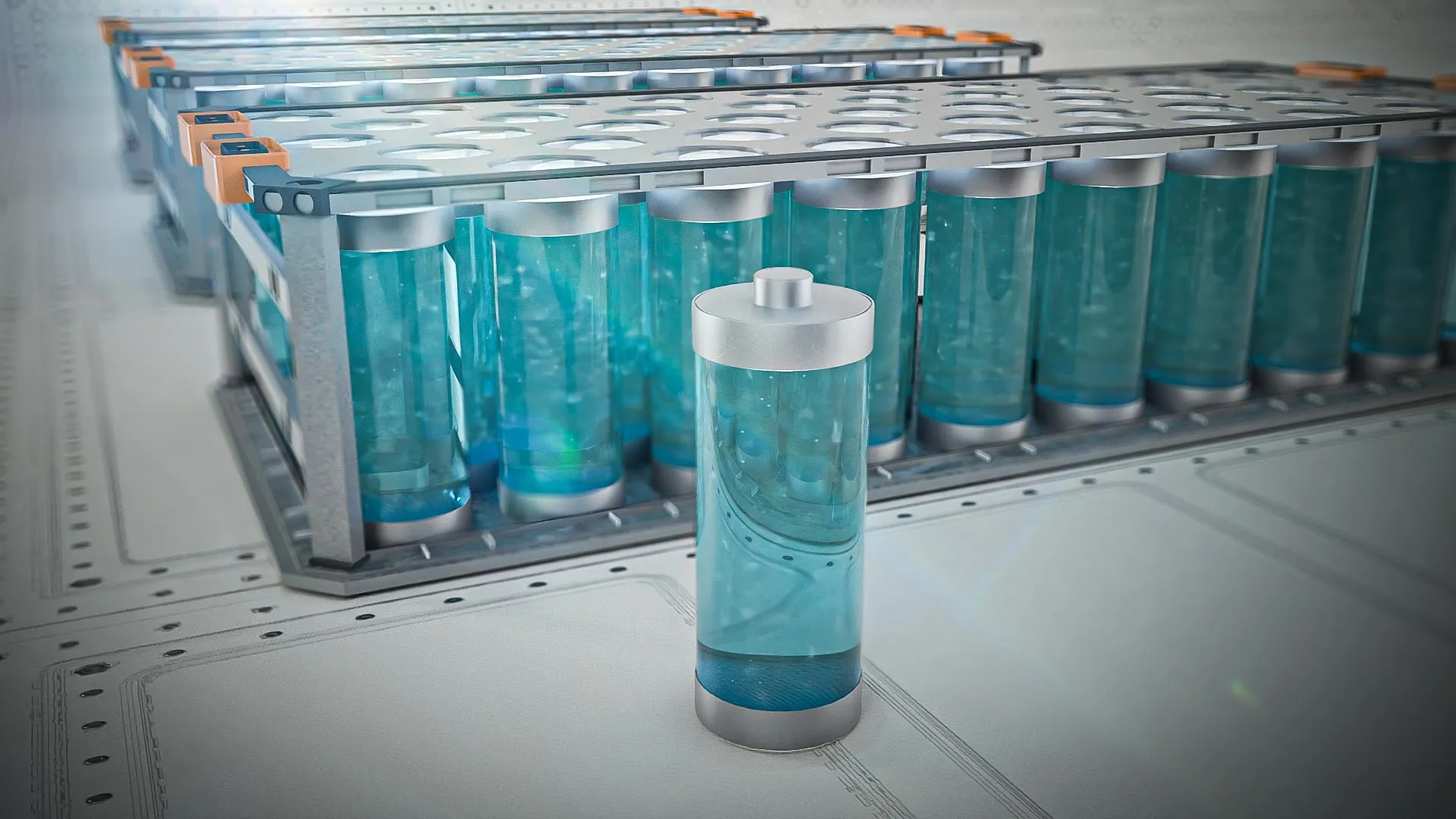
A paradigm shift in energy storage material science has emerged from recent research, demonstrating that, contrary to conventional wisdom, retaining water within critical battery compounds can unlock unprecedented performance enhancements. This innovative approach to sodium-ion battery technology not only promises significantly increased energy density and charging speeds but also introduces a novel capability for electrochemical seawater desalination, potentially transforming both sustainable energy infrastructure and global water management. This scientific advancement challenges long-held assumptions in battery chemistry, paving the way for a new generation of energy solutions that are both more efficient and environmentally synergistic.
The global imperative for robust, sustainable, and cost-effective energy storage solutions is escalating rapidly, driven by the increasing integration of intermittent renewable energy sources into national grids and the accelerating electrification of transportation. For decades, lithium-ion batteries (LIBs) have dominated this landscape, lauded for their high energy density and relatively long cycle life. However, the widespread adoption of LIBs faces inherent limitations: lithium itself is a finite resource, geographically concentrated, and its extraction often carries significant environmental and social costs. Furthermore, the reliance on other critical minerals like cobalt and nickel, also subject to supply chain volatility and ethical concerns, underscores the urgent need for viable alternatives.
Enter sodium-ion batteries (SIBs). Sodium, the sixth most abundant element in the Earth’s crust, is ubiquitously available, inexpensive, and boasts a chemical profile similar to lithium, making it a compelling candidate for next-generation battery technology. Despite these advantages, SIB development has historically lagged behind LIBs, primarily due to challenges in achieving comparable energy density, power output, and cycle stability. The larger ionic radius of sodium compared to lithium often leads to slower diffusion kinetics within electrode materials and can cause greater structural strain during repeated charge-discharge cycles, resulting in diminished performance. Overcoming these fundamental material science hurdles has been a central focus for researchers worldwide.
A recent breakthrough emanating from advanced materials research presents a radical re-evaluation of how electrode materials interact with their environment. Focusing on sodium vanadium oxide, a well-established sodium-based compound often considered for cathode applications, scientists discovered that intentionally allowing the material to retain its natural water content fundamentally alters and significantly improves its electrochemical properties. This finding directly contradicts the prevailing wisdom in battery engineering, which typically mandates the complete removal of water from electrode materials, often through energy-intensive heat treatments, to prevent parasitic reactions, corrosion, or structural degradation.
The specific compound under investigation, identified as nanostructured sodium vanadate hydrate (NVOH), exhibited profoundly superior characteristics when utilized in its hydrated form. Empirical testing revealed that NVOH cathodes stored nearly twice the charge compared to conventional sodium-ion cathode materials. This remarkable enhancement in energy storage capacity positions NVOH among the highest-performing cathodes reported to date for SIBs, effectively narrowing the performance gap with lithium-ion counterparts. Beyond increased energy density, the hydrated material also demonstrated accelerated charging rates and exceptional cycling stability, maintaining its robust performance over more than 400 charge-discharge cycles. This combination of attributes—high capacity, fast kinetics, and extended durability—represents a significant leap forward in SIB technology, addressing several key historical limitations simultaneously.
The unexpected nature of these findings underscores a pivotal moment in materials science. Researchers had long assumed that water molecules within the crystal lattice of electrode materials would be detrimental, interfering with ion intercalation, causing structural instability, or initiating unwanted side reactions that degrade battery performance and longevity. The revelation that hydration, when properly managed within the specific nanostructure of sodium vanadate, can instead act as an enabler rather than an impediment, opens new avenues for material design. While the precise mechanistic details are still being elucidated, it is hypothesized that the water molecules might play a critical role in stabilizing the host lattice, facilitating more efficient sodium ion transport channels, or even mediating interfacial reactions in a beneficial manner. This discovery challenges the very foundations of how researchers approach the synthesis and processing of active battery materials.
Beyond its transformative impact on battery performance, the research unveiled another groundbreaking capability: the effective operation of NVOH in saltwater environments, coupled with simultaneous electrochemical desalination. This represents an unprecedented dual functionality for a battery system. During experimentation, the hydrated sodium vanadate cathode not only continued to function efficiently in saline solutions, a notoriously demanding environment for most electrochemical devices due to corrosive effects and complex ion interactions, but it actively participated in removing sodium ions from the water. Concurrently, a graphite electrode within the system efficiently extracted chloride ions, collectively achieving electrochemical desalination.
This integrated approach to energy storage and water purification holds profound implications for sustainable resource management. Traditional desalination processes, such as reverse osmosis or multi-stage flash distillation, are notoriously energy-intensive, contributing significantly to global energy demand and carbon emissions. By leveraging a battery system that can both store energy and purify water, a synergistic solution emerges. Imagine coastal energy storage facilities that could utilize abundant seawater as an electrolyte, thereby eliminating the need for expensive, specially purified electrolytes, while simultaneously generating fresh water as a valuable byproduct. This vision could redefine the utility of battery infrastructure, moving beyond mere energy storage to address critical global challenges like water scarcity, particularly in arid coastal regions.
The ability to operate effectively in saltwater also opens the door to inherently safer and more cost-effective battery designs. Conventional battery electrolytes are often organic solvents, which can be flammable and toxic. Replacing these with an aqueous, potentially even seawater-based, electrolyte would drastically improve safety profiles, reduce material costs, and simplify manufacturing processes. Such systems would be less prone to thermal runaway events and could operate safely in a wider range of environmental conditions, further accelerating their adoption in large-scale applications.
The broader implications of this breakthrough are far-reaching, promising to accelerate the commercial adoption of sodium-ion batteries as a practical and superior alternative to lithium-based technology across multiple sectors. For grid-scale energy storage, where cost, safety, and longevity are paramount, the enhanced performance and environmental benefits of hydrated SIBs make them exceptionally well-suited. The ability to integrate massive amounts of intermittent renewable energy, such as solar and wind power, requires gigawatt-hour scale storage capacities, and the abundance and low cost of sodium position this technology as a leading contender for future energy grids.
In the realm of electric vehicles (EVs), while lithium-ion batteries currently offer the highest energy density for long-range applications, the rising costs and supply chain constraints of lithium, cobalt, and nickel are driving innovation towards more affordable alternatives. High-performance SIBs, particularly those achieving significantly higher energy densities like the hydrated sodium vanadate, could unlock new segments of the EV market, such as urban mobility, public transport, and commercial fleets, where the balance between range, cost, and safety might favor sodium over lithium. The ability to charge faster also addresses a critical consumer concern in EV adoption.
Looking ahead, the research trajectory for this novel hydrated sodium vanadate material will likely involve optimizing its synthesis and nanostructure to further enhance performance and stability. Researchers will explore different electrode architectures and cell designs to maximize the benefits of the hydrated state. Long-term cycling stability under various operational conditions, particularly in demanding saltwater environments, will be a key area of investigation. Furthermore, efforts will undoubtedly focus on scaling up the production of NVOH in a cost-effective and environmentally benign manner, bridging the gap between laboratory discovery and industrial application.
This scientific advancement signifies more than just an incremental improvement in battery technology; it represents a fundamental rethinking of material design principles. By challenging conventional assumptions about the role of water in electrochemical systems, researchers have not only unlocked superior energy storage capabilities but also pioneered a pathway towards integrated energy and water solutions. The prospect of batteries that are not only more powerful, safer, and cheaper but also capable of purifying one of Earth’s most precious resources marks a transformative moment, bringing commercially viable, sustainable energy storage systems, potentially intertwined with vital resource management, significantly closer to global reality.


 Lisa Mariana
 Aura Kasih



 Ridwan Kamil