Ayu Aulia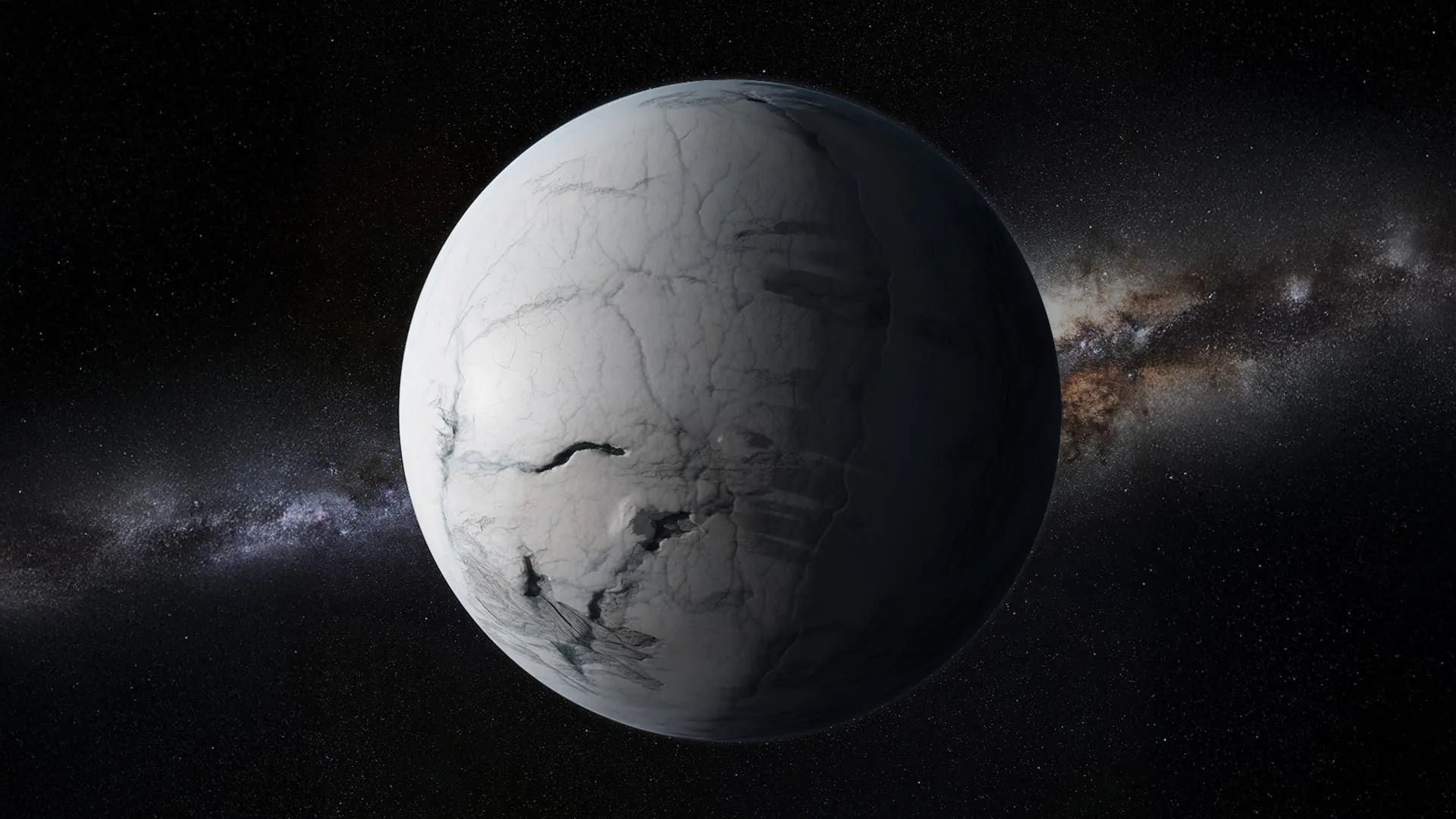
New scientific investigations have revealed compelling evidence challenging the long-held perception of a completely static, globally frozen planet during Earth’s most extreme ice age, colloquially known as Snowball Earth, suggesting that even under profoundly frigid conditions, the planet’s climate system retained a remarkable capacity for dynamic fluctuation.
The Cryogenian Period, spanning from approximately 720 to 635 million years ago, represents one of the most enigmatic chapters in Earth’s geological history. During this dramatic interval, the planet experienced at least two major, protracted glaciations—the Sturtian and Marinoan—where ice sheets are theorized to have advanced to the equator, potentially encasing the entire globe in a thick shell of ice. This "Snowball Earth" hypothesis posits a world so profoundly frozen that its climate system essentially ceased to operate, halting the regular exchange of gases and energy between the atmosphere and the oceans, thereby suppressing any significant short-term climate variability for millions of years. From an extraterrestrial vantage point, the Earth would have presented a stark, uniformly white sphere, devoid of the vibrant blues and greens characteristic of its current state.
However, a recent study published in Earth and Planetary Science Letters introduces a significant revision to this understanding, presenting data that indicate the climate system, at least during specific phases of the Snowball Earth, was far from quiescent. Instead, it continued to exhibit variability on timescales ranging from annual and decadal to centennial, patterns that bear striking resemblances to modern climate oscillations. This discovery implies a more nuanced and dynamic scenario for Earth’s deep past, challenging the rigid interpretation of a planet entirely locked in an immutable frozen state.
Unlocking Geological Archives: The Scottish Varves
The foundational evidence for these revelations originates from exceptionally preserved layered sedimentary rocks known as varves, found on the Garvellach Islands, situated off the west coast of Scotland. These distinct geological formations were deposited during the Sturtian glaciation, recognized as the most intense and prolonged of the Snowball Earth episodes, which endured for an astonishing 57 million years. Varves are annually deposited layers of sediment, typically found in glacial lake environments, where seasonal changes in ice melt and sediment supply create alternating light and dark bands. Each layer serves as a precise chronological marker, offering an unparalleled year-by-year archive of ancient environmental conditions.
Professor Thomas Gernon, a distinguished scholar in Earth and Planetary Science and a co-author of the study, expressed profound astonishment at the findings. He noted, "These rocks meticulously preserve the complete spectrum of climate rhythms familiar to us today – annual seasons, solar cycles, and interannual oscillations – all functioning actively during a Snowball Earth event. Such a finding is truly groundbreaking. It underscores the intrinsic propensity of the climate system to oscillate, even under the most extreme conditions, provided it is afforded even the slightest opportunity to do so." This observation fundamentally alters the perception of climate stability during a global glaciation, suggesting an underlying resilience in Earth’s climatic machinery.
The research team undertook a meticulous analysis of approximately 2,600 individual layers within the Port Askaig Formation, the geological unit containing these ancient varves. The thickness and composition of each layer were systematically examined, with each distinct layer representing a singular year of sediment accumulation. This granular level of detail allowed researchers to reconstruct annual climate shifts with unprecedented fidelity for such a remote geological epoch.
Dr. Chloe Griffin, the lead author of the research and a Research Fellow in Earth Science, underscored the extraordinary nature of these geological records. She remarked, "These rock formations are truly remarkable. They function as a natural data logger, meticulously recording year-by-year climatic shifts during one of the most profoundly cold periods in Earth’s history. Prior to this discovery, the very existence of climate variability at these specific timescales within the heart of the glaciation itself remained entirely unknown, simply because no comparable record had ever been identified."
Microscopic examination of these layers provided critical insights into their formation. The evidence strongly suggests that the layers were produced through cyclical freeze and thaw processes occurring seasonally within calm, deep-water environments shielded beneath an extensive ice cover. This implies a dynamic interplay between ice and water, rather than a monolithic, impermeable ice sheet. Subsequent application of sophisticated statistical analysis to the subtle variations in layer thickness unveiled clear, repeating patterns indicative of cyclical climatic fluctuations.
Dr. Griffin further elaborated on these statistical findings, stating, "Our analysis yielded unambiguous evidence for recurring climate cycles operating across timescales of a few years to several decades. Intriguingly, some of these detected cycles bear a striking resemblance to contemporary climate patterns, such as El Niño-like oscillations and those driven by solar activity." The identification of these familiar climate drivers in a world thought to be entirely frozen presents a compelling case for a more active and responsive Cryogenian climate system than previously imagined.
A Pulse of Activity in a Frozen Realm
Despite these compelling findings, the researchers caution against extrapolating that such pervasive variability characterized the entirety of the Snowball Earth period. Professor Gernon clarified this nuance: "Our results strongly suggest that this specific type of climate variability was likely an exception rather than the prevailing condition. The background state of Snowball Earth was undeniably one of extreme cold and profound stability. What we have uncovered here is most likely a relatively short-lived disturbance, potentially lasting for thousands of years, set against the broader canvas of an otherwise deeply and extensively frozen planet." This perspective refines the "Snowball Earth" narrative, introducing episodes of dynamic activity within a generally static, hyper-cold environment.
To better comprehend the mechanisms that could facilitate such climatic oscillations, the research team conducted advanced climate simulations of a globally frozen Earth. The models provided crucial insights into the conditions necessary for climate variability to persist. They demonstrated that if the planet’s oceans were entirely sealed beneath an unbroken expanse of ice, the vast majority of climate oscillations would indeed be effectively suppressed. However, a critical threshold emerged: if even a relatively small portion of the ocean surface, estimated to be around 15 percent, managed to remain ice-free, the vital interactions between the atmosphere and the ocean could resume, thereby re-establishing pathways for energy and moisture exchange.
Dr. Minmin Fu, a Lecturer in Climate Science and the lead researcher for the modeling component of the study, explained the implications of these simulations: "Our models unequivocally demonstrated that extensive open oceans are not a prerequisite for such variability. Even confined areas of open water, particularly in the tropical regions, possess the capacity to facilitate the operation of climate modes remarkably similar to those observed today, thereby generating the precise types of signals meticulously recorded in these ancient rocks." This modeling work provides a theoretical framework that substantiates the geological observations, bridging the gap between ancient rock records and contemporary climate science.
These combined geological and modeling results lend significant support to the evolving hypothesis that Snowball Earth was not an unremittingly frozen sphere. Instead, it may have been punctuated by intervals sometimes conceptualized as ‘slushball’ states or more extensive ‘waterbelt’ configurations, where crucial pockets of open ocean persisted, acting as critical conduits for climatic energy and moisture exchange. This ‘slushball’ model proposes that while polar regions were heavily glaciated, some equatorial or low-latitude oceanic areas could have remained partially or intermittently unfrozen, creating a narrow band of liquid water and active climate dynamics. Such areas could have been sustained by factors like geothermal heat, localized volcanic activity, or simply insufficient ice thickness in regions of high solar insolation.
The Significance of Scotland’s Geological Record
The specific geological site on the Garvellach Islands proved indispensable in the painstaking reconstruction of this ancient climate narrative. Dr. Elias Rugen, a Research Fellow who has dedicated the past five years to studying these unique deposits, highlighted their global significance. "These deposits represent some of the most remarkably preserved Snowball Earth rocks found anywhere across the globe. Through their study, one gains the extraordinary ability to decipher the climate history of a frozen planet, in this particular instance, with a precision that allows for year-by-year analysis." The exceptional preservation and detailed layering of these varves make them a truly rare and invaluable resource for paleoclimatological research.
Understanding the intricate behavior of Earth’s climate system during the profound extremes of the Snowball Earth era offers insights that extend far beyond this specific ancient epoch. Professor Gernon emphasized the broader implications of this work: "This research significantly enhances our comprehension of the inherent resilience and acute sensitivity of the climate system itself. It unequivocally demonstrates that even amidst the most extreme environmental conditions Earth has ever endured, the system possessed the capacity to be stimulated into dynamic motion. This finding carries profound implications for how planetary systems, including our own in the future, might respond to major disturbances and perturbations."
From a planetary science perspective, these findings suggest that even seemingly dormant or globally glaciated worlds might harbor hidden climatic activity, with potential implications for the search for life beyond Earth. If Earth’s deep past could support such dynamic fluctuations, it broadens the range of conditions under which complex processes might unfold on other celestial bodies. For Earth’s own biosphere, the existence of open water and climate variability during the Cryogenian could have provided crucial refugia for the persistence of early life forms, offering environments where primitive ecosystems could survive and adapt, ultimately paving the way for the dramatic diversification of life that characterized the subsequent Cambrian Explosion.
This groundbreaking study was made possible through the generous support of the WoodNext Foundation, a donor-advised fund program whose contributions are instrumental in sustaining Professor Gernon’s pioneering research group at the University of Southampton. The findings underscore the continuous evolution of our understanding of Earth’s deep history, revealing a past that is far more complex and dynamically intricate than previously conceived, even during its most profoundly frozen chapters. The quest to fully unravel the mysteries of Snowball Earth continues, with each new discovery adding critical layers to our comprehension of planetary resilience and the fundamental dynamics of climate.




 Aura Kasih
 Lisa Mariana