Lisa Mariana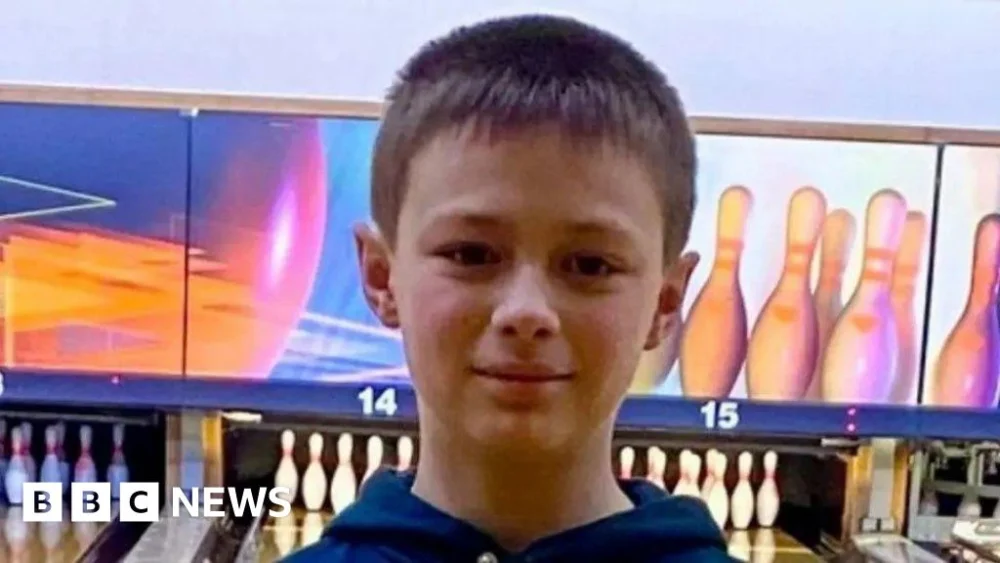
A judicial decision at Birmingham Crown Court has seen a teenage assailant receive a life sentence, with a minimum custodial term of thirteen years, for the brutal slaying of twelve-year-old Leo Ross, an act that has cast a stark light on the complexities of youth crime and the persistent shadow of knife violence. The tragic incident, occurring on January 21, 2025, involved the unprovoked stabbing of Leo as he walked home from school, an everyday journey tragically interrupted by an unfathomable act of aggression. This case, marked by its profound sorrow and the extreme youth of both victim and perpetrator, has ignited considerable public debate regarding the efficacy of current sentencing guidelines for juvenile offenders and the broader societal challenges of mental health support and crime prevention among young people.
The sentencing, presided over by Mr. Justice Choudhury KC, delivered a verdict that, while legally structured, left Leo Ross’s foster family visibly distraught. The judge underscored the horrific and shocking nature of the crimes, articulating the deep chasm of loss created by the defendant’s actions. The perpetrator, who was merely fourteen years old at the time of the murder, had previously entered a guilty plea to the charge of murder during a preceding hearing at Birmingham Crown Court. This admission of guilt for the primary offense was compounded by confessions to a series of other grave crimes, specifically three assaults on elderly women that occurred in the days leading up to the fatal attack on Leo. These earlier incidents, characterized by their gratuitous violence, painted a disturbing picture of a young individual engaged in a pattern of escalating aggression.
Following the fatal stabbing of Leo Ross, the then-14-year-old assailant exhibited a chilling composure, requesting a bystander to contact emergency services and even engaging with responding police officers at the crime scene. During these initial interactions, he disingenuously presented himself as a mere discoverer of the injured boy, actively concealing his culpability. After this deceptive interlude, he calmly departed the scene on his bicycle, only to be apprehended later as the investigation rapidly unfolded. This calculated deception further underscored the disturbing psychological facets of the case, suggesting a degree of premeditation and an awareness of the consequences of his actions, despite his tender age.
The case of Leo Ross resonates with particular poignancy within the West Midlands, as he is believed to be the youngest individual to fall victim to knife crime in the region. This somber statistic highlights a critical public health and safety crisis, drawing attention to the increasing vulnerability of children to extreme violence. The judicial proceedings revealed that Leo was a child “loved by all who knew him with a future ahead of him,” a testament to the bright potential extinguished by a senseless act. His routine journey home from Christ Church CE Secondary School in Yardley Wood, a mere ten-minute walk, transformed into a scene of unimaginable horror. He had been conversing with a friend on the telephone, coordinating a meeting point near a specific tree within a local park, a casual plan that tragically never materialized. His friend arrived as arranged, only to find Leo absent, unaware of the horrific encounter that had just transpired.
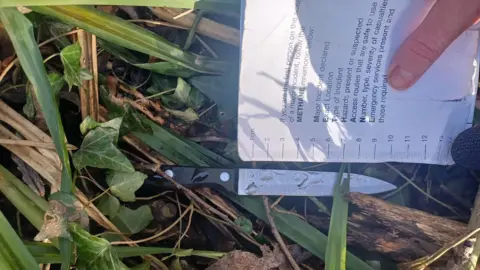
The court heard harrowing details of the attack: the teenage assailant encountered Leo in Trittiford Mill Park, chose him as a target due to his smaller stature, and then proceeded to stab him. The weapon, a knife, was subsequently discarded in nearby bushes alongside a stream, but was later successfully recovered by investigators, bearing the DNA evidence of both the victim and the perpetrator. This meticulous forensic work was instrumental in solidifying the case against the young offender, demonstrating the sophisticated investigative capabilities employed in such high-profile cases.

A significant aspect of the sentencing concerned the anonymity of the young killer. Due to his age, reporting restrictions currently prohibit the publication of his identity. However, Mr. Justice Choudhury KC indicated a strong inclination to lift these restrictions, granting Birmingham Children’s Trust a 24-hour period to submit any relevant arguments against such a decision. This deliberation highlights the delicate balance within the justice system between protecting the welfare of a minor offender and the public interest in transparency and accountability, especially in cases of extreme violence. The outcome of this decision will have implications for the perpetrator’s future and for the public discourse surrounding juvenile crime.
Outside the courtroom, the raw anguish of Leo’s family was palpable. Rachel Fisher, Leo’s mother, expressed profound dissatisfaction with the thirteen-year minimum term, labeling it a “complete and utter joke.” Her impassioned statement articulated a widespread sentiment among victims’ families: that such sentences fail to serve as a sufficient deterrent and do not adequately reflect the gravity of the loss. “These kids aren’t scared. They aren’t scared of the sentence. They’re not worried,” she stated, also directing criticism towards the local authority and police, suggesting a perceived systemic failure in preventing such tragedies. Her words echo a growing public demand for a more robust approach to youth justice, particularly concerning repeat or violent offenders.
During the court proceedings, the defense presented a complex profile of the perpetrator, detailing “formidable mental health problems.” The court was informed of episodes of self-harm, including self-inflicted facial injuries, the collection of his own blood, and a history of suicidal ideation and attempts. Furthermore, the defense highlighted that the teenager had experienced auditory hallucinations for an extended period and exhibited “bizarre behavior.” Diagnoses of a “conduct disorder” and Attention Deficit Hyperactivity Disorder (ADHD) were also presented, underscoring the severe psychological challenges faced by the young man. However, Mr. Justice Choudhury KC, while acknowledging these issues, emphasized that the defendant “knew and were aware of the consequences of your actions.” The judge’s observation that the perpetrator appeared to derive “pleasure from seeing the consequences” of his actions further complicated the picture, suggesting a disturbing lack of empathy and a potential for calculated cruelty that transcends simple mental distress.

The preceding attacks on three elderly women, to which the teenager also pleaded guilty, added another layer of depravity to his criminal record. These incidents involved the women being forcibly pushed to the ground and assaulted, one with her own walking stick, resulting in severe injuries. Mr. Justice Choudhury KC reviewed photographs of these injuries, describing the “savagery” required to inflict such harm as “hard to imagine.” This pattern of unprovoked violence against vulnerable individuals strongly suggested a deeply troubling trajectory of behavior leading up to Leo’s murder.
Detective Inspector Joe Davenport, who spearheaded the investigation for West Midlands Police, characterized Leo’s murder as a “tragic and random act of violence which killed an innocent young boy.” He confirmed that there was no discernible connection between Leo and his killer, reinforcing the randomness of the attack. Det Insp Davenport’s assessment of the perpetrator as a “truly dangerous individual” was stark, and he admitted that investigators would likely "never know why he decided to attack Leo, who was completely innocent.” This statement encapsulates the profound and often unanswerable questions that arise from such senseless acts. The detective also revealed that the killer had a pattern of causing violence, then calling the police, seemingly to witness the ensuing chaos, a behavior indicative of a profoundly disturbed individual.
The victim impact statements delivered in court provided a powerful and heart-wrenching account of the immeasurable loss. Rachel Fisher, Leo’s mother, described her son as "the most kind, funny and caring little boy," lamenting that "Leo’s life should be just beginning." Her tearful testimony spoke of losing "everything I did have and would have with him, my first-born child." Christopher Ross, Leo’s father, confronted the defendant directly, demanding he "Look up man… you killed my son." He passionately described Leo as a child "loved by everyone," a "kindest little boy you could ever hope to meet," and articulated his life since Leo’s death as a "living hell," vowing to "get justice for you." Amy Weston, a member of Leo’s foster family, also addressed the perpetrator, emphasizing Leo’s vulnerability as "a small defenceless child, as vulnerable as they come," and unequivocally stating, "What you did was wicked, senseless and unforgivable." These statements collectively paint a devastating picture of a family irrevocably shattered by an act of unimaginable cruelty.
This tragic case underscores the persistent and complex challenges facing the juvenile justice system and wider society. The intersection of youth, severe mental health issues, and escalating violence presents a formidable dilemma. While the judicial system must balance accountability with the potential for rehabilitation, the public’s demand for justice and protection from dangerous individuals remains paramount. The sentence handed down, a minimum of thirteen years in custody for a life sentence, reflects the gravity of murder, even when committed by a minor. However, the emotional responses from Leo’s family and the broader community highlight a perceived disconnect between legal outcomes and the deep-seated yearning for comprehensive justice and effective crime prevention strategies. This incident serves as a stark reminder of the urgent need for multifaceted approaches to address the root causes of youth violence, including enhanced mental health support, early intervention programs, and community-based initiatives aimed at diverting young people from a path of criminality. The memory of Leo Ross will undoubtedly fuel ongoing discussions about how best to protect the innocent and ensure that justice, in its fullest sense, is served.




 Aura Kasih
 Ridwan Kamil