Lisa Mariana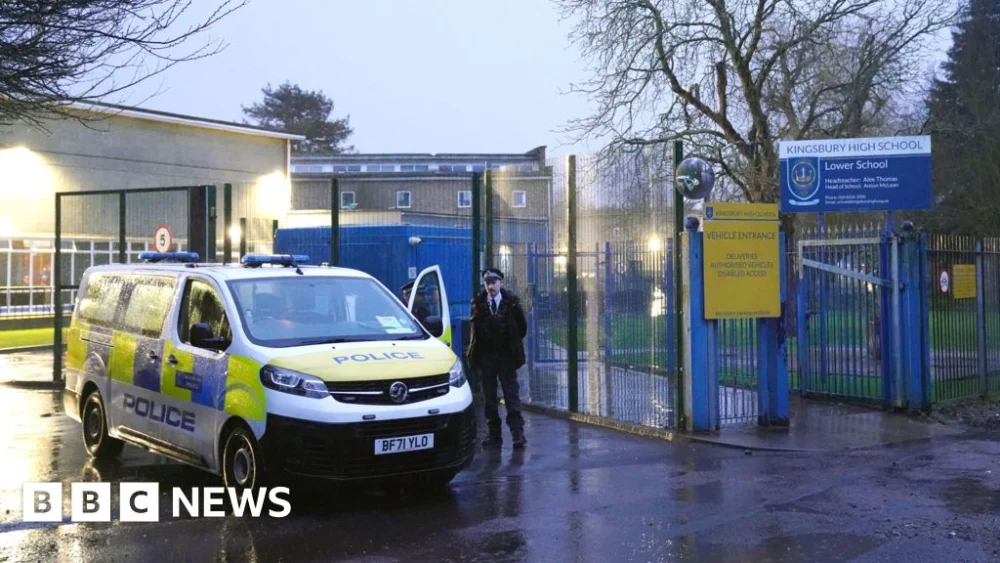
A grave incident of violence unfolded at a prominent educational establishment in North London, leading to the apprehension of a 13-year-old male student on suspicion of attempted murder after two other pupils sustained serious stab wounds within the school premises. The distressing event, which prompted a swift and comprehensive law enforcement response, has cast a somber shadow over the community and ignited urgent discussions regarding youth safety in academic environments.
The Metropolitan Police confirmed the arrest following the lunchtime incident at Kingsbury High School, located in the borough of Brent. Emergency services were initially summoned at approximately 12:40 GMT to reports of a 13-year-old boy having been stabbed. Subsequent investigations at the scene revealed a second victim, a 12-year-old boy, had also suffered stab injuries. Both young victims were immediately transported to a hospital, with one requiring urgent admission to a major trauma centre due to the severity of his injuries. Authorities have indicated that both boys are currently in serious but stable conditions, underscoring the critical nature of the attack.
The rapidity of the police response was highlighted by Detective Chief Superintendent Luke Williams, who stated that both armed officers and local policing units were deployed to the school gates within 13 minutes of receiving the initial 999 call. This swift deployment underscores the high priority assigned to incidents of violence within educational settings. The suspect, believed to be the same age as the initially reported victim, had reportedly left the scene following the stabbings but was later located and taken into custody. A weapon, believed to have been used in the assault, was also recovered by investigators, a critical piece of evidence in the ongoing inquiry. Det Ch Supt Williams reassured the public during an evening press conference that law enforcement was not actively seeking any further individuals in connection with the stabbings, suggesting the incident was contained to the individuals involved.
Remarkably, the investigation into this schoolyard violence is being spearheaded by officers from Counter Terrorism Policing London. This detail, while significant, was accompanied by an immediate clarification from the Met Police that the incident has not been classified as a terrorist act. The involvement of Counter Terrorism Policing (CTP) in non-terrorism related serious crimes is not unprecedented. CTP units possess a unique array of advanced investigative capabilities, extensive resources, and a mandate to address complex, high-impact incidents that may have broader societal implications or require a particularly robust and specialized approach. Their expertise often extends beyond traditional counter-terrorism operations to encompass serious crime investigations where rapid intelligence gathering, digital forensics, and a nuanced understanding of motivations might be crucial. This strategic decision by the Met Police likely reflects an abundance of caution and a desire to bring the full weight of their investigative prowess to bear on a profoundly disturbing event, ensuring all potential avenues of inquiry are rigorously explored, regardless of the eventual determination of motive. It also sends a clear signal of the seriousness with which this incident is being treated at the highest levels of law enforcement.
The ramifications of such an event reverberate deeply throughout the school and wider community. Kingsbury High School, an academy catering to nearly 2,000 pupils aged 11 to 18 across its upper and lower sites, found itself at the epicentre of a crisis. Head teacher Alex Thomas described it as "a deeply traumatic event for the whole school community," conveying his profound regret and expressing solidarity with the injured students and their families. The immediate aftermath saw pupils, some visibly distressed and in tears, along with anxious parents, remaining at the school for hours as police conducted interviews and secured the premises. The experience of children being held back as potential witnesses, as described by one parent whose Year Eight child was among them, highlights the profound psychological impact on young minds exposed to such violence. This incident undoubtedly shatters the sense of security that educational institutions are meant to provide, forcing a re-evaluation of safety protocols and emotional support systems for students and staff alike.
Beyond the immediate trauma, this incident brings into sharp focus the pervasive issue of youth violence and knife crime that continues to plague London. Statistics consistently reveal a worrying trend in offences involving knives, particularly among adolescents. While the specific motivations behind the Kingsbury High School stabbings remain under investigation, such incidents often reflect a complex interplay of socio-economic disadvantages, peer pressure, gang affiliations (even if informal), mental health challenges, and the desensitisation to violence propagated through various media channels. The easy accessibility of weapons and the readiness to use them in disputes among young people represent a societal failure that extends far beyond the school gates. Community leaders and law enforcement agencies are constantly grappling with strategies to counteract this trend, ranging from increased policing and stop-and-search operations to preventative youth programmes, educational campaigns, and efforts to address the root causes of alienation and deprivation.
Mayor of London, Sir Sadiq Khan, was quick to condemn the "appalling stabbings," urging anyone with information to come forward and emphasizing that "there is no honour in staying silent." This statement reflects a broader appeal to community responsibility, recognizing that tackling knife crime requires collective action and a willingness to break cycles of silence and fear that can protect perpetrators. Silence, in these contexts, can inadvertently perpetuate the problem by allowing criminal behaviour to go unchallenged. Similarly, Muhammed Butt, the leader of Brent Council, articulated the community’s shock, calling the double stabbing "deeply shocking and distressing." His comments underscored the universal parental fear for children’s safety at school and raised critical questions about how individuals so young come to possess weapons capable of inflicting such harm. Both statements from prominent figures signal a unified determination to address the immediate crisis and the underlying issues contributing to youth violence.
The legal process for a minor accused of such a serious offence is complex, involving considerations for their age, vulnerability, and rights within the justice system. The investigation will meticulously gather evidence, including forensic analysis of the recovered weapon, witness statements from pupils and staff, and any available CCTV footage, to build a comprehensive picture of the events. The suspect, a 13-year-old, will be held in custody for questioning, with appropriate safeguarding measures in place. The ultimate outcome, should charges be laid and proven, will involve navigating the specific legal frameworks designed for young offenders, balancing accountability with rehabilitation and welfare considerations.
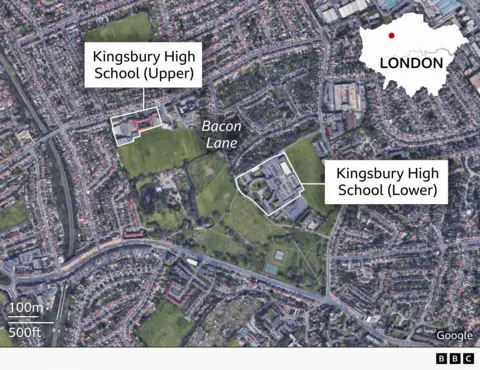
Looking ahead, the Kingsbury High School community faces a significant period of healing and rebuilding. The immediate focus will be on providing robust psychological support and counselling services for students, staff, and families affected by the trauma. Schools often become critical sites for such interventions, fostering a sense of safety and normalcy in the wake of disturbing events. Beyond this, there will undoubtedly be a thorough review of existing security protocols, emergency response plans, and safeguarding measures within the school. This incident may prompt broader discussions across the borough of Brent and indeed London, about the adequacy of current measures to prevent youth violence in educational settings. This could include debates around the role of school-based police officers, enhanced security technologies, and the effectiveness of educational programmes aimed at deterring knife carrying and promoting conflict resolution. Ultimately, addressing youth violence requires a multi-faceted, collaborative approach involving educational institutions, law enforcement, local authorities, mental health services, community organisations, and parents, all working in concert to create safer environments for young people to learn and thrive. The incident at Kingsbury High School serves as a stark and painful reminder of this ongoing challenge.




 Aura Kasih
 Ridwan Kamil