Ayu Aulia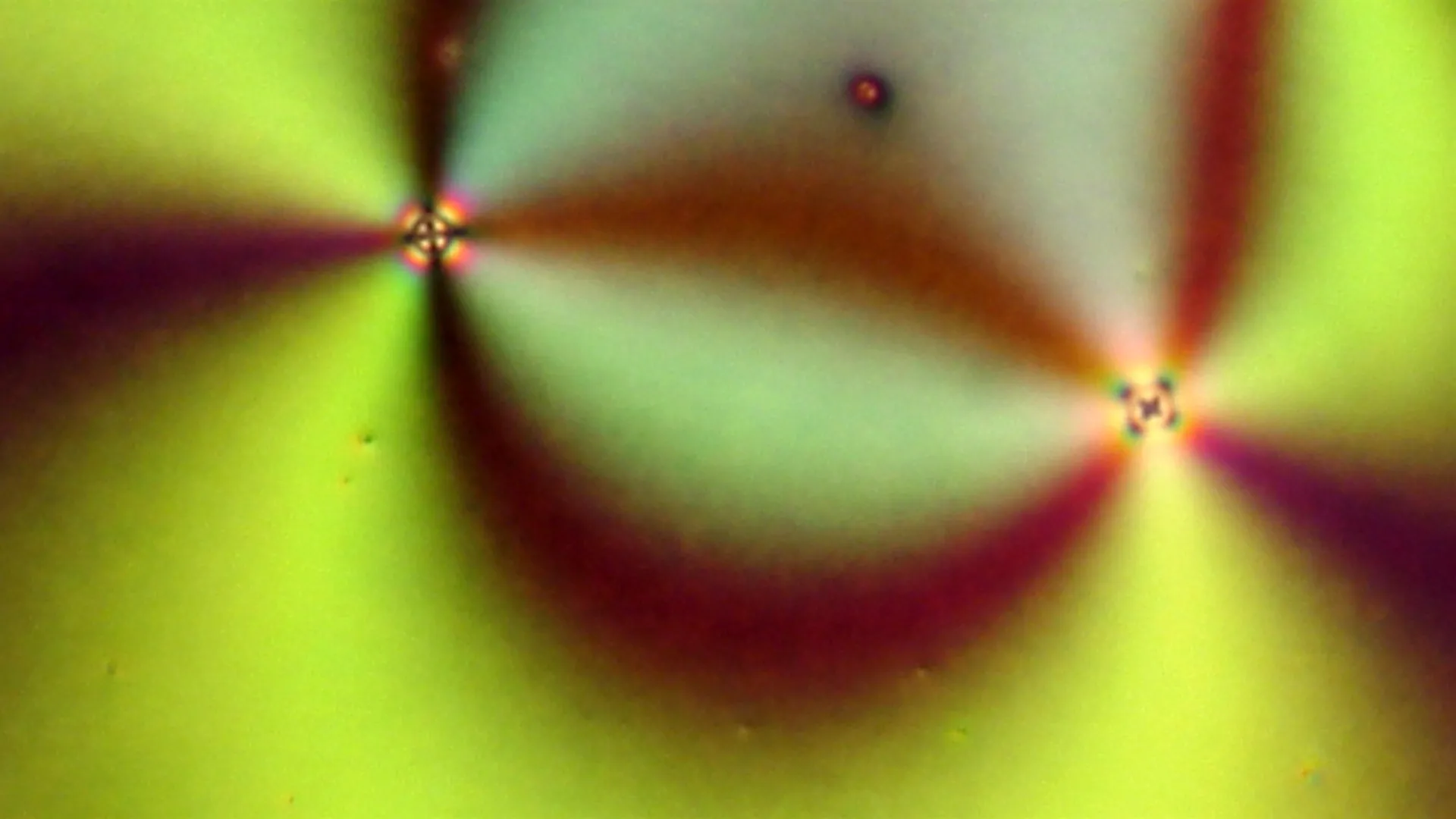
The intricate arrangements and structures that pervade the natural world, from the cosmic web of galaxies to the microscopic architecture of materials, frequently emerge from a fundamental process known as symmetry perturbation. As physical systems transition from states of high uniformity to more structured configurations, subtle yet persistent irregularities can materialize. These distinctive features, termed topological defects, manifest across an astonishing range of scales and disciplines, serving as crucial markers wherever order crystallizes within a system. Their ubiquitous presence offers scientists an unparalleled lens through which to decipher the mechanisms governing self-organization and the evolution of complex phenomena. Understanding these defects is paramount to grasping the foundational principles that dictate the formation and behavior of matter itself.
Traditional scientific methodologies for exploring these topological features have long been resource-intensive, often demanding extensive computational power and time. The inherent complexity of simulating systems where order is not uniformly defined poses significant challenges, limiting the scope and speed of scientific inquiry. However, a recent groundbreaking development signals a profound shift in this paradigm. Researchers, leveraging advanced artificial intelligence, have engineered a novel framework capable of predicting the formation and dynamics of these elusive patterns with unprecedented speed and accuracy. This innovation promises to revolutionize our ability to explore, understand, and ultimately harness the power of nature’s most intricate designs.
The Intricacies of Topological Defects: A Fundamental Challenge
Topological defects are not merely imperfections; they are fundamental, stable structures that encapsulate profound information about the system in which they arise. Their stability is a direct consequence of the underlying topology of the system’s order parameter, meaning they cannot be removed or smoothed out by continuous deformations without a catastrophic change in the system’s global state. From the early universe’s cosmic strings to the magnetic domains in ferromagnets, the crystalline grain boundaries in metals, and even the defects in biological membranes, these features provide critical insights into phase transitions, material properties, and energy landscapes.
Nematic liquid crystals, a fascinating class of materials exhibiting properties between conventional liquids and solid crystals, have emerged as an exceptionally fertile ground for the investigation of these defects. In these anisotropic fluids, elongated molecules possess a preferred orientational direction, or "director," while still retaining their fluidity and translational freedom. This unique combination of fluidity and orientational order makes them highly responsive to external stimuli, such as electric fields or temperature changes, and remarkably amenable to experimental observation. Scientists can meticulously track the nucleation, evolution, and interactions of defects within these systems, offering a dynamic window into complex pattern formation.
The conventional theoretical bedrock for describing the behavior of these molecular alignments and the topological defects within them is the Landau-de Gennes theory. This sophisticated mathematical framework provides a continuum description of the liquid crystalline state, allowing researchers to model how molecular order parameters vary spatially and how they collapse or become undefined within the core regions of defects. While powerful and predictive, applying the Landau-de Gennes theory to simulate the equilibrium configurations of defects, especially in three dimensions and under varied boundary conditions, typically involves iterative numerical minimization processes. These simulations are computationally expensive, often requiring hours or even days to converge to a stable solution, severely restricting the pace of scientific discovery and materials design. The slow turnaround time acts as a significant bottleneck, preventing rapid exploration of the vast parameter space relevant to complex defect architectures.
AI’s Transformative Intervention: A Quantum Leap in Speed
Addressing this formidable computational hurdle, a team of pioneering researchers, spearheaded by Professor Jun-Hee Na from Chungnam National University in the Republic of Korea, has unveiled a groundbreaking methodology for the rapid and reliable prediction of stable defect configurations. Their innovative approach supplants the laborious and computationally intensive traditional numerical simulations with a sophisticated deep learning framework, achieving an astounding acceleration in prediction speed. This AI-powered paradigm shift allows for the generation of defect pattern predictions in mere milliseconds, a stark contrast to the hours or even days previously demanded by conventional simulation techniques. This dramatic enhancement in computational efficiency represents a thousandfold increase in speed, fundamentally reshaping the landscape of defect research.
"Our methodology seamlessly integrates with and significantly enhances the capabilities of slower, conventional simulations by providing extraordinarily swift and dependable predictions," remarks Professor Na. "This synergistic approach critically facilitates a systematic and exhaustive exploration of defect-rich regimes, which were previously largely inaccessible due to computational constraints." The implications for accelerating both fundamental understanding and practical applications are profound, opening new avenues for scientific inquiry that were once considered impractical. The findings, meticulously detailed in the prestigious journal Small, underscore the immense potential of artificial intelligence to expedite complex scientific endeavors.
Deciphering the Deep Learning Architecture: The 3D U-Net Advantage
At the core of this revolutionary system lies a meticulously designed 3D U-Net architecture, a specialized variant of a convolutional neural network (CNN) renowned for its efficacy in volumetric image segmentation and analysis across scientific and medical domains. This particular design choice is crucial because it enables the model to simultaneously discern both the broad-scale molecular alignment patterns and the intricate, localized details characteristic of topological defects. The U-Net’s distinctive ‘U’ shape, comprising a contracting path to capture context and an expansive path to enable precise localization, makes it exceptionally well-suited for processing three-dimensional spatial data inherent to liquid crystal systems.
Rather than executing a laborious, step-by-step iterative simulation to minimize energy, this intelligent framework establishes a direct, learned mapping between the initial boundary conditions of the system and its ultimate equilibrium state. The network is provided with comprehensive information regarding the system’s boundaries – factors such as surface anchoring conditions, external field strengths, and sample geometry. From this input, the deep learning model directly predicts the complete three-dimensional molecular alignment field throughout the entire volume, including the precise morphology, spatial distribution, and characteristics of any emergent topological defects. This direct prediction bypasses the need for explicit physical equations during inference, instead relying on the intricate patterns learned during its training phase.
To imbue the model with this predictive power, the research team meticulously curated an extensive dataset derived from a vast array of traditional numerical simulations. This training dataset encompassed a wide spectrum of alignment scenarios, boundary conditions, and defect types, effectively teaching the neural network the underlying physics of defect formation and evolution. Following this rigorous training regimen, the network demonstrated an extraordinary capacity to accurately predict entirely novel configurations it had never encountered during its learning phase. Crucially, these AI-generated predictions exhibited remarkable fidelity, showing close agreement with both the results obtained from time-consuming conventional simulations and direct observations from sophisticated laboratory experiments, thereby validating the model’s robustness and reliability.
Mastering Complexity: Handling Dynamic and Merging Defects
One of the most significant triumphs of this AI-driven approach is its innate flexibility and capability to navigate particularly complex scenarios that often challenge traditional methods. Unlike explicit physics-based solvers, which rely on precisely formulated mathematical equations, this deep learning model discerns the intricate material behavior directly from the data itself. This data-driven learning paradigm grants it an inherent adaptability to handle highly intricate cases, including the prediction and characterization of higher-order topological defects. These more complex defects can exhibit dynamic behaviors such as merging, splitting, or reconfiguring themselves in response to subtle environmental changes.
The experimental validation further reinforced the AI’s exceptional performance, confirming its ability to accurately capture these complex defect dynamics. This demonstrated reliability across a broad spectrum of conditions – from simple point defects to intricate line defects and their dynamic interactions – underscores the model’s practical utility for advanced scientific research and engineering applications. The capacity to reliably predict such nuanced behaviors without explicit programming for each specific interaction represents a monumental leap forward, particularly in fields where these complex defect structures play a critical functional role.
Accelerating the Path to Advanced Materials: A New Era of Design
The profound speed advantage offered by this AI-driven methodology opens up unprecedented opportunities for materials scientists and engineers. By drastically accelerating the exploration of numerous design possibilities, the approach enables a rapid iteration cycle for conceptualizing and optimizing materials with precisely controlled defect structures. This capability is not merely an incremental improvement; it is transformative for the development of advanced optical devices, novel metamaterials, and a new generation of smart materials.
In advanced optical systems, for instance, the controlled placement and type of topological defects can be engineered to manipulate light in extraordinary ways, leading to breakthroughs in lens design, waveguides, and optical sensors. For metamaterials – artificially engineered materials with properties not found in nature – the ability to quickly simulate and predict the influence of defect configurations on their exotic electromagnetic or acoustic behaviors is invaluable.
"By drastically shortening the material development process from conception to realization, AI-driven design is poised to accelerate the creation of highly intelligent and responsive materials," emphasizes Professor Na. "This will unlock a plethora of applications, ranging from next-generation holographic and immersive virtual or augmented reality (VR/AR) displays, where precise light manipulation is paramount, to highly adaptive optical systems capable of real-time environmental compensation, and even smart windows that dynamically respond to changing light conditions or privacy requirements."
The implications extend beyond these examples. The rapid predictive power could also be crucial for understanding and mitigating defects in semiconductor manufacturing, designing novel catalysts with specific surface defect sites, or even in the burgeoning field of soft robotics, where programmed material responses are key. The ability to quickly screen vast numbers of potential material designs, identifying promising candidates for experimental synthesis, promises to significantly reduce the time and cost associated with research and development cycles.
Future Horizons: Expanding AI’s Role in Scientific Discovery
While this breakthrough focuses on liquid crystals, the underlying principles of using deep learning to predict complex patterns arising from symmetry breaking are broadly applicable. Future research could explore extending this AI framework to other material systems exhibiting topological defects, such as ferroelectrics, magnetic materials, or even biological tissues. The integration of this predictive power with automated experimental platforms, where AI guides both simulation and physical synthesis, represents a tantalizing prospect for fully autonomous materials discovery.
Furthermore, refining the models to incorporate more dynamic processes, such as defect annihilation and creation under external fields or temperature gradients, will further enhance their utility. The continuous evolution of deep learning architectures, coupled with increasing computational power, suggests that even more intricate and multi-scale phenomena will soon yield to AI-driven analysis. This research stands as a powerful testament to the transformative potential of artificial intelligence, not just as a tool for data processing, but as a fundamental engine for accelerating scientific discovery and engineering innovation at the very frontiers of material science and physics. The code of nature’s most complex patterns is finally being cracked, not just faster, but with an unprecedented depth of understanding.



 Lisa Mariana
 Aura Kasih