Ayu Aulia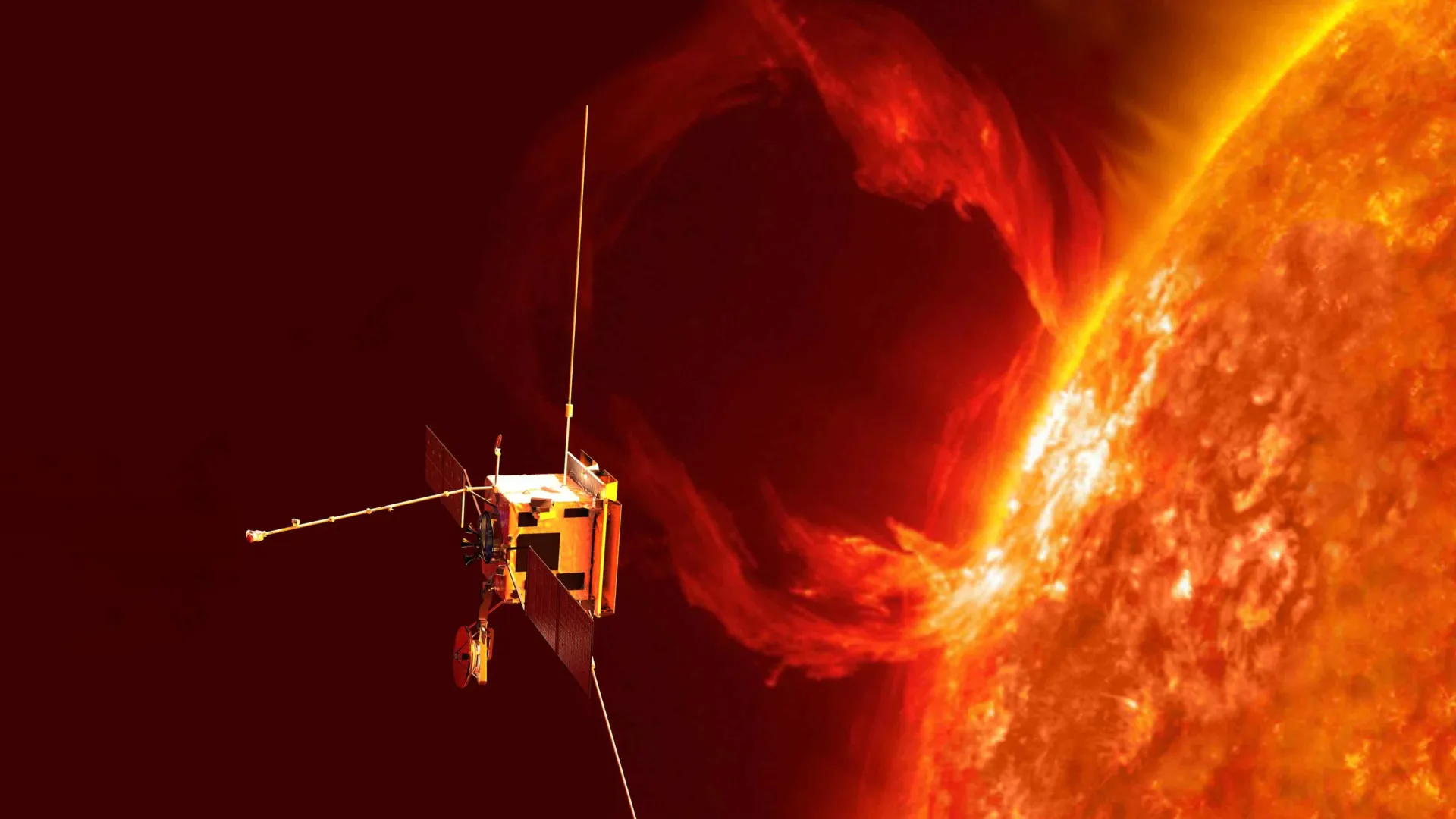
A groundbreaking international scientific collaboration has achieved an unparalleled, continuous observation of a colossal solar active region, designated NOAA 13664, providing critical insights into the formation and dynamic evolution of the most intense space weather phenomena witnessed in two decades and illuminating the complex interplay between the Sun’s magnetic engine and its profound terrestrial impacts. For generations, solar physicists have grappled with the inherent challenge of continuously monitoring specific dynamic regions on our star’s surface. The Sun’s axial rotation, completing a full circuit approximately every 28 Earth days, means that any particular active region remains visible from Earth for only about two weeks before disappearing behind the solar limb. This rotational occultation has historically imposed significant limitations on understanding the long-term evolution of solar phenomena, leaving critical gaps in observational datasets.
This observational lacuna has been significantly addressed by the European Space Agency’s (ESA) Solar Orbiter mission, launched in 2020. Unlike Earth-bound telescopes or spacecraft positioned along the Earth-Sun line, Solar Orbiter traverses a wide elliptical orbit, circling the Sun roughly every six months. This unique trajectory affords it an unprecedented vantage point, enabling it to observe regions of the Sun that are typically obscured from Earth, including portions of its far side. Dr. Ioannis Kontogiannis, a solar physicist affiliated with ETH Zurich and the Istituto ricerche solari Aldo e Cele Daccò (IRSOL) in Locarno, underscores the mission’s transformative impact, stating that it has fundamentally broadened humanity’s perspective on solar dynamics.
The Emergence of an Exceptional Solar Event
Between April and July 2024, Solar Orbiter meticulously documented one of the most intensely active solar regions observed in the past two decades. Identified as NOAA 13664, this region rotated into Earth’s direct line of sight in May 2024, promptly announcing its formidable presence through a series of powerful eruptions. These events subsequently triggered the most severe geomagnetic storms to impact Earth since 2003, manifesting as spectacular auroral displays that captivated observers across unusually low latitudes, extending as far south as Switzerland. Professor Louise Harra, a distinguished figure at ETH Zurich and the director of the Davos Physical Meteorological Observatory, highlighted the widespread visibility of these auroras as a testament to the region’s extraordinary energetic output.
To dissect the intricate mechanisms governing the formation and evolution of such extreme solar regions, Professor Harra and Dr. Kontogiannis spearheaded an international research consortium. This team innovatively integrated observational data from two distinct spacecraft, thereby constructing an exceptionally comprehensive chronicle of NOAA 13664’s lifecycle. Solar Orbiter furnished invaluable data from the Sun’s far side, capturing the region’s nascent stages and subsequent developments away from terrestrial view. Concurrently, NASA’s Solar Dynamics Observatory (SDO), positioned to continuously monitor the Earth-facing side of the Sun, provided an uninterrupted stream of observations as NOAA 13664 traversed our hemisphere.
A Record-Breaking Observational Feat
The synergistic combination of these datasets allowed researchers to track NOAA 13664 with remarkable continuity for an unprecedented duration of 94 days. This extended observational window represents a monumental achievement in solar physics. Dr. Kontogiannis emphasized the significance of this accomplishment, noting that it constitutes the longest continuous series of images ever compiled for a single active region, marking a definitive milestone in the field. This uninterrupted monitoring facilitated the observation of NOAA 13664 from its initial emergence on April 16, 2024, on the far side of the Sun, through its complete evolution, and ultimately to its eventual dissipation after July 18, 2024. Such an extended timeline was crucial for capturing subtle, long-term changes and evolutionary patterns that would typically remain unobserved due to the Sun’s rotation.
The scientific value of this sustained observation cannot be overstated. By meticulously tracing the region’s development, scientists gained unprecedented insight into the processes of magnetic field emergence, re-organization, and energy storage. Active regions on the Sun are fundamentally characterized by exceptionally potent and intricate magnetic fields. These fields originate when highly magnetized plasma, a superheated ionized gas, ascends from the Sun’s deep interior and breaches its visible surface. Within these dynamic regions, magnetic field lines can become exceedingly tangled, twisted, and unstable, accumulating vast quantities of energy. When these intricate magnetic configurations reach a critical point of instability, they explosively release this stored energy in dramatic fashion.
The Mechanics of Solar Fury and Terrestrial Impact
These energetic releases manifest primarily as two distinct phenomena: solar flares and coronal mass ejections (CMEs). Solar flares are intense bursts of electromagnetic radiation, spanning the spectrum from radio waves to X-rays and gamma rays, which propagate at the speed of light and can reach Earth in mere minutes. CMEs, conversely, involve the expulsion of massive quantities of plasma and high-energy particles into interplanetary space, traveling at speeds ranging from a few hundred to several thousand kilometers per second. While solar flares are renowned for their immediate electromagnetic impact, it is typically the arrival of CMEs, several days later, that drives the most profound space weather effects, inducing geomagnetic storms when they interact with Earth’s magnetosphere.
While solar storms are widely celebrated for generating the mesmerizing aurora borealis and australis, their implications extend far beyond aesthetic displays, posing tangible threats to modern technological infrastructure. Severe space weather events have the capacity to induce geomagnetically induced currents (GICs) in long conductors on Earth, potentially disrupting terrestrial power grids and even leading to widespread blackouts, as evidenced by historical events like the 1989 Quebec power outage. Furthermore, they can severely interfere with high-frequency communication systems, degrade the accuracy of global positioning systems (GPS), and increase radiation exposure for both spacecraft and high-altitude aircraft crews. Satellites, which form the backbone of global communication, navigation, and Earth observation, are particularly vulnerable. A notable incident occurred in February 2022, when 38 out of 49 Starlink satellites, launched by SpaceX, were rendered inoperable just two days after deployment due to heightened solar activity, highlighting the fragility of orbital assets.
Disruptions Closer to Home: Economic and Societal Ramifications
The ramifications of severe space weather extend to surprisingly localized and critical infrastructure. Professor Harra noted that "even signals on railway lines can be affected and switch from red to green or vice versa," a scenario that carries significant safety risks. The May 2024 events associated with NOAA 13664 also caused widespread disruptions in "modern digital agriculture," as reported by Professor Harra. The reliance of contemporary farming on precise satellite signals for guidance, drone-based monitoring, and sensor networks means that disruptions to these systems can lead to lost working days, compromised crop yields, and substantial economic losses for farmers.
Dr. Kontogiannis succinctly articulated the profound relevance of this research: "It’s a good reminder that the sun is the only star that influences our activities. We live with this star, so it’s really important we observe it and try to understand how it works and how it affects our environment." This statement underscores the strategic imperative of solar physics research, not merely for scientific advancement but for safeguarding human civilization’s technological dependencies.
Unraveling Magnetic Complexity Across Rotations
A pivotal achievement of this collaborative effort was the unprecedented ability to track a single superactive solar region, NOAA 13664, through three complete solar rotations. This sustained observation provided an unparalleled opportunity to meticulously document the step-by-step evolution of its intricate magnetic structure, revealing a progressive increase in complexity over time. The magnetic fields within the region gradually coalesced into a tightly intertwined configuration, indicative of immense energy storage. This relentless buildup of magnetic stress ultimately culminated in the most powerful solar flare witnessed in two decades, which erupted on May 20, 2024, from the far side of the Sun, unseen from Earth at the time of its genesis. This observation offers critical insights into the pre-eruptive magnetic configurations that precede major solar events.
Towards Enhanced Space Weather Forecasting
The profound insights gleaned from these record-breaking observations are anticipated to significantly advance the accuracy of solar storm predictions and improve our capacity to forecast their potential impacts on Earth. More precise space weather forecasts are indispensable for developing proactive mitigation strategies to protect vulnerable satellites, power grid infrastructure, and other sensitive technological systems. As Professor Harra explains, "When we see a region on the sun with an extremely complex magnetic field, we can assume that there is a large amount of energy there that will have to be released as solar storms." This understanding allows for a more informed assessment of potential threats.
However, the precise timing and exact strength of solar eruptions remain formidable challenges for current predictive models. Scientists are not yet able to definitively determine whether a highly complex region will produce a single catastrophic event or a series of smaller, yet still impactful, eruptions, nor can they pinpoint with high fidelity the precise moment these events will occur. Recognizing these persistent limitations, ESA is actively developing a new space probe named Vigil, specifically dedicated to enhancing our understanding of space weather. Scheduled for launch in 2031, Vigil will provide a unique upstream vantage point, observing the Sun’s far side and offering early warnings of Earth-directed solar phenomena, thereby revolutionizing space weather forecasting capabilities and bolstering the resilience of our increasingly space-dependent civilization.




 Aura Kasih
 Lisa Mariana


 Ridwan Kamil