Lisa Mariana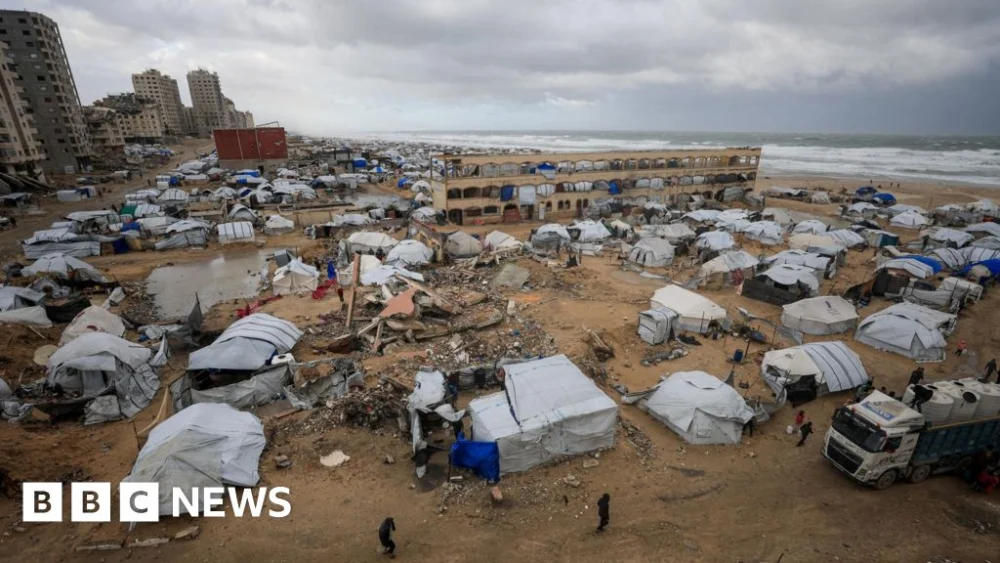
The United States has formally commenced the second critical phase of former President Donald Trump’s comprehensive framework for achieving enduring peace and stability in the Gaza Strip, a pivotal stage designed to establish a technocratic Palestinian government within the beleaguered territory. This significant development, articulated by US envoy Steve Witkoff, signals a robust commitment to reshaping Gaza’s political and security landscape following months of intense conflict. The overarching objective of this phase extends beyond mere political restructuring to encompass the extensive reconstruction of the devastated enclave and its complete demilitarization, specifically targeting the disarmament of Hamas and other armed Palestinian factions.
Ambassador Witkoff underscored the gravity of the impending transformations, issuing a stark warning regarding the expectations placed upon Hamas. "The US expects Hamas to comply fully with its obligations," he stated emphatically, highlighting that these responsibilities explicitly include the immediate repatriation of the remains of the final deceased Israeli hostage. He further cautioned, "Failure to do so will bring serious consequences," indicating a firm stance from Washington regarding adherence to the agreed-upon terms and the potential for punitive measures should compliance falter. This declaration sets a demanding precedent for the implementation of the ambitious peace plan, placing the onus squarely on the militant group to demonstrate its commitment to the cessation of hostilities and the broader path toward normalization.
The initiation of this second phase follows the successful conclusion of Phase One, which saw a series of critical agreements reached between Hamas and Israel in October. This initial stage was characterized by the implementation of a fragile but significant ceasefire, which brought a temporary halt to the most intense fighting. Central to Phase One was a complex hostage-prisoner exchange, which facilitated the release of numerous individuals held by both sides, providing a glimmer of hope amidst the profound suffering. Furthermore, Phase One included a partial Israeli military withdrawal from certain areas of Gaza, alongside a substantial surge in humanitarian aid deliveries, aimed at alleviating the dire conditions faced by the civilian population. These initial steps, while fraught with challenges, laid the groundwork for the more expansive and structurally transformative goals now being pursued in Phase Two.
A cornerstone of the current phase is the establishment of a new administrative body for Gaza. The formation of the 15-person transitional government, officially named the National Committee for the Administration of Gaza (NCAG), was initially announced by Egypt, a key regional facilitator in the peace process. This technocratic entity is envisioned to provide stable and impartial governance for the territory, stepping into a vacuum created by the ongoing conflict and the imperative to sideline militant control. The NCAG is designed to operate under the direct oversight of a superior supervisory body, the "Board of Peace," an international steering committee. Notably, this Board of Peace is slated to be chaired by former President Trump himself, a detail that was a central feature of the comprehensive 20-point plan unveiled three months prior. Trump’s direct involvement as chairman signifies the high-level political backing for the initiative and underscores the US commitment to its success, even post-presidency.
The current conflict in Gaza was dramatically ignited by the devastating Hamas-led assault on southern Israel on 7 October 2023. This meticulously planned and executed attack resulted in the tragic deaths of approximately 1,200 individuals, predominantly Israeli civilians, and the abduction of 251 others who were taken hostage into Gaza. The sheer scale and brutality of the incursion sent shockwaves globally, precipitating Israel’s retaliatory military campaign. Since that fateful day, the human cost in Gaza has been immense, with the territory’s Hamas-run health ministry reporting more than 71,430 fatalities due to Israeli military operations. These stark figures underscore the urgent necessity of a robust and sustainable peace framework, highlighting the devastating impact of the conflict on civilian populations and the imperative to prevent further loss of life.
Analysis of the Demilitarization Mandate and its Feasibility
The mandate for the "full demilitarization of Gaza, including the disarmament of Hamas and other Palestinian groups," represents arguably the most ambitious and formidable component of Phase Two. Historically, attempts to disarm militant groups in conflict zones have faced immense resistance, often proving intractable without overwhelming force or comprehensive political buy-in. Hamas, a deeply entrenched political and military organization that has governed Gaza for over 15 years, possesses a sophisticated military wing with extensive networks, weaponry, and popular support among segments of the population. Its disarmament would entail not only the confiscation of heavy weaponry but also the dismantling of its command structure, intelligence capabilities, and vast tunnel networks, which have been built over decades.
Experts on regional security and counter-insurgency operations express significant skepticism regarding the voluntary or easily enforced disarmament of such a well-established entity. Hamas views its armed capabilities as essential for resistance and self-defense against Israeli occupation, and any relinquishment of these assets would likely be perceived as an existential threat to its ideology and power base. The "serious consequences" threatened by Ambassador Witkoff could range from renewed military operations to severe economic sanctions, but the effectiveness of these measures in achieving full disarmament without exacerbating the humanitarian crisis remains a critical question. The precedent set by other post-conflict demilitarization efforts suggests that success often hinges on providing credible political alternatives and robust security guarantees for the disarmed group and its constituents, elements that are complex to forge in the current highly polarized environment.
The Role and Challenges of a Technocratic Palestinian Government (NCAG)
The proposed National Committee for the Administration of Gaza (NCAG) is envisioned as a crucial step towards depoliticizing governance and focusing on reconstruction and service delivery. A 15-person technocratic government, as opposed to one formed through traditional political processes, aims to be perceived as neutral and competent, capable of garnering broader international support and facilitating aid. However, the operational challenges for the NCAG are immense. It will be tasked with governing a territory devastated by war, suffering from a profound humanitarian crisis, and with a populace deeply scarred by conflict and years of political division.
Its legitimacy among the Palestinian population will be a key determinant of its success. Without a clear mandate derived from popular will, or at least strong public acceptance, the NCAG could struggle to assert authority, especially in areas where Hamas’s influence remains strong. The question of how this government will interact with, or supplant, existing administrative structures in Gaza, which have been under Hamas control, is complex. Furthermore, its ability to coordinate effectively with the Palestinian Authority in the West Bank, and with international donors and Israel, will be paramount. The NCAG’s success will also depend heavily on its capacity to deliver tangible improvements in daily life for Gazans – rebuilding infrastructure, restoring essential services, and facilitating economic recovery – all while navigating the immense political and security pressures of the post-conflict landscape.
The "Board of Peace" and Donald Trump’s Unique Oversight
The establishment of the "Board of Peace" chaired by former President Donald Trump introduces a highly unusual element into a post-conflict resolution framework. While the involvement of high-profile international figures can lend gravitas to peace initiatives, a former head of state directly chairing such a body, especially one known for a non-traditional approach to diplomacy, presents both potential advantages and unique risks. Trump’s previous administration introduced the "Deal of the Century," a peace plan that was largely rejected by Palestinians due to its perceived pro-Israel bias. His current role as chairman of the Board of Peace could, for some, undermine the perception of neutrality required for such a sensitive undertaking.
However, proponents might argue that Trump’s direct involvement signals an unprecedented level of US commitment, potentially leveraging his personal influence and direct access to key leaders in the region. His chairmanship could also be interpreted as an attempt to ensure accountability from all parties, with the implicit threat of direct US intervention or withdrawal of support if commitments are not met. The composition of the rest of the Board of Peace, and its operational mechanisms for decision-making, conflict resolution, and enforcement, will be critical to its effectiveness and ability to navigate the complex geopolitical currents of the Middle East.
Geopolitical Context and Regional Implications
The Trump Gaza peace plan unfolds against a backdrop of deeply entrenched regional conflicts and shifting alliances. The involvement of Egypt as a key facilitator highlights its enduring role in mediating between Israel and Palestinian factions, leveraging its strategic position and diplomatic ties. Other Arab states, particularly those that have normalized relations with Israel under the Abraham Accords, may view this initiative with cautious optimism, seeing it as a potential pathway to de-escalation and regional stability, or with apprehension, fearing it could further entrench Palestinian grievances if perceived as inequitable.
The plan’s success or failure will have significant implications for the broader Middle East. A successful demilitarization and reconstruction of Gaza, coupled with stable governance, could provide a model for future conflict resolution and strengthen regional security cooperation. Conversely, a failure could further destabilize the region, embolden militant groups, and complicate efforts towards a comprehensive Israeli-Palestinian peace agreement, including the long-sought two-state solution. The initiative also implicitly tests the limits of external imposition of governance models versus locally driven solutions, a perennial debate in international peacebuilding.
Long-Term Vision and Potential Obstacles
The comprehensive nature of the Trump plan, encompassing ceasefire, hostage exchanges, aid, withdrawal, demilitarization, reconstruction, and new governance, suggests a long-term vision for a fundamentally transformed Gaza. However, the path is fraught with potential obstacles. Beyond the immediate challenges of Hamas’s disarmament and the NCAG’s legitimacy, issues such as securing adequate funding for reconstruction, ensuring freedom of movement for goods and people, and addressing the underlying socio-economic grievances that fuel instability will be crucial.
The sustainability of the peace hinges on more than just security arrangements; it requires genuine economic opportunity, social cohesion, and a political horizon that offers hope for the Palestinian people. The plan’s ability to integrate with the broader aspirations for Palestinian statehood and self-determination will be a critical test. Without a clear pathway towards addressing the core political issues of the Israeli-Palestinian conflict, including the status of Jerusalem and borders, any solution for Gaza, however comprehensive, risks remaining a temporary fix.
The current announcement of Phase Two marks a critical juncture in the ongoing efforts to bring a durable end to the conflict in Gaza. The coming months will reveal the true extent of the commitment of all parties to this ambitious plan, and whether the proposed framework can overcome the immense political, security, and humanitarian challenges to forge a new future for the besieged territory. The international community will be closely observing the implementation of these directives, understanding that the success or failure of this initiative will reverberate far beyond the borders of Gaza.



 Aura Kasih