Lisa Mariana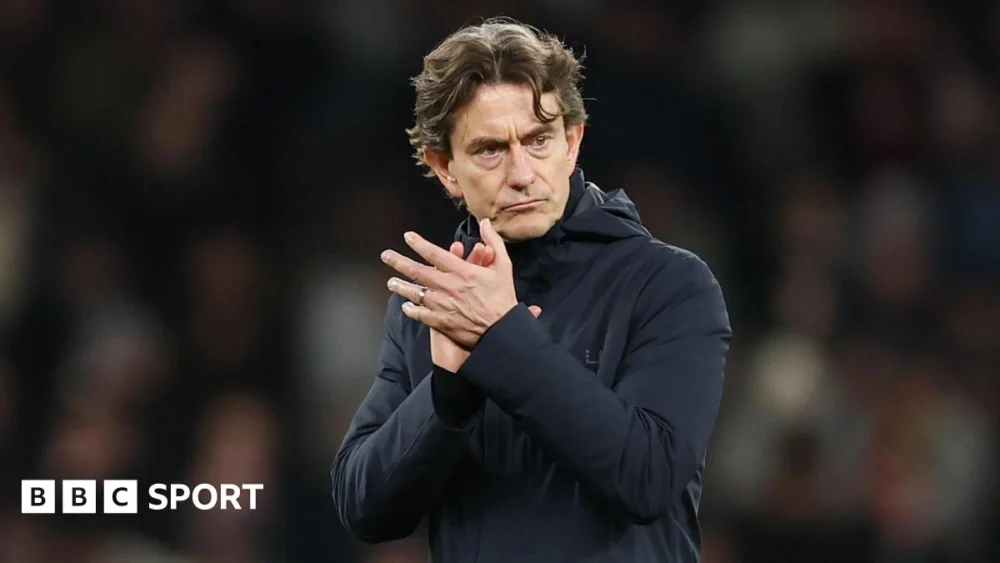
The leadership at Tottenham Hotspur Football Club finds itself embroiled in intense internal discussions regarding the continued viability of head coach Thomas Frank’s position, as the club grapples with a period of profound underperformance just seven months into his tenure. This pivotal moment has been precipitated by a series of disappointing results and a growing disconnect with the fanbase, compelling the club’s executive strata to scrutinise the long-term trajectory under the Danish tactician.
Since his appointment last summer, Thomas Frank’s stewardship of the North London club has been characterised by an undeniable struggle to meet the elevated expectations inherent to a club of Tottenham’s stature. The initial optimism surrounding his arrival, following a period of managerial instability, has progressively eroded, replaced by widespread apprehension concerning the team’s direction and tactical identity. Sources within the club indicate that the option of terminating Frank’s contract has transitioned from a speculative whisper to a tangible point of deliberation among key members of the executive team in recent weeks, signalling a significant shift in internal sentiment.
While the club’s hierarchy has, until recently, maintained a public stance of support for Frank despite the team’s manifest difficulties throughout the current campaign, the recent home defeat to West Ham United has dramatically altered the calculus. This latest setback has intensified the pressure, pushing Frank’s role into an acutely precarious state. The leadership now faces a stark choice: whether to implement immediate changes to arrest the decline or to afford the head coach additional time to reverse the team’s fortunes, a decision laden with considerable strategic and financial implications.
The statistical reality underscores the severity of Tottenham’s predicament. The club currently languishes in 14th position in the Premier League table, a stark and alarming contrast to their customary aspirations for European qualification. With merely seven victories from 22 league fixtures, the team’s win rate stands at an unacceptable level for a club that possesses one of the most advanced training facilities and stadia in world football, coupled with a significant investment in its playing squad. This lack of consistent performance has not only impacted their standing but has also fostered a palpable sense of disillusionment among the club’s fervent supporter base.
The erosion of fan confidence reached a nadir during the closing stages of the aforementioned match against West Ham. Chants of "you’re getting sacked in the morning" reverberated around the stadium, a visceral expression of the supporters’ frustration and a clear indication that a significant segment of the fanbase has lost faith in the former Brentford manager’s ability to steer the club back to prominence. Such overt displays of dissent from the stands are rarely ignored by club executives and often serve as a potent catalyst for decisive action.
Thomas Frank’s arrival at Tottenham in June of the preceding year was itself a consequence of another managerial change, following the departure of Ange Postecoglou. This context of frequent leadership transitions adds another layer of complexity to the current situation, raising questions about the club’s long-term vision and its capacity to foster managerial stability. The club’s recent form provides little solace, with only a solitary victory registered across their last eight competitive matches. Furthermore, Tottenham’s campaigns in both domestic cup competitions have already concluded prematurely, eliminating two potential avenues for silverware and exacerbating the sense of underachievement.
The European front offers little respite. The team’s current standing in the Champions League group stage places their hopes of advancing to the knockout stages in grave jeopardy. A forthcoming fixture against Borussia Dortmund looms as an absolutely critical encounter, the outcome of which could either reignite their continental aspirations or consign them to an early exit, with significant financial and reputational repercussions. Failure to progress would not only diminish the club’s standing on the European stage but also impact revenue streams, which are increasingly vital for maintaining competitiveness at the elite level.
Detailed Performance Analysis and Tactical Scrutiny
Frank’s tactical philosophy, renowned for its pragmatic approach, robust defensive organisation, and effective set-piece routines at his previous club, has seemingly failed to translate effectively to the demands and player profile at Tottenham. The struggle to implement a cohesive and consistently effective playing style has been a recurring theme throughout his short tenure. While the squad boasts considerable individual talent, the collective output has often appeared disjointed and lacking in fluidity. Critics point to an apparent inability to consistently control matches, dictate tempo, or break down well-organised defences, particularly at home.
The team’s defensive vulnerabilities have been a particular concern. Despite Frank’s reputation for building solid foundations, Tottenham has conceded goals with alarming regularity, often through lapses in concentration or systemic frailties. This contrasts sharply with the expectation that a manager known for defensive acumen would swiftly address such issues. On the offensive side, the team has often lacked creativity and cutting edge, struggling to convert possession into meaningful goal-scoring opportunities. Key attacking players, who performed with distinction under previous managers, appear to be operating below their customary high standards, prompting questions about player motivation, tactical instructions, and the overall confidence within the squad.
The poor run of form, characterised by only one win in eight fixtures, is indicative of deeper systemic issues. It suggests not merely isolated incidents of misfortune but a persistent inability to secure results against a variety of opponents, both strong and weak. This period of sustained underperformance has inevitably impacted player morale, which can create a self-perpetuating cycle of negative results and diminished confidence. A manager’s ability to inspire and motivate a squad through difficult patches is paramount, and the recent displays suggest a struggle in this crucial aspect of leadership.
Internal Dynamics and Stakeholder Perspectives
The internal scrutiny within the club’s executive apparatus is a multifaceted process. The initial decision to appoint Frank would have been based on a comprehensive assessment of his qualifications, philosophy, and track record. However, the subsequent divergence between pre-appointment expectations and actual on-field performance necessitates a re-evaluation. The emergence of at least one executive actively advocating for Frank’s dismissal suggests a growing faction within the club’s leadership that believes a change is imperative to salvage the season and protect the club’s long-term interests. This internal division, if pronounced, can itself create further instability.
For the club’s board, the decision is not simply a matter of footballing performance. It involves significant financial considerations, including the severance package for Frank and his coaching staff, especially given the brevity of his contract. There is also the strategic challenge of identifying and attracting a suitable replacement in the middle of a season, a task that often proves difficult. The board must weigh the potential financial outlay against the cost of continued underperformance – including lost prize money, diminished sponsorship appeal, and the risk of failing to qualify for lucrative European competitions. The long-term reputation of the club, both in attracting top managerial talent and elite players, is also at stake. A perception of instability can deter future candidates and make recruitment more challenging.
The vociferous reaction from the supporter base is a powerful external factor. Tottenham fans, renowned for their passion and loyalty, also hold high expectations. The "sacked in the morning" chants are not merely expressions of momentary anger but reflect a deeper sense of disillusionment that has built over months of underwhelming displays. Sustained fan pressure can often be a significant influence on board decisions, as maintaining the connection and goodwill of the fanbase is crucial for the club’s overall health and commercial viability. The financial implications of a disengaged fanbase, including reduced matchday attendance and merchandise sales, cannot be overlooked.
Financial and Strategic Implications of Managerial Change
The financial burden of frequent managerial changes is substantial. Each dismissal typically involves significant compensation payments, not only to the head coach but often to an entire backroom staff. For a club like Tottenham, operating within the stringent parameters of financial fair play regulations, such unplanned expenditures can impact future transfer budgets and investment plans. Furthermore, a new managerial appointment often necessitates further investment in the playing squad to align with the new coach’s tactical vision, adding another layer of financial commitment.
From a strategic perspective, instability in the managerial hot seat can undermine the club’s long-term planning. Constant changes in leadership can disrupt player development pathways, lead to incoherent transfer policies, and create a culture where short-term fixes are prioritised over sustainable growth. It can also make it challenging to establish a distinct playing philosophy or identity, which is often crucial for attracting and retaining top-tier talent. The repeated cycle of appointing and dismissing managers risks portraying Tottenham as a club that lacks a clear strategic direction, potentially making it less appealing to prospective players and coaches seeking stability and a clear pathway to success.
The Path Forward: Immediate Action vs. Patience
The Tottenham hierarchy currently faces a binary choice, each option carrying its own set of risks and potential rewards.
Option 1: Immediate Managerial Change.
- Pros: A new manager could provide an immediate "bounce," injecting fresh energy and tactical impetus into a struggling squad. This might galvanise the players, reignite fan enthusiasm, and potentially salvage the remainder of the season, particularly their European aspirations. It demonstrates decisiveness and responsiveness to the club’s poor form and fan sentiment.
- Cons: The financial cost of termination and a new appointment is considerable. It perpetuates a cycle of instability, potentially damaging the club’s reputation. Finding a suitable, high-calibre replacement mid-season is notoriously difficult, and a rushed appointment could lead to a similar situation down the line. It also implies a concession that the initial appointment was a misjudgment.
Option 2: Granting Thomas Frank More Time.
- Pros: This approach champions stability and allows the manager more time to fully implement his vision and overcome the current difficulties. It avoids further financial outlay and the disruption associated with another change. If Frank were to successfully turn the tide, it would validate the club’s initial backing and demonstrate a commitment to a longer-term project.
- Cons: The significant risk of continued underperformance, further alienating the fanbase, and missing critical targets such as European qualification. Prolonging the current struggles could lead to irreparable damage to player morale, club reputation, and financial standing. There is also the risk that waiting too long might leave insufficient time for a new manager to make an impact if a change ultimately becomes unavoidable.
Conclusion
Tottenham Hotspur stands at a critical inflection point in its season and, arguably, its strategic direction. The decision regarding Thomas Frank’s future transcends mere footballing results; it encompasses financial prudence, long-term strategic vision, and the delicate balance of managing stakeholder expectations. The precarious league position, the early exits from domestic cups, and the fragile European campaign underscore the urgency of the situation. The upcoming fixture against Borussia Dortmund looms not just as a crucial match for European qualification, but potentially as a final referendum on Frank’s capacity to inspire a turnaround. The path the club’s hierarchy chooses will undoubtedly define the trajectory of Tottenham Hotspur for the foreseeable future, making this one of the most significant decisions in recent club history.



 Aura Kasih
 Ayu Aulia