Aura Kasih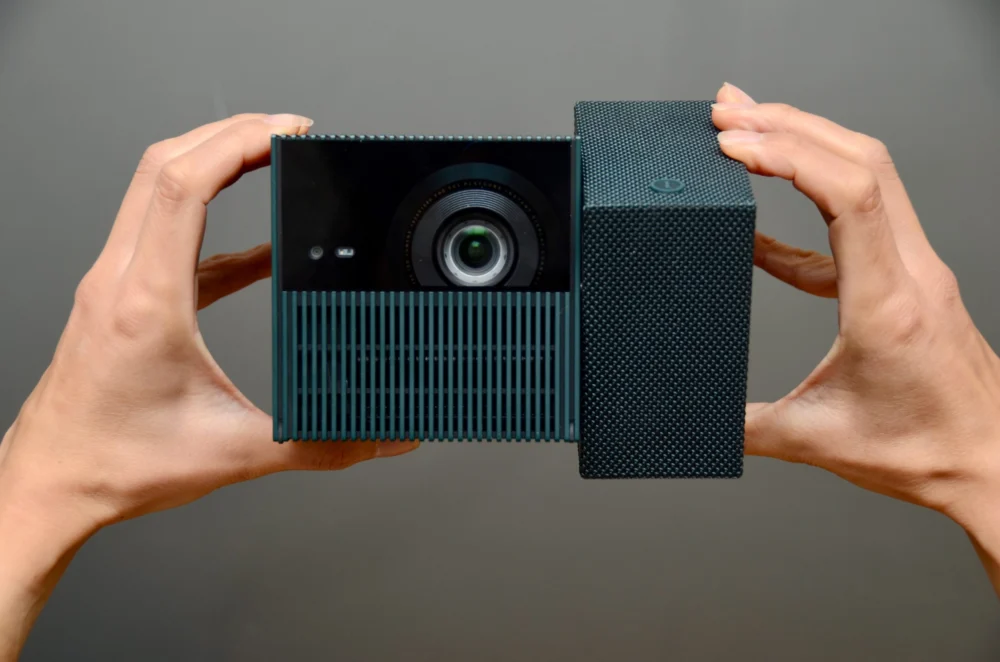
In the dynamic landscape of personal entertainment devices, the pursuit of the ultimate all-in-one portable projector hinges on a delicate equilibrium of features and compromises, balancing image fidelity, audio immersion, operational longevity, and intuitive user experience within a compact and accessible form factor. TCL’s innovative PlayCube emerges as a compelling contender, successfully navigating these trade-offs to present a 1080p projection solution that justifies its premium positioning in the 2026 market.

Having subjected the TCL PlayCube, powered by the Google TV operating system, to an extensive two-month evaluation during a cross-country journey, followed by several months of integration into a home environment, its remarkable adaptability and inherent enjoyment have been thoroughly demonstrated. The projector’s diminutive size and versatile nature facilitate spontaneous setup, irrespective of the time of day or the location, transforming any space into a personal screening venue with effortless grace.
The PlayCube’s design, a testament to functional artistry, draws inspiration from the iconic Rubik’s Cube, featuring a 90-degree rotating lens mechanism. This ingenious mechanism allows for effortless image adjustment, seamlessly clearing obstacles that might otherwise obstruct the projection path. Beyond its rotational capability, the PlayCube offers conventional mounting options via a standard tripod thread, or can be inverted for an immersive ceiling-viewing experience, ideal for relaxed bedside entertainment. Complementing its mechanical ingenuity, the device is equipped with a suite of advanced automatic adjustment features, including precise focus control, intelligent keystone correction, sophisticated obstacle detection, screen alignment, and integrated eye protection, ensuring a consistently optimized viewing experience with minimal manual intervention.

A standout characteristic of the PlayCube is its impressive brightness, particularly within the context of portable projectors. While 750 ISO lumens might not rival the output of dedicated home theater projectors, it represents a significant achievement for a device so remarkably compact, measuring a mere 149.8 x 96.6 x 96.6mm and weighing just 1.3kg. This brightness is sufficient to deliver a highly watchable experience even in ambient daylight, projecting a focused 30-inch image within the confined space of a vehicle, and scaling to an expansive 100-inch display against a suitable surface after dusk. Although it lacks the advanced color-adaptation technology found in some competing models, such as Samsung’s latest Freestyle+ projector, which dynamically adjusts color based on the surrounding environment, the PlayCube still produces a visually pleasing image. The projector’s distinct blue-gray chassis, while aesthetically appealing, can subtly influence the color palette of the projected image, a minor concession that does not detract significantly from overall watchability.
The integrated 5W speaker of the PlayCube delivers adequate, albeit not exceptional, audio performance. While it lacks stereo separation, the sound output is sufficiently powerful to fill a moderate-sized room. However, it exhibits a deficit in terms of sonic fullness, warmth, and intricate detail. Music playback, for instance, can sound somewhat shrill and thin, and complex audio passages in action sequences, such as the cacophony of a high-octane chase scene, may result in a somewhat muddled soundscape. Despite these limitations, the audio remains enjoyable, particularly when the volume is kept below 60 percent, a level that still provides ample loudness. During outdoor screenings, the projector’s audio capabilities are such that maintaining a volume below 20 percent is often advisable to avoid disturbing nearby individuals, highlighting its effective sound projection.

For users seeking a more immersive audio experience, the PlayCube offers robust connectivity options, including a standard audio jack and Bluetooth wireless transmission, enabling seamless integration with headphones or external self-powered speakers. The device can also function as a standalone Bluetooth speaker, a feature that deactivates the projection lamp while retaining fan operation, a characteristic that, while minor, is worth noting. The internal fan operates at a quiet 27dB measured at one meter, a level that is generally unobtrusive, though perceptible during moments of auditory silence.
The battery life of the PlayCube, powered by its 66Wh cell, demonstrated remarkable consistency during recent testing, exceeding TCL’s claim of up to three hours. In a prolonged test session, projecting the 2-hour and 50-minute film "The Aviator" via the Netflix application at maximum brightness, the device delivered exactly three hours and one minute of continuous operation on a full charge. Furthermore, the PlayCube’s compatibility with USB-C power banks extends its utility for extended viewing sessions, offering a convenient solution for situations where mains power is unavailable. Recharging the projector from complete depletion to full capacity was accomplished in approximately 104 minutes when connected to a 65W USB-C charger.

During the extended four-month testing period, particularly while engaged in van life activities in warmer climates, an inconsistent pattern of battery life was observed. This phenomenon is hypothesized to be linked to the projector’s power management protocols in standby mode. A brief press of the power button initiates a sleep function, allowing for rapid wake-up in under 30 seconds. In this standby state, the fan cycles periodically, consuming energy, which may account for the observed accelerated battery drain in higher temperatures. Upon returning to the more temperate climate of the home environment, this issue was no longer apparent, suggesting a potential environmental influence or perhaps a resolution through a firmware update. To mitigate any potential phantom power drain in standby mode, a full shutdown by long-pressing the power button is recommended. This process, while taking approximately 80 seconds to complete, can be expedited by disabling certain automatic screen adjustment features.
The user interface, characteristic of many battery-powered projectors, occasionally exhibits a degree of sluggishness. Navigation within the Google TV interface via the remote control may involve a brief delay of one to two seconds for responsiveness. Similarly, the automatic image adjustment features, while beneficial, can also be somewhat slow to engage. Nevertheless, their eventual activation is a welcome enhancement, even if the obstacle avoidance functionality can be inconsistent. Fortunately, all settings can be manually fine-tuned to achieve the desired visual output.

TCL explicitly positions the PlayCube as a device "designed specifically for camping projection," a designation that resonates strongly with individuals engaged in mobile living arrangements, such as vanlifers. The projector’s performance in this context has been notably impressive. Priced at $799.99, the TCL PlayCube represents a significant investment, yet it delivers an exceptional combination of brightness, battery endurance, and portability that is seldom found at a lower price point. Competitors, such as Xgimi’s Halo+ projector, offer a comparable feature set at the same price. While the Halo+ boasts superior stereo sound and a more substantial build, its battery life is comparatively shorter. However, it is currently available at a discounted price of $449, presenting a compelling alternative for budget-conscious consumers seeking a high-quality portable projection solution.
The development of portable projectors like the TCL PlayCube signifies a broader trend towards democratizing high-quality audiovisual experiences, moving them beyond the confines of traditional living rooms and into diverse, on-the-go environments. The integration of smart operating systems like Google TV further enhances their appeal, transforming them from mere display devices into self-contained entertainment hubs capable of accessing vast libraries of content. As technology continues to advance, we can anticipate further innovations in brightness, battery efficiency, and image processing, making portable projectors even more capable and versatile in the years to come, potentially challenging the dominance of larger, fixed display technologies for certain use cases. The PlayCube stands as a robust early example of this evolving category, offering a glimpse into a future where immersive visual entertainment is truly unbound.


 Lisa Mariana
 Ayu Aulia