Lisa Mariana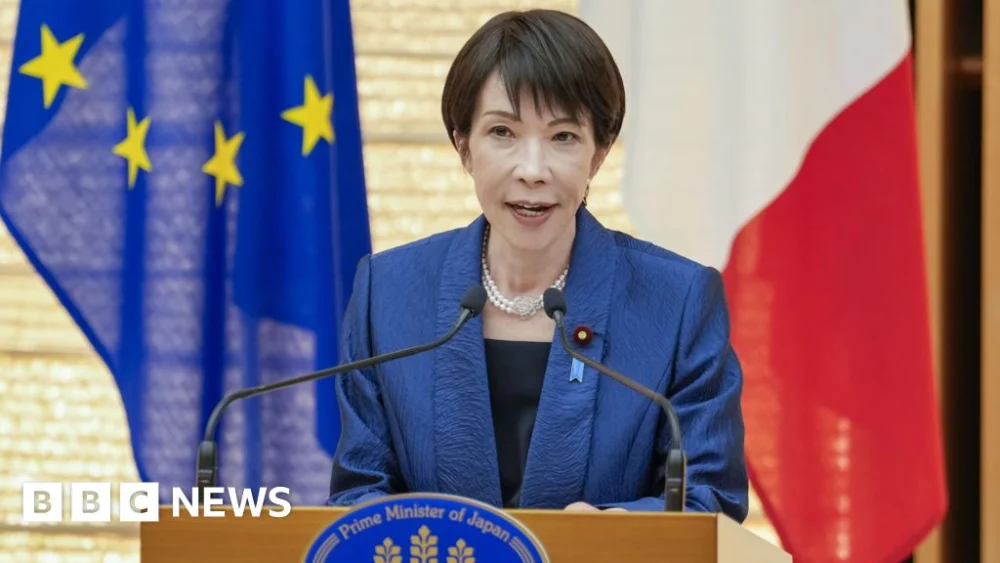
Speculation is mounting that Japanese Prime Minister Sanae Takaichi is on the verge of calling a snap general election, a strategic maneuver less than three months into her tenure, aimed at solidifying her mandate and securing a more robust parliamentary majority. This preemptive electoral contest, expected to be announced at a press conference on Monday afternoon, would see Japanese citizens head to the polls to elect the 465 members of the House of Representatives, the more powerful lower chamber of the bicameral legislature. The move comes as the leader, who assumed office in October, enjoys a period of elevated public approval, presenting a calculated opportunity to strengthen her administration’s legislative footing amidst a complex domestic and international landscape.
The political landscape in Japan has witnessed a period of considerable fluidity, with Prime Ministers frequently succeeding one another in recent years. Takaichi’s decision to seek a fresh mandate so early in her term is a testament to the strategic calculations often employed by Japanese leaders to capitalize on favorable political winds. Historically, snap elections have been a double-edged sword for ruling parties, offering the chance to cement power but also carrying the inherent risk of a backfiring gamble. The House of Representatives, with its significant legislative authority, including the power to elect the Prime Minister and pass budgets, is the cornerstone of Japan’s parliamentary democracy, making control of its majority paramount for any government seeking to implement a comprehensive policy agenda.
Prime Minister Takaichi’s ascension to power last October was marked by significant public interest, and her cabinet has consistently recorded high approval ratings since taking office. This initial honeymoon period, often characterized by public goodwill and optimism, provides a crucial window for a leader to make bold political decisions. The current configuration of the Liberal Democratic Party (LDP) in the House of Representatives sees it holding 199 seats, a figure that includes three legislators from allied independent factions. While the LDP, in coalition with the Japan Innovation Party, currently commands a working majority in the lower house, this margin is relatively slim. A snap election, if successful, could significantly expand this majority, granting Takaichi greater legislative flexibility and reducing her reliance on coalition partners, thereby enhancing the stability and longevity of her administration.
Sanae Takaichi embodies a distinct political profile within Japan’s conservative establishment. A close political protégé of the late former Prime Minister Shinzo Abe, she is widely recognized for her unwavering commitment to conservative principles and a robust national defense. Her self-professed admiration for former British Prime Minister Margaret Thatcher has earned her the moniker "Japan’s Iron Lady," a designation that speaks to her perceived resilience, decisive leadership style, and strong ideological convictions. As Japan’s first female leader, Takaichi’s premiership holds symbolic significance, potentially inspiring a new generation of women in Japanese politics, even as her policy stances firmly align with traditional LDP conservatism. This blend of historic first and staunch traditionalism defines her public persona and policy approach.
On the domestic front, Takaichi is a vocal proponent of substantial government-led fiscal stimulus to invigorate economic growth. This approach signals a clear revival of the principles underpinning "Abenomics," the economic strategy championed by her mentor, Shinzo Abe. Abenomics comprised three main pillars: aggressive monetary easing by the Bank of Japan, flexible fiscal policy involving government spending, and structural reforms to boost Japan’s long-term growth potential. Takaichi’s embrace of this framework suggests a continued emphasis on overcoming Japan’s chronic deflationary pressures and revitalizing its economy through public investment and expansionary policies. While such measures can stimulate demand and employment, they also raise questions about Japan’s already substantial public debt and the potential for inflationary pressures, especially in a global economic environment marked by supply chain disruptions and commodity price volatility. The challenge for Takaichi will be to demonstrate that her version of Abenomics can deliver sustainable growth without exacerbating existing fiscal vulnerabilities.
In the realm of foreign policy and national security, Takaichi’s administration has adopted an assertive posture, particularly concerning regional challenges. In December, her cabinet approved a record-breaking defense budget totaling nine trillion yen (approximately $57 billion USD or £43 billion GBP). This significant allocation underscores Tokyo’s escalating concerns regarding the evolving geopolitical landscape, with China’s burgeoning military capabilities and assertive regional actions being explicitly identified as Japan’s "greatest strategic challenge." This reorientation of defense spending signals a departure from post-war pacifist norms, reflecting a growing consensus within Japan’s political establishment that a more robust defense capability is indispensable for national security in the 21st century.
Takaichi’s resolute stance on regional security has, however, not been without controversy. In November, her administration became the target of considerable ire from Beijing following comments she made suggesting that Japan’s Self-Defense Forces could be deployed in response to a potential Chinese attack on Taiwan. These remarks, perceived as a direct challenge to Beijing’s "One China" policy and its sovereignty claims over Taiwan, ignited a diplomatic spat that has seen bilateral ties plunge to their lowest point in over a decade. The deterioration in relations underscores the delicate balance Japan must strike between upholding its security interests, particularly concerning the stability of the Taiwan Strait, and managing its complex and economically vital relationship with its colossal neighbor. This friction has broader implications for regional stability, drawing in other key players and potentially escalating tensions in an already volatile East Asian theatre.
Concurrently, Takaichi has actively pursued a deepening of ties with the United States, Japan’s most critical security ally. During U.S. President Donald Trump’s visit to Japan last October, the two leaders engaged in effusive mutual praise, culminating in the signing of a significant deal on rare earths – critical minerals essential for advanced technologies – and a joint declaration heralding a new "golden age" of U.S.-Japan relations. This emphasis on strengthening the alliance reflects a shared strategic imperative to counter regional assertiveness and maintain a free and open Indo-Pacific. The renewed commitment, particularly under an administration that could see President Trump return to the White House, highlights Japan’s strategic hedging and its reliance on the U.S. security umbrella amidst rising geopolitical uncertainties. The "golden age" rhetoric, while perhaps aspirational, signals a desire for closer military, economic, and technological cooperation, vital for both nations’ long-term interests.
Despite her cabinet’s robust approval ratings, which have consistently charted between 60% and 80% in major polls as of December, Takaichi’s decision to call a snap election is a calculated gamble fraught with inherent risks. The LDP, while Japan’s perennial ruling party, has faced periods of internal instability, evidenced by the fact that Takaichi is the country’s fourth Prime Minister in the past five years. Her predecessors’ tenures were prematurely curtailed by factors such as eroding public support and political scandals, underscoring the fickle nature of Japanese public opinion and the constant pressure on leaders to maintain public trust.
A particularly cautionary tale for Takaichi is the experience of her immediate predecessor, Shigeru Ishiba. Ishiba’s decision to call a snap election shortly after taking office resulted in one of the LDP’s most dismal electoral performances in recent history, ultimately costing the party its outright majority in the House of Representatives. This precedent serves as a stark reminder that even a Prime Minister enjoying initial popularity can miscalculate the electorate’s mood, leading to unforeseen and detrimental outcomes. The memory of Ishiba’s misstep will undoubtedly loom large over Takaichi’s campaign, intensifying the scrutiny of her strategic rationale and the potential repercussions of her gamble.
Further complicating the electoral landscape is the emergence of a newly consolidated opposition front. In a significant development last week, Japan’s largest opposition party, the Constitutional Democratic Party of Japan (CDPJ), forged a new centrist alliance with the Komeito party. Komeito, a long-standing and often influential coalition partner of the LDP, unexpectedly departed from its traditional alliance to join forces with the CDPJ. This new entity, branded the Centrist Reform Alliance, is poised to present a unified and formidable challenge to the LDP in the upcoming election. The defection of Komeito, known for its disciplined organizational structure and ability to mobilize voters, represents a significant blow to the LDP’s traditional electoral machinery and could reshape the dynamics of multi-party competition. The Centrist Reform Alliance aims to capitalize on any public fatigue with LDP dominance and present a credible alternative, potentially drawing support from a broad spectrum of voters disillusioned with the ruling party or seeking a more moderate political direction.
The formation of such a broad opposition coalition introduces an unprecedented level of uncertainty into Japan’s typically predictable electoral contests. While the LDP under Takaichi enjoys the advantages of incumbency and high personal approval, the unified opposition could harness anti-incumbent sentiment and offer a clearer policy alternative than a fragmented opposition. The election will thus not merely be a referendum on Takaichi’s nascent premiership but also a test of the opposition’s ability to translate consolidation into electoral gains.
The implications of this snap election are far-reaching, both domestically and internationally. Should Takaichi succeed in significantly expanding the LDP’s majority, it would cement her authority, enabling her to pursue her conservative agenda with greater vigor, particularly concerning defense buildup and economic reforms. A strengthened mandate would also provide stability to Japan’s political leadership, which has often been criticized for its high turnover. Conversely, a weaker-than-expected performance or, in a worst-case scenario, the loss of the LDP’s majority, could plunge Japanese politics into renewed instability, potentially jeopardizing Takaichi’s leadership and forcing a realignment of political forces. Such an outcome would introduce uncertainty into Japan’s foreign policy trajectory, particularly regarding its assertive stance towards China and its alliance with the United States. International markets would closely watch the results, as political stability is crucial for investor confidence in the world’s third-largest economy.
In conclusion, Prime Minister Sanae Takaichi’s anticipated decision to call a snap election represents a high-stakes political maneuver designed to capitalize on her current popularity and secure a stronger legislative mandate. While buoyed by high approval ratings and a clear policy agenda centered on economic stimulus and robust national security, her gamble carries significant risks, notably the precedent of past failures and the emergence of a formidable, consolidated opposition. The outcome of this preemptive electoral contest will undoubtedly shape the trajectory of Japanese politics for years to come, influencing its domestic reform efforts and its strategic positioning on the global stage.




 Aura Kasih
 Ayu Aulia