Lisa Mariana
The National Health Service, the United Kingdom’s largest employer, finds itself at the epicentre of an escalating societal debate concerning gender identity and single-sex provisions within the workplace. Recent legal judgments, particularly a landmark employment tribunal ruling in Darlington, have illuminated the profound complexities employers face in balancing the protected characteristics of sex and gender reassignment under equality legislation. This intricate legal and social landscape necessitates a re-evaluation of established policies and underscores the urgent need for unequivocal national guidance to prevent further discord and potential legal liabilities across all sectors.
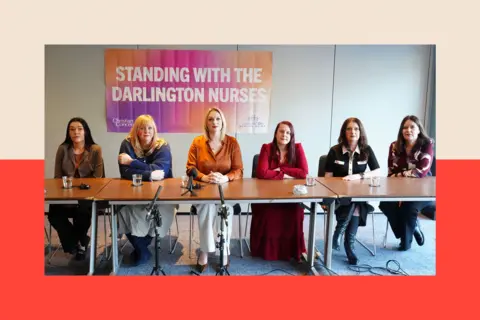
The dispute that brought these issues into sharp relief originated in the staff changing rooms of Darlington Memorial Hospital. In the summer of 2023, nurse Bethany Hutchison encountered a colleague, Rose Henderson, a trans woman (a biological male who identifies as a woman), entering the female changing facilities. This encounter, described by Hutchison as "shocking" due to Henderson’s perceived masculine appearance, ignited a broader controversy among the female nursing staff. The tribunal heard testimonies expressing profound discomfort, with one nurse recounting flashbacks to childhood abuse and another admitting initial reluctance to voice concerns for fear of being labelled bigoted or transphobic. Over two dozen nurses ultimately registered their objections, culminating in legal action initiated by eight individuals against the County Durham and Darlington NHS Trust.
While the tribunal explicitly cleared Rose Henderson of any improper conduct, noting "no improper behaviour," the focus shifted to the management’s actions. Henderson, who maintained a right to use the female-only changing room, became an unwitting figure in a larger institutional failing. The employment tribunal concluded that the NHS Trust had indirectly discriminated against the female nurses by permitting Henderson access to their changing facilities without offering a suitable, dignified alternative. The ruling further found that the nurses’ complaints were not adequately addressed, fostering a "hostile, humiliating, and degrading environment." Crucially, the tribunal determined that the Trust had prioritised "the perceived rights of Rose" over the statutory protections and dignity of the biological female staff. This verdict, hailed by some nurses as "a moment of truth," signals a critical juncture for organisational policy development throughout the public and private sectors. The NHS Trust has indicated it is carefully reviewing the judgment, while the affected nurses have expressed feeling "gaslighted" by their managers, highlighting the deep emotional toll of such disputes.
The duration and intensity of this two-and-a-half-year conflict raise fundamental questions about how organisations navigate competing rights and foster inclusive environments. Although an employment tribunal decision does not establish legal precedent in the same way a higher court ruling does, it serves as a powerful interpretive lens for existing laws, offering significant insight into how similar cases might be adjudicated. The central finding in the Darlington case was the Trust’s fundamental misunderstanding of equality legislation.

The County Durham and Darlington NHS Foundation Trust’s internal "Transitioning in the Workplace" (TIW) policy stated that individuals identifying as transgender were "legally allowed to use any toilet facility they prefer," adding that if "others do not wish to share the gender specific facilities, they should use alternative facilities." The tribunal unequivocally declared this policy unlawful. This judgment resonates deeply because, at the time, such policies were widely adopted across numerous NHS Trusts and other public and private entities, reflecting a common interpretation of inclusivity.
The withdrawal of this policy by the Trust last year followed a pivotal Supreme Court ruling. This ruling, while not directly about workplace facilities, significantly clarified the interpretation of "sex" within the 2010 Equality Act, defining it primarily on a biological basis. The Supreme Court’s elucidation underscored that granting a trans woman (a biological male) access to a single-sex female space could, by logical extension, imply that other biological males could also access it, thereby effectively negating the single-sex nature of the provision. This clarification is vital, as the Equality Act 2010 explicitly protects both women and transgender individuals, creating a complex interplay of rights that organisations must meticulously balance.

Dr. Michael Foran, an associate professor of law at the University of Oxford specialising in equality and anti-discrimination law, highlights the broader implications of the Supreme Court’s pronouncement. He notes that the ruling provided a crucial framework for lower courts, establishing a test: if the establishment of a single-sex space is deemed lawful, then the exclusion of individuals of the opposite biological sex from that space is likely to be considered proportionate. This legal reasoning formed a cornerstone of the Darlington tribunal’s decision, marking a shift in the prevailing understanding of workplace accommodations for transgender employees, particularly concerning intimate single-sex spaces.
The debate, characterised by trans rights campaigners like Translucent as "excruciatingly difficult," highlights the rarity of such explicit conflicts but stresses the need for proportionate solutions when rights genuinely "clash." Conversely, gender-critical women’s advocacy groups like Sex Matters expressed both relief and validation, asserting that the tribunal’s findings on "common sense" principles were long overdue.
The legal landscape, however, remains fractured by other recent employment tribunal decisions that offer slightly divergent interpretations. In Scotland, two December rulings added layers of complexity. One case involved nurse Sandie Peggie, who challenged NHS Fife’s allowance of a trans woman doctor in female changing rooms. While the tribunal initially appeared to accept an "automatic right" for a transgender person to use facilities aligning with their stated gender identity, it concluded that once Peggie’s protected rights under equality law were infringed, the doctor’s access "should have been revoked on an interim basis" until alternative arrangements were made. The failure to do so constituted harassment, though other discrimination and victimisation claims were dismissed. Peggie is appealing this decision.
In another Scottish case, engineer Maria Kelly’s claims of harassment and discrimination against her employer, Leonardo UK, were dismissed after the company permitted trans women to use female toilets. The tribunal found that Kelly had access to alternative facilities and was not treated unfavourably. Leonardo UK had also received legal advice affirming its obligation to allow transgender colleagues to use facilities of their choice. Kelly is also planning an appeal, indicating the ongoing legal uncertainty.

Dr. Foran suggests that legal practitioners and employers will scrutinise all three decisions, but he believes the NHS cases (Darlington and Peggie) will have the most significant impact. He argues that the broader legal implication from both cases is that NHS policies allowing self-identification into single-sex spaces have been deemed to constitute unlawful harassment of women on the grounds of sex. From a legal standpoint, he deems it "foolish" for the NHS or similar organisations to persist with such policies. However, he also points out that the Peggie judgment’s suggested case-by-case approach, dependent on factors like a trans person’s "passing" or surgical status, introduces a complex and potentially subjective test.
The confluence of pending appeals and the prospect of further legal challenges means that a definitive judicial resolution on how to balance the rights of women and transgender people in single-sex spaces remains distant. In the interim, employers across the UK are left to interpret these fragmented legal signals. Joanne Moseley, an employment law solicitor at Irwin Mitchell, notes that businesses are increasingly concerned about their exposure to claims following the Supreme Court’s judgment. Many companies with existing policies that allow staff to use facilities where they feel most comfortable are now facing challenges from employees demanding changes.

In response, some organisations are proactively investing in fully enclosed, lockable facilities or expanding gender-neutral options alongside existing separate-sex amenities. Improving signage to clearly delineate access rights is also becoming a common strategy. However, these practical solutions are often costly and do not fully address the underlying legal ambiguity.
The absence of clear, official guidance from regulatory bodies exacerbates this confusion. The Equality and Human Rights Commission (EHRC), tasked with providing practical advice on implementing equality law, submitted updated guidance to ministers in September 2025 following the Supreme Court ruling. A leaked draft from November suggested that single-sex spaces should primarily be accessible to individuals of the same biological sex, and that, in certain proportionate circumstances, trans individuals might be asked about their physical appearance or behaviour when accessing facilities. However, ministers have delayed publication, citing the need to ensure accuracy and comprehensive consideration.

The pressure on the government to release this EHRC guidance, or to publicly explain its rejection, intensifies with each new legal case. Moseley warns that while the Darlington ruling aligns with the Supreme Court’s judgment, the lack of official direction creates significant uncertainty. She cautions that an organisation’s defence in a legal action would not be strengthened by claiming it was awaiting government guidance.
Ultimately, workplaces thrive when all staff feel included and respected. In this highly charged area of public discourse, the absence of clear regulatory frameworks makes achieving this balance exceedingly difficult. When courts are forced to provide direction on the fundamental organisation of changing rooms, toilets, and other single-sex spaces, it can be deeply corrosive to workplace harmony, pitting colleagues against each other. Beyond the substantial financial costs borne by employers, there is an immeasurable emotional toll on the individuals involved – both women and transgender people – who feel compelled to litigate to have their fundamental rights and dignity recognised. The ongoing struggle within the NHS serves as a stark reminder of this profound societal challenge.




 Aura Kasih