Aura Kasih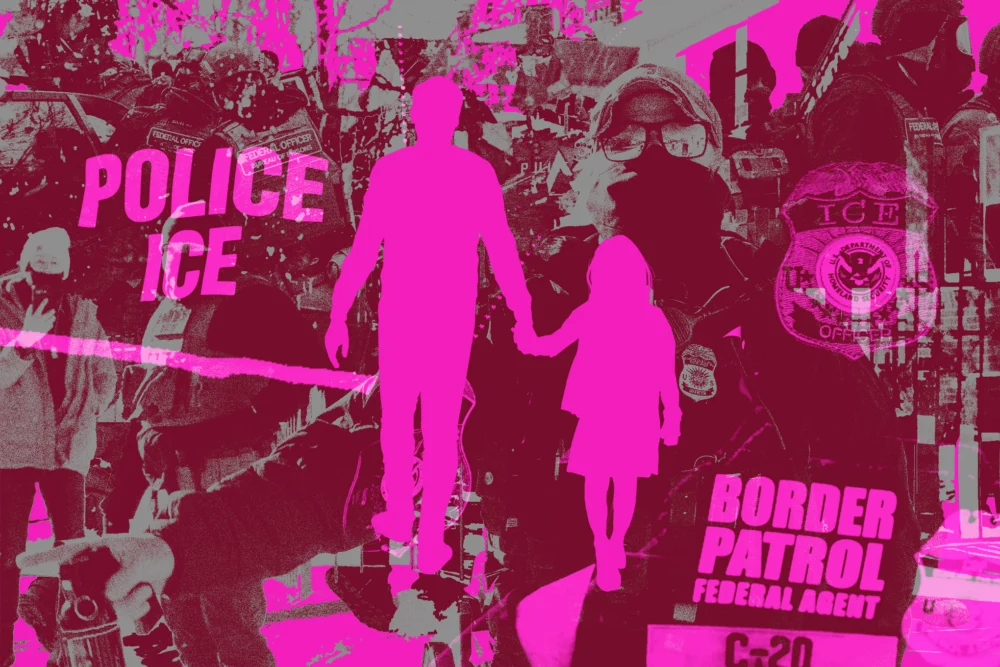
The fabric of daily life in Minneapolis has been irrevocably altered by the heightened presence and actions of federal immigration enforcement agencies, casting a long shadow over the innocent joys and fundamental security that parents strive to provide for their children. The chilling impact of these operations extends far beyond the immediate targets, permeating the collective consciousness of families and forcing a re-evaluation of safety, trust, and the very definition of childhood in a city grappling with an unprecedented level of federal intervention. This pervasive atmosphere of apprehension, punctuated by stark incidents of separation and fear, presents a profound challenge for parents attempting to navigate the complex emotional landscape of raising young children in an environment marked by uncertainty and vulnerability.
The Children’s Theatre Company of Minnesota’s abrupt cancellation of performances for their production of "Go, Dog. Go!" serves as a poignant microcosm of the broader societal disruption. Citing "the safety of our patrons, staff, and artists" as the paramount concern, the decision directly stemmed from a fatal encounter involving federal agents just blocks from the theater. For parents like the author, this cancellation represented more than just a missed cultural outing for a child; it symbolized the erosion of safe, predictable spaces essential for childhood development. The gift of a theater ticket, intended to spark wonder and create lasting memories for a four-year-old, transformed into an illustration of how external forces can abruptly curtail moments of pure joy, leaving behind disappointment and a gnawing sense of unease. This incident, though seemingly minor in the grander scheme of human suffering, underscores the pervasive anxiety that now colors even the most innocent childhood pursuits.
The emotional toll on children, particularly those at formative ages, is a critical concern for caregivers. The advice offered by educational resources, such as those from "Sesame Street," often emphasizes reassurance and the explanation of safety measures. For children aged four to five, guidance typically involves discussing how adults can protect them and utilizing distance to contextualize distant events. However, in the current climate of Minneapolis, these well-meaning strategies are tested by the stark reality of federal agents operating in residential areas, creating an atmosphere where the very concept of safety feels compromised. The proximity of federal operations to everyday life, including places of entertainment and education, renders the abstract advice of distant reassurance inadequate. The concern shifts from explaining events that happened "far away" to confronting the palpable presence of enforcement agents in their own communities.
The plight of Liam Conejo Ramos, a five-year-old boy detained by Immigration and Customs Enforcement (ICE) alongside his father, exemplifies the most heart-wrenching consequences of these intensified enforcement efforts. Liam’s photograph, depicting him in a Spider-Man backpack and a fuzzy blue bunny hat, became an indelible image of the era, embodying the anguish of familial separation and the vulnerability of young children caught in the gears of immigration policy. His detention, following his arrival home from preschool, and subsequent transfer to a facility in Dilley, Texas, raises critical questions about the ethical implications of detaining children, especially those who have committed no offense beyond their parents’ immigration status. The image of Liam, a child whose world has been violently upended, stands in stark contrast to the idealized notion of childhood innocence and security.
The broader implications of these actions extend to the erosion of trust between communities and law enforcement, as well as the potential for long-term psychological impact on children exposed to such events. Experts in child psychology and trauma underscore the detrimental effects of witnessing or experiencing fear, separation, and the presence of armed agents, particularly on young minds. The ability of parents to foster resilience and provide a secure base is significantly challenged when the external environment itself becomes a source of fear and uncertainty. The interventions of federal agencies, while ostensibly aimed at enforcing immigration laws, are increasingly viewed through the lens of their impact on the developmental well-being of children. This has led to calls for more humane and child-centered approaches to immigration enforcement, recognizing that the innocence and vulnerability of children should be a primary consideration in policy and practice.
The response from political factions regarding the welfare of children impacted by these enforcement actions has been a subject of considerable debate. While some advocate for stringent enforcement, others argue that the human cost, particularly on families and children, is unacceptably high. The classification of children as "collateral damage" by certain political groups is viewed by many as a callous disregard for the foundational principles of child protection. This perspective highlights a fundamental divergence in how the well-being of children is prioritized in policy discussions, with critics asserting that a commitment to protecting children should transcend political ideologies. The rhetoric surrounding child welfare, therefore, becomes a critical indicator of societal values and the extent to which a government prioritizes the protection of its most vulnerable populations.
The question of how to comfort a child like Liam, separated from his family and confined in a detention center, is a deeply troubling one. Consulting standard child-rearing advice, such as that provided by "Sesame Street," becomes an exercise in highlighting the inadequacy of such guidance in extreme circumstances. The advice to explain safety measures and utilize distance to reassure a child is rendered moot when the child is directly experiencing fear for their safety and the terrifying reality of family separation. In Liam’s case, there are no readily available grown-ups, beyond his own family, who can offer tangible protection or intervention. This situation underscores a critical failure in the system, where the very institutions designed to uphold order and safety are perceived as the source of danger and distress for innocent children.
The fundamental role of parents is to provide a safe and loving environment where children can develop the resilience to navigate life’s inevitable challenges. This includes a wide spectrum of experiences, from minor injuries to profound losses. While parents cannot shield their children from all hardship, their primary responsibility is to cultivate a secure foundation from which children can learn, grow, and ultimately overcome adversity. However, the pervasive atmosphere of fear and uncertainty generated by intensified immigration enforcement in Minneapolis directly undermines this parental function. The constant threat of ICE operations, the potential for family separation, and the visible presence of armed agents create an environment where the sanctity of safe, loving spaces is compromised, making it increasingly difficult for parents to fulfill their protective and nurturing roles.
The Trump administration’s approach to immigration enforcement has been characterized by a focus on deterrence and removal, with critics arguing that this has come at the expense of child welfare. The exploitation of children’s innocence and vulnerability as a means of achieving policy objectives has been a point of contention. The notion that children can be seen as "collateral damage" by a government that purports to protect its citizens raises serious ethical questions. The increasing need for specialized training for school bus drivers on how to respond to ICE encounters, the necessity for parents to explain the routine presence of masked agents, and the anxiety surrounding youth sports events being perceived as potential targets for ICE raids all point to a significant breakdown in the social contract that ensures the safety and normalcy of childhood.
The impact on educational institutions is particularly concerning. Schoolteachers are now faced with the difficult task of explaining to their students why so many classmates are absent. In some Minneapolis public schools, as many as 40 percent of students have been kept home by parents seeking to ensure their safety, or, in the most tragic instances, because ICE has detained them. This phenomenon not only disrupts the learning process but also creates a palpable sense of fear and insecurity within the school community. The image of Liam Conejo Ramos has, for many, become a symbol of the administration’s alleged cruelty towards non-white children. However, the reality extends far beyond this single, poignant case. Over a thousand individuals, including many under the age of five, are held in the Dilley detention facility. Accounts from legal professionals describing the conditions within these facilities paint a grim picture, citing issues such as contaminated baby formula, insect-infested food, and verbally abusive guards. The experience of children spending significant portions of their young lives in detention facilities, such as the twins who had spent nearly a year in detention by the time they turned five, is a stark indictment of the current immigration enforcement policies.
The issue of racial bias in immigration enforcement is a recurring theme in discussions surrounding these operations. Critics argue that the targeting of individuals like Liam Conejo Ramos is intrinsically linked to their race and ethnicity, rather than solely to their immigration status. The fact that Liam’s father, Adrian Alexander Conejo Arias, had no criminal record and was in the process of seeking asylum legally complicates the narrative that ICE only targets "the worst of the worst." The raid on their home, which resulted in the detention of both Liam and his father while his pregnant mother remained inside, underscores the perceived indiscriminate nature of these operations and the fear they instill in families. This situation highlights a broader concern that the current administration’s policies disproportionately affect non-white immigrant communities, perpetuating systemic inequalities.
The emotional and psychological impact of such experiences on children is a significant area of concern for mental health professionals. Reports indicate that children in detention centers often exhibit signs of lethargy, sleep disturbances, and emotional distress, asking frequently about their families and their former lives. The contrast between Liam’s described cheerful disposition and his current withdrawn state in detention serves as a stark reminder of the profound trauma that can be inflicted upon children by these circumstances. The inability of parents to provide solace and reassurance in such situations amplifies the sense of helplessness and despair.
The shared experiences of parents in Minneapolis, regardless of their background, offer a common ground for understanding the universal desire to protect and nurture children. The simple act of selecting a winter hat for a child, or the joy a child experiences in dressing as a favorite superhero, are universal touchstones of childhood. The author’s observation that Liam Conejo Ramos, apart from his family’s country of origin and skin color, is fundamentally like their own daughters, underscores the shared humanity that transcends national origin. The assertion that it is the racism inherent in the current administration’s policies that makes Liam a target, and by extension, that puts other children at risk, is a powerful indictment of the system. This perspective suggests that the current enforcement strategies are not merely about immigration law but are deeply intertwined with racial prejudice.
Looking ahead, the long-term consequences of these intensified immigration enforcement actions on the children of Minneapolis and the nation at large are a subject of considerable concern. As these children grow, they will carry the memories and the lessons learned from this period. The responsibility of parents to educate their children about the realities of the society in which they grew up, including the choices made by those in power, the support for such policies, and the efforts of those who opposed them, will be paramount. The hope is that future generations will learn from the failures of the present, striving to create a more just and equitable society where the innocence and well-being of all children are unequivocally protected. The legacy of this era will undoubtedly be shaped by how effectively society addresses the profound impact of these policies on its youngest and most vulnerable citizens.


 Ridwan Kamil
 Lisa Mariana
 Ayu Aulia