Lisa Mariana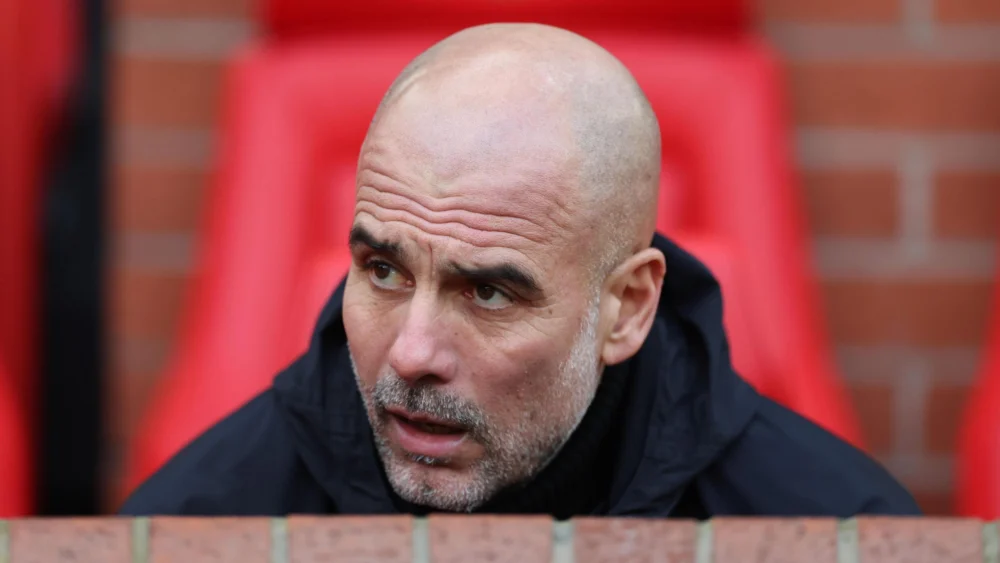
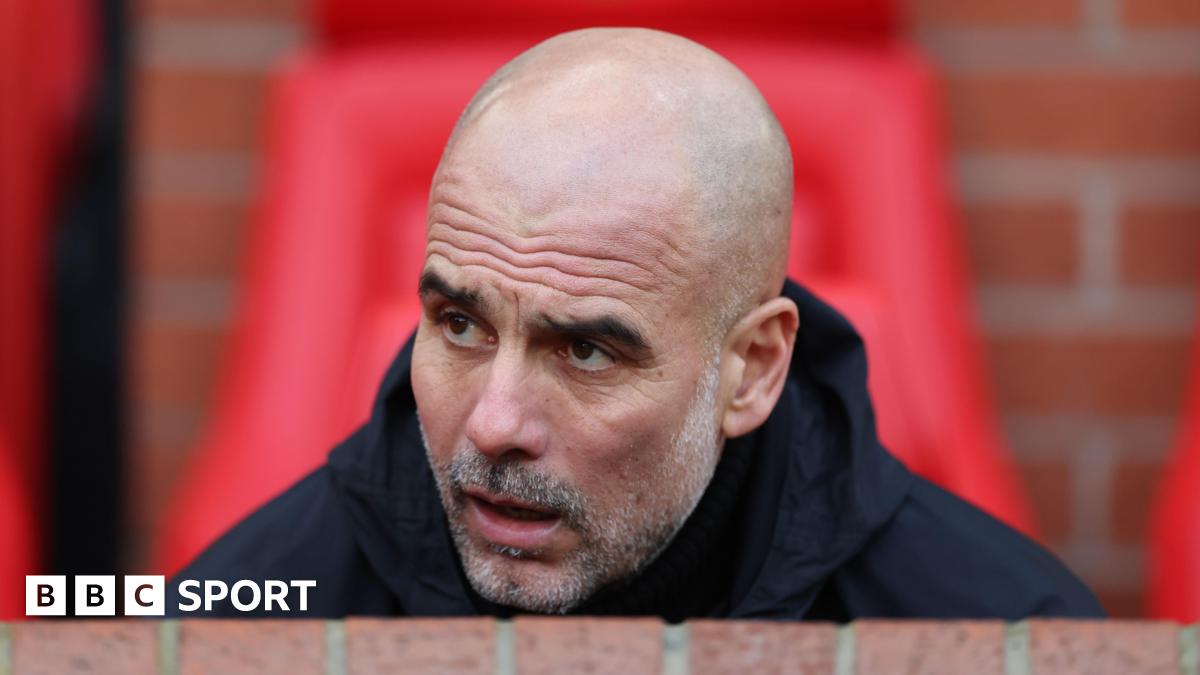
A significant shift in the Premier League landscape unfolded at Old Trafford, where Manchester United delivered a decisive 2-0 blow to reigning champions Manchester City, a result that not only heralded a triumphant beginning for Michael Carrick’s temporary stewardship but also severely complicated City’s pursuit of a fourth consecutive league title. Following a performance characterized by a discernible lack of intensity and tactical predictability, City’s esteemed manager, Pep Guardiola, adopted a characteristically analytical and self-critical posture, steadfastly refusing to attribute his side’s defeat to controversial officiating decisions, including a contentious first-half challenge that many observers believed warranted a red card.
The highly anticipated Manchester derby, a fixture laden with historical rivalry and contemporary stakes, saw the red side of the city emerge victorious, igniting jubilant scenes among the home support. For the blue half, however, the outcome cast a long shadow, potentially leaving them a daunting nine points adrift of the league leaders, Arsenal, by the close of the matchday. This fixture represented City’s sixth competitive outing within a condensed 17-day period, a schedule that Guardiola explicitly identified as a significant contributor to his team’s diminished performance.
Guardiola’s Candid Assessment: Energy Deficit and Tactical Stagnation
In his post-match reflections, Guardiola offered a starkly honest assessment of his team’s showing. "The better team won," he conceded, a statement that underscored his conviction that United had simply outmaneuvered and outfought his squad on the day. He pinpointed a critical absence of "energy" as a primary differentiator, explaining that this vital attribute manifests not only in defensive endeavors and individual duels but also in the fluidity and intent of offensive play. This observation from a manager renowned for his teams’ relentless intensity speaks volumes about the perceived dip in his players’ physical and mental output.
Guardiola, now a veteran of 27 Manchester derbies, articulated his disappointment, stating that his team failed to reach the requisite standard for such a high-stakes encounter. He drew a contrast with recent performances, including a victory against Newcastle and draws against Sunderland, Chelsea, and Brighton, where he felt his team displayed superior qualities despite the results. Today, he asserted, was different. "Just accept it and move on," he concluded, signaling a pragmatic approach to confronting the setback rather than dwelling on external factors or grievances. This philosophy of immediate self-assessment and forward-looking adjustment is a hallmark of Guardiola’s managerial style, emphasizing internal growth over external scapegoating.
The Dalot Controversy: A Test of VAR and Managerial Philosophy
A significant talking point revolved around a first-half incident involving United’s Diogo Dalot and City’s Jeremy Doku. Less than ten minutes into the match, Dalot executed a knee-high challenge on Doku, making contact with studs. Referee Anthony Taylor issued a yellow card, a decision that was subsequently upheld by the Video Assistant Referee (VAR). The Premier League’s match centre later clarified that the contact was "glancing and not with excessive force," thus supporting the on-field decision.
Despite the widespread debate and the apparent severity of the challenge, Guardiola remained steadfast in his refusal to use the VAR decision as an excuse for his team’s defeat. While acknowledging his personal belief that it "is a red card," he firmly stated, "it would be poor as a manager to analyse that as the reason for [losing] the game." He elaborated that even if United had been reduced to ten men for the majority of the match, City’s underlying performance—their lack of energy and conviction—would have rendered any numerical advantage irrelevant. This stance reflects a deeply ingrained principle within Guardiola’s coaching ethos: accountability must always begin within the team. Blaming external factors, he argued, would prevent the necessary introspection and hinder the team’s ability to "grow up and move forward."
The incident, however, did reignite discussions surrounding the consistency and interpretation of VAR protocols. Former Premier League official Darren Cann offered an alternative perspective, suggesting that Dalot was "very fortunate to escape a red card." Cann posited that had Taylor been advised to review the incident on the pitchside monitor, the outcome might well have been different. This divergence of opinion underscores the ongoing challenges in achieving universal consensus on borderline decisions, even with the aid of technology. United’s interim manager, Michael Carrick, predictably defended his player, stating he believed Dalot had cleanly won the ball and was unaware of any serious foul play at the time.
Tactical Dissection: City’s Offensive Inertia and United’s Defensive Mastery
The statistical data from the match paints a clear picture of City’s struggles. Despite enjoying a dominant 68% possession, Guardiola’s side mustered a mere one shot on target throughout the entire contest. Their Expected Goals (xG) rate stood at a paltry 0.45, marking the second-lowest figure recorded in Guardiola’s extensive 364-game Premier League tenure. This offensive anemia directly supports Guardiola’s "predictable" assessment.
United’s tactical approach was meticulously executed. They adopted a disciplined defensive block, aiming to funnel City’s attacks into wide areas before suffocating them with intense, multi-player presses. For instance, on their left flank, the coordinated efforts of Bruno Fernandes, Patrick Dorgu, Kobbie Mainoo, and Luke Shaw converged to deny City players time and space, effectively neutralizing their creative threats. While this defensive strategy inevitably left space on the far side of the pitch, City repeatedly failed to exploit these opportunities by switching the point of attack with sufficient speed and precision. The article suggests that players like Antoine Semenyo, Jeremy Doku, and Rico Lewis are less adept at this crucial aspect of play compared to others, implying a specific tactical void.
Furthermore, the absence of key personnel due to injury exacerbated City’s challenges. The article highlights Matheus Nunes as a particular miss. His physical profile and ability to track opposition runs would have been invaluable in containing United’s transitions and supporting Rodri, who frequently found himself isolated against both Bryan Mbeumo and Bruno Fernandes. Similarly, injuries to first-choice ball-playing defenders like Josko Gvardiol, John Stones, and Ruben Dias meant that Abdukodir Khusanov, Nathan Ake, and Max Alleyne were tasked with building play from the back. While these players performed adequately in stemming counter-attacks, their perceived lack of elite ball-playing quality meant City struggled to capitalize on the time and space United afforded their center-backs, hindering the initiation of effective offensive sequences.
Individually, City’s attacking stars also struggled to make an impact. Erling Haaland, the prolific Norwegian striker, found himself in an uncharacteristic barren patch, having scored only once (a penalty) in his last seven games and failing to net from open play since December 20. Against Lisandro Martinez, Haaland was effectively nullified, managing a mere 14 touches of the ball throughout the match and failing to register a single shot on target. Phil Foden, another vital attacking component, extended his own goal drought to eight consecutive games, while substitute Rayan Cherki, despite a recent goal against Newcastle, was unable to alter the game’s trajectory. These individual struggles collectively underscored the team’s broader offensive malaise.
Implications for the Title Race and Future Outlook
The defeat at Old Trafford, combined with recent draws against Sunderland, Chelsea, and Brighton, marks City’s fourth consecutive league game without a victory. This unexpected dip in form has delivered a significant advantage to Arsenal, who now hold the initiative in what promises to be a gripping title race. The psychological impact of falling potentially nine points behind, especially after dominating the league in recent seasons, cannot be understated. City now faces the immediate pressure of regaining momentum and rediscovering their championship-winning form.
Looking ahead, Manchester City faces a crucial Champions League fixture against Bodo/Glimt on Tuesday, an opportunity to reset and rebuild confidence away from domestic pressures. The club is also reportedly close to finalizing the £20 million signing of Crystal Palace captain Marc Guehi, a move intended to bolster their defensive options, particularly in light of the recent injury woes. However, the arduous schedule and the apparent fatigue affecting key players suggest that Guardiola’s challenge extends beyond mere squad depth. He must find a way to re-energize his squad, reignite their creative spark, and address the tactical predictability that characterized their performance against United.
Historically, Manchester City under Pep Guardiola has demonstrated a remarkable capacity to overcome setbacks and mount formidable title charges. Their mental fortitude and tactical adaptability have been cornerstones of their success. However, the current constellation of factors—fixture congestion, key injuries, a dip in form for star players, and the emergence of a strong rival in Arsenal—presents a sterner test. The coming weeks will be crucial in determining whether City can shake off this uncharacteristic slump and reaffirm their credentials as a dominant force in English football, or if this derby defeat will be remembered as a pivotal moment in the unraveling of their title aspirations. For Manchester United, conversely, the victory provides a much-needed shot in the arm, offering a sense of stability and renewed optimism as they navigate their own transitional period under interim management. The result, therefore, carries ramifications far beyond the immediate bragging rights, shaping the narratives and trajectories of both clubs in the season ahead.



 Aura Kasih
 Ayu Aulia