Aura Kasih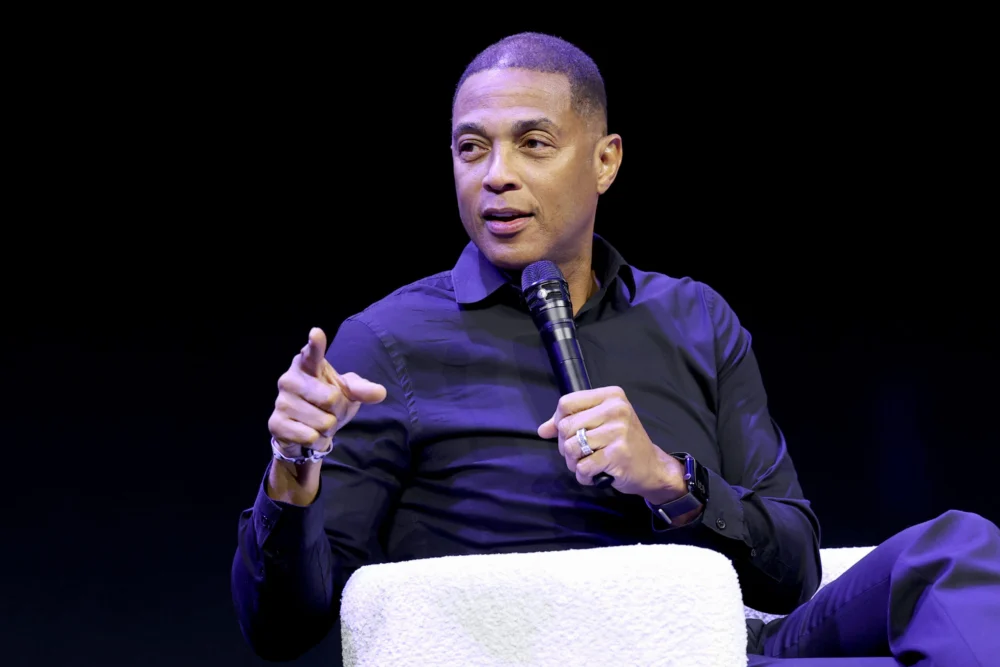
Veteran journalist Don Lemon found himself at the center of a legal storm late Thursday evening, apprehended by federal authorities in Los Angeles. The arrest, stemming from his coverage of an anti-Immigration and Customs Enforcement (ICE) protest in Minnesota, has ignited significant debate regarding the boundaries of journalistic inquiry and the potential for governmental overreach in the pursuit of perceived disruptions.
The incident unfolded against the backdrop of a protest that targeted a church in St. Paul, Minnesota, a location with documented ties to ICE leadership. Lemon, a prominent figure known for his tenure at CNN and his subsequent independent journalistic endeavors, was reportedly present as an observer, documenting the activities of a group of demonstrators. This group, according to federal claims, engaged in actions that allegedly infringed upon the rights of churchgoers to worship freely. However, the narrative presented by Lemon’s legal counsel and supported by initial judicial proceedings suggests a starkly different interpretation: that of a journalist fulfilling his professional duties.
Adding a layer of complexity to the situation, independent journalist Georgia Fort also reported being targeted for arrest by the FBI on the same evening, directly linking her apprehension to her presence and livestreaming activities during the Minnesota protest. This parallel action raises serious questions about whether multiple members of the press were singled out for their reporting on the event. The confirmation of Fort’s arrest by Attorney General Pam Bondi, who characterized the actions of Lemon, Fort, and others as a "coordinated attack" on the church, further amplified the controversy. Bondi’s statement also indicated that two additional individuals, including a candidate for the Minnesota State Senate, Jamael Lundy, were apprehended in connection with the events.
Lemon’s legal representative, attorney Abbe Lowell, forcefully asserted that his client was engaged in constitutionally protected journalistic work and that his arrest was a misapplication of federal resources. Lowell emphasized Lemon’s extensive three-decade career, arguing that his actions in Minneapolis were consistent with the established practices of investigative journalism. He further contended that the Justice Department, under the current administration, was diverting its attention from potentially more pressing matters, such as the alleged killings of protesters by federal agents in Minnesota, to pursue this specific case. This assertion positions the arrest not merely as an isolated legal matter, but as a potential indicator of broader political motivations influencing law enforcement actions against the press.
The core of the legal dispute appears to revolve around Lemon’s role at the St. Paul church. While the federal government alleges he was participating as a protester, his legal team maintains he was present solely in his capacity as a journalist. This distinction is critical, as it pits the right to observe and report against accusations of active interference. The initial attempt to secure an arrest warrant for Lemon and several protesters was reportedly denied by a local magistrate judge, a decision that was subsequently upheld by a federal appellate panel. This judicial rebuff suggests that, at least in the initial stages, the legal threshold for probable cause of criminal wrongdoing by Lemon as a protester was not met. The subsequent issuance of an arrest warrant by a grand jury on Thursday, reportedly involving the FBI and Homeland Security Investigations (HSI), indicates a renewed effort by federal agencies to pursue charges.
This developing situation carries profound implications for the landscape of American journalism and the public’s right to information. The ability of journalists to report freely on sensitive issues, including protests and the actions of government agencies, is a cornerstone of a democratic society. Any perceived governmental pressure or legal action that could chill such reporting is a matter of significant public concern. The involvement of federal agencies in pursuing arrests of journalists, even in circumstances where the line between observer and participant may be blurred in the eyes of law enforcement, sets a potentially dangerous precedent.
To fully understand the gravity of this event, it is essential to consider the broader context of press freedom in the United States. While the First Amendment provides robust protections for the press, these protections are not absolute and can be tested in various legal arenas. Historically, journalists have faced challenges, including surveillance, harassment, and even arrest, when covering controversial events or reporting on government actions deemed sensitive. However, the deliberate targeting of prominent journalists by federal agents for their presence at a protest, particularly when those journalists claim to be acting solely in an observational capacity, raises the specter of intimidation and suppression of dissent.
The specific nature of the protest itself, directed at ICE, adds another dimension. Anti-ICE demonstrations have become increasingly common as immigration policies and enforcement practices have come under scrutiny. These protests often involve direct action aimed at disrupting government operations or drawing public attention to specific grievances. The church’s connection to ICE leadership, as reported, may have been a deliberate tactical choice by the protesters to maximize impact and leverage. The government’s response, however, focuses on the alleged disruption of religious services, framing the issue as a violation of the rights of churchgoers rather than a response to the underlying anti-ICE sentiment.
The legal arguments surrounding the case will likely center on definitions of "interference" and the intent of the individuals involved. Was Lemon, by his presence and any actions he may have taken to document the protest, acting as an impartial observer or as an active participant? The government’s claim that he was not present as a journalist, but as a protester, is a critical assertion that will need to be substantiated in court. The denial of the initial warrant request by a magistrate judge, and its affirmation by an appellate panel, suggests that the evidence presented at that stage did not meet the legal standard to justify an arrest warrant for Lemon as a protester. The subsequent grand jury indictment indicates that new evidence or a different legal interpretation was presented to that body.
The involvement of a grand jury signifies a formal accusation of a crime, paving the way for potential prosecution. The charges themselves, focusing on alleged violations of federal law during the protest, will be crucial in understanding the government’s legal strategy. The broad scope of federal law enforcement agencies involved, including the FBI and HSI, underscores the seriousness with which the government is treating this matter.
Beyond the immediate legal proceedings, the arrest of Don Lemon and Georgia Fort has broader implications for the practice of journalism. It highlights the vulnerability of independent journalists and those operating outside traditional media structures. In an era where independent reporting plays an increasingly vital role in holding power accountable, any actions that could be perceived as an attempt to stifle such voices are deeply concerning. The potential for a chilling effect on future reporting, where journalists may self-censor or avoid covering sensitive events for fear of reprisal, is a tangible risk.
Furthermore, the narrative surrounding the arrest, particularly the contrasting interpretations of Lemon’s role, underscores the importance of clear and transparent communication from law enforcement agencies. The public perception of such events can be heavily influenced by the framing of the narrative, and accusations of "coordinated attacks" can cast a wide net. The defense’s argument that the Justice Department is focusing on this case instead of investigating alleged killings by federal agents in Minnesota suggests a perceived political motivation behind the legal actions.
The future outlook for this case is uncertain. Legal experts will be closely watching the proceedings to see how the courts interpret the balance between the government’s interest in maintaining public order and protecting religious freedom, and the press’s constitutional right to observe and report on public events, even those that are controversial or disruptive. The outcome could have a lasting impact on how journalists are treated when covering protests and demonstrations, and on the willingness of individuals to engage in both activism and independent reporting. The arrest serves as a stark reminder of the ongoing tension between governmental authority and the fundamental principles of a free press.


 Ridwan Kamil
 Lisa Mariana
 Ayu Aulia