Lisa Mariana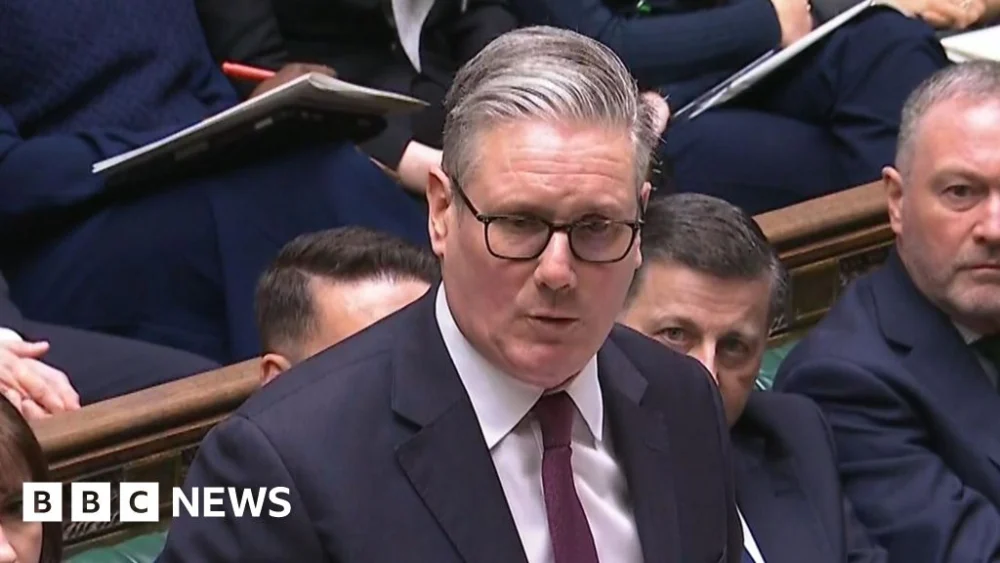
In a definitive declaration of national resolve, Prime Minister Keir Starmer has unequivocally rejected former U.S. President Donald Trump’s demands regarding the sovereign future of Greenland, a stance articulated following Trump’s recent scathing critique of the United Kingdom’s agreement concerning the Chagos Archipelago. Starmer’s firm position, voiced during a parliamentary session, underscores a commitment to international law and self-determination, directly confronting a transactional approach to geopolitics that seeks to leverage existing alliances for territorial gain. The confrontation highlights escalating tensions in the complex web of transatlantic relations and the broader geopolitical competition for strategic territories.
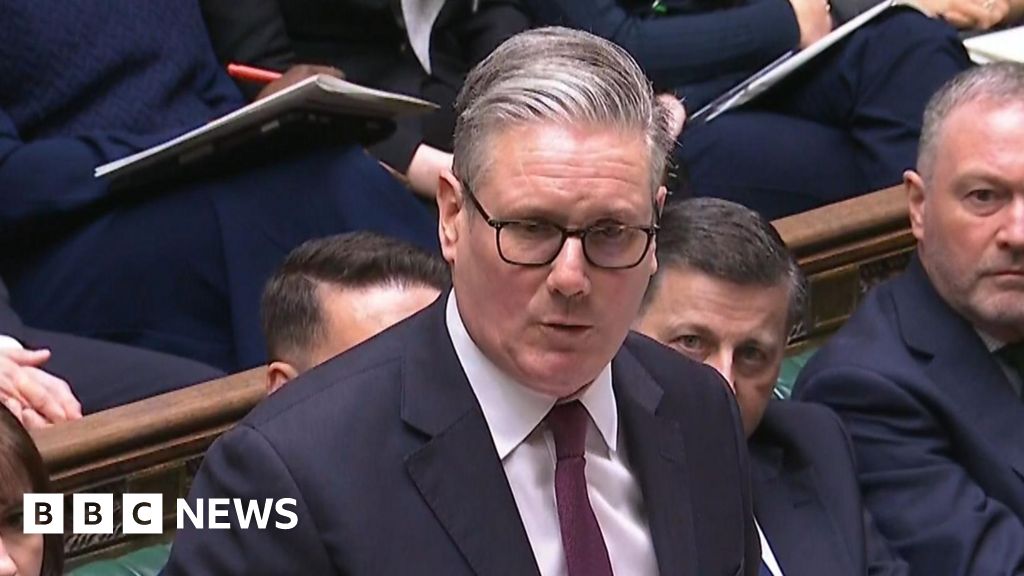
Addressing legislators from the dispatch box, Prime Minister Starmer asserted his unwavering resolve, stating explicitly that he would not capitulate to any external pressure concerning Greenland. His comments came in direct response to remarks made by former President Trump, who had previously offered apparent support for the UK’s Chagos Islands resolution but subsequently reversed course, using the issue as a fulcrum to exert pressure on London regarding Greenland. Starmer explicitly linked Trump’s sudden shift to a calculated manoeuvre designed to influence British policy on Greenland, emphasizing that the island’s destiny rests solely with its inhabitants and the Kingdom of Denmark. This principled stand is set to be reinforced by an upcoming high-level meeting in Downing Street with Danish Prime Minister Mette Frederiksen, signalling a united front against any perceived foreign overreach.
The genesis of this diplomatic friction lies in recent statements from former President Trump, who on Tuesday characterized the UK’s agreement to transfer sovereignty of the Chagos Islands to Mauritius, while retaining a crucial military base, as an "act of great stupidity." This sharp condemnation marked a departure from earlier expressions of support following a meeting between Trump and Starmer at the White House. Trump’s subsequent public statements explicitly connected his disapproval of the Chagos deal to his long-standing aspiration to acquire Greenland, threatening punitive tariffs against European nations that might oppose his territorial ambitions. This strategy reflects a consistent pattern of leveraging economic threats and public shaming as tools of foreign policy, characteristic of his previous administration.
The Chagos Islands deal, valued at £3.4 billion (approximately $4.6 billion), represents a complex diplomatic effort by the United Kingdom to resolve a protracted sovereignty dispute. Under the terms of the agreement, the UK commits to ceding the archipelago to Mauritius while securing a long-term lease for the strategically vital joint UK-US military base on Diego Garcia, the largest island. This arrangement is deemed by British ministers as essential for establishing a robust legal framework for the continued operation of the base, a critical asset for global security and projection of power in the Indian Ocean. However, the legislative process required to ratify this agreement has encountered significant obstacles, currently stalled in a parliamentary wrangle between the House of Lords and the House of Commons, indicating internal divisions and scrutiny over its implications.
Former President Trump’s strong disapproval was amplified on his Truth Social platform, where he posted a scathing critique: "Shockingly, our ‘brilliant’ Nato ally, the United Kingdom, is currently planning to give away the Island of Diego Garcia, the site of a vital US military base, to Mauritius, and to do so FOR NO REASON WHATSOEVER." He further asserted, "There is no doubt that China and Russia have noticed this act of total weakness." This critique served as a direct prelude to his broader geopolitical argument: "The UK giving away extremely important land is an act of GREAT STUPIDITY, and is another in a very long line of national security reasons why Greenland has to be acquired." Trump’s rhetoric frames the Chagos decision as an act of strategic miscalculation by a key ally, thereby justifying what he perceives as a necessary and proactive territorial acquisition of Greenland to bolster US national security.
The strategic importance of Greenland, a vast, ice-covered island in the North Atlantic, is multifaceted and forms the bedrock of Trump’s persistent interest. As an autonomous territory within the Kingdom of Denmark, Greenland possesses immense untapped natural resources, including rare earth minerals, zinc, lead, and gold, which are increasingly vital for modern technology and green energy transitions. Beyond its mineral wealth, Greenland’s geographical location is paramount. The accelerating melting of its ice sheet due to climate change is opening new shipping lanes in the Arctic, potentially revolutionizing global trade routes and significantly reducing transit times between continents. This ‘Arctic scramble’ has intensified geopolitical competition, with nations like Russia and China actively increasing their presence and influence in the region. For the United States, control or significant influence over Greenland would offer unparalleled strategic advantages, enhancing its military presence in the Arctic, bolstering missile defence capabilities, and providing a critical vantage point for monitoring activities in the High North. The island has a history of US strategic interest, dating back to President Harry Truman’s 1946 offer to purchase it from Denmark, highlighting its enduring significance in American defense doctrine.
Domestically within the UK, the Conservative leader, Kemi Badenoch, offered a nuanced response to the unfolding diplomatic row. While expressing unequivocal support for Prime Minister Starmer’s stance on Greenland, thereby presenting a rare moment of cross-party consensus on a matter of national sovereignty, Badenoch diverged sharply on the Chagos Islands agreement. Echoing Trump’s sentiments, she concurred with the assessment that the deal was an act of "stupidity," stating that the Conservative opposition had maintained this position for the past year. Badenoch seized the opportunity to advocate for the deal’s immediate cancellation, proposing that the allocated funds be redirected towards bolstering the UK’s armed forces. This demonstrates the deep political divisions surrounding the Chagos agreement within British politics, transcending the immediate transatlantic dispute. The ongoing legislative deadlock further underscores the contentious nature of the deal, highlighting concerns about its financial implications, its impact on the long-term security of the Diego Garcia base, and its broader implications for British foreign policy and international legal obligations.
The broader geopolitical landscape provides essential context for understanding this diplomatic friction. The Arctic region is rapidly emerging as a new theatre of great power competition, driven by climate change, resource accessibility, and new maritime routes. Russia has significantly re-militarized its Arctic coastline, while China has declared itself a "near-Arctic state," pursuing economic and scientific interests in the region. In this environment, Greenland’s strategic value for NATO and the US is magnified, making any discussion of its territorial status highly sensitive. The confrontation also casts a spotlight on the enduring, yet sometimes strained, "special relationship" between the United States and the United Kingdom. Trump’s transactional approach, which prioritizes perceived national interest and leverages economic and political pressure, often challenges traditional diplomatic norms and alliance solidarity. For the UK, navigating this relationship in a post-Brexit world requires a delicate balance between maintaining its crucial alliance with the US and upholding its commitment to international law and sovereign principles, particularly as it seeks to define its "Global Britain" identity.
The implications of this standoff are far-reaching. For the United Kingdom, it underscores the complexities of balancing its alliance commitments with its sovereign responsibilities and its standing on the international stage. Starmer’s firm rejection of Trump’s pressure aligns the UK with international legal consensus regarding self-determination and territorial integrity, principles that are vital for a nation seeking to project soft power and uphold a rules-based international order. For Denmark and Greenland, the unified front reinforces their sovereignty and underscores the importance of the autonomous region’s right to self-determination. It also highlights the delicate act of balancing the strategic interests of a powerful ally like the US with national identity and governance. For the United States, the episode serves as a reminder of the limits of transactional diplomacy and the potential for such approaches to alienate allies, even those with deep historical ties. Looking ahead, the potential return of Donald Trump to the US presidency would undoubtedly reignite these debates, potentially leading to further diplomatic challenges and a re-evaluation of established alliances and international norms. The ongoing competition for influence and resources in the Arctic will continue to shape global geopolitics, making the future of territories like Greenland a central point of contention for years to come.
In conclusion, Prime Minister Starmer’s resolute refusal to yield to external pressure on Greenland represents a significant assertion of sovereignty and adherence to international legal principles. This diplomatic clash, exacerbated by the contentious Chagos Islands agreement, underscores the deep ideological fissures in contemporary international relations. It highlights the tension between a transactional, "America First" foreign policy and a rules-based international order, forcing key allies like the UK and Denmark to defend fundamental tenets of national autonomy and self-determination against the backdrop of escalating geopolitical competition for strategic global assets.



 Aura Kasih
 Ayu Aulia