
 Lisa Mariana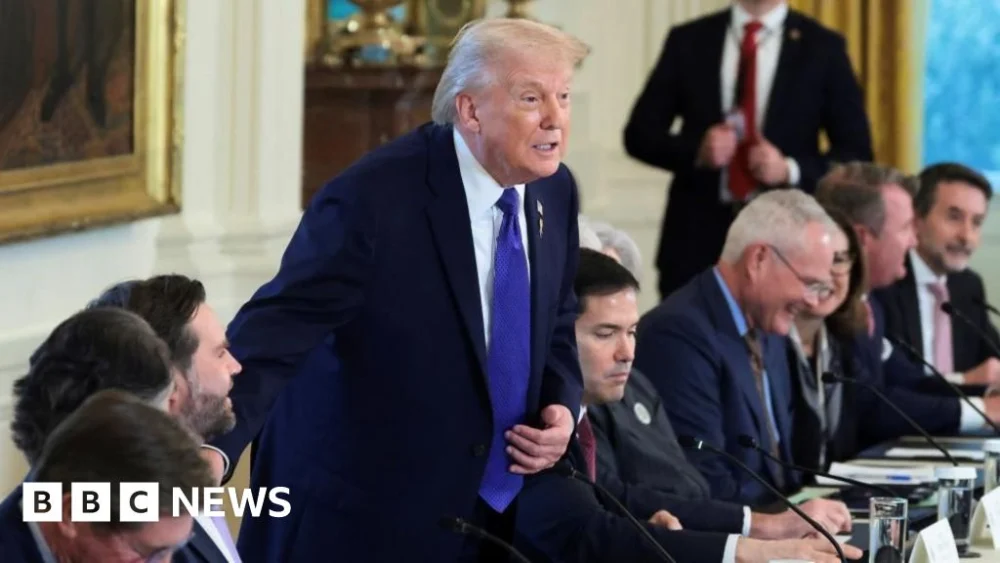
The United States administration has unveiled an ambitious proposal, seeking an injection of at least $100 billion into Venezuela’s beleaguered oil sector, a move designed to reshape global energy markets and assert geopolitical influence, yet major energy corporations have met this overture with profound skepticism, citing the nation’s profound instability as an insurmountable barrier to immediate investment. This audacious plan, articulated during high-level discussions at the White House, aims to unlock Venezuela’s vast subterranean wealth, repositioning the South American nation as a significant global energy supplier, but the private sector’s cautious reception underscores the formidable economic and political hurdles that stand in the way of such an endeavor.
Venezuela possesses the largest proven crude oil reserves globally, a staggering endowment that has historically positioned it as a critical player in international energy markets. However, decades of political turmoil, economic mismanagement, and international sanctions have crippled its once-mighty petroleum industry, reducing its output to a fraction of historical highs. The current administration in Washington views this potential as a strategic asset, proposing a dramatic revitalization of the sector. The stated objective is multifaceted: to secure future energy supplies, potentially drive down global oil prices, and leverage economic influence in a region of strategic importance. The administration’s vision for unlocking this potential is predicated on a significant political shift, with President Trump having articulated a scenario involving the removal of Venezuelan leader Nicolas Maduro as a precursor to fully unleashing the nation’s oil capabilities.
This prospective geopolitical maneuver, however, encountered immediate and significant resistance from the very industry leaders whose capital and expertise would be essential for its realization. Executives from America’s largest oil conglomerates, while acknowledging the immense allure of Venezuela’s reserves, conveyed a uniform message of caution. Darren Woods, Chief Executive of ExxonMobil, articulated the prevailing sentiment with stark clarity: "Today it’s uninvestable." His assessment highlighted the inherent risks and lack of predictability that have plagued foreign energy investments in Venezuela for decades. Exxon, for instance, has experienced the expropriation of its assets in the country on two separate occasions, a history that necessitates "pretty significant changes" to the operational and legal environment before any re-engagement could be contemplated. This historical precedent serves as a potent deterrent, signaling to potential investors that the sanctity of contracts and the protection of assets remain fundamental concerns.
The historical trajectory of Venezuela’s relationship with international oil companies is replete with complexities and periods of acute tension. Following the discovery of oil over a century ago, foreign firms played a dominant role, but a gradual process of nationalization, culminating in the complete state control of the industry under former President Hugo Chávez, fundamentally altered the landscape. Chávez’s socialist government, through the national oil company Petróleos de Venezuela, S.A. (PDVSA), asserted greater control over operations, often revising contractual terms to the detriment of foreign partners and eventually leading to outright expropriations. This era saw a significant exodus of international expertise and capital, replaced by political appointments and a decline in technical proficiency, which contributed to a precipitous fall in production capacity.
The operational decline of PDVSA is a case study in how political agendas can undermine a nation’s primary economic engine. Chronic underinvestment in infrastructure, widespread corruption, and a lack of skilled personnel have left much of Venezuela’s oil infrastructure dilapidated and inefficient. Wells are in disrepair, pipelines are corroding, and refineries operate far below capacity. This structural decay has been exacerbated by stringent U.S. sanctions, which have severely restricted Venezuela’s ability to sell its crude on international markets and acquire necessary equipment, further accelerating the industry’s deterioration. From a peak production exceeding 3 million barrels per day in the late 1990s, Venezuela’s output has plummeted to approximately one million barrels per day, accounting for less than 1% of global supply. Reversing this extensive damage would require not merely capital, but a comprehensive, long-term commitment to technological upgrades, environmental remediation, and human capital development.
Despite the pervasive challenges, a handful of international oil firms maintain a presence in Venezuela, navigating the treacherous operational and political landscape. Chevron stands as the last major American oil company operating within the country, having carved out a unique, albeit constrained, niche. Similarly, European energy giants like Spain’s Repsol and Italy’s Eni continue to conduct limited operations. Their continued presence is often attributed to a strategic long-term view, existing infrastructure, and complex political arrangements that allow them to operate where others have withdrawn. These companies, represented at the White House meeting, expressed cautious optimism regarding the potential for increased activity under a more stable regime, but their commitment remains contingent on fundamental shifts in the investment climate. Repsol, for instance, indicated a potential path to triple its current production of approximately 45,000 barrels per day over several years, provided the "right conditions" are met.
The proposed $100 billion investment figure, advanced by the U.S. administration, represents a monumental sum, far exceeding typical foreign direct investment flows into volatile regions. For context, industry analysts, such as those from Rystad Energy, estimate that a sustained investment of $8 billion to $9 billion per year would be necessary for Venezuela’s production to triple by 2040. This suggests that the administration’s figure, while aspirational, would need to be deployed over an extended period and under exceptionally favorable conditions. Such an injection of capital would fundamentally require a complete overhaul of the oil infrastructure, extensive drilling campaigns for new wells, the deployment of advanced extraction technologies, and the re-establishment of a highly skilled workforce. Without substantial government subsidies or guarantees, and absent a deeply rooted political stability, attracting private capital on this scale would be an unprecedented challenge.
The administration’s assertive stance extends beyond merely attracting investment; it envisions a significant degree of U.S. oversight and control over Venezuela’s future oil revenues. President Trump explicitly stated that companies would be "dealing with us directly. You’re not dealing with Venezuela at all. We don’t want you to deal with Venezuela." This directive underscores a geopolitical strategy aimed at maintaining leverage over any transitional or future Venezuelan government. The White House has indicated a willingness to "selectively" roll back existing U.S. sanctions, which have severely hampered Venezuelan oil sales. However, this relaxation would be coupled with a parallel mechanism for revenue management, whereby proceeds from oil sales would be deposited into U.S.-controlled accounts, rather than flowing directly to the Venezuelan state. This strategy, demonstrated by recent U.S. seizures of tankers carrying sanctioned Venezuelan crude, highlights a clear intent to dictate the terms of engagement and exert financial control over the nation’s primary resource.
Expert analysis further illuminates the chasm between political ambition and market realities. David Goldwyn, president of Goldwyn Global Strategies and a former U.S. State Department special envoy for international energy affairs, articulated the industry’s polite yet firm reluctance. He noted that major players like ExxonMobil and Shell would not commit "single-digit billions of dollars, much less tens of billions of dollars" without fundamental assurances. These include robust physical security for personnel and assets, undeniable legal certainty regarding contracts and property rights, and a competitive fiscal framework that allows for reasonable returns on investment. The current environment, he concluded, is simply "not right" for such large-scale commitments. While smaller, independent oil and gas drillers might be more inclined to take on higher risks for potentially higher rewards, their capacity for investment typically hovers in the tens of millions, a far cry from the "fantastical" $100 billion figure.
The implications of a successful, albeit hypothetical, revitalization of Venezuela’s oil sector are profound for global energy markets. A significant increase in Venezuelan output would contribute to greater global supply, potentially leading to lower crude oil prices, a stated objective of the U.S. administration. However, the political risks for companies engaging in such a volatile environment remain substantial. Any investment would be subject to the whims of future political shifts, the potential for renewed expropriations, and the complexities of operating under an external power’s economic control. The long-term sustainability of Venezuela’s economic recovery hinges not just on capital infusion, but on the establishment of a genuinely stable political system, transparent governance, and a commitment to the rule of law that transcends short-term political objectives.
In conclusion, the U.S. administration’s ambitious call for a $100 billion investment in Venezuela’s oil industry represents a bold geopolitical play, aiming to reshape global energy dynamics and exert significant regional influence. While the lure of Venezuela’s vast reserves remains undeniable, the immediate response from major energy corporations reveals a stark reality: the nation’s profound political instability, coupled with a history of asset seizures and a lack of legal certainty, renders it "uninvestable" in the eyes of many. Rebuilding Venezuela’s devastated oil sector would require not only an unprecedented financial commitment but, more crucially, a fundamental transformation of its political and economic landscape. Without a fully stabilized political situation and a robust framework for investor protection, the ambitious visions articulated in Washington are likely to remain aspirational, demonstrating the enduring tension between strategic geopolitical objectives and the pragmatic demands of commercial investment.




 Aura Kasih

 Ridwan Kamil