Lisa Mariana
A contentious declaration by former U.S. President Donald Trump, alleging that NATO allied forces deliberately maintained a distance from the "front lines" during the two-decade conflict in Afghanistan, has provoked a furious backlash from high-ranking political figures, military veterans, and their families across the United Kingdom and continental Europe. These remarks have not only reopened painful wounds for those who served and sacrificed but also reignited critical discussions about the fundamental nature of transatlantic security cooperation and the equitable distribution of responsibilities within the North Atlantic Treaty Organization.
The controversy stems from comments made by Trump during a recent interview, wherein he expressed skepticism regarding the steadfastness of NATO allies in supporting the United States should such a need arise. He specifically asserted, "We have never really asked anything of them," before adding a highly inflammatory claim about their role in Afghanistan: "They’ll say they sent some troops to Afghanistan… and they did, they stayed a little back, a little off the front lines." This characterization has been met with immediate and forceful repudiation from officials and former service members who underscore the significant contributions and profound sacrifices made by non-U.S. NATO contingents.
The Historical Context of Collective Security in Afghanistan
The invocation of NATO’s Article 5, the collective defense clause stipulating that an attack on one member is an attack on all, represents a singular moment in the alliance’s history. Triggered in the immediate aftermath of the devastating September 11, 2001, terrorist attacks on the United States, it served as the bedrock for the subsequent international intervention in Afghanistan. This was not merely an American endeavor; it was a testament to the principle of collective security, with member states swiftly committing resources, personnel, and strategic support to dismantle al-Qaeda and oust the Taliban regime that harbored them.
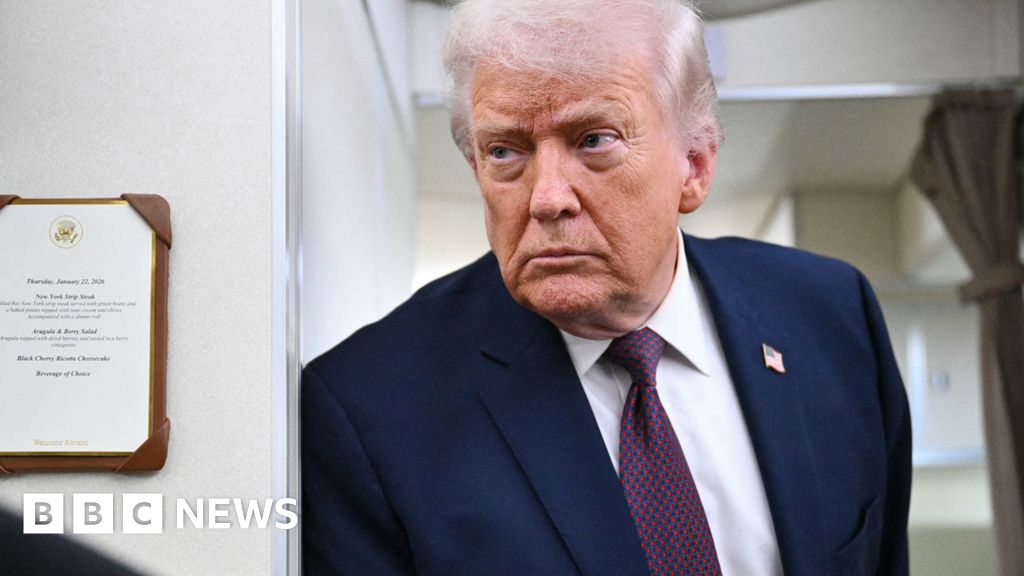
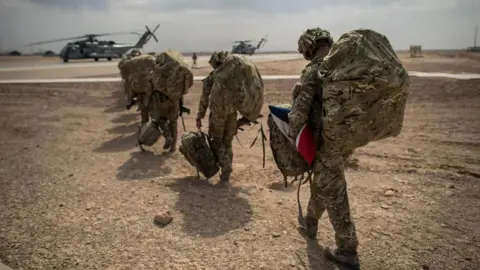
From 2001 until the final withdrawal in 2021, the mission in Afghanistan, initially Operation Enduring Freedom and later the NATO-led International Security Assistance Force (ISAF) and its successor, Resolute Support Mission, saw a diverse coalition of forces operating under extremely challenging conditions. Countries such as the United Kingdom, Canada, Germany, France, Italy, the Netherlands, and numerous others deployed tens of thousands of troops, providing a vast spectrum of capabilities ranging from direct combat operations and counter-insurgency efforts to training Afghan security forces, provincial reconstruction, and humanitarian aid. The notion of a singular, static "front line" in the asymmetric warfare characteristic of Afghanistan is, in itself, a simplification that fails to capture the complex and omnipresent threats faced by all deployed personnel. Improvised Explosive Devices (IEDs), ambushes, and direct engagements with insurgent forces were a constant reality across various operational zones, with allied forces often embedded deep within hostile territories.
The human cost of this collective endeavor was immense. Of the more than 3,500 coalition fatalities recorded by the time of the U.S. withdrawal, approximately two-thirds were American. However, the remaining third, accounting for over a thousand lives, were service members from allied nations. The United Kingdom, for instance, suffered 457 fatalities, the second-highest toll among all coalition partners. These numbers unequivocally contradict the assertion that allied troops avoided direct engagement or remained in safe rear echelons. Each casualty represents a direct contribution to the shared mission, often in the most perilous circumstances.
Waves of Condemnation from UK Officials and Veterans
The former U.S. President’s comments immediately drew sharp rebukes from across the British political spectrum and from the families of those who bore the brunt of the conflict. Stephen Kinnock, the Shadow Secretary of State for Health and Social Care, characterized Trump’s claims as "disappointing" and lacking "any resemblance to reality." He emphatically reiterated the unwavering solidarity of the UK and its allies with the United States in its missions, paying tribute to the "patriotism, courage, dedication, [and] professionalism" of British armed forces who "put their lives on the line." Kinnock also affirmed that Labour Party leader Keir Starmer would directly address these remarks with Trump, underscoring the deep national pride in the armed forces’ contributions.
Beyond official political condemnation, the emotional impact on veterans and their families has been profound. Lucy Aldridge, whose 18-year-old son William was killed by a bomb blast in Afghanistan, described Trump’s remarks as "extremely upsetting" and "insulting." She poignantly articulated the enduring trauma experienced by families, stating, "We live the trauma daily for the rest of our lives because of the contribution that our loved ones made. And they were absolutely on the front line." Similarly, Diane Dernie, mother of Ben Parkinson, one of the most severely injured British soldiers to survive the conflict, condemned the comments as "so insulting" and a "childish man trying to deflect from his own actions." She highlighted the stark reality of the threat, asserting, "I can assure you, the Taliban didn’t plant IEDs miles and miles back from the front line." Her call for Prime Minister Starmer to "stand up for his own armed forces" resonated deeply.
Further compounding the domestic outrage, Conservative MP Ben Obese-Jecty, a veteran of the Afghanistan campaign, voiced his dismay on social media, expressing sadness that "our nation’s sacrifice, and that of our Nato partners, held so cheaply." Labour MP Emily Thornberry, speaking on a televised debate, labeled the comments an "absolute insult" to the fallen and a fundamental misunderstanding from "a man who has never seen any action." She emphasized the consistent support the UK has offered the U.S. and criticized Trump’s behavior as "bullying, rude, that has deliberately been trying to undermine us, which has been trying to undermine Nato." Similar sentiments were echoed by Conservative shadow cabinet member Stuart Andrew, who found the remarks "disgraceful" and "appalling," and Liberal Democrat leader Sir Ed Davey, who questioned, "How dare he question their sacrifice?" Even Robert Jenrick, a former Shadow Justice Secretary who recently joined Reform UK, deemed the comments "offensive and wrong."
International Repercussions and Diplomatic Challenges
The ripple effect of Trump’s statements extended beyond the UK. David van Weel, the Dutch foreign minister, unequivocally dismissed the claims as "false" during an interview, asserting that "Europeans shed blood" in support of U.S. troops in Afghanistan. He noted that NATO Secretary General Mark Rutte had already challenged similar assertions from Trump, emphasizing the need to "speak out for the truth" repeatedly. This collective European response underscores a broader frustration with rhetoric that appears to undermine the foundational principles of the transatlantic alliance.
Calvin Bailey, a Labour MP and former RAF officer who served alongside U.S. special operations units in Afghanistan, provided a poignant reminder of the shared ethos that underpinned the mission. He stated that the belief in "inalienable rights" and the rejection of tyranny, articulated at America’s founding, was the driving force behind the post-9/11 response. His comments highlight the ideological underpinnings of the alliance, which transcend mere transactional calculations.
The Ministry of Defence, when approached for comment, pointed to earlier remarks made by Defence Secretary John Healey during a visit to Denmark, prior to Trump’s specific comments. Healey had emphasized the profound camaraderie and shared sacrifice: "In Afghanistan, our forces trained together, they fought together, and on some occasions, they died together, making the ultimate sacrifice." This pre-emptive articulation of alliance solidarity inadvertently served as a direct rebuttal to the subsequent contentious remarks.
Strategic Implications and the Future of NATO
Trump’s repeated questioning of NATO’s utility and the commitment of its members carries significant strategic implications, particularly in an era of heightened global instability. His "America First" doctrine has consistently challenged the post-World War II international order, often portraying alliances as burdensome rather than mutually beneficial. Such rhetoric risks eroding the trust and cohesion that are vital for collective defense, especially when facing emerging threats from state and non-state actors.
The alliance is built on the premise of burden-sharing, with each member contributing to the collective security apparatus. While debates over defense spending targets and equitable contributions are legitimate and ongoing within NATO, directly disparaging the combat roles and sacrifices of allied forces undermines the very spirit of cooperation. It also offers potential adversaries a narrative of disunity and weakness, which could embolden aggressive actions.
Should Trump return to the U.S. presidency, these comments foreshadow a potentially turbulent period for transatlantic relations. His past actions, including questioning Article 5 and threatening withdrawal from the alliance, have created apprehension among European partners. The current remarks further cement concerns about the reliability of U.S. leadership and the future trajectory of NATO. For European nations, the need to strengthen their own defense capabilities and solidify intra-European security cooperation becomes even more pressing in the face of such uncertainty.
Ultimately, the outrage generated by Donald Trump’s claims is not merely a political spat; it is a profound expression of respect for military service, an affirmation of historical truth, and a defense of the core principles of the NATO alliance. The sacrifices made by thousands of allied personnel in Afghanistan were real, substantial, and often paid in blood. To diminish these contributions is to disregard the shared history, collective purpose, and enduring bonds that define the transatlantic security partnership, at a moment when its strength and unity are arguably more critical than ever.




 Aura Kasih
 Ayu Aulia