Lisa Mariana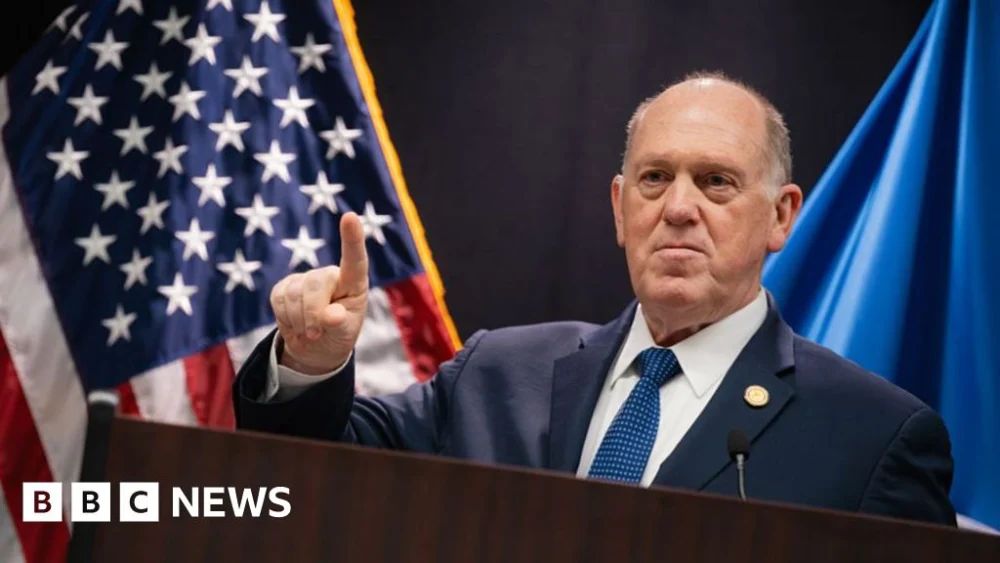
The Trump administration has signaled a potential reduction in federal law enforcement presence within Minneapolis, contingent upon the cooperation of state and local officials, following a period of intense scrutiny and public outcry triggered by the fatal shootings of two U.S. citizens by federal agents. This conditional offer to "draw down" federal forces represents a calculated strategic shift by the White House, aiming to navigate escalating political and social pressures while maintaining its commitment to a robust immigration enforcement agenda. The move comes as federal-local relations in Minnesota have reached a critical juncture, characterized by legal challenges, impassioned protests, and a bitter funding dispute in Washington.
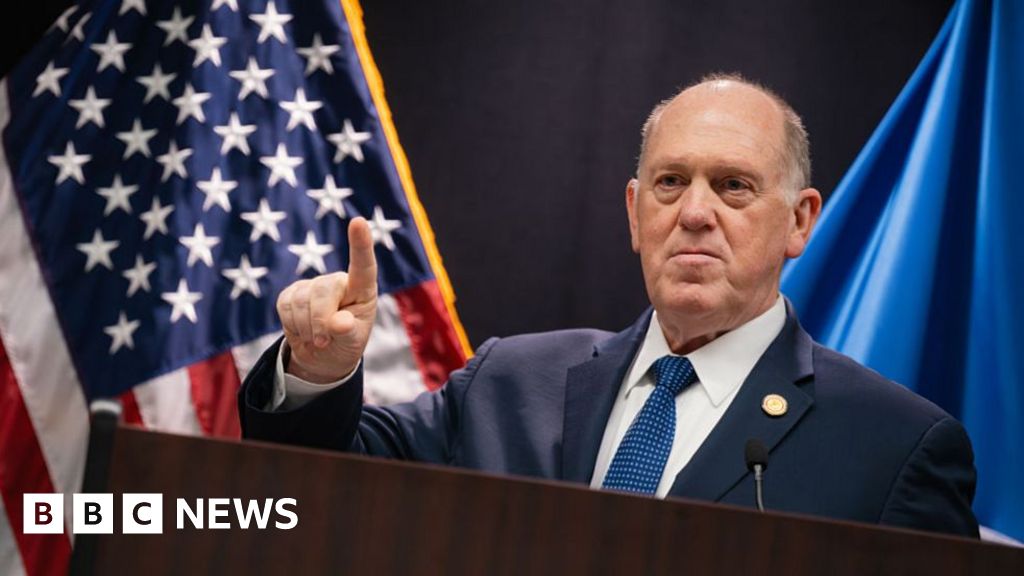
At a Thursday news conference held in Minneapolis, Tom Homan, designated by the White House as the "Border Tsar" and now leading the operational response, articulated the administration’s intent to persist with its immigration enforcement mission, albeit with a revised approach. Homan emphasized a desire for "common sense cooperation that allows us to draw down on the number of people we have here," clarifying that this adjustment should not be misconstrued as a retreat from core objectives. "We are not surrendering our mission at all. We’re just doing it smarter," Homan asserted, hinting at a more targeted strategy without providing specific details. This declaration underscores a tactical recalibration rather than a fundamental policy change, suggesting a pivot towards more politically palatable methods of achieving enforcement goals amidst widespread condemnation.
The impetus for this strategic re-evaluation stems directly from the deaths of Renee Good and Alex Pretti, which have ignited significant local protests and national public outrage. These incidents have drawn sharp criticism from a bipartisan array of lawmakers, amplifying the pressure on the administration to reassess its aggressive tactics. The precise scale and timeline of any potential federal troop withdrawal remain ambiguous, however, fueling uncertainty and prompting further questions regarding the extent to which the Trump administration genuinely intends to "de-escalate" the situation in Minneapolis, as previously stated by the president. Homan’s unequivocal statement, "President Trump wants this fixed, and I’m going to fix it," highlights the direct executive mandate driving the current federal response and underscores the high-stakes nature of his mission.
Adding a controversial layer to an already volatile situation, President Trump subsequently utilized social media to label Alex Pretti as an "agitator and, perhaps, insurrectionist." This characterization followed the release of footage depicting an altercation between Pretti and federal officers approximately eleven days prior to his death. The president asserted that the 37-year-old’s "stock has gone way down" in light of the video, which he described as "quite a display of abuse and anger, for all to see, crazed and out of control," contrasting it with the perceived "calm and cool" demeanor of the ICE Officer. Such presidential commentary, particularly on an active investigation involving a deceased citizen, carries significant weight, potentially influencing public perception, judicial proceedings, and the broader narrative surrounding federal law enforcement conduct. It also exemplifies the administration’s willingness to engage directly in shaping the public discourse around controversial events.
In stark contrast, Steve Schleicher, legal counsel for the Pretti family, offered a sharply different interpretation of the events. Speaking to a US news partner, Schleicher contended that a week before Pretti was fatally shot, he was "violently assaulted by a group of ICE agents" despite posing "no threat to anyone." The family’s legal representative emphatically stated that "nothing that happened a full week before could possibly have justified Alex’s killing at the hands of ICE on Jan 24." This counter-narrative emphasizes the temporal distance between the two incidents and challenges the administration’s implicit suggestion that Pretti’s prior conduct might somehow mitigate the circumstances of his death. The conflicting accounts highlight a profound divergence in perspective regarding the justification and proportionality of federal force.
The killings of Good and Pretti, executed by agents involved in the Trump administration’s broader immigration enforcement initiatives, have not only fueled protests in Minneapolis and national outcry but have also prompted calls from legislators across the political spectrum for the removal of certain administration officials. Minnesota Governor Tim Walz and Minneapolis Mayor Jacob Frey, both Democrats, have consistently advocated for the complete withdrawal of federal agents from the state’s capital region. Furthermore, the state has initiated legal proceedings, seeking a federal court order to halt "Operation Metro Surge," a large-scale federal deployment involving approximately 3,000 officers from various Department of Homeland Security (DHS) components, including immigration and border patrol agents. This legal challenge underscores the deep chasm between federal and local authorities regarding jurisdiction and operational mandates.
Conversely, the administration has vehemently criticized local officials, arguing for greater collaboration with federal officers and agents. A particular point of contention has been Minneapolis’s "sanctuary city policy," which prohibits city employees from enforcing federal immigration laws. This policy, designed to foster trust between immigrant communities and local law enforcement, is viewed by the federal government as an impediment to national security and immigration enforcement. Homan reiterated on Thursday that any changes to the federal operation would be directly dependent on the level of cooperation extended by state and local authorities. While acknowledging disagreements with some of Frey and Walz’s demands, Homan refrained from specifying which demands were unacceptable, maintaining a degree of strategic ambiguity that keeps the onus of compromise on local leaders.
Despite the highly charged atmosphere, lines of communication between the White House and local leadership have been established. Governor Walz reportedly engaged in two conversations with the White House in the immediate aftermath of Pretti’s death, and both he and Mayor Frey have since spoken directly with President Trump. These high-level discussions suggest an executive recognition of the need for dialogue, even as significant policy disagreements persist. However, Homan’s subsequent public statements offered scant detail regarding the administration’s willingness to make substantive changes, beyond pledging a "more targeted" approach to the Minneapolis crackdown. This vagueness leaves considerable room for interpretation and raises questions about the sincerity and scope of any promised de-escalation.
While promising to "fix" the Minneapolis situation, Homan simultaneously staunchly defended the administration’s broader immigration enforcement measures. He asserted that a tightening of border security and an aggressive targeting of undocumented immigrants for deportation had demonstrably enhanced national security. Data obtained by a BBC US partner indicates that US Immigration and Customs Enforcement (ICE), a component of DHS, conducted over 480,000 deportations in Trump’s first year back in office. This figure surpasses the previous high of 410,000 recorded in 2012 under the Obama administration, illustrating a significant escalation in enforcement activity. The document also revealed that DHS is currently holding more than 75,000 individuals in detention, highlighting the immense scale of the federal immigration apparatus.
The deployment of federal agents and National Guard units to major US cities over the past year has been a hallmark of President Trump’s commitment to his campaign pledge of cracking down on illegal immigration. These deployments have consistently been met with widespread protests and legal challenges in numerous Democrat-led cities, including Portland, Los Angeles, and Chicago, establishing a recurring pattern of federal-local conflict. The intensity of public and congressional frustration regarding the handling of the Good and Pretti deaths appears to have reached a critical threshold, prompting President Trump to dispatch Homan to Minneapolis to assume control of the operation, effectively sidelining Border Patrol chief Gregory Bovino, who had previously overseen similar enforcement actions in other urban centers. This leadership change signals a recognition of the need for a different approach or at least a different public face for the operation.
The impact of Homan’s remarks on Thursday within Washington’s political landscape remains uncertain. Several House and Senate Republicans have joined Democrats in calling for comprehensive investigations into the Good and Pretti shootings, indicating a rare bipartisan consensus on the need for accountability. Moreover, Senate Democrats have issued a credible threat of a partial government shutdown if a forthcoming spending package includes new funding allocations for the Department of Homeland Security. This legislative maneuver underscores the deep partisan divide over immigration policy and federal enforcement tactics.
On Thursday, a procedural vote on the spending bill was indeed blocked by seven Senate Republicans, who joined Democrats in opposition. This bipartisan resistance forced Senate leaders and the White House to negotiate a deal to remove DHS funding from the larger spending package. This agreement allows for the funding of other government agencies until September while providing a temporary extension for DHS, effectively kicking the can down the road on the contentious immigration enforcement debate. President Trump acknowledged this development via social media, stating that "Republicans and Democrats in Congress have come together to get the vast majority of the Government funded until September, while at the same time providing an extension to the Department of Homeland Security." This temporary resolution averts an immediate government shutdown but leaves the core funding dispute unresolved.
A primary demand from Senate Democrats concerning any future DHS funding bill is the imposition of restrictions on ICE’s field tactics. Specifically, they have called for agents to cease wearing masks and to refrain from conducting searches and arrests without a judicial warrant. These demands are in direct response to a memo made public earlier this month, which authorized ICE agents to conduct warrantless searches, raising significant civil liberties concerns. Senate Minority Leader Chuck Schumer, in a forceful floor speech on Thursday, articulated the Democratic stance, declaring, "This is a moment of truth. What ICE is doing, outside the law, is state-sanctioned thuggery and it must stop." This strong rhetoric highlights the deep ideological chasm between the parties regarding the appropriate scope and methods of federal immigration enforcement. President Trump, during a cabinet meeting on the same day, indicated the White House’s engagement with Democrats to avoid a full government shutdown, signaling an awareness of the political perils associated with such an outcome.
Meanwhile, Mayor Jacob Frey continued his advocacy efforts in Washington, speaking at a conference for mayors and visiting Capitol Hill, persistently calling for an end to the federal operation in his city. Frey underscored the disproportionate federal presence, estimating 3,000 to 4,000 federal forces in Minneapolis, vastly outnumbering the city’s approximately 600 local police officers. Homan declined to provide an updated figure for federal forces when questioned on Thursday, maintaining operational secrecy. Frey presented compelling allegations, stating that "People have been indiscriminately pulled off the street," and that "American citizens have been yanked away from their homes after that, solely because they look like they are from Mexico or Ecuador or Somalia." These claims of racial profiling and arbitrary detention resonate deeply with concerns about civil liberties and community trust. Mayor Frey concluded with a poignant appeal to fundamental American principles, asserting, "That’s not how we operate in America," encapsulating the sentiment that the federal tactics are an affront to national values. The ongoing standoff in Minneapolis, therefore, transcends mere immigration policy, evolving into a fundamental debate about federal authority, local autonomy, civil rights, and the very character of American governance.




 Aura Kasih
 Ayu Aulia