Lisa Mariana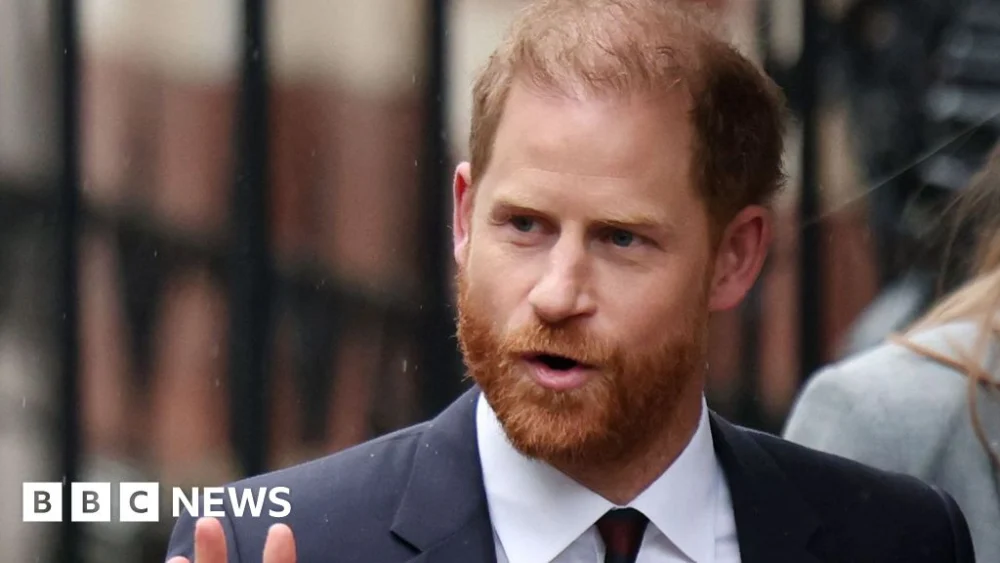
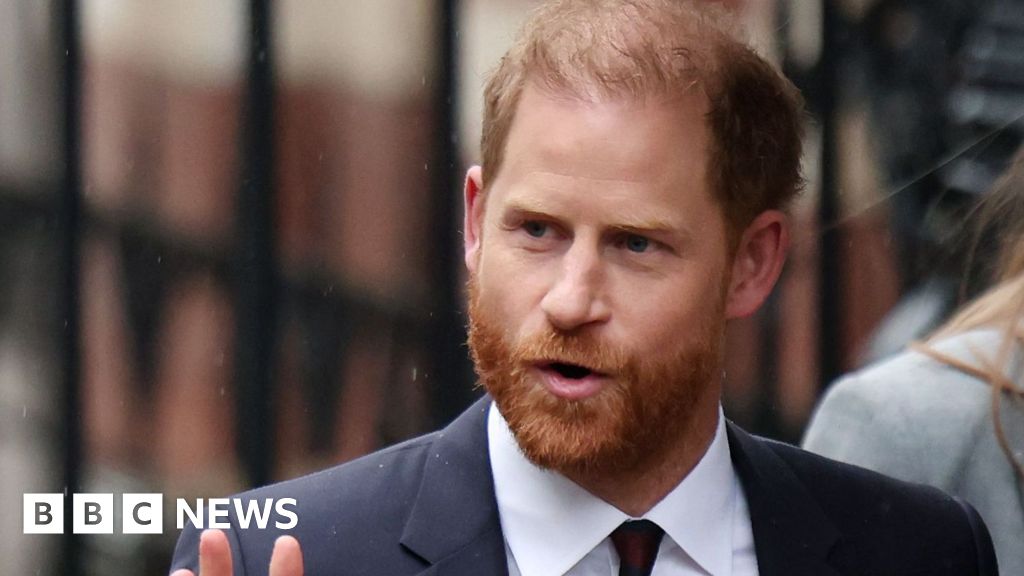
Prince Harry, Duke of Sussex and a veteran of two tours in Afghanistan, has issued a forceful call for the recognition of NATO troops’ sacrifices in the conflict, advocating for their contributions to be acknowledged with unwavering honesty and profound reverence, following contentious statements by former US President Donald Trump regarding the frontline involvement of allied forces. The Duke’s intervention underscores a deepening rift in transatlantic discourse concerning the shared burdens and historical narratives of international military engagements.
The former President’s remarks, delivered in a recent interview, suggested that allied nations had "stayed a little back" from direct combat roles in Afghanistan, implying a disproportionate assumption of risk by American personnel. This assertion has ignited a firestorm of condemnation across global capitals, particularly among nations that deployed substantial forces and suffered significant casualties in the protracted conflict. Prince Harry, speaking from a position of personal experience and military service, articulated a powerful rebuttal, emphasizing the profound human cost borne by coalition partners.
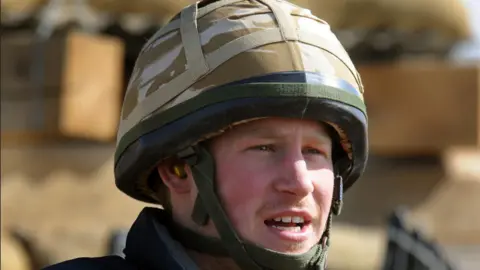
"I served there. I forged indelible bonds of friendship there. And I mourned the loss of comrades there," stated the Duke, reflecting on his two deployments to the Central Asian nation. His remarks served as a poignant tribute to the NATO forces who perished, including the 457 United Kingdom service members whose lives were tragically cut short. This personal testimony lends significant weight to his plea for an accurate and respectful recounting of history, particularly in the face of comments perceived as dismissive and factually inaccurate.
The genesis of NATO’s involvement in Afghanistan dates back to the aftermath of the devastating September 11, 2001, terrorist attacks on the United States. In an unprecedented move, the North Atlantic Treaty Organization invoked Article 5 of its founding treaty, a clause stipulating that an attack on one member is considered an attack on all. This singular invocation solidified a collective commitment to mutual defense, obliging every allied nation to stand in solidarity with the United States in its pursuit of shared security objectives in Afghanistan. Allies from across Europe and beyond answered this solemn call, contributing troops, resources, and strategic support to the mission.
"In 2001, Article 5 was invoked for the first—and to this day, only—time in NATO’s history. This critical provision mandated that every allied nation pledge its support to the United States in Afghanistan, united by our common security interests. Our allies responded with unwavering commitment," Prince Harry underscored. He elaborated on the far-reaching repercussions of this collective endeavor: "Thousands of lives were irrevocably altered. Parents laid their children to rest. Children were orphaned. Families continue to bear an immeasurable cost. These sacrifices demand to be commemorated with truth and dignity, as we collectively uphold our unwavering commitment to diplomacy and the pursuit of peace."
Former President Trump’s contentious remarks, aired during a televised interview, further elaborated on his long-held skepticism regarding the utility and reciprocal commitment of NATO allies. He asserted, "We’ve never genuinely required their assistance. We have never truly imposed demands upon them. They might claim to have dispatched troops to Afghanistan… and indeed they did, but they maintained a somewhat detached posture, a slight distance from the active combat zones." He further expressed doubt, stating he was "uncertain" whether the military alliance would reciprocate aid to the United States "should we ever find ourselves in need." These statements represent a continuity of a critical stance on NATO that characterized his previous presidency, often centered on issues of defense spending and burden-sharing.
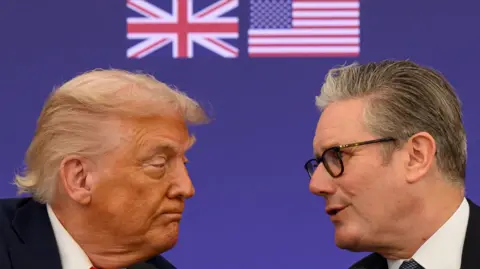
The repercussions of Trump’s commentary resonated immediately across the United Kingdom’s political spectrum, eliciting widespread condemnation. Sir Keir Starmer, the leader of the opposition Labour Party, swiftly denounced the remarks as "insulting and frankly appalling." Starmer further indicated that, had he personally uttered such words, he would "unquestionably offer an apology." This bipartisan condemnation highlighted the deep national reverence for military service and the sacrifices made in Afghanistan, transcending typical political divisions.
"I will forever hold in high esteem their valor, their bravery, and the profound sacrifices they made for our nation," Sir Keir declared. "Many others endured injuries, some of which were life-altering. I consider President Trump’s comments to be both insulting and utterly appalling, and I am not at all surprised by the profound distress they have caused to the loved ones of those who were killed or injured, and indeed, throughout the entire country."
The international reaction mirrored the domestic outrage. Radoslaw Sikorski, Poland’s foreign minister, a nation that contributed 33,000 troops to the Afghan mission, stated unequivocally: "No individual possesses the right to disparage the service of our soldiers." This sentiment resonated deeply across European capitals, where many nations had contributed forces to the mission, often in dangerous and challenging environments.
Jaap de Hoop Scheffer, who served as NATO’s Secretary General during the Afghanistan War, offered a sharp rebuke on BBC World Service. "No American president should be afforded the liberty to diminish their legacy or to inflict pain upon those who continue to grieve the ultimate sacrifice made by their loved ones in Afghanistan," he contended. He called for a direct apology: "What I would anticipate is a sincere expression of regret from the President of the United States."
The US-led invasion of Afghanistan commenced in October 2001, primarily aimed at dismantling Al-Qaeda and ousting the Taliban regime, which harbored Osama Bin Laden and other architects of the 9/11 attacks. NATO nations provided substantial military contingents and logistical support to the ensuing war effort. By 2021, when the United States completed its withdrawal, the conflict had claimed the lives of over 3,500 coalition soldiers. Approximately two-thirds of these fatalities were American, with the UK incurring the second-highest number of military deaths at 457. Other significant contributors to the coalition included Canada, Germany, France, Italy, Denmark, the Netherlands, and Australia, each bearing their own share of casualties and operational costs.
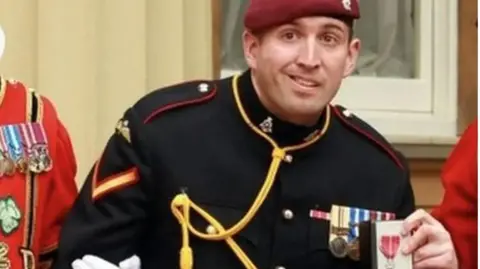
The majority of the 457 British service personnel who died over nearly two decades of deployment in Afghanistan succumbed to injuries sustained in Helmand Province, a region notorious for its intense combat and high operational tempo. This area was frequently the scene of the heaviest fighting against insurgent forces, directly contradicting any notion of allied forces "staying back." Beyond the fatalities, hundreds more British personnel endured severe, often life-altering, injuries, including amputations and debilitating psychological trauma.
Among those who suffered profound injuries is Corporal Andy Reid, who lost both his legs and his right arm after detonating an improvised explosive device (IED) in Afghanistan. "Not a single day passes without us experiencing some form of pain, whether physical or mental, as we reflect on that conflict," he shared with BBC Breakfast. Reid vividly recalled his direct collaboration with American soldiers during his service in Afghanistan, affirming, "If they were positioned on the front line and I was alongside them, then unequivocally, we too were on the front line."
Diane Dernie, whose son Ben Parkinson sustained catastrophic injuries when his Army Land Rover struck a mine near Musa Qala in 2006, described Trump’s comments as "profoundly insulting" and distressing. Her son, Ben Parkinson, has been lauded as one of the most severely injured British soldiers to survive the conflict. Dernie characterized Trump’s words as "the childish rantings of a man attempting to divert attention from his own conduct." She issued a direct challenge to the Prime Minister, urging him to "defend his own armed forces" and confront the former US President directly.
In response to Dernie’s impassioned plea, the Prime Minister reiterated his condemnation. "I have articulated my stance unequivocally, and what I convey to Diane is this: if I had misspoken in such a manner or uttered those words, I would most certainly apologize, and I would extend that apology directly to her." In a subsequent interview, Dernie acknowledged the strength of the Prime Minister’s words but pressed for direct engagement with Trump. "His statements were precisely what we desired to hear, but those words must be communicated directly to the President," Dernie insisted. "I appreciate the Prime Minister’s sentiments, but they need to be conveyed to Donald Trump himself."
The unified censure of Trump’s remarks extended across the political establishment. Kemi Badenoch, a prominent Conservative leader, stated, "I have engaged with parents of young men who tragically forfeited their lives. To disparage their memory in such a manner is an utter disgrace. There is an excessive amount of reckless rhetoric from President Trump. He evidently lacks comprehension of the historical events. We must not tolerate such flippant pronouncements." Sir Ed Davey, leader of the Liberal Democrats, sharply criticized the former President, pointing out, "Trump evaded military service on five occasions. How dare he challenge their sacrifice?" Trump indeed received five deferments from military conscription during the Vietnam War era, four for academic reasons and one due to bone spurs. Even Nigel Farage, leader of Reform UK and a political ally of Trump, conceded, "Donald Trump is mistaken. For two decades, our armed forces fought with immense bravery alongside America’s in Afghanistan."
Prominent American political and military figures have also voiced their indignation and dismay concerning Trump’s comments on NATO. Lieutenant General (Ret.) Herbert Raymond McMaster, who previously served as National Security Advisor and as a senior US officer in Afghanistan, affirmed that British forces were actively engaged in daily counter-insurgency operations. "I consider it an affront to those who fought alongside us," McMaster told the BBC. "What I would wish for him to articulate is an affirmation of our profound gratitude for our allies who stood with us, particularly those who made the ultimate sacrifice in a conflict that, in my view, was crucial for the future of all humanity."
Throughout his political career, Trump has consistently expressed skepticism about NATO, frequently accusing member states of failing to meet their defense spending commitments. In recent weeks, his rhetoric has expanded to include controversial statements about the acquisition of Greenland, a semi-autonomous territory of Denmark, a fellow NATO ally. His repeated pronouncements regarding ownership, alongside implied threats of military action and tariffs against traditional European allies, have significantly strained the transatlantic alliance.
The White House, in the immediate aftermath of the outcry, maintained a relatively subdued posture, partly due to the story’s limited resonance within the United States and Trump’s reduced public appearances. On Friday, prior to Sir Keir Starmer’s call for an apology, the White House released a statement reiterating Trump’s long-held position on NATO. The statement affirmed: "President Trump is correct—America’s contributions to NATO vastly overshadow those of other nations, and his success in securing a 5% spending commitment from NATO allies is empowering Europe to assume greater responsibility for its own defense. The United States remains the sole NATO partner capable of safeguarding Greenland, and the President is advancing NATO’s interests by pursuing this objective." As of the latest reports, the White House has not formally responded to Starmer’s demand for an apology, indicating a steadfast adherence to the former President’s controversial stance. The ongoing debate highlights the profound challenges facing the alliance in maintaining unity and a shared strategic vision amidst evolving geopolitical realities and persistent internal critiques from influential American political voices.


 Aura Kasih
 Ayu Aulia