Lisa Mariana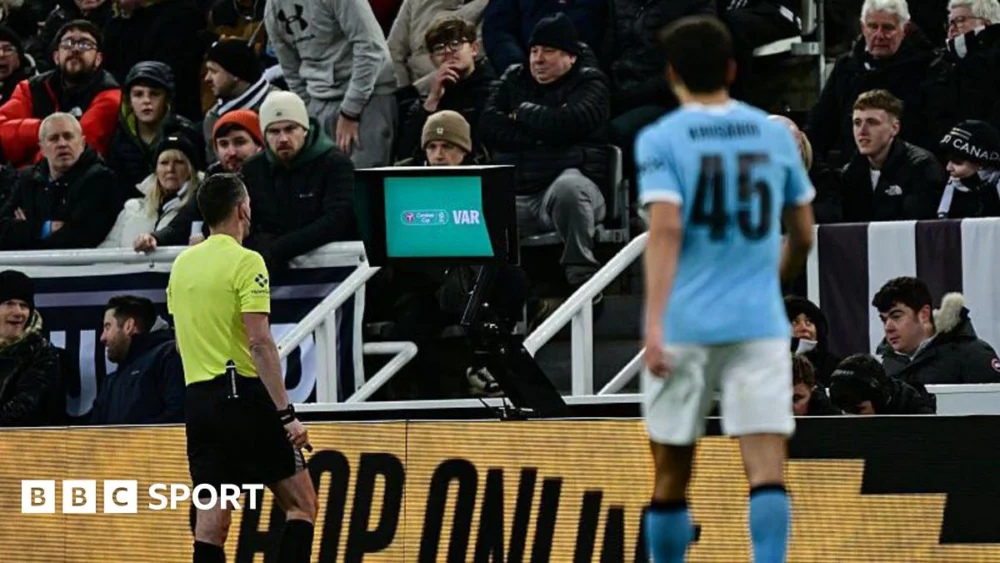
A recent Carabao Cup semi-final fixture between Manchester City and Newcastle United has become the latest flashpoint in the ongoing global discourse surrounding Video Assistant Referee (VAR) technology, following a protracted and contentious decision to disallow a pivotal goal. The incident, which saw a potential second goal for Manchester City overturned after an extensive review, has reignited fundamental questions about the application of football’s laws, the role of technology in sport, and the very essence of the fan experience. The controversy has prompted widespread criticism from pundits, managers, players, and supporters alike, suggesting that the drive for absolute technical correctness may be fundamentally at odds with the dynamic and often subjective nature of the game.
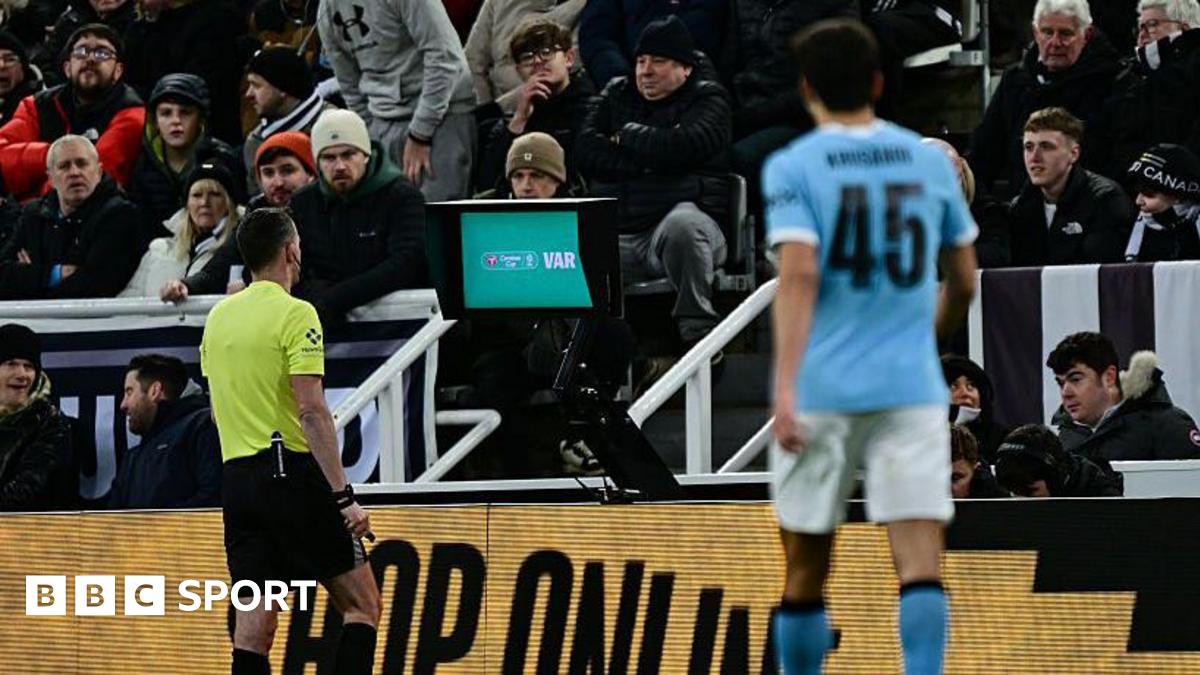
The contentious moment unfolded during the first leg of the League Cup semi-final, a high-stakes encounter where Manchester City ultimately secured a 2-0 victory over Newcastle. Having already established a lead through Antoine Semenyo’s 53rd-minute strike, City appeared poised to double their advantage just ten minutes later. Semenyo, a significant January acquisition, latched onto a cross from Tijjani Reijnders and expertly dispatched the ball past Newcastle goalkeeper Nick Pope, sparking immediate celebrations among the Manchester City contingent. However, the elation was short-lived as referee Chris Kavanagh, advised by VAR official Stuart Attwell, initiated a review for a potential offside infringement. What followed was a glacial five-and-a-half-minute interlude, during which the flow of the game was entirely halted, and the atmosphere in St. James’ Park transitioned from fervent excitement to a tense, expectant silence.
The prolonged examination ultimately concluded with Kavanagh disallowing the goal. The rationale provided was that Manchester City’s prolific striker, Erling Haaland, was in an offside position and deemed to have interfered with play. Specifically, Haaland was perceived to be jostling with Newcastle defender Malick Thiaw, creating an obstruction that, in the officials’ judgment, impacted Thiaw’s ability to challenge Semenyo’s shot. This ruling plunged the match into a maelstrom of debate, with many arguing that while technically justifiable under the stringent interpretation of the law, the decision betrayed the spirit of the game and the original intent behind VAR’s introduction.
The heart of the controversy lies in the intricate interpretation of Law 11, which governs offside. A player is deemed offside if they are in an offside position at the moment the ball is played by a teammate and become involved in active play by interfering with play, interfering with an opponent, or gaining an advantage. Interfering with an opponent can encompass several actions, including preventing an opponent from playing or being able to play the ball by obstructing the opponent’s line of vision, challenging an opponent for the ball, clearly attempting to play a ball which is close when this action impacts on an opponent, or making an obvious action which clearly impacts on the ability of an opponent to play the ball. In this instance, the VAR’s assessment focused on Haaland’s physical interaction with Thiaw. While Haaland did not touch the ball, his presence and movement were judged to have sufficiently impeded the defender, thereby influencing the play. This particular aspect of offside, "interfering with an opponent," is inherently subjective, relying on the referee’s and VAR’s judgment of intent and impact, a subjectivity that frequently generates contention.
Further complicating the review process was the reported failure of the semi-automated offside technology (SAOT), a system designed to provide rapid and highly accurate offside decisions. This technical malfunction necessitated a reversion to traditional manual line-drawing by the VAR, a method known for its potential for human error and slower review times. The reliance on manual processes in a high-stakes semi-final, especially following a prior instance of SAOT failure involving the same two clubs in a Premier League fixture, raises significant questions about the reliability and preparedness of officiating infrastructure. The extended duration of the review, exceeding five minutes, exacerbated frustration, fostering the perception among many that the officials were struggling to reach a definitive conclusion rather than confirming a "clear and obvious" error, which was the original mandate for VAR.
Post-match reactions underscored the depth of the dissatisfaction. Antoine Semenyo himself expressed bewilderment, stating unequivocally that the goal "should have stood." Manchester City manager Pep Guardiola, while asserting that such adversity would ultimately make his team "stronger," tacitly acknowledged the perceived injustice. Captain Bernardo Silva was more direct, voicing considerable frustration and linking the incident to previous unfavorable VAR decisions against his side, including a denied penalty for Phil Foden in an earlier league encounter at the same venue. Such comments highlight a growing sentiment among players and coaches that VAR, rather than enhancing fairness, is introducing an element of unpredictable inconsistency that can unfairly tilt the balance of matches.
From a broader analytical perspective, the incident encapsulates the persistent tension between the desire for absolute precision in officiating and the inherent fluidity and human element of football. The Football Issues Correspondent for BBC Sport observed that while the decision was "technically correct in law" due to Haaland’s offside position and contact with a defender, fans would likely perceive it as a legitimate goal where the offside offense would have gone unnoticed without VAR’s microscopic examination. This distinction between technical adherence to the rulebook and the intuitive understanding of the game’s flow is crucial. Many argue that VAR was intended to correct egregious errors, not to meticulously dissect every frame for marginal infractions that might not genuinely impact the outcome of a play in real-time. The prolonged delay further eroded confidence, suggesting an absence of clear conviction on the part of the VAR official.
Pundits offered a spectrum of views, yet a common thread of frustration regarding the process emerged. Former striker Chris Sutton declared, "I think the game has gone," labeling the decision a "sheer guess" and questioning whether the defender genuinely could have intervened. While former Liverpool midfielder Jamie Redknapp and Newcastle defender Dan Burn conceded that "by the letter of the law" it was the correct call, both criticized the subjective nature and the impact of the process. Redknapp noted the paradox that had the goal stood, few would have contested it, while Burn expressed a preference for clear-cut offside rulings over subjective interpretations of interference. Former Manchester City defender Micah Richards passionately articulated the view that VAR was not introduced for such highly marginal calls, lamenting that it has become "anti-goal" and constitutes "re-refereeing the game," a process that consumes excessive time. These sentiments collectively underscore a growing disillusionment with how VAR is being implemented, leading to a perception that it often detracts from the spectacle rather than enhancing it.
The sentiment among the fan base echoed the pundits’ frustration, ranging from calls to "get rid of VAR" entirely to accusations of officials actively seeking reasons to disallow goals. Fans expressed a profound sense of disconnect, noting that the lengthy reviews drain the spontaneity and joy from goal celebrations. The consensus among many supporters is that VAR has "ruined the game" and is "killing the game slowly" by over-analyzing moments that, in real-time, appear perfectly legitimate. This emotional response from the core audience is a critical factor, as sustained dissatisfaction risks alienating the very people who drive the sport’s commercial and cultural success.
The implications of such incidents extend beyond a single match result. They contribute to a broader crisis of confidence in football officiating and the efficacy of VAR. For a technology introduced with the noble aim of eradicating "clear and obvious errors" and ensuring fairness, its current application often appears to generate more debate and controversy than it resolves. The subjective nature of "interfering with an opponent" and the technical glitches experienced by advanced systems like SAOT highlight the persistent challenges in applying precise technological solutions to a sport rich in human nuance and interpretation.
Looking ahead, the footballing world faces a critical juncture regarding VAR. There are increasing calls for clearer, more consistent guidelines for its application, particularly concerning subjective offside decisions. The length of reviews remains a significant point of contention, with proposals for strict time limits to minimize disruption to the game’s flow. Further technological advancements are anticipated, aiming to refine SAOT and other systems to reduce the need for manual intervention and enhance accuracy. However, even with technological improvements, the fundamental debate between the "letter of the law" and the "spirit of the game" will likely persist. The challenge lies in finding an equilibrium where VAR can effectively correct genuine errors without inadvertently penalizing the attacking intent, spontaneous joy, and natural dynamism that define football. Ultimately, for VAR to truly serve the game, its implementation must evolve to be less intrusive, more transparent, and, critically, more aligned with the intuitive understanding of fair play that resonates with players, coaches, and, most importantly, the millions of fans worldwide.



 Aura Kasih