
 Aura Kasih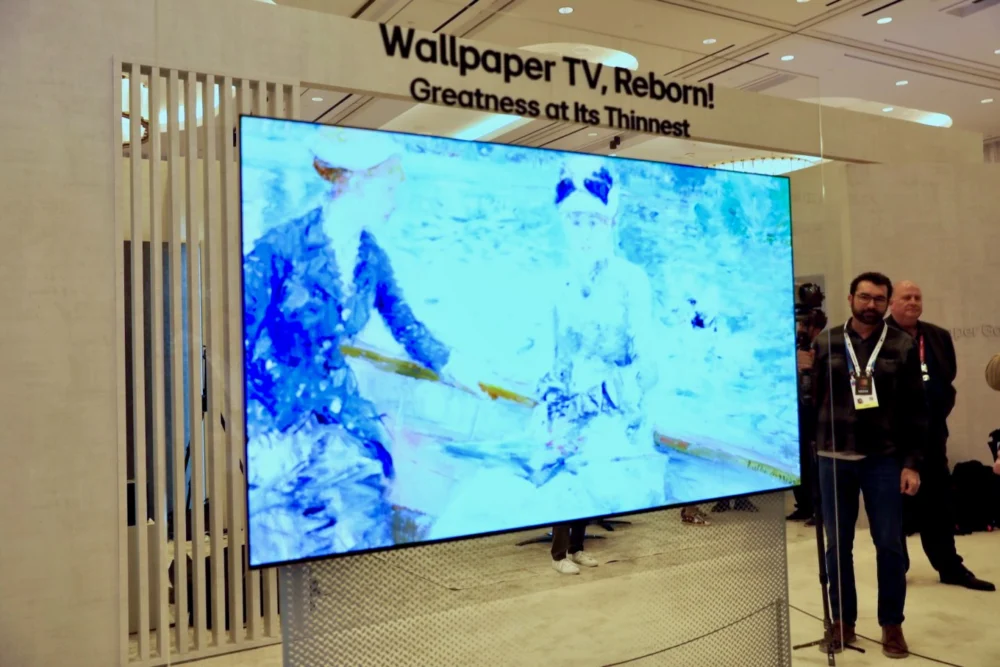
The Consumer Electronics Show (CES) in 2026 served as a crucial barometer for the future of home entertainment, with television manufacturers pushing the boundaries of visual innovation. This year’s exhibition showcased a confluence of monumental display sizes, groundbreaking advancements in panel technology, and the refined elegance of previously celebrated designs. While the show offered a glimpse into what lies ahead, it was the sheer technological prowess demonstrated by the industry’s leading players that truly captivated attendees, promising an immersive and unparalleled viewing experience for consumers in the coming year.
LG Redefines Ultra-Thin Elegance with the Return of the Wallpaper TV
LG has once again set a new benchmark for television design and performance with the reintroduction of its iconic Wallpaper TV, now designated as the W6 model. This iteration, a mere 9 millimeters in thickness, represents a significant leap forward in integrating advanced display technology into an almost imperceptible form factor. The W6 eschews traditional bulky frames, opting for a minimalist aesthetic enhanced by subtle, carved linear patterns along its perimeter. These design elements not only contribute to the structural integrity of the ultra-slim panel but also lend a sophisticated, artistic flair, allowing the display to seamlessly meld with any interior décor.

A key innovation enabling this minimalist design is the refined Zero Connect Box 2.0. This advanced wireless transmission system drastically reduces cable clutter, ensuring that the television itself remains the sole focal point. The box, now 35% more compact than its predecessor, facilitates a clean aesthetic by handling all external device connections wirelessly. Furthermore, the W6 is the inaugural television to support 4K signals at an astonishing 165Hz across all its HDMI ports. This capability is particularly significant for high-end gaming and future-proofed entertainment systems, offering a fluid and responsive visual experience that was previously unattainable.
Underpinning the W6’s visual excellence is LG’s proprietary Primary RGB Tandem 2.0 panel, coupled with its Hyper Radiant Color Technology. This advanced panel architecture promises a substantial increase in brightness, estimated to be 20% over the already impressive G5 model, which achieved peak brightness levels exceeding 2,400 nits. The enhanced brightness translates to more vibrant colors, deeper contrast, and superior High Dynamic Range (HDR) performance. Complementing this is the W6’s 12-bit color depth processing. This advanced processing capability provides greater headroom for handling the 10-bit signals commonly transmitted from modern content sources. By offering a richer palette and finer gradations, it significantly mitigates the risk of color banding and other visual artifacts, resulting in a more natural and lifelike image. The combination of these technological advancements positions the LG W6 as a leader in OLED display technology, merging breathtaking aesthetics with uncompromising picture quality.
TCL’s X11L SQD Mini LED: A Quantum Leap in Brightness and Color Accuracy
TCL’s CES 2026 showcase was dominated by the unveiling of its X11L SQD Mini LED television, a testament to the company’s aggressive push into premium display technologies. This flagship model eschews the prevalent RGB LEDs, opting instead for a novel approach utilizing blue LEDs. TCL claims this design, in conjunction with proprietary advancements, enables an extraordinary peak brightness of 10,000 nits. Such a luminous output is a significant development, paving the way for unprecedented HDR impact and detail visibility in even the brightest viewing environments.

The X11L’s impressive specifications extend to its dimming capabilities, boasting up to 20,000 local dimming zones. This granular control over backlight illumination allows for exceptional contrast ratios and the precise rendering of deep blacks adjacent to brilliant highlights, minimizing the common issue of blooming or haloing around bright objects on dark backgrounds. Furthermore, the TV achieves a remarkable 100% coverage of the BT.2020 color gamut, a standard that encompasses a significantly wider range of colors than previous standards like Rec.709. This expansive color volume ensures that the X11L can reproduce incredibly rich, nuanced, and lifelike hues.
These advancements are attributed to two pivotal innovations developed by TCL CSOT, the company’s panel manufacturing division. The X11L incorporates reformulated quantum dots, which are crucial for efficient light conversion and precise color generation. Coupled with an improved color filter system, these components work in synergy to unlock the full potential of the blue LED backlight. The visual results are striking, with colors appearing exceptionally vibrant and accurate. The exceptional control over blooming, thanks to the vast number of dimming zones, further elevates the viewing experience. While this cutting-edge technology comes at a premium, with the 75-inch model starting at $6,999.99, the X11L represents a significant stride in Mini LED technology, offering a glimpse into the future of high-performance displays.
Samsung’s R95H Micro RGB TV: Pushing the Boundaries of MicroLED Display Technology
Samsung continued its pioneering work in MicroLED technology at CES 2026, presenting the R95H, its most expansive Micro RGB display to date, measuring an imposing 130 inches. Building on the foundation laid by its earlier MicroLED launches, the R95H exemplifies the pursuit of ultimate picture quality. The "Timeless Frame" design, a hallmark of Samsung’s premium offerings, further enhances the immersive experience by creating the illusion that the display is suspended in mid-air within its elegant metal frame.

The R95H is engineered to deliver unparalleled visual fidelity, achieving 100% coverage of the BT.2020 color space. This means it can reproduce the full spectrum of colors intended by content creators, offering a visual richness and accuracy that is unmatched. The display also features a glare-free screen, a critical component for maintaining image integrity and viewing comfort in diverse lighting conditions. This advanced surface treatment minimizes distracting reflections, ensuring that viewers can fully appreciate the deep blacks and vibrant colors without interruption. Support for HDR10+ Advanced signifies a commitment to the latest HDR standards, promising enhanced dynamic range and detail rendition.
While the R95H showcased at CES is a prototype, its presence underscores Samsung’s dedication to advancing MicroLED technology. The company has also announced plans to introduce new, more accessible sizes of its Micro RGB LED TVs, with models as small as 55 inches slated for release in 2026. This strategic expansion signals a move towards making this premium technology available to a broader audience, albeit still within the high-end market segment. The ongoing development and refinement of MicroLED technology, as exemplified by the R95H, position it as a strong contender for the future of flagship home displays, offering a compelling alternative to OLED and other advanced panel types.
Hisense UXS: Enhanced Color Purity with the Addition of a Cyan LED
Hisense, a company instrumental in popularizing RGB LED television technology, has further evolved its premium UX series with the introduction of the 116-inch UXS model. The most significant advancement in the UXS is the incorporation of an additional cyan LED into its backlight system, transforming it from an RGB LED TV into an RGCB LED TV. This innovation addresses specific challenges in color reproduction and visual comfort.

The addition of the cyan LED offers two primary benefits. Firstly, it facilitates a smoother transition between blue and green color reproduction. These particular color wavelengths can sometimes be prone to "color crosstalk," where one color bleeds into the other, compromising the purity and accuracy of the displayed hues. The cyan LED acts as an intermediary, helping to create a more seamless and precise color blend. Secondly, this enhancement contributes to a reduction in blue light output within certain problematic ranges. Excessive blue light exposure can lead to eye strain, fatigue, and disruption of natural circadian rhythms. By mitigating this, the UXS aims to provide a more comfortable and healthier viewing experience, particularly during extended viewing sessions.
Beyond these improvements, the RGCB LED backlight also extends the UXS’s color reproduction capabilities, pushing its BT.2020 coverage to an impressive 110 percent. This signifies the ability to display colors that fall even outside the already expansive boundaries of the BT.2020 standard, offering a richer and more nuanced color palette than ever before. The 116-inch screen size further amplifies the immersive potential of this advanced display technology. Hisense’s commitment to refining LED backlight technology, as demonstrated by the UXS, highlights the ongoing innovation within the LCD television space, offering compelling performance and enhanced user benefits.
LG G6 OLED: A Refined Masterpiece of Black Levels and Reflection Control
LG’s G6 OLED television represents a significant iteration in its flagship lineup, building upon the celebrated strengths of its predecessors. This model shares many of the advanced display technologies found in the W6 Wallpaper TV, including the Primary RGB Tandem panel and Hyper Radiant Color Technology. This combination is engineered to deliver a picture that is approximately 20% brighter than the previous year’s G5 model, translating to more impactful HDR content and improved performance in well-lit rooms.

A key focus for the G6 is its enhanced black level performance. OLED technology is inherently capable of perfect blacks, as each pixel can be individually turned off. The G6 further refines this by employing advanced image processing and panel optimization to ensure that blacks are as deep and inky as possible. Complementing this is the implementation of a sophisticated reflection-free technology. With a reflectance rate of less than 0.5%, the G6 significantly minimizes ambient light interference. This feature is crucial for maintaining the integrity of dark scenes, preventing distracting reflections from washing out the image and ensuring that the viewer’s attention remains solely on the on-screen content, regardless of the room’s lighting conditions. The synergy of perfect blacks and superior reflection control makes the LG G6 a formidable contender for those seeking the pinnacle of OLED viewing.
The collective advancements showcased at CES 2026 underscore a dynamic and rapidly evolving television market. Manufacturers are not only increasing screen sizes and peak brightness but are also investing heavily in fundamental panel technologies and processing capabilities. From the ultra-slim artistry of LG’s Wallpaper TV to the groundbreaking brightness of TCL’s Mini LED, the stunning clarity of Samsung’s MicroLED, and the refined color accuracy of Hisense’s RGCB LED, consumers can anticipate a future where visual experiences are more immersive, accurate, and visually stunning than ever before. The focus on reducing visual artifacts, enhancing color reproduction, and improving viewing comfort indicates a mature market where incremental, yet impactful, technological leaps are defining the next generation of home entertainment.




 Lisa Mariana


 Ridwan Kamil