
 Aura Kasih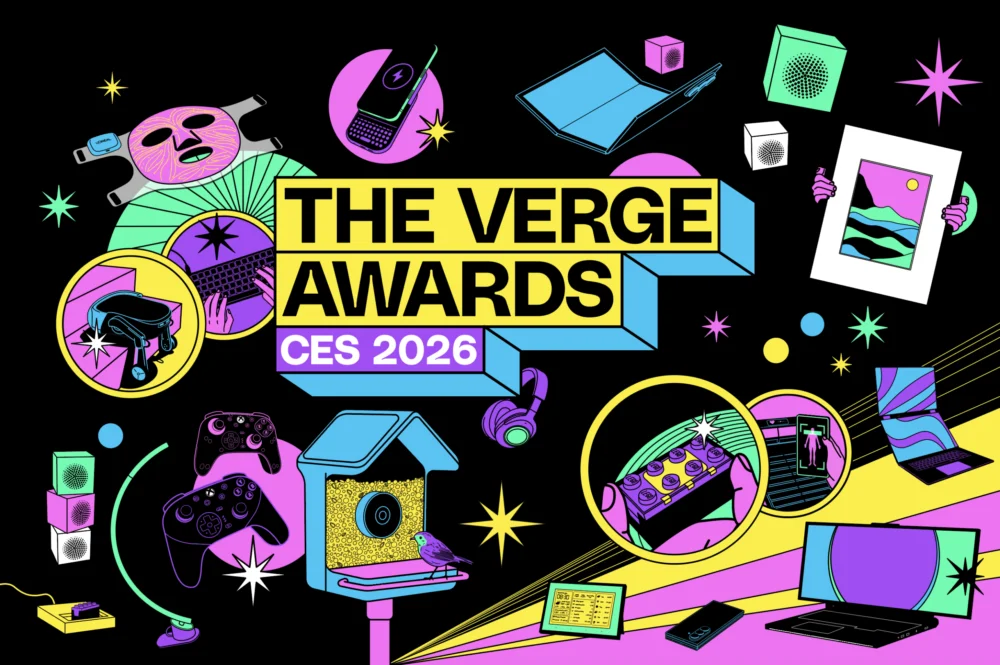
The Consumer Electronics Show (CES) once again convened in Las Vegas, marking the annual pilgrimage of the global tech industry to showcase the innovations that will define the coming year. CES 2026 delivered a compelling spectrum of advancements, from groundbreaking leaps in existing product categories to entirely novel concepts, offering a tangible preview of the technological landscape of 2026 and beyond. The Verge’s editorial team meticulously documented and analyzed these developments, highlighting products that not only pushed boundaries but also resonated with practical utility, sheer delight, or even a touch of absurdity. These selected innovations represent the pinnacle of ingenuity and foresight, earning them The Verge Awards for Best of CES 2026.
The Evolution of Visual Fidelity: Best Monitor
For years, the pursuit of pristine visual clarity in high-refresh-rate OLED monitors has been a central theme at CES. While Samsung has consistently led the charge, CES 2026 marks a significant shift as LG Display emerges as a frontrunner in this arena. Both industry titans have finally achieved a critical milestone: the development of OLED panels that render text with exceptional sharpness, eradicating the persistent color fringing that previously marred the readability of fine print on earlier generations of OLED displays. This breakthrough is attributed to advancements in pixel structure, ensuring a more precise arrangement of red, green, and blue subpixels.
After rigorous evaluation and direct comparison, LG Display’s innovation stood out. Their 27-inch, 4K OLED panel delivers an unparalleled combination of sharpness and visual comfort for both text-based work and gaming. The monitor’s dual-mode capability, offering either 4K at 240Hz or a blistering 1080p at 480Hz, provides users with the flexibility to prioritize either resolution or ultra-smooth motion. While other displays at CES boasted higher peak brightness (1,500 nits) and resolutions, this LG Display panel, with its 1,000-nit peak brightness, strikes an optimal balance for daily use, making it the preferred choice for productivity and entertainment alike. Asus is poised to be among the first to integrate this advanced display into their ROG Swift OLED PG27UCWM, a monitor that further enhances connectivity with DisplayPort 2.1a, HDMI 2.1, and a 90W USB-C port for seamless laptop docking and charging. Although pricing and availability remain undisclosed, this collaboration signals a new era for high-performance gaming and professional monitors.

The Integrated Command Center: Best Keyboard
CES 2026 showcased a robust lineup of input devices, but Corsair’s Galleon 100 SD keyboard distinguished itself through its elegant integration of a powerful control surface. This full-size, wired mechanical keyboard not only offers a premium typing experience but also incorporates a Stream Deck-like interface, a feat of engineering that avoids the often-clunky aesthetic of such combined devices. The Galleon 100 SD, priced at $350, aims to bridge the gap between high-performance peripherals and versatile content creation tools.
The integrated control panel, analogous to a Stream Deck Plus, features a display, dual rotary knobs, and twelve customizable buttons. These buttons grant access to an extensive ecosystem of plug-ins, custom icons, and sound effects via Elgato’s renowned software platform. This fusion allows users to seamlessly manage applications, control smart home devices, mute microphones, and execute a multitude of commands without diverting attention from their primary workflow. Beyond its innovative control features, the keyboard itself boasts Corsair’s proprietary mechanical switches, a hot-swappable PCB for personalized switch configurations, and an impressive 8,000Hz polling rate. Furthermore, its browser-based configuration utility eliminates the need for dedicated software downloads, streamlining the user experience. The Galleon 100 SD represents a significant step forward in creating an all-in-one command center for professionals and enthusiasts alike.
Pioneering Color Accuracy: Best TV
TCL’s X11L SQD-Mini LED TV made a bold statement at CES 2026, diverging from the industry’s prevailing focus on RGB LEDs to champion a refined approach utilizing blue LEDs. This strategic choice, coupled with significant technological advancements, positions the X11L as a standout in the premium television market. The core of TCL’s innovation lies in its reformulated quantum dots, which unlock a broader color spectrum, and an enhanced color filter, dubbed the UltraColor Filter, engineered for superior color accuracy.

These synergistic technologies enable the X11L to achieve a remarkable 100% coverage of the BT.2020 color space, a benchmark for future color standards. This level of color reproduction, combined with an astonishing peak brightness of 10,000 nits and up to 20,000 local dimming zones, delivers an unparalleled viewing experience characterized by breathtaking contrast and vibrant, lifelike colors. While the initial investment for the 75-inch model is substantial at $6,999.99, this technology is expected to trickle down to more accessible models later in the year, democratizing access to this cutting-edge visual fidelity. The X11L represents a significant leap in display technology, setting a new standard for color accuracy and brightness in home entertainment.
The Reinvention of the Laptop: Best Laptop
Asus has refined its dual-screen gaming laptop concept with the latest iteration of the ROG Zephyrus Duo, presenting a compelling vision for the future of mobile computing. This new model features two identical 16-inch OLED displays, pushing the boundaries of immersive user experiences. Coupled with up to RTX 5090 graphics and an Intel Panther Lake processor, the Zephyrus Duo offers formidable gaming performance. Its innovative design extends to a removable wireless keyboard and trackpad, allowing for a truly adaptable form factor.
The Zephyrus Duo transcends traditional laptop limitations, transforming into a clamshell device, a multi-monitor setup for side-by-side productivity, or even a compact tented convertible. This versatility, inspired by the productivity gains observed in devices like the Lenovo Yoga Book 9i, is now infused with the raw power required for high-end gaming. While pricing and specific release dates for Q2 2026 remain under wraps, the dual-OLED configuration and anticipated component costs suggest a premium price point. Nevertheless, the potential for seamless integration of work and play on such a dynamic platform makes the Zephyrus Duo a highly anticipated device, promising to redefine the capabilities of a portable workstation.
Seamless Access and Interoperability: Best Smart Home Device

The smart home security sector at CES 2026 was dominated by advancements in access control. Innovations ranged from biometric solutions like palm and facial recognition to novel wireless charging capabilities for smart locks. However, the Aqara Smart Lock U400 distinguished itself not through radical new technology, but through its embrace of open standards and robust interoperability.
The U400 is the first smart lock to fully support Apple’s hands-free Home Key unlocking utilizing ultra-wideband (UWB) technology. This allows for seamless, secure unlocking as users approach with their Apple Watch or iPhone. Crucially, as a Matter-over-Thread device, it integrates effortlessly with a wide array of smart home platforms, including Google Home, Amazon Alexa, Home Assistant, and Samsung SmartThings. This broad compatibility addresses a long-standing challenge of fragmentation within the smart home ecosystem. While the hands-free unlocking feature is currently exclusive to Apple devices, the U400’s Aliro readiness signifies its future-proof nature. Aliro, a collaborative standard from Apple, Samsung, and Google, promises to extend Home Key-like hands-free and NFC unlocking capabilities to Android devices, representing a significant stride towards a more unified and user-friendly smart home experience.
Advanced Driver Assistance Takes Center Stage: Best Car
Mercedes-Benz’s Drive Assist Pro system emerged as a significant highlight at CES 2026, offering a tangible and impressive demonstration of advanced driver-assistance capabilities. This Level 2 partially autonomous system is designed for both urban environments and highway driving, showcasing a sophisticated integration of hardware and software. The system’s robust sensor suite, comprising five radar sensors, ten cameras, and twelve ultrasonic sensors, feeds data into a powerful Nvidia supercomputer capable of processing up to 508 trillion operations per second.
During a controlled test drive through the complex urban landscape of San Francisco, the Drive Assist Pro system exhibited remarkable composure. It adeptly navigated through dense traffic, acknowledging and reacting to dynamic elements such as cyclists, double-parked vehicles, delivery trucks, and pedestrians. This performance demonstrates a level of situational awareness and predictive capability that rivals, and in some aspects surpasses, existing autonomous driving solutions. While still requiring driver supervision, the system’s efficacy suggests a clear pathway towards eventual full autonomy. Its multi-sensor redundancy, a key differentiator from camera-only approaches, and its foundation on Nvidia’s safety-certified silicon and AI software, position it as a leading contender in the evolution of automotive safety and convenience.

A New Paradigm for Health Monitoring: Best Health Tech
CES 2026 showcased a strong trend in longevity technology, often accompanied by complex or intrusive methodologies. In contrast, the Withings Body Scan 2 offers a more accessible and sophisticated approach to health monitoring. Positioned not merely as a scale, but as a "longevity station," it measures over 60 biomarkers, with a particular focus on cardiovascular and non-invasive metabolic health. A key innovation is its ability to analyze metabolic health through trace amounts of foot sweat, a less invasive method than traditional urine or blood tests.
The significance of the Body Scan 2 lies in its conceptual shift: it de-emphasizes weight as the sole determinant of health. By presenting a comprehensive view of various biomarkers, it encourages a more holistic understanding of well-being. While the device commands a premium price of $600, it represents a forward-looking investment in personal health management, with the expectation that such advanced monitoring technologies will become more affordable over time. The Body Scan 2 signifies a move towards more integrated and insightful personal health tracking.
Illuminating Skincare: Best Wearable
The wearables category at CES 2026 was characterized by incremental updates, making L’Oréal’s innovative LED face mask a refreshing departure. Departing from the rigid, mask-like designs often seen, L’Oréal’s product adopts a flexible, silicone-based material inspired by sheet masks, enhancing comfort and skin contact. Its design allows for more precise application and closer proximity of the LED lights to the skin. A smaller, targeted version for the under-eye area is also available. The inherent flexibility of the material suggests potential applications for other body parts in future iterations.

What elevates this product beyond novelty is L’Oréal’s commitment to transparency and regulatory compliance. The company has disclosed the specific wavelengths used (630nm and 830nm) and is pursuing 510(k) FDA clearance. In a market often saturated with unverified claims, this dedication to scientific validation and regulatory oversight sets a benchmark for cosmetic technology. The L’Oréal LED face mask exemplifies a responsible and innovative approach to at-home beauty treatments.
Multifunctional Design Redefined: Best Hair Dryer/Lamp
The Dreame standing hair dryer presents a unique and arguably luxurious fusion of essential home appliances. This $700 device transcends its primary function as a hair dryer by seamlessly integrating into a living space as a floor lamp. The concept appeals to those seeking to streamline their environment and reduce clutter, offering a discreet yet powerful solution for hair drying.
The dual-purpose design allows users to maintain a sense of normalcy in their living or workspace while benefiting from the convenience of an integrated hair dryer. The ability to switch between functional modes without compromising on aesthetic appeal makes it a novel addition to the home appliance market. While the price point positions it as a high-end item, the innovative integration of two distinct functionalities into a single, stylish unit offers a compelling proposition for specific consumer needs.
Elevating the Gaming Experience: Best Gaming

8BitDo has long been recognized for delivering high-quality, affordable alternatives to mainstream gaming controllers. With the introduction of the Ultimate 3E Controller for Xbox, the company has not only solidified its position but has also surpassed console manufacturers in offering a premium, feature-rich gaming peripheral. Launching in Q2 2026 with a price of $149.99, the Ultimate 3E represents 8BitDo’s most sophisticated controller to date, packed with innovations designed to enhance gameplay.
Key features include drift-resistant Hall effect joysticks with integrated reactive LED lighting, Hall effect triggers with adjustable stops for precise control, dual sets of shoulder buttons, motion controls, and four haptic feedback motors for immersive tactile feedback. Connectivity options are equally versatile, supporting recent Xbox consoles via an included 2.4GHz dongle, as well as Bluetooth and USB-C for broader compatibility. The controller’s extensive customization options, facilitated by 8BitDo’s Ultimate Software X, allow users to remap controls, fine-tune trigger and stick sensitivity, and even swap out button modules. The availability of interchangeable modules offering either soft silicone membrane buttons or crisp micro switches caters to a wide range of player preferences. The Ultimate 3E Controller is poised to become a leading choice for discerning Xbox gamers seeking unparalleled performance and personalization.
The Future of Mobile Computing: Best Phone
Samsung’s continued exploration of foldable display technology has culminated in the groundbreaking Galaxy Z TriFold, a device that redefines the concept of a portable screen. While the term "trifold" might seem a misnomer for a device that folds twice, its ability to transform from a compact wallet-like form factor into a substantial 10-inch tablet display is nothing short of remarkable. The outer 6.5-inch screen offers the functionality of a traditional smartphone, while the expansive inner display caters to tablet-like productivity and immersive media consumption.
The TriFold’s adaptability extends beyond its folding mechanism. Samsung’s DeX mode enables a PC-like desktop experience on the inner screen, enhancing its utility for productivity tasks. This seamless transition between mobile and desktop paradigms underscores Samsung’s commitment to versatile and user-centric design. While the initial release in Korea and planned US availability later this year come with an undisclosed, likely premium price tag, the TriFold represents a significant technological achievement and a compelling glimpse into the future of mobile devices.

Audiophile Excellence Redefined: Best Audio Product
Fender, a brand synonymous with iconic musical instruments, has ventured into the high-fidelity audio space with its Mix headphones, delivering an experience that impressed even seasoned audio reviewers. The Mix headphones offer a balanced and rich sound profile, avoiding excessive bass or treble that can fatigue the listener. Their ergonomic design, featuring plush earcups and secure clamping force, ensures comfort during extended listening sessions, while their robust construction speaks to their durability.
Beyond their sonic quality, the Fender Mix headphones incorporate thoughtful design elements. A user-replaceable battery, accessible via a removable ear cup, ensures longevity and reduces electronic waste. The battery provides an impressive 100 hours of listening time (52 hours with active noise cancellation engaged). Furthermore, an integrated USB-C dongle enables Auracast broadcasts, allowing for seamless sharing of audio streams. The headphones support low-latency, lossless, and high-resolution audio up to 24-bit/96kHz. Even in the event of battery depletion, a 3.5mm port allows for passive listening. The Fender Mix headphones represent a significant achievement in audio engineering, blending premium sound with user-centric features.
Conquering the Final Frontier: Best Robot
CES 2026 was an exhibition of robotic advancements, featuring debuts from industry leaders like Boston Dynamics and LG. However, amidst the impressive, yet often conceptual, humanoid robots, Roborock’s Saros Rover stood out as the most practical and impactful robotic innovation. This device tackles a long-standing challenge in automated home cleaning: the navigation of stairs.

The Saros Rover is the world’s first robot vacuum capable of both ascending and descending stairs while performing cleaning duties. Its innovative design, utilizing wheeled legs with a frog-like articulation, allows it to methodically navigate staircases, pivoting on each step to vacuum treads. While currently a concept product without a confirmed price or release date, the Saros Rover represents a significant breakthrough, effectively conquering the "final frontier" for home cleaning robots. This development promises to bring true multi-floor automation to a wider audience.
The Return of the Integrated Computer: Best Surprise
HP’s Eliteboard G1a re-imagines the traditional office keyboard by integrating a full-fledged desktop computer within its chassis. This unassuming device houses an AMD Ryzen AI 300-series processor, RAM, storage, a fan, stereo speakers, and microphones, offering a complete computing solution in a compact form factor. The package is further enhanced by a pre-paired Bluetooth mouse and options for a user-replaceable battery and an embedded fingerprint reader. Connectivity is simplified via a single USB-C cable, which provides both power and display output to a monitor.
This device injects a welcome element of whimsy into the typically utilitarian realm of office peripherals. Its design evokes a sense of nostalgia, reminiscent of early home computers like the Commodore 64, blended with the modern modularity of devices like the Raspberry Pi 500. While laptops remain the dominant choice for portability, the Eliteboard G1a offers a unique and distinctive alternative, appealing to users seeking a streamlined, minimalist computing setup. Its understated membrane keyboard, while not on par with enthusiast mechanical options, provides a perfectly adequate typing experience for its intended purpose.
The Promise of Solid-State Energy: Best Promise

Donut Lab’s announcement of a production-ready solid-state battery at CES 2026 generated considerable interest within the electric vehicle sector. Solid-state batteries, which replace liquid electrolytes with solid materials, hold the potential for significant improvements in energy density, safety, longevity, and charging speed. Such advancements could revolutionize the electric vehicle market, addressing key consumer concerns.
While the landscape of solid-state battery development is replete with unfulfilled promises, Donut Lab’s assertion of imminent production warrants attention. If their claims are substantiated, this breakthrough could accelerate the transition to electric mobility. The implications for battery technology are profound, offering a glimpse into a future of more efficient, safer, and longer-lasting energy storage solutions. The industry awaits tangible evidence to validate these promising claims.
A Welcome Rebranding: Best Backpedal
Dell’s decision to reinstate the venerated XPS brand for its premium laptop line at CES 2026 was met with widespread approval. Following a controversial rebranding initiative that replaced XPS with generic designations like "Dell," "Dell Pro," and "Dell Pro Max," the company has seemingly recognized the significant brand equity and customer loyalty associated with the XPS name.
The return of the XPS branding on the laptop lids signifies a positive shift in Dell’s marketing strategy. While the "Dell Pro" lines remain in existence, the reintroduction of XPS suggests a renewed focus on the premium segment that defined the brand’s success. This strategic adjustment addresses consumer feedback and reaffirms Dell’s commitment to offering high-quality, desirable products.

The Ingenuity of E Ink: Best Use of E Ink
While E Ink’s advanced color e-paper technology featured prominently in several digital picture frames at CES 2026, SwitchBot’s innovative application of traditional monochromatic E Ink panels garnered particular attention. The SwitchBot Weather Station leverages this low-power display technology to provide comprehensive weather information for both indoor and outdoor environments. Its minimalist design, featuring a 7.5-inch E Ink screen encased in a simple frame, allows it to blend seamlessly into any home decor, whether mounted on a wall or placed on a table.
The weather station’s appeal lies in its simplicity and functionality. Beyond weather data, it can display synchronized calendar information and offers limited control of smart home devices via the SwitchBot Hub. The inclusion of AI-powered features, such as weather insights and motivational quotes, adds a layer of personalized utility. The SwitchBot Weather Station exemplifies how E Ink technology can be repurposed beyond traditional e-readers to create elegant and energy-efficient information displays.
Affordable Sound for Everyone: Best Thing We’d Actually Buy
Ikea’s Kallsup Bluetooth speaker emerges as a standout product at CES 2026, not for groundbreaking technological innovation, but for its compelling blend of affordability, design, and practicality. Priced at a mere $10, this compact cube speaker, available in white, pink, and lime green, promises "powerful sound" and serves as an impulse purchase that could redefine the market for budget-friendly audio devices.

The Kallsup’s versatility is further enhanced by its ability to wirelessly sync with up to 100 other units, enabling users to create a multi-room audio system without significant investment. With an estimated battery life of nine hours at half volume and a user-replaceable battery, it addresses concerns about e-waste and ensures long-term usability. The Kallsup embodies the essence of accessible technology, making it a product that many consumers will likely find irresistible.
A Rollable Future for Gaming: Best Concept
Lenovo’s Legion Pro Rollable concept, building upon the success of their ThinkBook Plus Gen 6, presents an ambitious vision for the future of gaming laptops. This innovative concept extends the rollable OLED display horizontally, transforming a standard 16-inch laptop into an expansive 24-inch ultrawide screen, with a 21.5-inch intermediate option. This adaptability caters to a wide range of gaming and productivity needs.
While the absence of playable games during the demonstration was a minor setback, the underlying technology and the gaming prowess of the base Legion Pro 7i model suggest immense potential. If executed with the same quality as Lenovo’s previous rollable offerings, this concept could redefine the gaming laptop form factor, offering unparalleled immersion and a seamless transition between portable and desktop-like experiences.
The Inevitable Fusion of AI and Art: Most "Of Course They Made That"

The proliferation of AI-generated art has spawned a new category of digital display devices, and Fraimic is at the forefront of this trend. Their digital E Ink picture frames are specifically designed to showcase AI-generated artwork, a concept that, while perhaps initially perplexing, quickly becomes a logical extension of the AI art movement.
Fraimic’s offerings are distinguished by integrated microphones and voice control, allowing users to generate custom artwork simply by speaking their requests. Available in two sizes, with prices ranging from $399 to $999, these frames offer a curated selection of image generations, with plans for subscription models to provide unlimited creations. While the AI art generation aspect might be polarizing, the underlying E Ink Spectra 6 display technology ensures a power-efficient and visually appealing display, capable of showcasing personal photos as well.
The Charm of the Unnecessary: Most Irrationally Loved Product
In a CES landscape often dominated by practical innovations, Ecovacs’ LilMilo captured hearts with its sheer, unadulterated cuteness. This fluffy robot dog, designed solely for companionship and visual appeal, represents a deliberate departure from the trend of AI-powered, multi-functional robots. LilMilo’s soft fur, endearing toe beans, and reactive capabilities, including eye contact and owner recognition, foster a sense of connection.
While its lack of practical utility might be a point of contention, LilMilo’s charm lies in its ability to evoke genuine affection. The carefully crafted design, coupled with subtle AI interactions, creates an uncanny sense of sentience. Despite its questionable necessity, the emotional response it elicits underscores the human desire for connection, even with a non-functional robotic companion.

Tactile Immersion Redefined: Most Fun
Haply’s MinVerse controller offers a groundbreaking approach to interacting with digital content, particularly in 3D environments. This haptic device provides a level of tactile feedback that dramatically enhances immersion and precision, transforming the user experience in applications ranging from gaming to 3D modeling. The ability to "feel" virtual objects and textures through the controller opens up new possibilities for creative expression and interaction.
The MinVerse’s potential extends beyond entertainment, offering a more intuitive and accessible workflow for 3D design and manipulation. Priced at $1,500, it represents a significant investment, yet its potential to democratize advanced 3D sculpting tools makes it a compelling proposition for hobbyists and professionals alike. Haply’s commitment to API integration with popular software like Blender and Maya further solidifies its position as a transformative technology.
A Smarter Approach to Avian Observation: Best Sequel
The Birdbuddy 2 represents a significant enhancement of its predecessor, the popular smart bird feeder. This updated model features a central circular camera housing with a wider 135-degree field of view, capable of capturing 2K HDR video in both landscape and portrait modes. The inclusion of slow-motion recording and an improved sensor that triggers recording upon a bird’s landing address key limitations of earlier models.

Beyond its enhanced camera capabilities, the Birdbuddy 2 boasts a larger six-cup food capacity and integrated solar panels for self-charging. These improvements offer a more convenient and immersive bird-watching experience, allowing users to observe their feathered visitors with greater detail and less interruption. Priced at $199, the Birdbuddy 2 is a compelling upgrade for existing users and an attractive entry point for new enthusiasts.
The Future of Physical-Digital Interaction: Thing I Want to Try the Most
Clicks’ Power Keyboard offers a novel solution for users seeking the tactile experience of physical keys on their smartphones. This innovative accessory magnetically attaches to a power bank, allowing for easy detachment and reattachment, thus avoiding the bulk of traditional keyboard cases. The dual functionality of the device—acting as both a keyboard and a power source—enhances its utility and convenience.
The Power Keyboard’s design prioritizes user experience with features such as portrait and landscape mode compatibility, Bluetooth connectivity for standalone use, and the ability to transfer between devices. The inclusion of physical keys promises a satisfying typing experience, and the overall concept addresses a niche demand for enhanced smartphone input methods.
A LEGO Revolution: Best in Show

Lego’s re-entry into CES with the Smart Brick has undeniably captured the event’s imagination, earning it the coveted Best in Show award. This innovative product transcends traditional toy paradigms by integrating AI-free, NFC-enabled smarts into the iconic Lego brick. The Smart Brick dynamically transforms a Lego creation based on nearby smart NFC tags and figures, enabling interactive play scenarios such as spaceship battles, musical instruments, or even responsive Lego creatures.
The true genius of the Smart Brick lies in its versatility. It empowers children and adults alike to repurpose existing Lego bricks and smart functionalities for their own imaginative constructions. The potential for future integration with popular franchises like Lego Pokémon further underscores its broad appeal. Lego’s bold move, eschewing the AI-driven trends of CES for a tangible, playful innovation, has proven to be a resounding success, signaling a new era of interactive construction toys.




 Lisa Mariana


 Ridwan Kamil