Lisa Mariana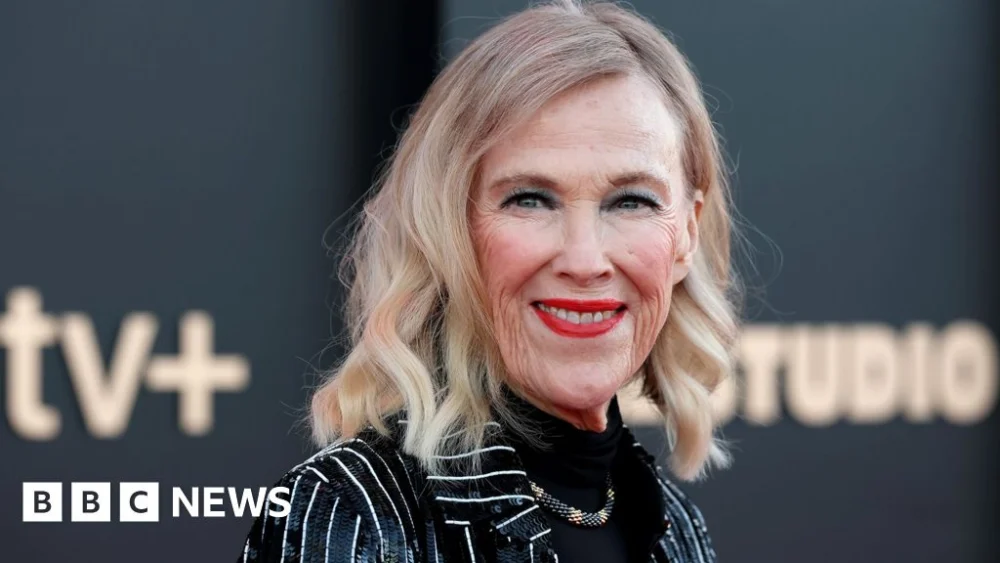
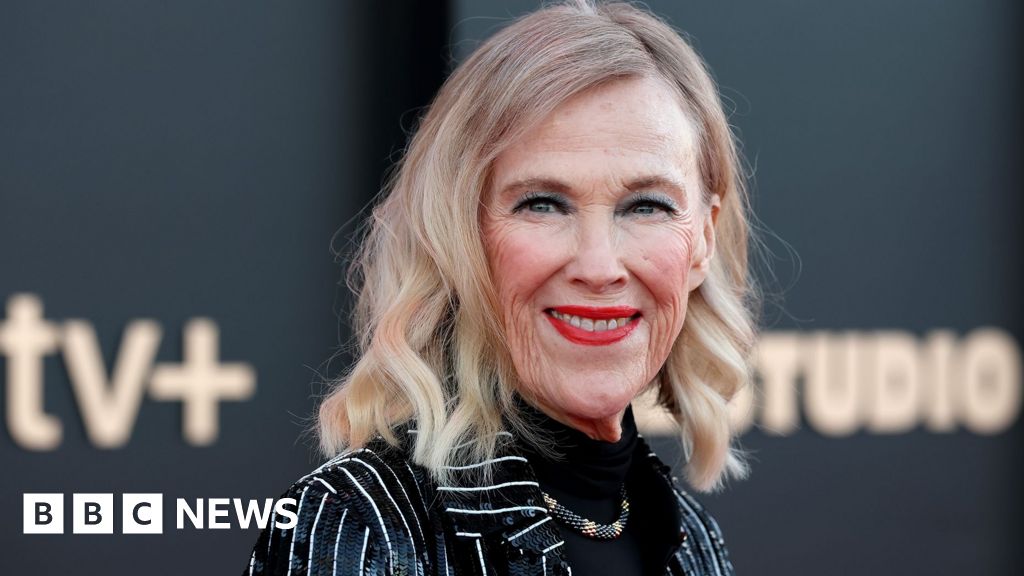
The entertainment world is mourning the passing of Catherine O’Hara, the incomparable Emmy-winning actress whose extraordinary comedic genius and dramatic versatility illuminated screens for decades. Following her death on Friday at the age of 71, an outpouring of profound grief and heartfelt tributes has emerged from across the industry, with luminaries such as Meryl Streep, Pedro Pascal, and Ben Stiller leading a global chorus of appreciation for an artist whose unique blend of wit, warmth, and eccentric brilliance left an indelible mark on popular culture.
O’Hara, a revered figure renowned for her iconic roles in cinematic classics like Beetlejuice and Home Alone, alongside her career-defining portrayal in the critically acclaimed television series Schitt’s Creek, passed away peacefully at her residence in Los Angeles after a brief illness. Her agent confirmed the news, prompting an immediate wave of remembrance for an actress who consistently transcended conventional performance, crafting characters that were both deeply flawed and utterly beloved.
The depth of feeling expressed by her peers underscores the significant void her departure creates. Meryl Streep, reflecting on O’Hara’s singular talent, remarked on the "love and light" she bestowed upon the world, attributing this radiance to her "whips-smart compassion for the collection of eccentrics she portrayed." This sentiment encapsulates O’Hara’s rare ability to infuse even the most outlandish characters with a profound sense of humanity, making them resonate deeply with audiences worldwide. Pedro Pascal, her co-star in the upcoming series The Last of Us, articulated a personal sense of loss, stating he was "eternally grateful" for their collaboration and acknowledging that "there is less light in my world," though "this lucky world that had you will keep you, always."
Ben Stiller, another prominent voice in comedy, struggled to convey the magnitude of her influence, asserting, "It’s hard to explain the impact she had on comedy," and concluding with the definitive statement that for him, "there was no one better." Such testimonials speak volumes about an artist whose craft was not merely entertaining but transformative, shaping the landscape of comedic performance for generations.
Catherine O’Hara’s illustrious career began in the vibrant Canadian comedy scene, where she honed her improvisational skills and developed the distinct characterizations that would become her hallmark. Her early work with the legendary Second City Toronto troupe laid the foundation for a trajectory that would see her transition seamlessly between sketch comedy, film, and television, consistently delivering performances that garnered critical acclaim and cemented her status as a comedic titan. This formative period cultivated her exceptional ability to create fully realized characters, often with minimal dialogue, relying instead on nuanced expressions, vocal inflections, and physical comedy.
Her cinematic legacy is perhaps most widely recognized through her unforgettable contributions to several seminal films. In Tim Burton’s 1988 gothic comedy Beetlejuice, O’Hara portrayed Delia Deetz, the eccentric, avant-garde stepmother whose artistic pretensions provided much of the film’s darkly humorous relief. Her performance was a masterclass in heightened reality, perfectly complementing Burton’s distinctive aesthetic. Michael Keaton, who co-starred as the titular ghoul in Beetlejuice and its highly anticipated 2024 sequel, Beetlejuice Beetlejuice, shared a poignant reflection on their enduring connection. "We go back before the first Beetlejuice. She’s been my pretend wife, my pretend nemesis and my real life, true friend," Keaton stated, adding, "This one hurts. Man am I gonna miss her." Director Tim Burton himself shared a photograph of the cast from the sequel, accompanied by a heartfelt message: "Catherine, I love you. This picture shows how much light you gave to all of us. You were a special part of my life and afterlife." Alec Baldwin, another co-star from the original film, lauded O’Hara’s unique presence, describing her as possessing "a quality that was all her own" and "one of the greatest comic talents in the movie business." These tributes collectively highlight her pivotal role in creating enduring cinematic magic.
Beyond the supernatural whimsy of Beetlejuice, O’Hara captured the hearts of millions as Kate McCallister, the perpetually frantic yet fiercely loving mother in the holiday perennial Home Alone and its sequel, Home Alone 2: Lost In New York. Her iconic scream upon realizing her son Kevin had been left behind became a cultural touchstone, epitomizing the universal parental nightmare. Macaulay Culkin, who played her on-screen son, shared an emotional tribute on Instagram, writing, "Mama. I thought we had time. I wanted more. I wanted to sit in a chair next to you. I heard you. But I had so much more to say. I love you. I’ll see you later." This poignant exchange underscores the deep, familial bonds O’Hara forged with her colleagues, extending far beyond the confines of a film set.
O’Hara’s collaborative spirit and improvisational prowess found a perfect outlet in her work with director Christopher Guest. Across four of his acclaimed mockumentaries, including Waiting for Guffman, Best in Show, and For Your Consideration, she delivered some of her most celebrated performances. Guest himself eulogized her as "one of the comic giants of our age," a testament to her unparalleled ability to craft indelible characters through subtle nuances and razor-sharp wit. His wife, actress Jamie Lee Curtis, amplified this sentiment by sharing a clip of O’Hara in Waiting for Guffman, simply captioning it, "BEST OF THE BEST IN SHOW," a fitting tribute to her profound influence on the genre. These films showcased O’Hara’s extraordinary capacity for character development within a largely improvised framework, proving her not just as an actress but as a true comedic architect.
In recent years, Catherine O’Hara experienced a profound resurgence in popularity, captivating a new generation of fans with her portrayal of the flamboyant, perpetually wig-clad matriarch Moira Rose in the Emmy-winning comedy series Schitt’s Creek. Her performance as Moira, an eccentric former soap opera star navigating life in a small town after her family loses its fortune, was nothing short of a cultural phenomenon. O’Hara’s distinctive accent, dramatic wardrobe, and unparalleled comedic timing elevated the character to iconic status, earning her a Golden Globe award for Best Actress in 2021 and solidifying her place in television history.
Dan Levy, co-creator and co-star of Schitt’s Creek, expressed the depth of their connection, stating that O’Hara was "family before she ever played my family." He added on Instagram that he would "cherish every funny memory I was fortunate enough to make with her." His father, Eugene Levy, who not only co-created and co-starred in the series but also shared a collaborative friendship with O’Hara spanning over half a century, issued a statement to Variety that encapsulated the profound loss. "Words seem inadequate to express the loss I feel today," he shared. "I cherished our working relationship, but most of all our friendship. And I will miss her." The enduring partnership between O’Hara and the Levys is a testament to the powerful synergy that can emerge from creative compatibility and deep personal respect, resulting in some of the most beloved and critically lauded television of the modern era.
O’Hara’s enduring relevance and continued artistic output were evident even in her final years. She was nominated for a Golden Globe award for her role as ousted movie executive Patty Leigh in Seth Rogen’s satirical series The Studio, a testament to her ability to adapt and excel in contemporary comedic landscapes. Her nomination at the upcoming Actor Awards (formerly the Screen Actors Guild Awards) for the same role further underscores her lasting impact. Seth Rogen himself shared a heartfelt tribute, recalling telling O’Hara upon their first meeting that she "was the funniest person I’d ever had the pleasure of watching on screen," and crediting Home Alone as the film that inspired him to pursue filmmaking. "Getting to work with her was a true honour," he concluded, highlighting her profound influence on aspiring artists.
Her status as a national treasure in Canada was also widely acknowledged. Mike Myers, the celebrated Canadian actor and comedian, lamented her passing as "a very sad day for comedy and for Canada," recognizing her immense contribution to the nation’s cultural identity. Former Canadian Prime Minister Justin Trudeau described her as a "beloved Canadian icon," while distinguished Canadian figure Mark Carney echoed the sentiment, stating that the country had "lost a legend." These tributes from public figures underscore the widespread affection and respect O’Hara commanded in her homeland, recognizing her journey from the stages of Toronto to global stardom as a source of national pride.
Beyond her extraordinary professional achievements, Catherine O’Hara was a devoted individual, survived by her husband, production designer Bo Welch, whom she married in 1992, and their two sons, Matthew and Luke. She also leaves behind six siblings. Her personal life, though often kept private, was a grounding force in a career defined by boundless creativity and public acclaim.
The passing of Catherine O’Hara marks the end of an era for comedic performance, yet her formidable body of work ensures her legacy will continue to inspire and entertain. Her inimitable ability to embody characters that were simultaneously exaggerated and deeply authentic, absurd and profoundly human, has etched her into the pantheon of entertainment greats. She possessed a rare gift for finding the humor and pathos in the everyday, transforming mundane moments into comedic gold. As the entertainment world reflects on her extraordinary life and career, it is clear that O’Hara’s enduring imprimatur on comedy, character acting, and cultural memory will resonate for generations, ensuring that her light, though dimmed, will continue to shine brightly through the timeless joy she brought to millions.




 Aura Kasih