Ayu Aulia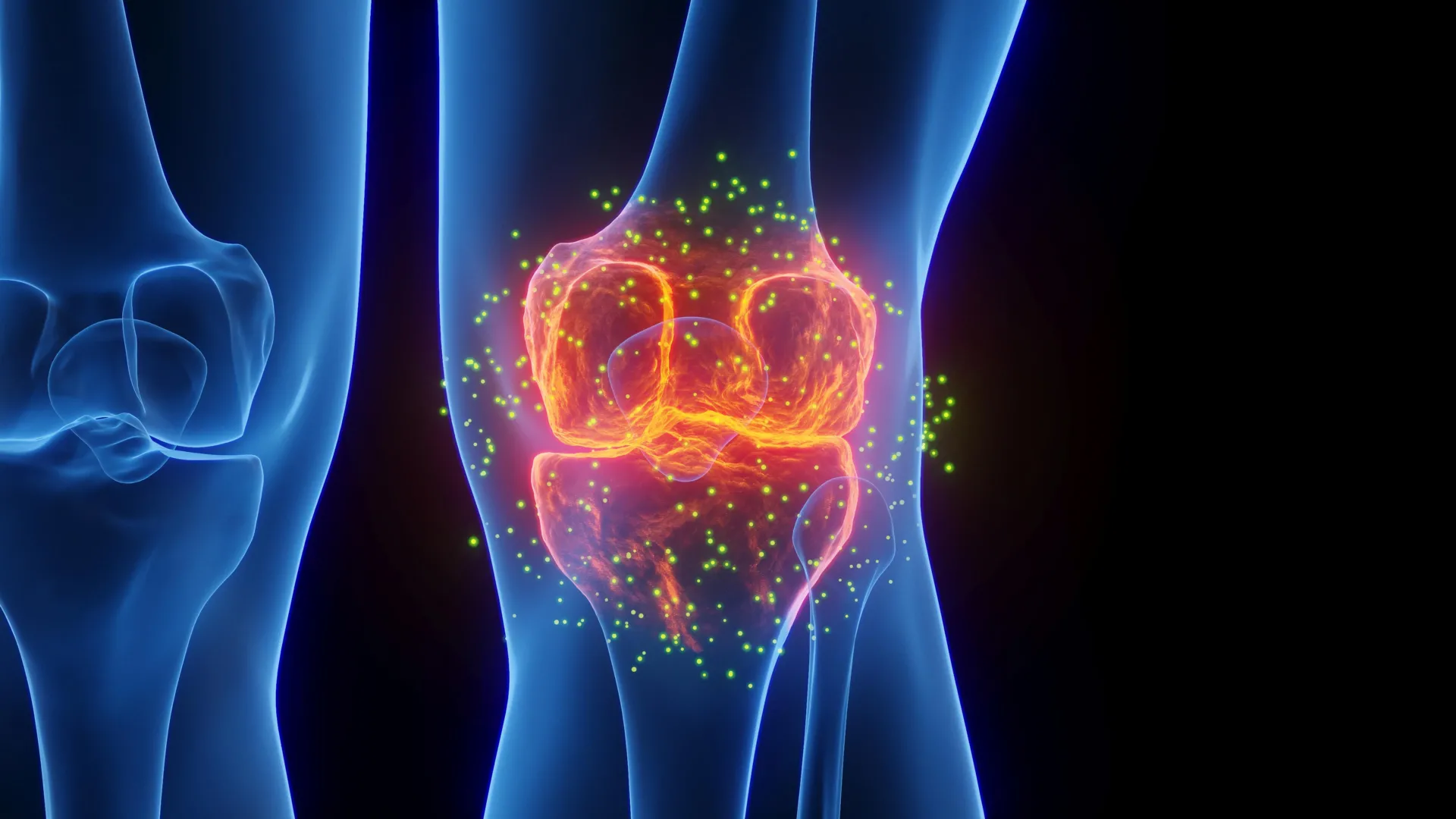
Scientists at Stanford University have made a significant advancement in musculoskeletal medicine, identifying a molecular pathway that not only reverses age-related cartilage degradation but also prevents the onset of arthritis following acute joint injuries. This pioneering work, centered on inhibiting a specific aging-associated protein, presents a compelling new therapeutic modality that could transform the treatment landscape for millions suffering from degenerative joint conditions, moving beyond pain management to genuine tissue restoration. The potential implications extend to an oral treatment already under investigation in human clinical trials for other age-related conditions, suggesting a viable path toward widespread clinical application.
The core of this groundbreaking investigation reveals that blocking a protein intrinsically linked to the aging process can effectively restore lost knee cartilage in animal models. Furthermore, this intervention demonstrated a remarkable ability to halt the progression of arthritis following joint trauma, such as injuries mimicking anterior cruciate ligament (ACL) tears, which commonly afflict athletes and active individuals. Crucially, laboratory tests on human cartilage samples, obtained from individuals undergoing knee replacement surgery, exhibited a similarly positive response. These samples, encompassing both the structural extracellular matrix and the vital chondrocyte cells responsible for cartilage production, began to form new, functional cartilage when subjected to the treatment. These findings collectively suggest a future where age-related or injury-induced cartilage loss could be reversed through non-surgical means, potentially rendering many knee and hip replacement procedures obsolete.
The Unmet Challenge of Osteoarthritis
Osteoarthritis (OA) stands as a pervasive and debilitating degenerative joint disease, afflicting approximately one in five adults across the United States. Its economic burden is substantial, generating an estimated $65 billion annually in direct healthcare expenditures. Beyond the financial impact, OA profoundly diminishes the quality of life for millions, causing chronic pain, stiffness, and reduced mobility. Current therapeutic strategies for OA are largely palliative, focusing on symptom management through pain relievers, anti-inflammatory drugs, physical therapy, and, in advanced cases, surgical joint replacement. Critically, there are no pharmacological interventions presently approved that can slow, halt, or reverse the fundamental cartilage damage that underpins the disease’s progression. This represents a significant unmet medical need, driving the urgent quest for novel, disease-modmodifying treatments. The Stanford research proposes a fundamental paradigm shift, targeting the root biological mechanisms of cartilage degeneration rather than merely ameliorating its downstream effects.
The Role of Gerozymes in Age-Related Decline
Central to this therapeutic innovation is a protein identified as 15-PGDH. This molecule has been categorized by the research team as a "gerozyme," a term coined in 2023 to describe enzymes whose activity levels escalate with advancing age and are implicated in the gradual deterioration of tissue function. The concept of gerozymes posits that certain enzymatic activities, while potentially beneficial in youth, become dysregulated or overactive with age, contributing to cellular senescence and tissue decline.
Previous studies by the same research group established a strong correlation between elevated levels of 15-PGDH and diminishing muscle strength in older mice. Inhibiting this enzyme through a small-molecule compound resulted in augmented muscle mass and enhanced endurance in aged animals. Conversely, experimentally inducing higher 15-PGDH production in young mice precipitated muscle atrophy and weakness, underscoring its pivotal role in age-related muscle dysfunction. The influence of 15-PGDH is not confined to muscle tissue; it has also been linked to regenerative processes in bone, nerve, and blood cells, highlighting its broad systemic impact on tissue homeostasis and repair.
In most of these aforementioned tissues, regeneration typically involves the activation, proliferation, and subsequent differentiation of tissue-resident stem cells. However, the mechanism observed in cartilage appears distinctly different. In this context, chondrocytes, the specialized cells responsible for producing and maintaining the cartilage matrix, undergo a profound shift in their gene expression patterns. Rather than relying on an external pool of stem cells, these existing chondrocytes appear to revert to a more youthful, functional state, capable of synthesizing new cartilage components. This "reprogramming" of mature cells without stem cell involvement represents a novel and particularly exciting aspect of the discovery.
A New Frontier in Tissue Regeneration
Dr. Helen Blau, a distinguished professor of microbiology and immunology and head of the Baxter Laboratory for Stem Cell Biology, emphasized the novelty of this regenerative pathway. "This represents an entirely new modality for regenerating adult tissue, holding immense clinical promise for addressing arthritis stemming from both aging and injury," she stated. "Our initial hypothesis led us to search for stem cells, but it became unequivocally clear that they are not directly involved in this process. This observation is truly exhilarating." Dr. Blau, alongside Dr. Nidhi Bhutani, an associate professor of orthopaedic surgery, served as senior authors on the study, which was published in the esteemed journal Science. Dr. Mamta Singla, an instructor of orthopaedic surgery, and Dr. Yu Xin (Will) Wang, a former postdoctoral scholar now an assistant professor at the Sanford Burnham Institute, were the lead authors.
Dr. Bhutani underscored the critical medical need this research aims to address. "Millions contend with chronic joint pain and swelling as they age," she observed. "Until now, no pharmaceutical agent has directly targeted the underlying cause of cartilage loss. The effect of this gerozyme inhibitor on cartilage regeneration is nothing short of dramatic, surpassing any previously reported outcomes from other drugs or interventions."
The human body contains three primary classifications of cartilage. Elastic cartilage, characterized by its pliability, forms structures such as the external ear. Fibrocartilage, known for its density and toughness, serves as a shock absorber in regions like the intervertebral discs of the spine. The third type, hyaline cartilage, often referred to as articular cartilage, is smooth and glossy, facilitating low-friction movement in synovial joints like the hips, knees, shoulders, and ankles. It is this articular cartilage that is predominantly affected and damaged in the context of osteoarthritis.
Understanding Cartilage’s Limited Regenerative Capacity
Osteoarthritis typically develops when joints are subjected to chronic stress, whether from the cumulative effects of aging, acute traumatic injuries, or excessive mechanical loading due to factors like obesity. In this pathological process, chondrocytes, instead of maintaining the cartilage matrix, begin to release pro-inflammatory molecules and enzymes that degrade collagen, the primary structural protein of cartilage. This progressive breakdown leads to the thinning and softening of the cartilage layer, which in turn exacerbates inflammation, swelling, and pain—the cardinal symptoms of OA.
Under normal physiological conditions, articular cartilage possesses an extremely limited intrinsic capacity for self-repair. While some populations of mesenchymal stem or progenitor cells capable of forming cartilage have been identified within bone marrow, similar cell populations have not been successfully isolated or characterized within the articular cartilage tissue itself. This intrinsic deficiency in regenerative potential is a major reason why OA has historically been considered an irreversible, progressive condition.
The Prostaglandin E2 Connection
Earlier investigations conducted in Dr. Blau’s laboratory had established that prostaglandin E2 (PGE2), a lipid mediator, plays an essential role in the proper functioning of muscle stem cells. The enzyme 15-PGDH is responsible for the catabolism (breakdown) of PGE2. By either inhibiting 15-PGDH or directly augmenting PGE2 levels, researchers had previously demonstrated improved repair mechanisms in damaged muscle, nerve, bone, colon, liver, and blood cells in young mice.
This foundational work prompted the team to explore whether this same biochemical pathway might be implicated in cartilage aging and joint deterioration. A comparative analysis of knee cartilage from young and old mice revealed a striking finding: 15-PGDH levels approximately doubled in the cartilage of aged animals, suggesting its potential contribution to age-related decline in joint health.
Evidential Regeneration in Murine Models
To test their hypothesis, researchers administered a small-molecule inhibitor of 15-PGDH to older mice. The drug was initially delivered via abdominal injection to assess systemic effects, and subsequently, directly into the knee joint for localized treatment. In both experimental paradigms, cartilage that had thinned and become dysfunctional with age demonstrated a remarkable thickening across the joint surface. Rigorous histological and biochemical analyses further confirmed that the newly regenerated tissue was indeed hyaline cartilage, the functional type found in healthy joints, rather than the less functional fibrocartilage.
"The extent of cartilage regeneration observed in aged mice was genuinely surprising," Dr. Bhutani remarked. "The regenerative effect was truly outstanding and consistent."
Similar therapeutic benefits were observed in mouse models of knee injury designed to mimic ACL tears, which are prevalent in sports involving sudden stops, pivots, or jumps. Despite surgical repair, approximately half of individuals sustaining such injuries develop osteoarthritis in the affected joint within 15 years. Mice that received twice-weekly injections of the gerozyme inhibitor for a four-week period following injury exhibited a significantly reduced incidence and severity of osteoarthritis. In stark contrast, control animals receiving a placebo treatment displayed double the levels of 15-PGDH compared to uninjured mice and developed overt osteoarthritis within four weeks. Furthermore, treated mice demonstrated more normal gait patterns and bore more weight on the injured limb than their untreated counterparts, indicating functional improvement.
Dr. Blau also highlighted an intriguing aspect of the study’s findings regarding PGE2. "While prostaglandin E2 has historically been associated with inflammation and pain signaling," she clarified, "this research clearly demonstrates that, at appropriate biological concentrations, modest increases in PGE2 can actively promote tissue regeneration." This suggests a more nuanced role for PGE2, where its physiological levels are critical for regenerative processes, distinct from its pro-inflammatory actions at higher, pathological concentrations.
Cellular Reprogramming Without Stem Cell Involvement
Detailed molecular analyses provided insights into the cellular mechanisms underlying this regeneration. Chondrocytes in older, untreated mice exhibited altered gene expression profiles, with an upregulation of genes associated with inflammation and the pathological conversion of cartilage into bone, coupled with a downregulation of genes essential for cartilage formation. Treatment with the 15-PGDH inhibitor effectively reversed these detrimental gene expression patterns.
Specifically, a subpopulation of chondrocytes characterized by high 15-PGDH production and expression of cartilage-degrading genes decreased from 8% to 3% of the total chondrocyte population. Another group of cells linked to fibrocartilage formation declined from 16% to 8%. Concurrently, a third, beneficial population of chondrocytes, which did not produce 15-PGDH and instead expressed genes crucial for hyaline cartilage formation and extracellular matrix maintenance, significantly expanded from 22% to 42%. These profound shifts in chondrocyte populations and gene expression profiles unequivocally point to a broad return to a more youthful and functional cartilage phenotype, achieved without the recruitment or differentiation of exogenous or endogenous stem cells.
Translational Evidence from Human Tissue
Further reinforcing the clinical potential of this discovery, the researchers conducted experiments using human cartilage samples obtained from patients undergoing total knee replacement surgery for advanced osteoarthritis. After just one week of in vitro treatment with the 15-PGDH inhibitor, these human osteoarthritic tissues showed a significant reduction in 15-PGDH-producing chondrocytes, decreased expression of genes indicative of cartilage degradation and fibrocartilage formation, and compelling early signs of articular cartilage regeneration.
"The mechanism elucidated here is quite striking and has fundamentally reshaped our understanding of how adult tissue regeneration can occur," Dr. Bhutani noted. "It is evident that a substantial pool of pre-existing cells within the cartilage itself is capable of altering its gene expression patterns. By precisely targeting these cells for regeneration, we believe we have an unprecedented opportunity to achieve a much broader clinical impact."
Path to Human Clinical Trials
The prospects for translating these findings into human therapies are particularly promising. Dr. Blau highlighted that Phase 1 clinical trials for a 15-PGDH inhibitor, currently being evaluated for age-related muscle weakness, have already demonstrated its safety and activity in healthy human volunteers. "Our aspiration is for a similar clinical trial to be initiated in the near future, specifically to investigate its efficacy in cartilage regeneration," she stated. "This represents a truly exciting potential breakthrough. The idea of regenerating existing cartilage and potentially circumventing the need for joint replacement surgery is profoundly impactful."
The collaborative research effort also involved contributions from investigators at the Sanford Burnham Prebys Medical Discovery Institute. The project received substantial funding from multiple sources, including grants from the National Institutes of Health, the Baxter Foundation for Stem Cell Biology, the Li Ka Shing Foundation, the Stanford Cardiovascular Institute, the Milky Way Research Foundation, the Canadian Institutes of Health Research, a Stanford Translational Research and Applied Medicine Pilot grant, a GlaxoSmithKline Sir James Black Postdoctoral Fellowship, and a Stanford Dean’s Postdoctoral Fellowship. It is important to note that Dr. Blau, Dr. Bhutani, and several co-authors hold inventor status on patent applications related to 15-PGDH inhibition in cartilage and tissue rejuvenation, which are licensed to Epirium Bio. Dr. Blau is also a co-founder of Myoforte/Epirium and holds equity and stock options in the company, underscoring the direct translational potential of this academic research into clinical applications.
This seminal work from Stanford University researchers marks a pivotal moment in the fight against osteoarthritis and age-related tissue degeneration. By uncovering a novel mechanism of cartilage regeneration that leverages the intrinsic plasticity of mature chondrocytes, the team has illuminated a promising new therapeutic avenue. The prospect of a pharmaceutical intervention—potentially an oral pill—that can not only alleviate symptoms but actively reverse cartilage damage offers a profound shift in the clinical management of a condition that burdens millions worldwide, heralding a future where joint health might be restored rather than merely maintained.



 Lisa Mariana

 Aura Kasih