Aura Kasih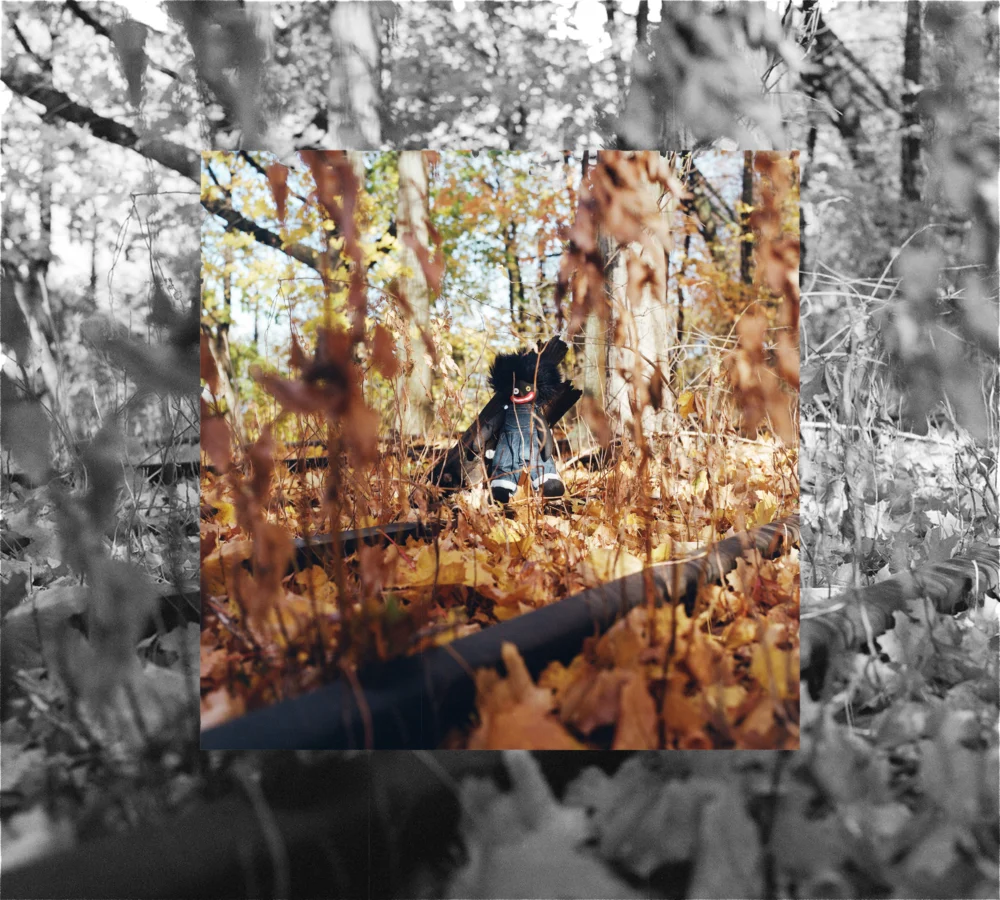
In the ever-evolving landscape of avant-garde hip-hop, Billy Woods has cemented his reputation as a consistently formidable voice, his discography a testament to relentless artistic output and uncompromising vision. With a career marked by critically acclaimed solo endeavors such as the introspective Hiding Places and the sprawling narrative of Maps, alongside his impactful collaborations with Elucid under the moniker Armand Hammer, Woods has cultivated a body of work that defies easy categorization. While his previous albums have never shied away from thematic darkness, his latest offering, Golliwog, plunges into an abyss of psychological horror and unflinching social commentary, positioning it as his most unsettling and profound work to date. This is not the gratuitous shock-value horrorcore of past eras; instead, Woods crafts an experience that resonates with the cerebral unease and thematic depth characteristic of the A24 cinematic sensibility, eschewing the more overt, jump-scare driven tactics of Blumhouse productions for a more insidious, pervasive dread.
The opening track, "Jumpscare," immediately sets a disarming tone. The auditory cue of a film reel accelerating, coupled with the delicate, yet unsettling, chime of a music box, conjures a familiar horror trope. Woods’ initial lyrical pronouncements – "Ragdoll playing dead. Rabid dog in the yard, car won’t start, it’s bees in your head" – appear to signal a descent into predictable genre conventions. However, this initial misdirection serves as a prelude to a far more sophisticated form of terror. As the track progresses, the sonic palette transforms into a disorienting tapestry of interwoven voices and unidentifiable, piercing screeches. It is within this maelstrom that Woods delivers a stark declaration, a mission statement that encapsulates the album’s philosophical underpinnings: "The English language is violence, I hotwired it. I got a hold of the master’s tools and got dialed in." This pronouncement is crucial, as it reveals Woods’ intent: to weaponize language itself, to dissect and reassemble it in a manner that exposes the inherent brutality embedded within communication and societal structures.
The production throughout Golliwog is meticulously designed to cultivate a pervasive sense of disquiet rather than deliver fleeting frights. Woods, in collaboration with his producers, orchestrates an environment that systematically erodes the listener’s comfort. On "Waterproof Mascara," the mournful sounds of a woman’s weeping are not merely an embellishment but are transformed into a recurring, rhythmic motif, imbuing the track with a profound sense of sorrow and vulnerability. Kenny Segal’s contribution on "Pitchforks & Halos" is particularly arresting, creating an auditory landscape that evokes the chilling perspective of a predator, the sonic equivalent of a serial killer’s point-of-view. This track, in its unsettling intimacy, draws the listener into a deeply uncomfortable psychological space. Meanwhile, DJ Haram’s production on "All These Worlds are Yours" veers into the primal, industrial textures reminiscent of early Throbbing Gristle, a stark contrast to the more traditional, albeit somber, sonic palette of tracks like "Golgotha," which fuses the driving force of boombap drums with the mournful resonance of New Orleans funeral brass. This juxtaposition of disparate sonic elements creates a fractured, yet cohesive, auditory experience, mirroring the fragmented nature of the album’s thematic concerns.
This dense, often deliberately disorienting production serves as the fertile ground for Woods’ lyrical explorations, which seamlessly weave together the visceral realities of systemic oppression and colonial legacies with stark, almost voyeuristic observations of human cruelty. The imagery is potent and often disturbing, juxtaposing the mundane with the monstrous: "Trapped a housefly in an upside-down pint glass and waited for it to die." This seemingly small act of detached observation carries a heavy symbolic weight, reflecting a broader callousness towards suffering. Later, on "Corinthians," Woods demonstrates a remarkable ability to transition from a stance of assertive self-possession to a grave warning about complicity in human rights atrocities. The lyrical passage concerning the conflict in Gaza serves as a powerful indictment of apathy and denial: "If you never came back from the dead you can’t tell me shit / Twelve billion USD hovering over the Gaza Strip / You don’t wanna know what it cost to live / What it cost to hide behind eyelids / When your back turnt, secret cannibals lick they lips." This segment is a masterclass in concise, impactful social commentary, leveraging vivid metaphor and urgent prose to confront the listener with uncomfortable truths about global injustice and the moral cost of indifference.
The lyrical dexterity displayed on Golliwog is a hallmark of Woods’ artistry. He navigates a complex terrain where confrontational pronouncements intersect with philosophical inquiries, and visceral horror is tempered by profound emotional depth. His ability to juxtapose the deeply personal with the universally political, the mundane observation with the apocalyptic vision, creates a listening experience that is both intellectually stimulating and emotionally taxing. The album’s narrative is not linear but rather a fragmented mosaic, reflecting the chaotic and often incomprehensible nature of the modern world. Each track functions as a self-contained vignette, contributing to a larger, overarching tapestry of dread and societal decay.
The thematic resonance of Golliwog extends beyond mere shock value, delving into the psychological ramifications of living in a world saturated with violence, misinformation, and systemic injustice. Woods’ lyrical persona often embodies a figure who has witnessed and endured immense suffering, yet remains keenly aware of the broader societal forces at play. This perspective allows him to offer a critical lens on power structures, historical narratives, and the human capacity for both immense cruelty and profound resilience. The album’s title itself, while potentially provocative, can be interpreted as a deliberate confrontation with historical imagery and its enduring impact, forcing listeners to grapple with uncomfortable associations and their continued relevance.
The meticulous construction of Golliwog speaks to a deliberate artistic intent to create an immersive and unsettling experience. The producers, a roster of collaborators who understand and complement Woods’ vision, contribute significantly to the album’s unique atmosphere. Their ability to craft soundscapes that are both experimental and emotionally resonant is key to the album’s success. From the abstract sonic textures to the more grounded, yet still unsettling, rhythmic frameworks, each sonic choice is calculated to amplify the thematic weight of Woods’ lyrics. This collaborative synergy elevates Golliwog from a collection of songs to a fully realized artistic statement.
In conclusion, Billy Woods’ Golliwog is not an album for passive consumption. It demands engagement, contemplation, and a willingness to confront the darker aspects of the human condition and the contemporary world. It is a work that challenges conventions, pushes boundaries, and solidifies Woods’ position as one of the most important and visionary artists in contemporary music. The album’s sophisticated blend of lyrical prowess, innovative production, and profound thematic exploration creates a lasting impression, resonating long after the final notes have faded. It is a testament to the power of art to not only reflect the anxieties of our time but to also provoke critical thought and foster a deeper understanding of the complex realities we inhabit.




 Lisa Mariana