Lisa Mariana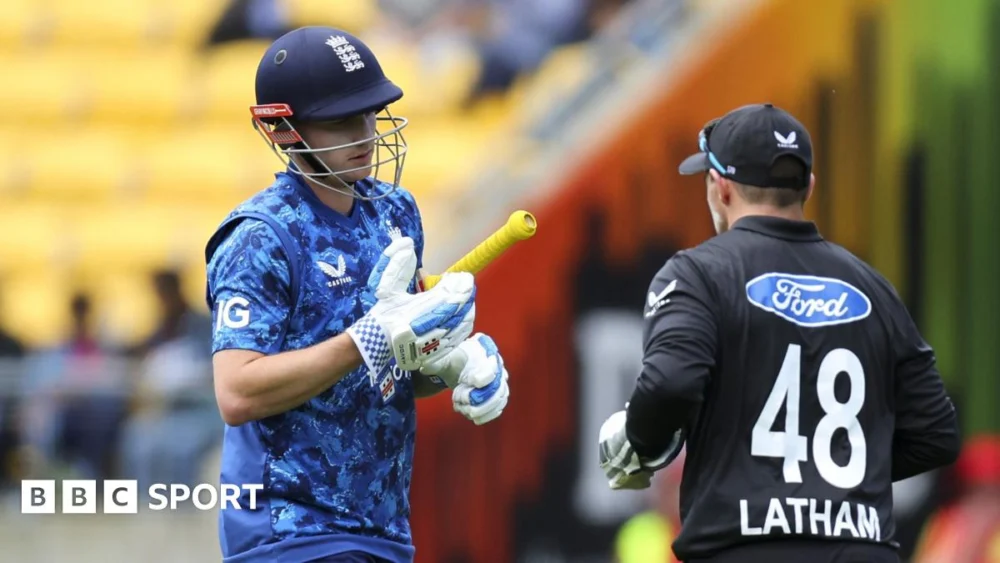
England international Harry Brook has formally apologised following his involvement in an incident with a security staff member at a New Zealand nightclub, an event that occurred prior to the recent Ashes series but whose details have only recently emerged amidst intense scrutiny of the team’s off-field conduct. The highly publicised altercation saw Brook, who holds key leadership positions within the England setup, reportedly refused entry to a venue in Wellington, leading to a physical exchange with a bouncer the night before a crucial One-Day International fixture. This revelation has cast a further shadow over England cricket, coming as it does at the conclusion of a disappointing 4-1 Ashes defeat in Australia, a tour already marred by questions surrounding player discipline and the overall team environment.
The incident, which transpired during England’s tour of New Zealand that served as a precursor to the Ashes campaign, involved Brook being denied access to a nightclub. According to reports, this refusal escalated into a physical confrontation where Brook was struck by the bouncer. This sequence of events unfolded on the eve of the third ODI in Wellington, a match that subsequently saw England suffer a two-wicket loss, with Brook himself contributing a mere six runs. The timing and nature of the incident are particularly problematic, highlighting a significant lapse in professional conduct from a player entrusted with leadership responsibilities.
In response to the gravity of the situation, the England and Wales Cricket Board (ECB) initiated a formal and confidential disciplinary process. This internal review concluded with severe repercussions for Brook, who has been issued a substantial fine of approximately £30,000 and placed on a final warning regarding his future behaviour. Despite the seriousness of the infraction, the ECB has opted to retain Brook in his role as England’s white-ball captain, a position he assumed last year, and as the Test vice-captain. He is expected to lead the team in the forthcoming T20 World Cup and the limited-overs series against Sri Lanka, commencing in a fortnight. This decision reflects a delicate balance the ECB must strike between enforcing disciplinary standards and preserving the continuity of leadership within a critical period for England’s international commitments.
Brook himself addressed the controversy directly through a public statement, expressing profound remorse for his actions. "I want to apologise for my actions," Brook stated, acknowledging the detrimental impact of his behaviour. He further elaborated, "I fully accept that my behaviour was wrong and brought embarrassment to both myself and the England team." The statement underscored his recognition of the privilege and responsibility associated with representing England, describing it as "the greatest honour of all." He conveyed deep regret for "letting down my team-mates, coaches and supporters," indicating a period of introspection. Brook affirmed his commitment to learning from the experience, emphasising the lessons it imparted regarding "responsibility, professionalism and the standards expected of those representing your country." His concluding remarks reiterated an unreserved apology and a pledge to rebuild trust through exemplary future conduct, both on and off the field. The ECB corroborated Brook’s apology, confirming that the incident had been handled internally and that the player acknowledged his conduct fell short of expected standards.
This isolated incident in New Zealand, though predating the Ashes, cannot be viewed in isolation. Its revelation has intensified the debate surrounding the broader culture within the England cricket setup, particularly in light of the team’s recent struggles and the numerous off-field controversies that plagued their tour of Australia. The Ashes campaign was widely characterised by accusations of a relaxed, bordering on lax, team culture. One significant point of contention was a four-night break taken by the squad in Noosa, Queensland, between the second and third Tests. This period, which followed two preceding nights in Brisbane, meant some players reportedly spent up to six consecutive days engaged in social drinking. Harry Brook was among the players photographed in a Noosa bar during this time, further contributing to the perception of a lack of focus during a crucial series.
The Noosa interlude was not without its own set of incidents that drew public criticism. Opening batter Ben Duckett was reportedly filmed by a member of the public appearing intoxicated, with the video subsequently circulating on social media. Such public displays of unprofessional conduct during an active Test series raise serious questions about player awareness, the effectiveness of team management in monitoring player behaviour, and the overall discipline within the squad. These incidents collectively contributed to an image of a team perhaps not fully committed to the rigorous demands of an elite international tour, especially one as historically significant as the Ashes.
Adding another layer of complexity to the narrative, on the very same night as Brook’s altercation with the nightclub bouncer in Wellington, a video surfaced on social media depicting Brook and England teammate Jacob Bethell drinking. While distinct from the bouncer incident itself, this footage underscored a pattern of behaviour that raised concerns. Prior to the fourth Ashes Test, England’s Managing Director of Cricket, Rob Key, acknowledged having discussed the New Zealand social media video with Brook and Bethell. At that time, Key indicated that he considered these discussions to be "informal warnings," not warranting formal disciplinary action. This distinction between an "informal" warning for the social media video and the subsequent "formal" disciplinary action for the bouncer altercation highlights an evolving understanding and response from the ECB as the full scope of the issues became apparent.
The scrutiny of England’s off-field conduct has become a dominant theme throughout this Ashes series, overshadowing aspects of their on-field performance. In the aftermath of the disappointing tour, ECB Chief Executive Richard Gould announced a comprehensive review into the entire campaign, specifically stating that "behaviour" would be a key area of analysis. This holistic approach signals a recognition that the issues extend beyond individual transgressions and may point to systemic challenges within the team environment. Such a review would typically delve into aspects like player welfare, the clarity of conduct guidelines, the enforcement of social media policies, and the effectiveness of tour management strategies. The tension between player privacy and the inherent public responsibility of representing the national team is a complex dynamic that the review will undoubtedly have to navigate.
From an analytical perspective, the recurring nature of such incidents within England cricket raises pertinent questions about institutional memory and the efficacy of past disciplinary measures. The history of English cricket is punctuated by high-profile off-field controversies, ranging from the Ben Stokes incident in Bristol to earlier episodes involving prominent players. Each event prompts a period of introspection and promises of reform, yet the latest revelations suggest that lessons may not have been fully embedded into the team’s culture. The "Bazball" era, characterised by an aggressive, uninhibited style of play under the leadership of Brendon McCullum and Ben Stokes, has been lauded for its transformative impact on England’s Test cricket. However, there is a risk that this ethos of freedom and expression on the field could be misinterpreted as a license for laxity off it, blurring the lines between controlled aggression and uncontrolled behaviour.
For Harry Brook, a player of immense talent and burgeoning leadership potential, this incident represents a significant setback. At just 26 years old, he has rapidly ascended through the ranks, securing the white-ball captaincy and the Test vice-captaincy. Such roles carry not only performance expectations but also the burden of exemplary conduct as a role model. The "final warning" is a stark reminder that any future misstep could jeopardise his career trajectory and leadership aspirations. Rebuilding trust will require consistent, unimpeachable conduct and a renewed focus on his responsibilities, demonstrating that the lessons learned from this mistake are truly profound and enduring. His performance in the Ashes, where he scored 358 runs in 10 innings without reaching a century, was below his established high standards, and while not directly attributable to off-field issues, the confluence of events paints a picture of a player potentially grappling with external pressures.
The implications for England cricket extend far beyond Brook’s individual consequences. The ongoing debate about team culture impacts sponsor perception, fan engagement, and the health of grassroots cricket, which looks to the national team for inspiration. Ensuring a robust player education and support system that instils values of professionalism, accountability, and respect is paramount. The ECB’s comprehensive review must aim to establish clearer boundaries and expectations for player conduct, particularly in an age where social media amplifies every transgression. The choices made regarding leadership roles and player selection moving forward, especially in the lead-up to the Ashes series of 2025-26, will be critical in demonstrating a tangible commitment to cultural reform.
In conclusion, Harry Brook’s apology following the New Zealand nightclub altercation serves as a potent reminder of the exacting standards demanded of elite athletes representing their country. The incident, set against the backdrop of a challenging Ashes tour marred by other behavioural concerns, underscores a critical juncture for England cricket. Beyond individual accountability, there is an urgent need for systemic introspection and a robust cultural recalibration. The effectiveness of the ECB’s ongoing review and its subsequent implementation of findings will ultimately determine whether these repeated lapses in discipline become a catalyst for lasting positive change or merely another chapter in a recurring narrative of off-field controversies, potentially impacting the very fabric of English cricket for years to come.



 Aura Kasih

 Ridwan Kamil